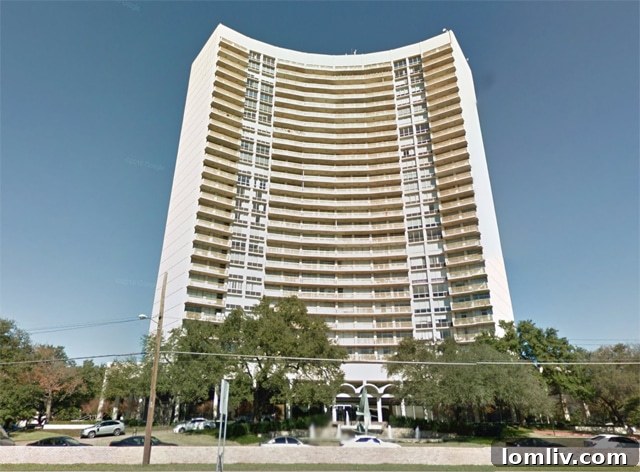
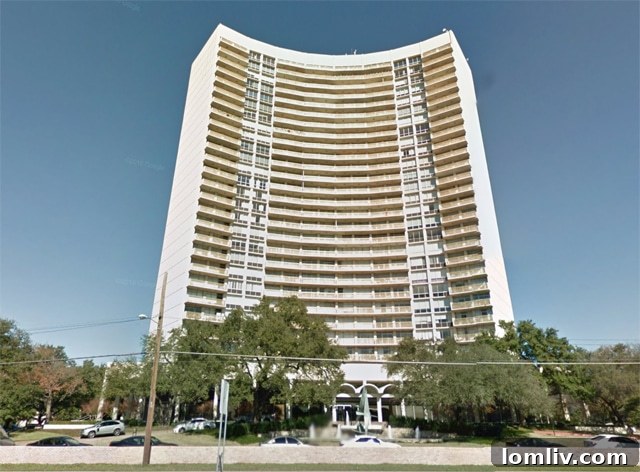
The quest for transparency and accountability within Homeowners Associations (HOAs) often leads to contentious disputes, a reality vividly illustrated by the recurring legal challenges faced by Preston Tower’s HOA. This article delves into two significant lawsuits filed within a year of each other, highlighting persistent concerns regarding financial record accessibility and the overall governance of the Preston Tower community. These cases underscore a broader struggle faced by residents in demanding their statutory and bylaw-enshrined rights, emphasizing the critical need for open communication and meticulous adherence to established regulations by HOA boards and their management.
Homeowners Associations are established to maintain common areas, enforce community rules, and manage the financial health of a shared living environment. To fulfill these responsibilities effectively and fairly, transparency in financial dealings and governance is not merely a best practice; it is a fundamental requirement often mandated by state laws and individual HOA bylaws. When this transparency falters, residents can find themselves in a challenging position, seeking to uphold their rights to examine financial records, understand expenditures, and ensure the responsible stewardship of their collective investments. The events at Preston Tower serve as a compelling narrative in this ongoing dialogue about resident rights versus HOA authority.
A Pattern Emerges: The Wennmohs Lawsuit
The first in this series of notable litigations commenced in December 2018, when Preston Tower resident Leonard Wennmohs initiated legal proceedings against the Preston Tower HOA and its management company, Intercity Investments (ICI). Wennmohs, who previously served as the community’s Treasurer from 2015 to 2017, asserted that during his tenure, detailed financial ledgers, meticulously updated on a monthly basis, were readily accessible to all residents. This open-door policy, he claimed, drastically changed under the leadership of a new building manager, Rob Kennehan, leading to significant restrictions on access to vital financial information.
The lawsuit brought forth serious allegations: not only were the financial records no longer freely available, but residents were reportedly required to submit formal written requests to view them—requests that, according to Wennmohs, were frequently disregarded. Furthermore, he alleged that he was informed he would be charged a fee to access these essential documents, a practice that raised significant questions about the HOA’s commitment to financial openness. Such restrictions, Wennmohs argued, directly contravened the spirit and letter of the HOA’s own governing documents.
HOA Bylaws: Ignored or Interpreted Differently?
At the heart of Wennmohs’s complaint lay the assertion that the Preston Tower HOA bylaws explicitly outline the association’s obligations regarding financial disclosure. The suit meticulously detailed these requirements, stating that the building is legally bound to provide owners with access to monthly ledgers, a comprehensive breakdown of monthly receipts and expenditures, an annual financial statement, and a common expense budget. Beyond merely making these documents available, the bylaws, Wennmohs contended, also mandated that the HOA and ICI publish a clear “set of dates and times that the Association or ICI will make the above-listed records available for review to all owners.” This provision was designed to ensure predictable and consistent access, eliminating arbitrary barriers for residents seeking to understand their community’s financial health.
In response to Wennmohs’s detailed allegations, the Preston Tower HOA and ICI issued a comprehensive rebuttal. Their defense centered on the claim that all requested information was indeed made available, with the notable exception of legal bills. The justification for withholding legal bills was cited as the necessity to protect the privacy of other residents, whose confidential issues might be exposed through the details within these documents. They further clarified that while records required an appointment for viewing, this was merely a procedural measure to ensure that a staff member was present in the office to facilitate access and answer any questions. Crucially, the defense also pointed out that the very request form Wennmohs took issue with had been implemented during his own time on the board, suggesting a hypocrisy in his current complaint: “He had no qualms with the form until he himself was asked to utilize it.”
Wennmohs, however, escalated his legal challenge, presenting a six-count indictment. This amended complaint broadened the scope of his initial allegations, delving into the building’s controversial handling of the catastrophic 2016 flood and the subsequent lawsuit it generated. That previous lawsuit had resulted in a loss for the HOA, holding them responsible for significant damages. While the direct financial connection to the transparency issues might seem tenuous at first glance, Wennmohs’s inclusion of this historical context aimed to highlight a potential pattern of mismanagement, lack of accountability, or a tendency for the HOA to engage in protracted legal battles rather than resolving disputes amicably. It suggested a behavioral trend where the HOA’s actions consistently led to resident dissatisfaction and legal intervention.
The building responded once more, reiterating its prior statements and defending its position. However, the contentious battle ultimately concluded in July 2019 when both parties agreed to settle out of court. While the specific terms of the settlement, including whether any financial compensation was exchanged, remain undisclosed, it is highly probable that a key component of the agreement involved a commitment by the HOA to enhance the accessibility of its financial documents for residents. Such settlements often serve as a tacit acknowledgment of the need for improved practices, even if the HOA maintains it was operating within its rights. The public availability of the legal documents from this case (here, here, here, here, here) provides valuable insight into the legal arguments exchanged.
A Familiar Echo: The Gutman Lawsuit
Barely a year after the Wennmohs settlement, the Preston Tower HOA found itself embroiled in remarkably similar legal challenges. On June 15, another resident, Greg Gutman, filed a new lawsuit, articulating grievances that strikingly mirrored those of his predecessor. Gutman’s petition paints a stark picture of the HOA’s operational environment, asserting:
“Association management has turned into a fortress ignoring and stonewalling communications from those seeking answers or explanations, or having the temerity to express dissatisfaction with the manner in which Association facility is being operated.”
This vivid description of an unresponsive “fortress” suggests a systemic issue of communication breakdown and a culture of resistance to resident inquiry, far beyond mere procedural hurdles.
Gutman’s lawsuit extends beyond simple access to records, leveling a series of grave accusations against the association’s leadership. He firmly believes that, over the past several years, the association’s board of directors and its manager, Rob Kennehan (the same manager named in the Wennmohs suit), have profoundly “failed in their duties to operate the association with due regard to prudent money management, the existence of nepotism, self-dealing, absentee management, transparency of their conduct, management of the Associations’ facilities and common areas and their duty of good faith and fiduciary obligations.” These are not minor complaints; they represent a fundamental challenge to the integrity and legal compliance of the HOA’s governance. Allegations of nepotism and self-dealing, in particular, imply conflicts of interest that can lead to decisions benefiting individuals rather than the community as a whole. Absentee management suggests a lack of active oversight, while the breach of fiduciary duty speaks to a failure to act in the best financial interest of the homeowners.
Adding another financially troubling dimension to his claims, Gutman specifically accuses the Association management of habitually referring “every dispute or owner complaint” to its legal counsel. This practice, he alleges, comes “at a very high per hour price,” effectively draining community funds on legal fees for issues that might otherwise be resolved internally or through more cost-effective means. This potentially exacerbates the financial burden on homeowners through increased dues or special assessments, further fueling dissatisfaction and mistrust.
Gutman’s petition also addresses procedural irregularities concerning board elections. He notes that elections have been postponed, ostensibly due to the COVID-19 pandemic. However, he contends that alternative methods for conducting these vital democratic processes could have been employed, such as the distribution and collection of paper ballots over an extended period to mitigate health risks. The postponement of elections is a significant concern for any HOA, as it can delay changes in leadership, prolong the tenure of a potentially controversial board, and stifle residents’ ability to exercise their electoral rights and hold their representatives accountable.
Strikingly, Gutman’s allegations regarding financial transparency closely echo those made by Wennmohs. He argues that “Association management has made it near impossible for owners to exercise their rights to examine the books and records of the Association to inform themselves on the issues that would impact on their votes in the board election process.” This suggests that the issues of record accessibility are not isolated incidents but rather a recurring barrier that prevents residents from making informed decisions about their community’s leadership and financial direction. As concrete evidence, Gutman highlights his own experience: he requested access to association records on May 31, only to have his request ignored despite “a number of reminders, inquiries directed to the association’s counsel, as well as repeated telephone calls and visits to the management office.” This detailed account illustrates a persistent and deliberate refusal to provide information, supporting the “fortress” metaphor.
A Collective Grievance: More Residents Affected
The severity of the situation is amplified by Gutman’s assertion that “a number of other residents received the same treatment.” This transforms the individual complaints of Wennmohs and Gutman into a collective grievance, indicating a systemic problem within the Preston Tower HOA’s management practices. When multiple homeowners experience similar barriers to accessing information or engaging with their association, it suggests a broader pattern of non-compliance or an institutional reluctance to embrace transparency. This collective experience lends significant weight to the lawsuits, portraying the disputes not as personal vendettas, but as a community-wide demand for better governance and adherence to established rules.
A crucial strategic element of Gutman’s lawsuit is its explicit request for discovery related to the Wennmohs settlement. By seeking access to the terms of the previous agreement, Gutman aims to establish whether the HOA and its management have, in fact, abided by the stipulations made in that settlement. If the new lawsuit reveals that the HOA failed to implement the agreed-upon improvements in financial transparency or record accessibility, it would significantly strengthen Gutman’s case, potentially demonstrating a pattern of non-compliance and a disregard for legal resolutions. This strategic move connects the two lawsuits, illustrating a persistent struggle for transparency at Preston Tower and suggesting that the issues raised are not new, but rather ongoing and unresolved.
From an observer’s perspective, the importance of transparency and open records in HOAs cannot be overstated. While many residents remain largely disengaged from HOA affairs, typically only becoming active when significant issues like special assessments or drastic dues hikes emerge, a core group of attentive homeowners relies on transparent practices to ensure the proper functioning and financial health of their community. Their vigilance serves as an important check and balance on the power of HOA boards and management. As the Gutman lawsuit was filed only days ago, a formal reply from the Preston Tower HOA and Intercity Investments is still pending, but their eventual response will be critical in understanding their defense against these renewed accusations.
On a separate, though equally relevant note, Gutman’s lawsuit also includes claims for damages resulting from the closure of various community amenities, including the pool, conference room, and community room, attributed to the COVID-19 pandemic. This aspect of the suit touches upon a broader legal trend expected to emerge in the wake of the pandemic, as residents challenge HOA decisions regarding facility access and amenity usage during public health crises. While such claims are likely to become more common, their legal success remains uncertain. HOAs often operate under public health mandates and have a duty to ensure resident safety, making it complex to prove that their decisions regarding closures constituted a breach of duty or caused actionable damages. The outcome of such claims will largely depend on specific bylaws, state laws, the reasonableness of the HOA’s actions given the circumstances, and the availability of clear evidence demonstrating negligence or arbitrary decision-making.
In conclusion, the Preston Tower community finds itself in a precarious position, marked by two significant lawsuits within two years, both centering on alarmingly similar claims of financial record secrecy and inaccessibility. The Wennmohs case, settled out of court, ostensibly aimed to improve transparency, yet the Gutman lawsuit suggests those improvements either never materialized or were insufficient. The grim statistic that this appears to be Preston Tower’s seventh lawsuit in seven years, according to reports, speaks volumes. It points to a deep-seated and persistent issue within the HOA’s governance or management structure. This recurring pattern of litigation highlights the critical importance of robust HOA bylaws, unwavering commitment to transparency, and a responsive, accountable management approach to ensure the well-being and trust of all residents within the community. The ongoing legal battles at Preston Tower serve as a powerful reminder of the fundamental rights of homeowners and the enduring challenges in upholding those rights when faced with perceived institutional resistance.