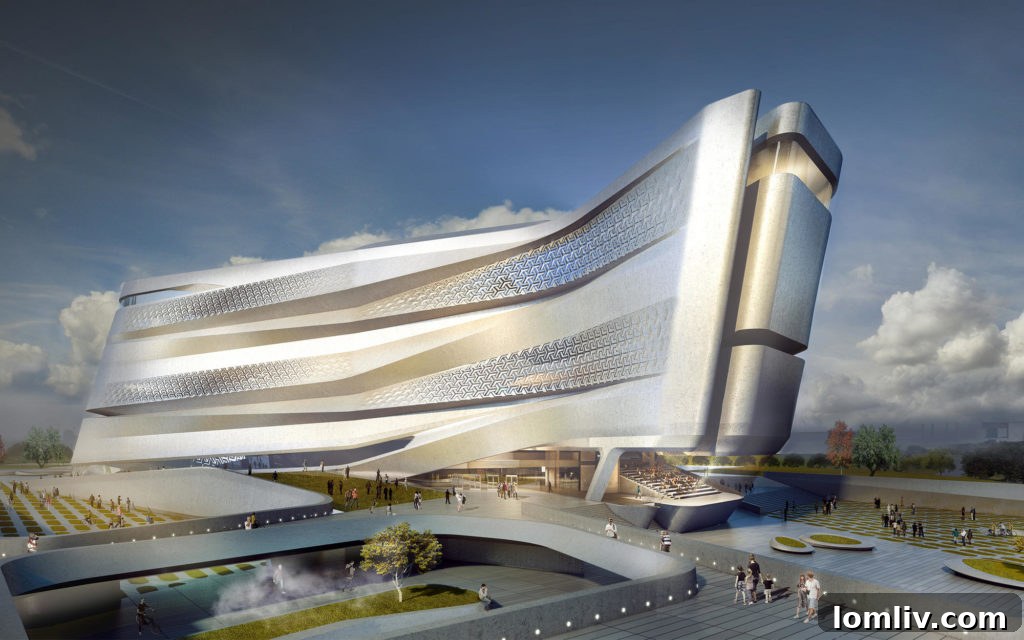
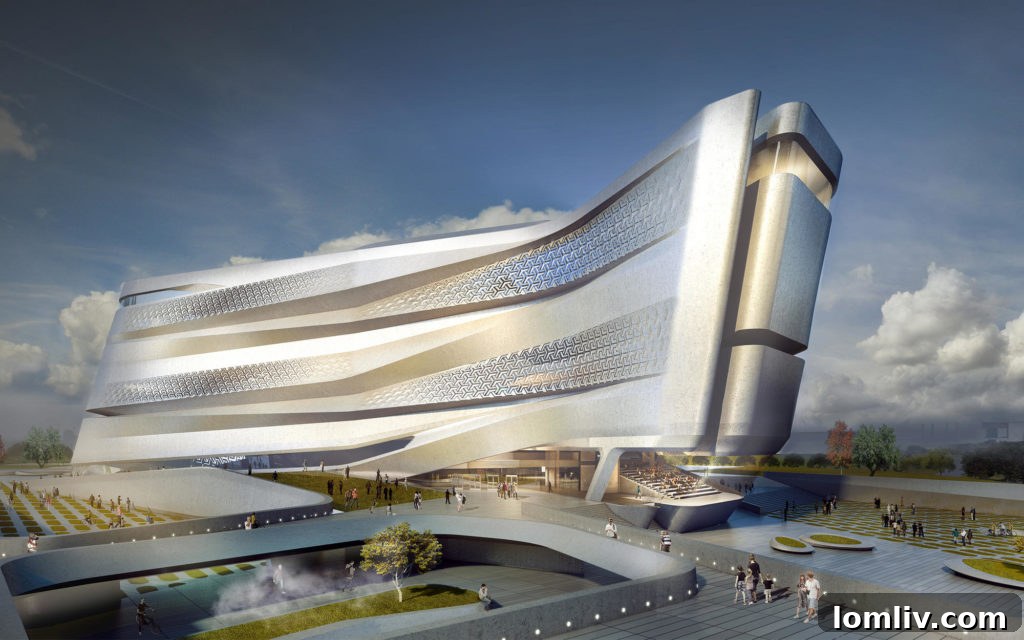
For those of us who regularly ponder the architectural landscape of our cities, the question of “Why Can’t Dallas Have Nice Things?” often arises. This recurring theme gained significant perspective following a recent lecture by Christian Veddeler from Amsterdam-based UNStudio (United Network Studio), hosted by the Dallas Architecture Forum. UNStudio’s innovative portfolio demands global attention, not just for its breathtaking aesthetics, but for the profound insights it offers into the challenges and possibilities of modern urban development. The firm’s work starkly contrasts with the prevailing architectural narrative in many cities, including Dallas, sparking a vital conversation about what truly defines a city’s built environment.
The core of the discussion, subtly conveyed through audience questions and Veddeler’s responses, highlighted a critical deficiency: fantastic architecture, by its very nature, necessitates a confluence of inspired developers, pragmatic yet generous budgets, and a robust local ecosystem of talent—architects, engineers, and skilled craftspeople capable of bringing ambitious visions to life. Unfortunately, Dallas, for all its economic vibrancy, frequently appears starved of these essential ingredients. While the city certainly boasts remarkable, self-funded cultural landmarks – often bearing the names of their benefactors – these singular achievements, while invaluable, don’t necessarily translate into a pervasive culture of design excellence across the profit-making commercial and residential sectors. The recent developments along McKinney and Olive stand out as a rare beacon in decades, underscoring the urgent need for a broader shift towards innovative, context-responsive design.
It’s important to clarify that “decent budget” doesn’t always equate to exorbitant spending. As Veddeler articulated, a significant portion of UNStudio’s acclaimed projects are municipal developments, such as train stations, or educational facilities for universities, where financial resources are meticulously managed. These projects demonstrate that ingenuity and impactful design aren’t solely the domain of limitless funds but are often born from clever problem-solving and a commitment to quality within constraints.
The notion that groundbreaking architecture is somehow antithetical to the American spirit or practice is, frankly, unfounded. A glance at metropolises like New York, Los Angeles, Miami, or Chicago immediately disproves this. Many of the stellar architecture firms globally have left an indelible mark across the United States. While UNStudio might not have as many large-scale U.S. projects to its name yet, the examples below unequivocally demonstrate their immense talent and global impact. The responsibility for this disparity, it seems, lies not with the architects, but with the collective vision (or lack thereof) in certain urban centers.
Let’s delve into some of UNStudio’s remarkable projects that exemplify what thoughtful, visionary architecture can achieve, transforming urban landscapes and enriching lives.
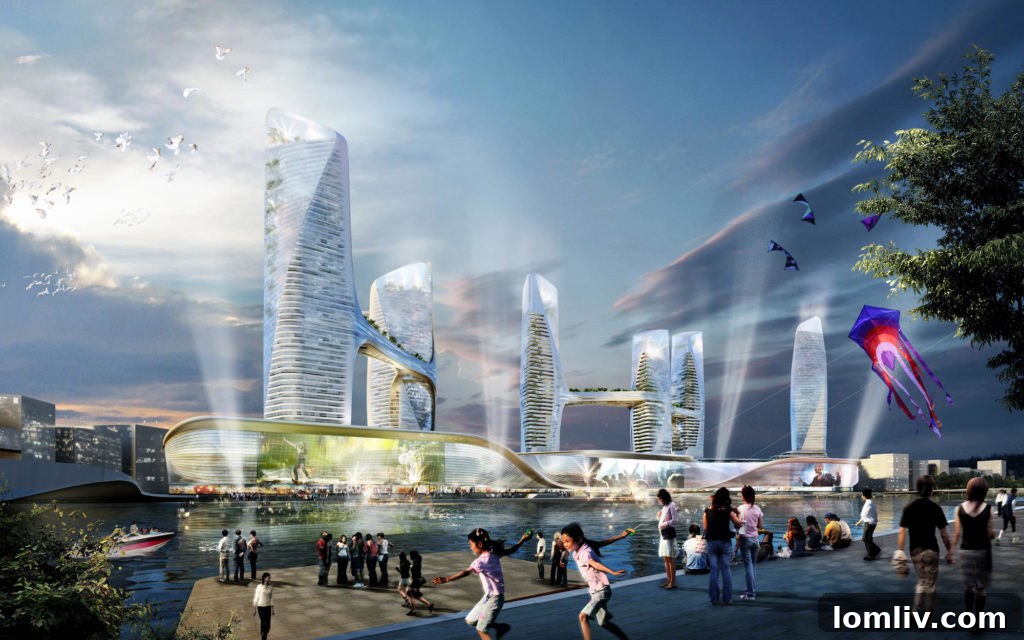
Central Business District: Tongzhou, China – A Sculptural Urban Tapestry
In Tongzhou, China, UNStudio reimagined the concept of a central business district with a series of six riverfront high-rises, designed as a singular, sculptural composition. These towers are artfully grouped into three sets of two, creating an illusion of two primary clusters and a single, towering edifice when viewed from their elevated connections. The most striking features are undoubtedly the upper bridges – not merely structural connectors, but vibrant public spaces envisioned to foster a closer sense of community among residents, bridging the gap between high-rise living and ground-level interaction. Beyond these dramatic links, one is immediately captivated by the abundance of integrated greenery, not confined to the lower levels, but cascading across the building exteriors and spanning the sky bridges, creating an organic dialogue with the urban environment.
A closer inspection reveals the intricate design language at play. Horizontal window lines are elegantly intersected by a network of dramatic, interconnected diagonals. These structural and aesthetic elements sweep from the apex of one building, traverse its facade, seamlessly merge with a sky bridge, and then continue their crossways journey down an adjacent tower. This dynamic interplay of lines creates a sense of fluid motion and visual coherence across the entire complex. Furthermore, the architectural narrative progresses vertically: the upper floors embrace translucency with extensive glazing, allowing light to flood the interiors and making the towers appear to dissolve into the sky. In contrast, the lower floors project a denser, more grounded presence, revealing their structural integrity and anchoring the composition within the urban fabric. This nuanced approach to form and transparency contributes to a truly captivating and forward-thinking urban development.
Scotts Tower, Singapore – A Vertical Neighborhood Oasis
Rising 31 stories above the vibrant cityscape of Singapore, the Scotts Tower, currently under construction, embodies UNStudio’s vision of a “vertical neighborhood.” Housing 231 residences, meticulously designed to range from one- to four-bedroom units, this tower integrates expansive parkland directly into its architectural schema. The design champions a holistic living experience, extending the urban green space upwards. Above, the magnificent rooftop park offers residents a tranquil escape, complemented by glimpses of the breathtaking 25th-floor sky terrace—a testament to elevated urban living.
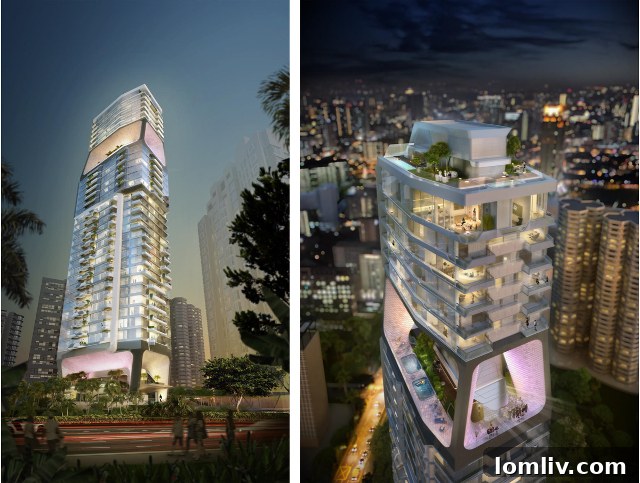
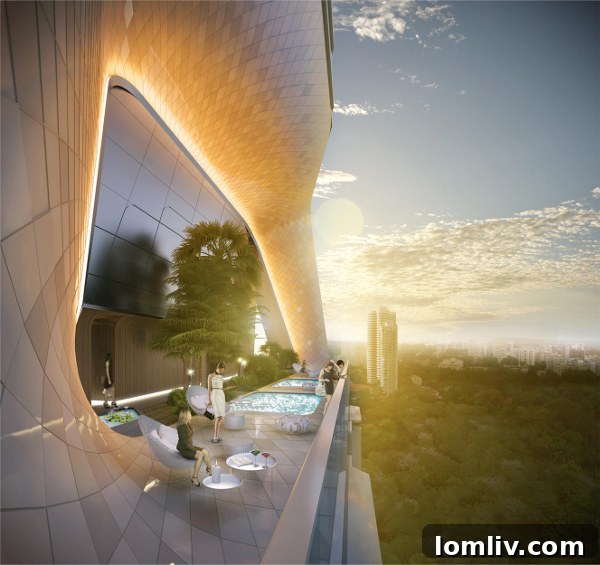
This grand sky terrace serves as an expansive amenity deck and green sanctuary, providing residents with an exceptional environment for leisure and relaxation. Beyond the inviting pool, a resident lounge and café extend the comforts of home into the verdant outdoors. The strategic angling of the building’s cut-ins is a deliberate design choice, maximizing natural daylight penetration and creating dynamic reflections that mirror the ever-changing sky. This thoughtful integration of natural light and open space fosters a profound connection to the environment, enhancing the overall quality of life for its inhabitants.
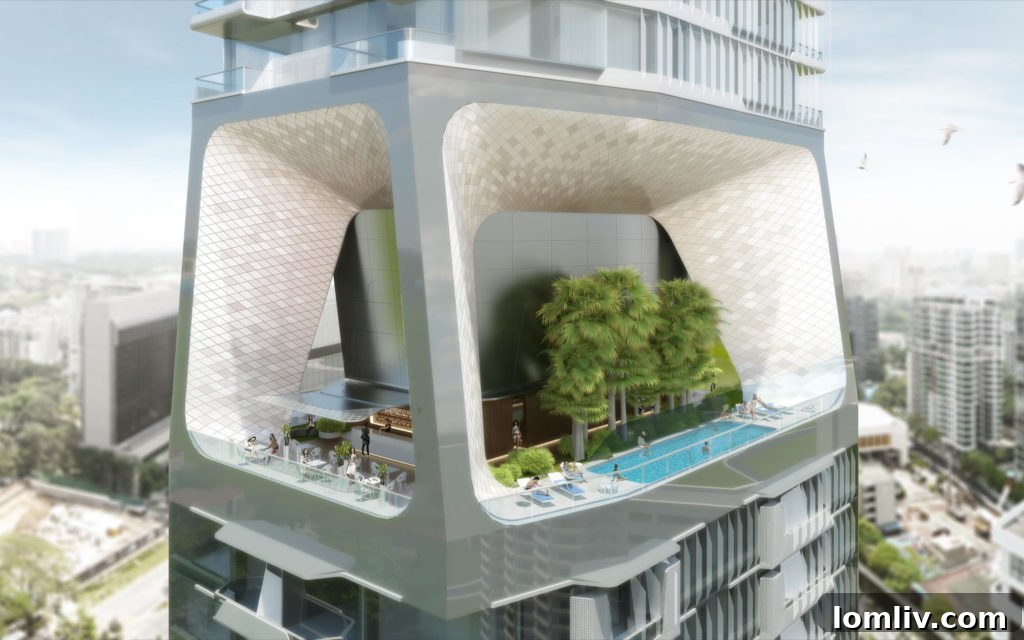
The Scotts Tower truly comes alive in the evening, with its illuminated frame casting a warm glow upon the neighborhood. Imagine winding down each day on this spectacular terrace, a glass of champagne in hand, as the sun dips below the horizon, painting the sky with vibrant hues. It’s an unparalleled vantage point for witnessing the daily ballet of sunrise and sunset, transforming routine into a daily spectacle. This project is not just a building; it’s a meticulously crafted experience, demonstrating how high-rise living can be both luxurious and deeply connected to nature and community.
Tour Bioclimatique: Paris, France – Elegance in a Challenging Context
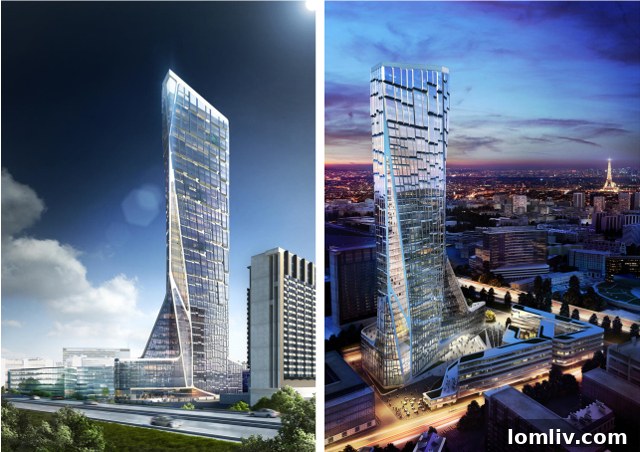
The Tour Bioclimatique in Paris stands as a testament to UNStudio’s ability to create simply ravishing architectural forms, even within the most challenging urban constraints. Its design is particularly remarkable given its difficult site – a cramped, triangular plot nestled adjacent to Paris’s Peripherique, right at the edge of the 15th Arrondissement. This unique positioning provides an almost deliberate orientation, with the plot seemingly pointing directly towards the iconic Eiffel Tower, establishing an immediate and powerful connection to the Parisian skyline.
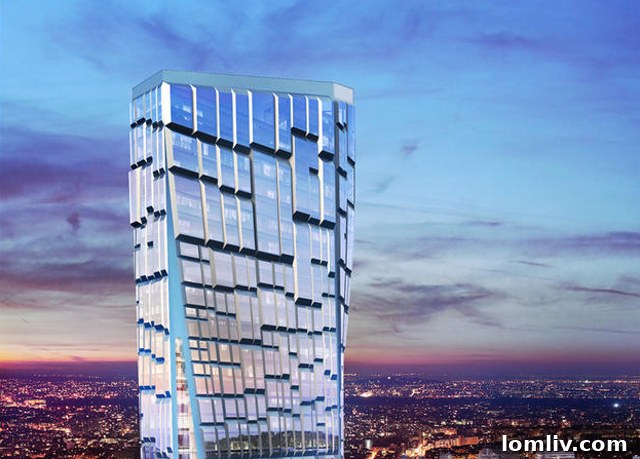
While the overall form is undeniably captivating, the less ostentatious yet equally mesmerizing element of this tower lies in its windows. A deliberate, top-to-bottom puzzle of varying sizes and configurations adds a critical and dynamic component to the building’s facade. This intricate fenestration creates a rhythm and visual depth that is endlessly engaging. From within, residents and occupants are treated to unique framed views of the city, while from the outside, the building itself becomes a work of art – a joy to behold against the backdrop of one of the world’s most beautiful cities. This project underscores how meticulous attention to detail can elevate a structure from functional to truly inspiring.
W21-22 Office Building: Baku, Azerbaijan – Redefining the Workspace
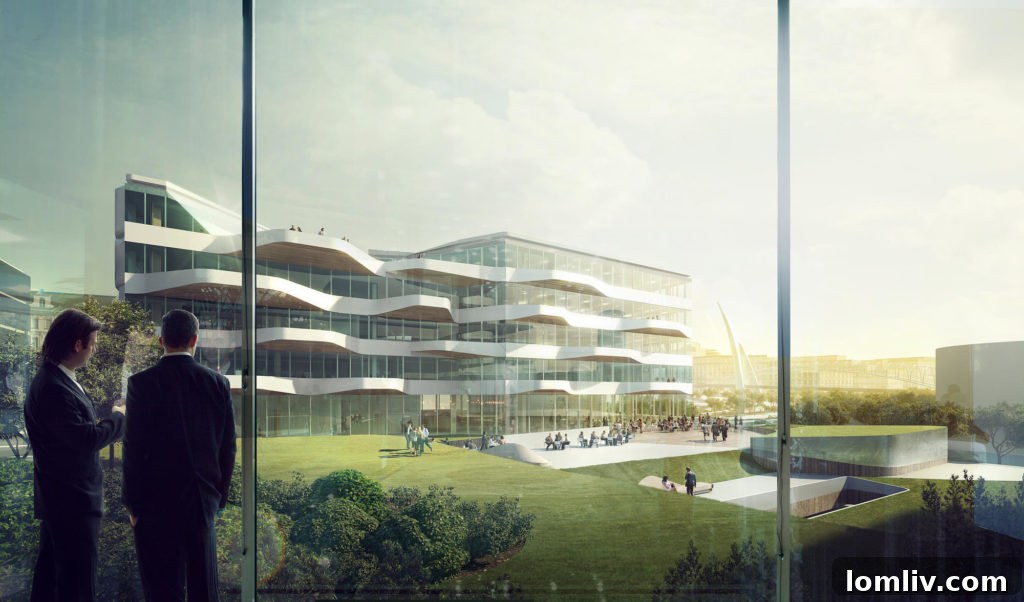
In Baku, Azerbaijan, UNStudio’s five-level W21-22 office building beautifully blurs the lines between commercial and residential architecture. With its distinctive ribbon-waves of outdoor terrace spaces, it could easily be mistaken for an upscale residential mid-rise. This innovative structure is a cornerstone of Baku’s ambitious transformation, converting a portion of the historically industrial “Black City,” once the heart of the country’s oil industry, into a vibrant new “White City.” This master plan, set for completion by 2021, envisions a dynamic mixed-use environment, combining commercial hubs with up to 19,700 new residences to house 50,000 residents. The W21-22 building exemplifies this forward-thinking urban strategy, integrating green spaces and outdoor interaction into the daily work environment, fostering a healthier, more engaging professional life. Its design emphasizes fluidity and connection to the outdoors, a refreshing departure from traditional office block aesthetics.
Ravel: Amsterdam, Netherlands – Living Within a Work of Art
Living in architecturally significant buildings is often described as residing within a work of art, a sentiment brilliantly elevated by UNStudio’s Ravel project in Amsterdam. This conceptual design takes the integration of art into daily life to an unprecedented level by incorporating a sprawling 50,000-square-foot museum and exhibition space directly within the residential development. Imagine the sheer delight of an art enthusiast: a seamless transition from their living room to the latest captivating exhibit, simply by stepping into an elevator. Further enhancing this extraordinary living experience is a proposed rooftop park, designed to gracefully connect the two residential sections. This elevated green space encloses an unseen inner courtyard, where windows face an urban oasis of water features and lush greenery, providing a serene escape amidst the city’s pulse.
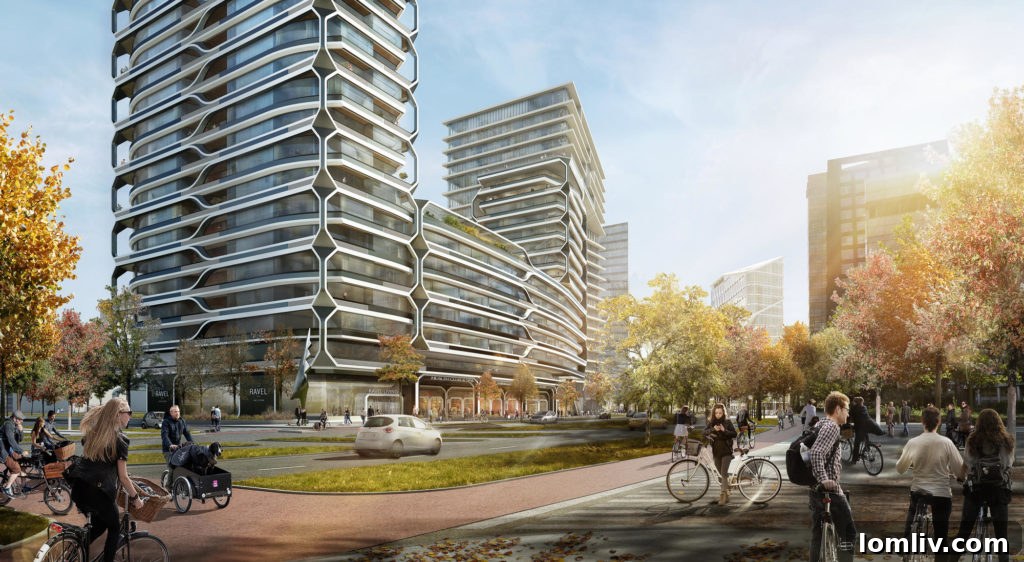
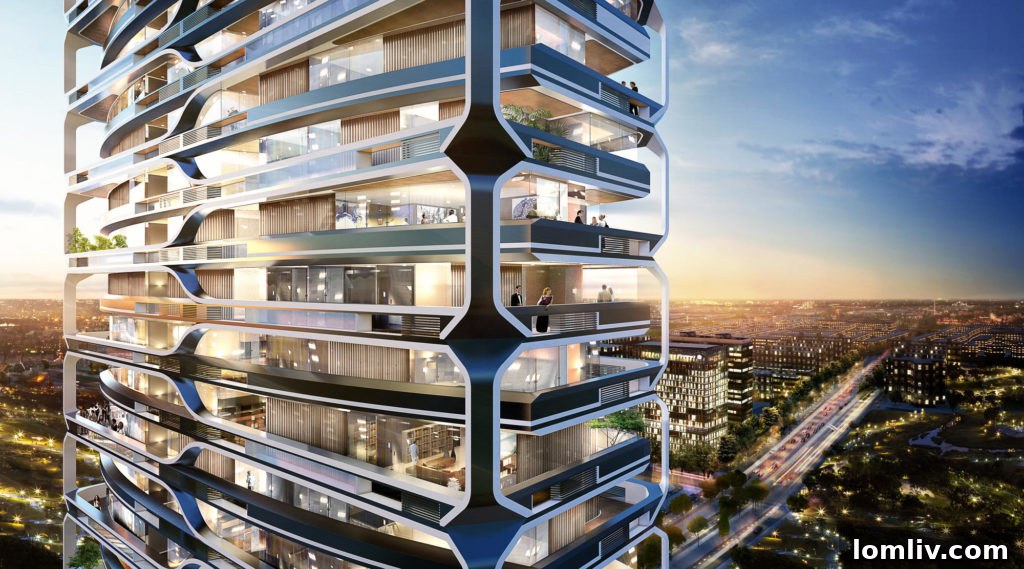
The exterior of the Ravel building is a masterclass in dynamic movement. Balconies appear to curve and intersect across the facades, creating a fluid, almost sculptural presence. The design incorporates distinctive diamond-shaped corners that subtly bend inwards, producing a unique, almost stacked-box effect that plays with light and shadow. Although Ravel remains an unbuilt competition entry, its visionary concept underscores UNStudio’s consistent pursuit of integrating cultural institutions, green spaces, and innovative forms into residential developments, pushing the boundaries of what urban living can be. It’s a powerful example of how architecture can transcend mere functionality to become an immersive cultural experience.
Wafra Tower: Lusail, Qatar – An Optical Illusion of Modern Living
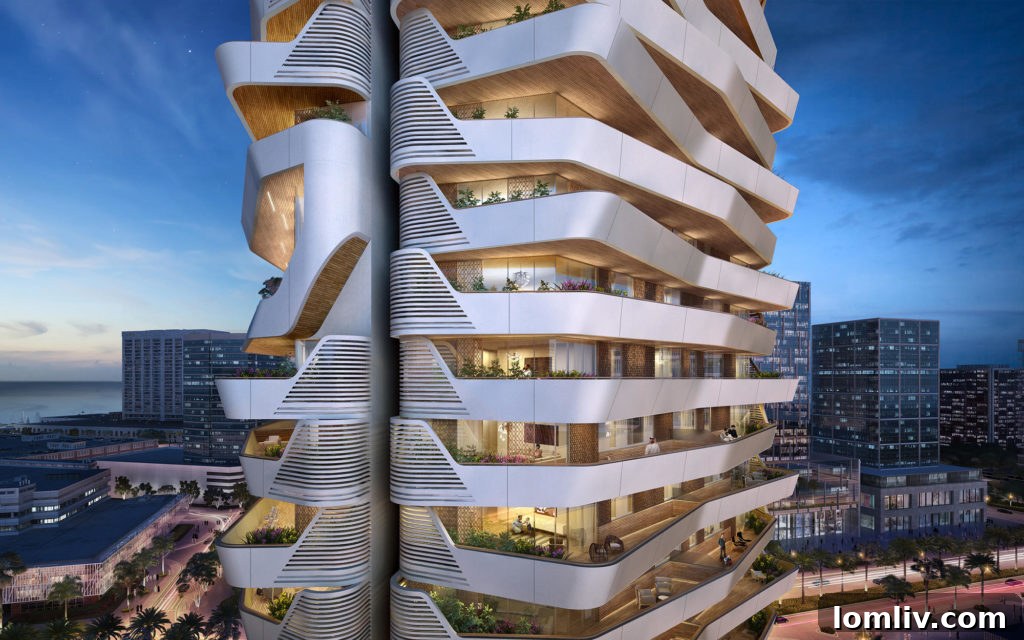
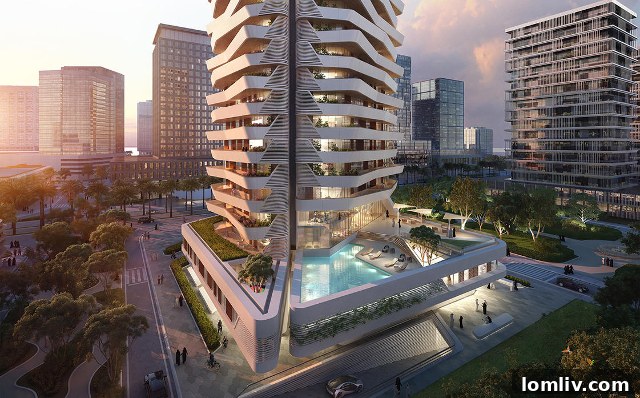
In Lusail, Qatar’s ambitious master-planned smart city located just north of Doha, UNStudio’s Wafra Tower stands as a striking 23-story residential high-rise within the vibrant marina district. The tower elegantly rests upon a three-story podium, which houses a comprehensive suite of resident amenities, including a lush rooftop garden, a refreshing pool, and inviting outdoor gathering spaces. The building’s exterior is an architectural marvel, initially appearing as an optical illusion. However, this captivating facade is meticulously composed of a series of repeating, undulating balconies, each varying in depth. This rhythmic, wave-like pattern creates a dynamic visual texture that shifts with the light and the viewer’s perspective, making the Wafra Tower a true landmark in Lusail’s burgeoning skyline.
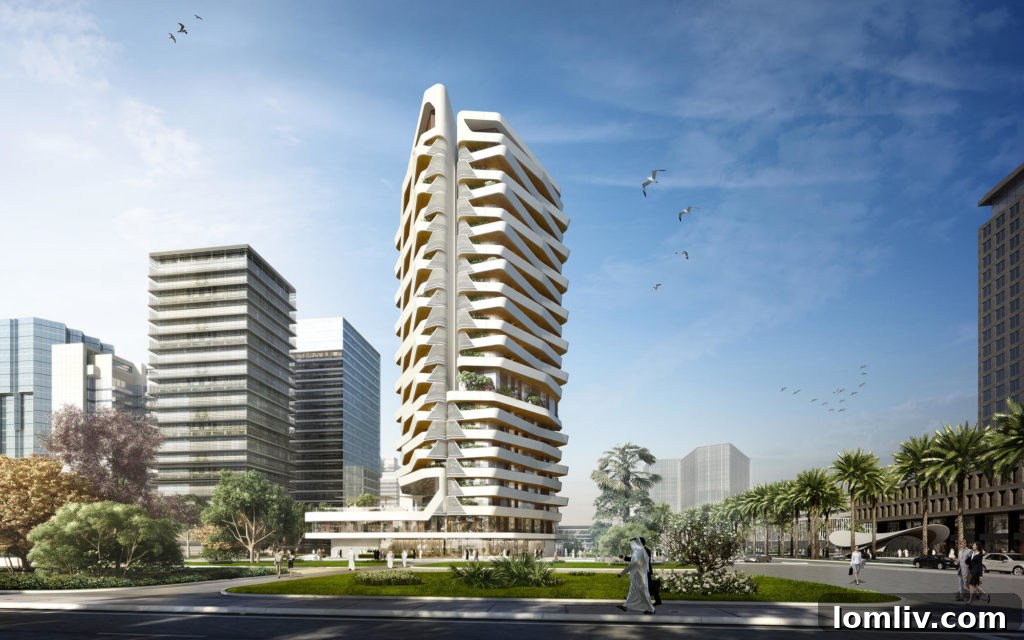
Upon closer inspection, what initially seems random reveals itself as a perfectly ordered design. The eye is drawn to the consistent regularity of the windows, which provide a counterpoint to the dramatic, sweeping curves of the balconies. These thoughtfully designed endcaps offer practical benefits, providing respite from the intense Arabian sun and ensuring privacy for residents from their neighbors. This duality of apparent chaos and underlying order showcases UNStudio’s mastery in creating visually arresting yet highly functional spaces. As one approaches the ground level, the building’s spine becomes visually pronounced, appearing to cleave the structure in two. This clever design element offers a unique perspective to those both above and below, akin to a set of architectural bookends awaiting a captivating story to unfold between them. Wafra Tower is not just a residence; it’s an experience, a living sculpture that continually engages and inspires.
Twofour54 Zone: Abu Dhabi, UAE – A Hub for Creative Industries
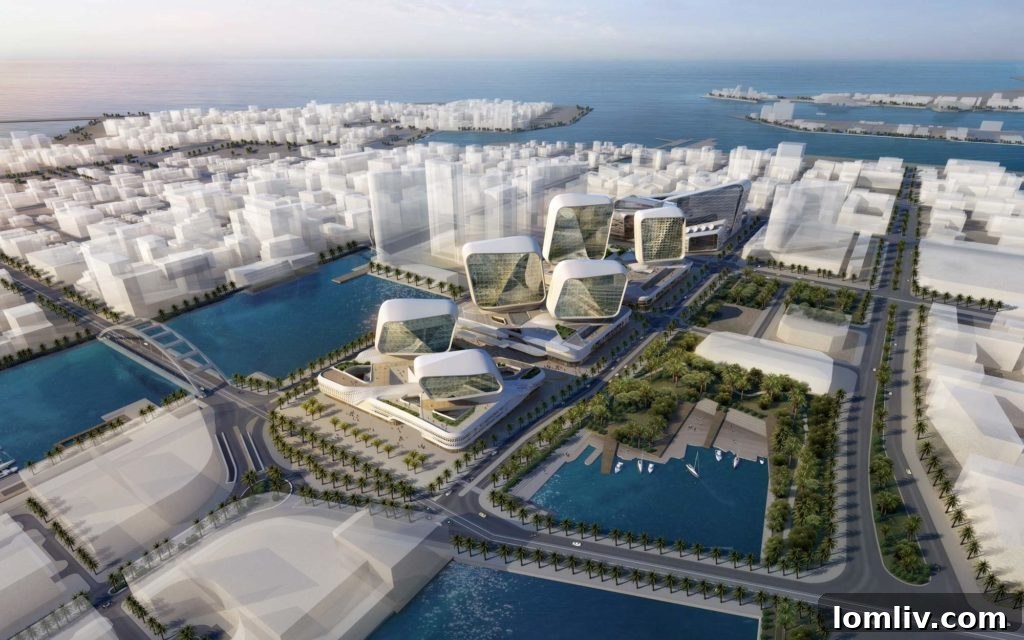
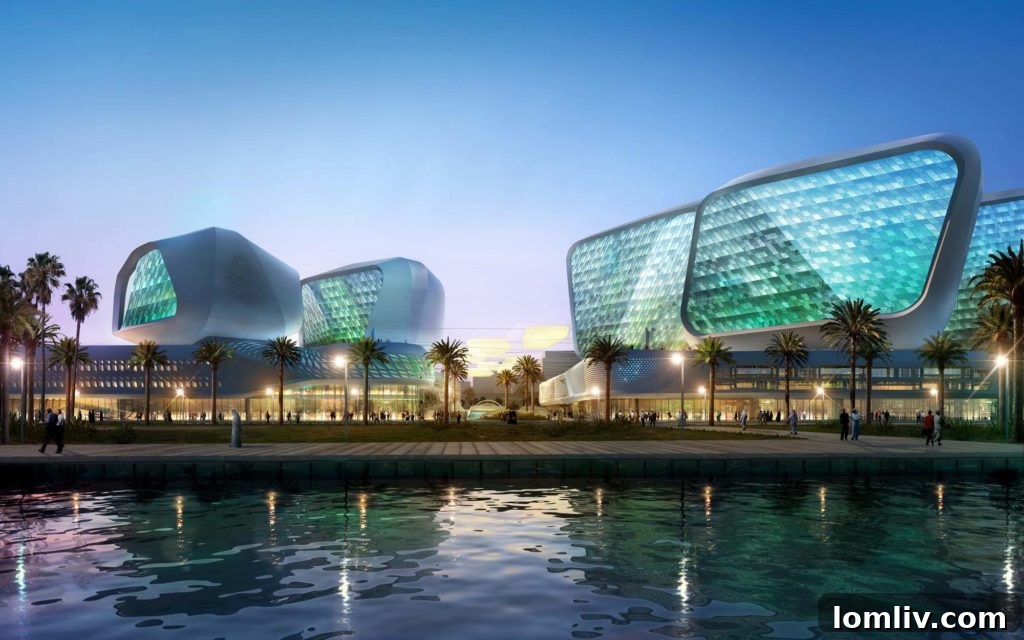
Much like the Central Business District in Tongzhou, UNStudio’s Twofour54 project in the Mena Zayed area of Abu Dhabi is conceived as a family of buildings designed to foster interaction and community. The vision for Twofour54 is to establish a dynamic “media precinct,” serving as a central nerve for the region’s burgeoning creative industries. The primary objective is to immerse the public in the creative process and actively encourage participation. This innovative zone will house state-of-the-art studios, advanced production facilities, diverse educational opportunities, and modern conference centers—all meticulously integrated to stimulate collaboration and innovation.
This entire creative ecosystem is designed to be convivial, surrounded by complementary residential, retail, and restaurant spaces, fostering a vibrant, round-the-clock community. The conceptualization of Twofour54 is truly space-age, evoking a sense of optimistic futurism, perhaps even a touch of “Jetson-y” charm, with its slightly off-square television monitor-like structures. It represents a bold step towards creating an integrated urban environment where living, working, and creative expression converge seamlessly, setting a benchmark for future creative hubs globally.

The Art and Science of Design: Beyond the Blueprint
Listening to Christian Veddeler wasn’t just about marveling at architectural masterpieces; it was about gaining a profound appreciation for the intricate thought processes underpinning these tremendous projects. The sheer depth of consideration—the complex interplay of mathematics, meticulous calculations, advanced modeling, and insightful conceptualization—that goes into each design earns a renewed level of respect for the architectural profession. While we might ponder solutions to problems in our daily lives, the intellectual rigor and technical precision required for a truly great building extend far beyond superficial contemplation.
In this era, computer modeling undeniably empowers architects and engineers to push the boundaries of design and structural possibility, allowing for unprecedented forms and efficiencies. Yet, this technological prowess merely augments, rather than replaces, the invaluable spark of human creativity. The innovative glint in the architect’s eye, the intuitive understanding of space, light, and human interaction, remains paramount and cannot be overstated. It’s this harmonious blend of cutting-edge technology and profound human artistry that distinguishes truly transformative architecture.
We eagerly anticipate the Dallas Architecture Forum’s forthcoming series of architect lectures, hopeful that such exposure will ignite a renewed passion for design excellence within our city. In the meantime, we can only keep our fingers crossed that visionary developers in Dallas will recognize the immense potential and call upon masters like UNStudio, or firms with a similar ethos, to help sculpt a more inspiring and forward-thinking urban landscape.

About the Author: My focus remains on high-rises, homeowners associations (HOAs), and property renovation, alongside a deep appreciation for modern and historical architecture balanced against the principles of the YIMBY (Yes In My Backyard) movement. My writing has been recognized by the National Association of Real Estate Editors, earning two Bronze awards (2016, 2017) and two Silver awards (2016, 2017) in 2016 and 2017. Should you have a story to share, a perspective to offer, or even a marriage proposal to make, please don’t hesitate to reach out via email: [email protected]. You’re welcome to search for me on Facebook and Twitter, though you might find my digital footprint elusive!