Revitalizing America’s Abandoned Malls: From Retail Graveyards to Vibrant New Communities
The landscape of American retail is undergoing a seismic shift, leaving in its wake a growing number of cavernous, silent shopping malls. While once bustling hubs of commerce and community, many of these iconic structures now stand as testaments to changing consumer habits and the rise of e-commerce. The recent closure of Collin Creek Mall in Plano, Texas, prompts a crucial question that echoes across the nation: What innovative futures await these vast, often centrally located, abandoned retail spaces?
This isn’t a new phenomenon, nor is it isolated. Analysts have long predicted the decline, with projections indicating a significant portion of existing malls are at risk of shuttering their doors permanently. As Josh Sanburn noted in a 2017 *Time* magazine article, “There are still about 1,100 malls in the U.S. today, but a quarter of them are at risk of closing over the next five years, according to estimates from Credit Suisse.” Other experts suggest these numbers could be even higher, painting a stark picture of a retail sector in flux.
The roots of this decline are multifaceted. A primary factor is simply overbuilding. Developers, witnessing the immense popularity of malls in the 1970s and 1980s, embarked on a building spree, resulting in an unprecedented amount of retail space. As *Institutional Real Estate, Inc.* highlighted, “In 2016, the United States had 23.5 square feet of retail space per person, compared with 16.4 square feet in Canada and 11.1 square feet in Australia… and 2.5 square feet in Europe, according to Morningstar Credit Ratings.” The conclusion is clear: “The United States simply has too much retail, and there is not enough demand to support all the malls currently in business.”
Beyond oversupply, the digital revolution has irrevocably altered how people shop. E-commerce offers unparalleled convenience, variety, and often competitive pricing, drawing consumers away from brick-and-mortar stores. Furthermore, evolving demographics and a growing preference for experiential retail, authentic local businesses, and walkable urban environments have diminished the appeal of traditional enclosed malls.
Adaptive Reuse: A Sustainable Path Forward
The demise of these retail behemoths presents both a challenge and an extraordinary opportunity. Instead of demolition, which is costly and environmentally impactful, adaptive reuse offers a sustainable and creative solution. Transforming these structures can breathe new life into communities, create jobs, and prevent urban blight. The question, as *Architectural Digest* posed in 2017, isn’t just *if* these malls can be repurposed, but *how*.
Generally, two primary strategies emerge: re-tenanting or complete redevelopment. Re-tenanting, which often involves converting an enclosed mall into an open-air retail center anchored by a large grocery store, has historically shown better odds of success. As *Architectural Digest* pointed out, “Redeveloping a mall in its entirety can be an expensive and risky proposition… And many malls are owned by publicly traded companies whose shareholders want solid returns, not high-risk redevelopment projects.” This approach leverages existing infrastructure while modernizing the retail experience to better suit contemporary consumer preferences, often integrating dining, entertainment, and community gathering spaces.
Successful Transformations: Beyond Retail
Many communities across the U.S. have embraced adaptive reuse, transforming abandoned malls into vibrant new facilities that serve a range of public and private needs. These innovative projects demonstrate the immense versatility of these large-scale structures:
- Educational Hubs: Some shuttered malls have been successfully converted into extension campuses for colleges, vocational training centers, or even public libraries, offering accessible education and resources to local populations.
- Recreational Facilities: In Antioch, Tennessee, the former Hickory Hollow Mall underwent a remarkable transformation, becoming a brand new practice ice skating rink for the Nashville Predators, a satellite campus for Nashville State Community College, and a vital community library. This multi-purpose development showcases how a single mall can house diverse functions.
- Mixed-Use Developments: A growing trend involves re-tenanting the commercial core while adding multifamily housing around the newly re-imagined property. This creates walkable communities where residents have immediate access to amenities and services.
Locally, we’ve seen impressive re-workings in action at Dallas’s Red Bird Mall, which is evolving into a significant mixed-use development, and the long-awaited transformation of the old Valley View site. These projects highlight a growing recognition of the untapped potential within these underutilized assets.
The Arcade Providence: A Pioneering Vision for Micro-Apartments
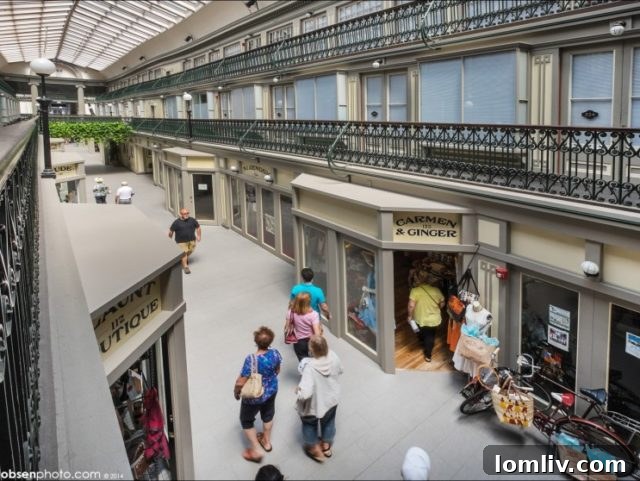
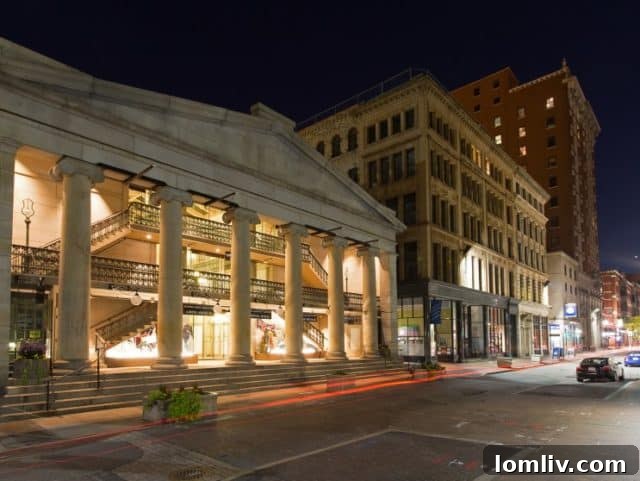
While various forms of retail and civic reuse have gained traction, one particular transformation has captured widespread imagination: the conversion of America’s first indoor shopping mall into micro-apartments. This story, widely shared, illustrates a truly innovative approach to urban living and sustainable development.
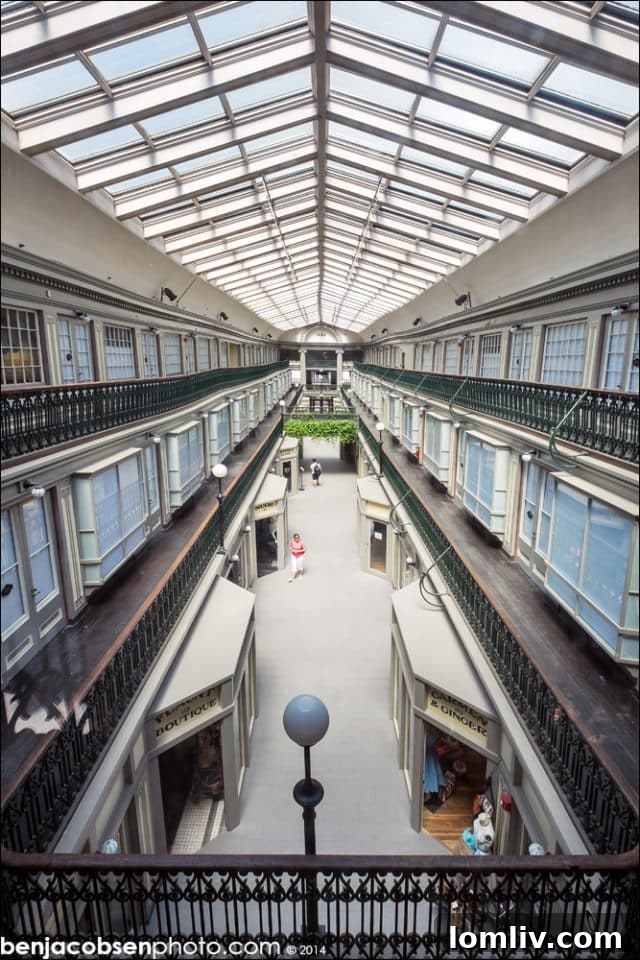
Located in Providence, Rhode Island, The Arcade Providence boasts a rich history, dating back 188 years. After its closure in 2008, Northeast Collaborative Architects undertook a visionary $7 million adaptive reuse project. Their work transformed the historic structure into a dynamic mixed-use space featuring 48 thoughtfully designed micro-apartments and a diverse array of businesses.
The architects meticulously preserved the arcade’s historic design and architectural integrity while simultaneously modernizing the building. Crucial updates included the installation of double-hung windows to enhance natural light, creating bright and inviting living spaces.
Living Large in Small Spaces: The Micro-Apartment Concept
The micro-apartments at The Arcade Providence range in size from a compact 225 square feet to a more spacious 775 square feet, catering to a diverse demographic, particularly those seeking affordable, walkable urban living. The one-bedroom units, typically between 225 and 450 square feet, are ingeniously designed to maximize space and functionality. Each unit comes fully furnished, featuring:
- Full bathrooms
- Built-in beds with integrated storage
- Efficient seating arrangements
- Kitchens equipped with essential appliances including refrigerators, sinks, dishwashers, and microwaves
The success of the micro-apartment model lies not just in the individual units but also in the extensive common amenities that compensate for smaller private spaces. Residents at The Arcade Providence enjoy access to a variety of shared facilities, fostering a sense of community:
- A lively game room
- A comfortable TV room
- Inviting communal porches
- On-site laundry facilities
- Secure bike storage
- Locked basement storage units
- A convenient parking garage located across the street
These shared amenities encourage interaction and provide residents with additional spaces for relaxation, entertainment, and practical needs, effectively extending their living area beyond the confines of their private units.
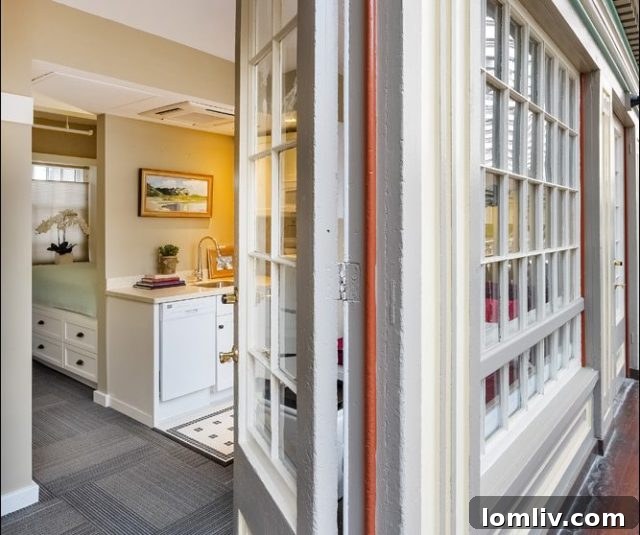
The fully-furnished apartments, with rents ranging from $800 to $1,800, offer an attractive proposition for those seeking an affordable entry into urban living without sacrificing convenience or style. The demand for these units has been exceptionally high, underscoring the success of this innovative concept. In 2016 alone, there were over 4,000 people on the waiting list, a clear indicator of the market’s hunger for well-designed, compact, and community-oriented living spaces.
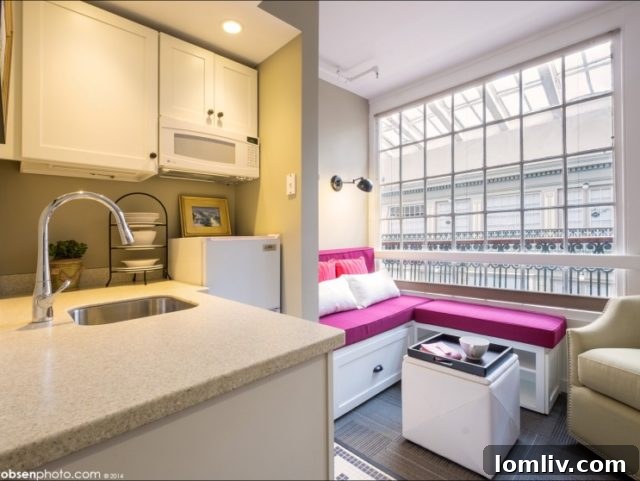
The Providence Arcade’s transformation resonates deeply with many, sparking conversations about the potential of similar projects across the country. As one reader eloquently put it in a Facebook discussion, “All dying malls should do this. They would make awesome retired living spaces.” This sentiment highlights a crucial point: adaptive reuse is not just about real estate; it’s about addressing diverse societal needs, from housing shortages to the desire for walkable, connected communities.
Envisioning the Mall of the Future: A Holistic Neighborhood
The ultimate vision for many dead malls extends beyond simple re-tenanting or even micro-apartments. It involves creating entirely new, holistic neighborhoods within and around these existing structures. Unlike a demolished mall, which contributes to landfills and requires extensive new construction, a reimagined mall space capitalizes on an already existing footprint, offering inherent sustainability advantages. Moreover, the vast expanses of parking lots surrounding most malls are ripe for ancillary redevelopment, ripe for conversion into green spaces, additional housing, or mixed-use commercial properties.
Imagine a vibrant community hub:
- Upper Levels: Dedicated to micro-apartments, co-living spaces, or even senior living residences, offering diverse housing options.
- First Level: A bustling ecosystem of shops, a large grocery store, a vibrant farmers market, an indoor garden, and even a playground in spacious common areas. This level could also house a variety of restaurants, a drug store, laundry services, and community centers.
- Adjacent Developments: Surrounding the reconfigured mall, townhomes or other multifamily residences could be built, creating a truly walkable environment where families can live and easily access the indoor amenities of the main building.
- Green Spaces: Integrated parks, walking trails, and community gardens would transform concrete parking lots into lush, inviting areas for recreation and relaxation.
- Mixed-Use Integration: The entire complex would be designed as a cohesive mixed-use development, where living, working, shopping, and recreation are all seamlessly integrated, fostering a strong sense of community and reducing reliance on automobiles.
This vision transcends mere renovation; it proposes a fundamental transformation into a self-contained, sustainable neighborhood designed for modern living. It offers solutions to urban sprawl, housing affordability, and the increasing demand for walkable, experience-rich environments.
What Lies Ahead for North Texas Malls?
The potential for these adaptive reuse projects is immense, not just for the U.S. generally, but specifically for regions like North Texas, which has its share of aging or underperforming retail centers. The question then becomes: What other ingenious uses could be found for an abandoned mall? What specific malls in North Texas are ideally positioned for this kind of groundbreaking reimagining, transforming them from relics of the past into beacons of the future?
The era of the traditional mall may be fading, but the opportunities for these sites to evolve into something even more meaningful for our communities are just beginning.
Want to see the other spaces we’ve reimagined? Click here.