The Escalating Challenge of Super Commuting: Navigating Longer Journeys in Modern Metros
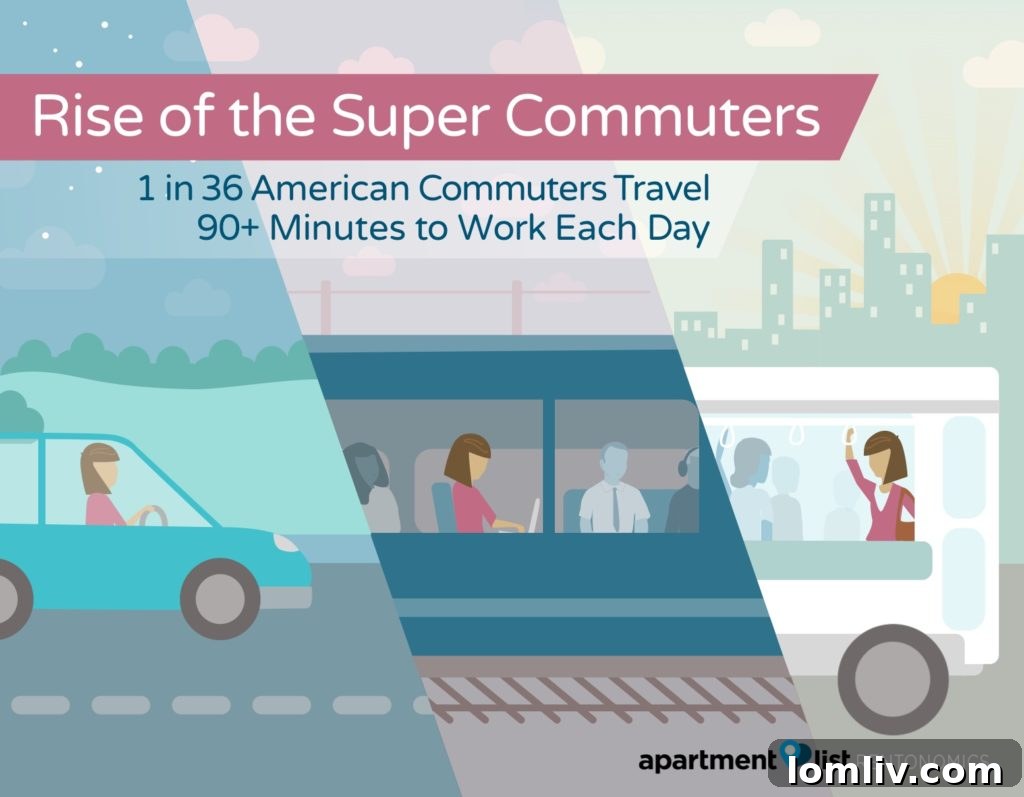
Dallas, a city renowned for its grand scale in everything from architecture to ambition, also experiences grand — and increasingly lengthy — commutes. Across the United States, a growing phenomenon known as “super commuting” is reshaping urban landscapes and the daily lives of millions. A super commuter is defined as someone who travels 90 minutes or more to work each day, a journey that can significantly impact quality of life, personal finances, and even public health. This trend, as highlighted by a comprehensive Apartment List study examining commuter data between 2005 and 2016, is not only prevalent but also rapidly on the rise, signaling deeper socioeconomic shifts within our metropolitan areas.
The Alarming Rise of Super Commuting: A National and Local Trend
The concept of a super commute might sound extreme, yet it’s becoming an unfortunate reality for a substantial portion of the American workforce. In the vibrant Dallas metro area, the statistics are particularly striking: approximately one in 45 commuters falls into the super commuter category. This isn’t merely a static figure; it represents a concerning upward trajectory. The share of Dallas commuters enduring these marathon journeys surged from 1.8 percent in 2005 to 2.2 percent in 2016, marking a significant 22.3 percent increase over just a little over a decade.
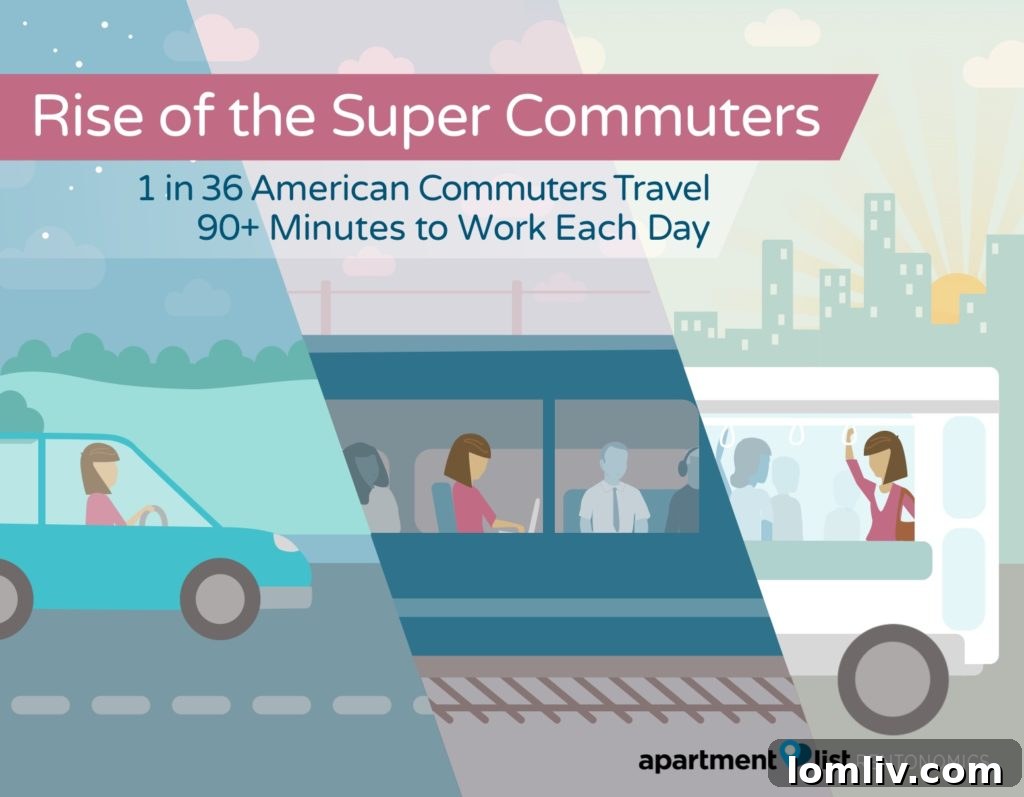
This escalating trend in super commutes isn’t isolated to Texas; it’s a nationwide phenomenon sweeping across the country. The Apartment List study revealed that roughly three-quarters of the 100 largest U.S. metros and 39 states witnessed a notable increase in the proportion of super commuters during the 2005 to 2016 period. Nationally, the share of individuals traveling 90 minutes or more to work grew by 15.9 percent, climbing from 2.4 percent in 2005 to 2.8 percent by 2016. By the latter year, nearly 4 million American workers – or one in every 36 commuters – were dedicating 90 minutes or more each way to their daily trek to work. This remarkable growth underscores a fundamental shift in how and where people live and work.
Why Are Commutes Getting Longer? Unpacking the Causes
Understanding the forces behind this rise in super commuting is crucial for addressing its implications. Experts point to a confluence of factors, primarily centered around economic pressures and evolving urban development patterns. One of the most significant drivers is the escalating cost of housing in desirable urban centers. As property values and rents skyrocket in cities with robust job markets, many workers find themselves priced out of neighborhoods close to their employment.
The Housing Affordability Crisis and Urban Sprawl
The relentless increase in housing costs forces individuals and families to seek more affordable living options further away from metropolitan cores. This push towards suburban and exurban areas, where housing is typically less expensive, inevitably extends commute times. Furthermore, much of the new housing stock, including in rapidly growing cities like Dallas, has been developed on the periphery of metropolitan areas. While these developments offer accessible housing, they often create significant geographical separation from downtown job centers. Commuting from these outer rings to central business districts, especially during peak rush hour traffic, can transform a seemingly reasonable distance into a burdensome, multi-hour journey.
Post-Recession Reluctance to Relocate
Another contributing factor is a psychological and financial reluctance among many homeowners and renters to move, a sentiment often rooted in the lingering memories of the 2008 financial crisis. For many, the idea of selling their homes or breaking leases, particularly after experiencing market volatility, carries an element of risk. This reluctance can keep individuals rooted in their current residences, even if their jobs have moved or if commuting patterns have become increasingly challenging. The investment made in a home or community often outweighs the daily inconvenience of a long commute, especially if alternative, closer housing options are either unaffordable or unavailable.
A Closer Look at Dallas: A Hub for Long Commutes
Dallas’s position as a major economic engine in Texas also places it prominently on the map of super commuting. The city ranks 39th among the country’s 100 largest metros for the share of super commuters. While this might seem mid-range, it still indicates a substantial portion of its workforce enduring long journeys. For context, Dallas’s super commuter share (2.2 percent) is slightly smaller than that of its neighbor Houston (2.6 percent), another sprawling Texas metropolis. However, it aligns closely with other major Texas cities like San Antonio (2.2 percent) and Austin (2.1 percent), suggesting a regional trend influenced by the state’s rapid growth and urban development models.
The sheer size and continuous expansion of the Dallas-Fort Worth metropolitan area contribute significantly to its commuting challenges. With a vast network of highways and a car-centric culture, traffic congestion is an inherent part of daily life. As businesses and residential areas spread out across the metroplex, the distances between home and work increase, and the time spent traversing these distances often grows disproportionately due to congestion bottlenecks. The robust job market attracts talent, but the urban infrastructure struggles to keep pace with the influx of residents and vehicles.
The Geography of Super Commuting: Where It’s Most Prevalent
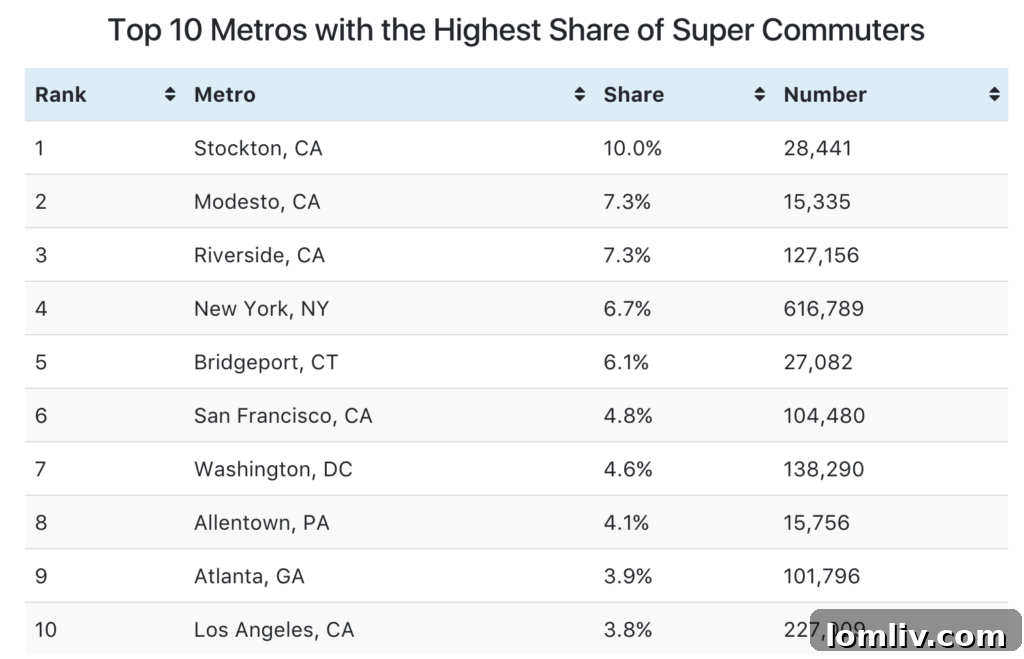
Beyond Dallas, the cities with the highest concentrations of super commuters share common characteristics: they are typically large metros with booming economies, high living costs, and notoriously congested traffic. A significant pattern emerges when examining the top 10 metros for super commuters: eight of these are situated in the regions surrounding three of America’s most expensive and economically powerful cities: San Francisco, Los Angeles, and New York. In these areas, the combination of high-paying jobs and exorbitant housing prices creates an environment where living close to work is simply unfeasible for many, pushing residents further and further out into surrounding communities, thereby elongating commutes.
These coastal hubs attract talent globally, yet their housing supply has failed to keep pace with demand, leading to an affordability crisis that ripples through entire regions. Workers often have no choice but to accept longer commutes to access employment opportunities that provide a livable wage, even if it means sacrificing hours of their day to travel.
The Super Commuter’s Journey: Transportation Choices
The mode of transportation for super commuters also reveals telling insights. While private vehicles remain the dominant form of transport for most Americans, super commuters disproportionately rely on public transportation. Nationally, an estimated 91.4 percent of commuters traveling under 90 minutes to work use a private vehicle. In stark contrast, only 69.7 percent of super commuters depend on private cars, indicating a much higher propensity for using buses, trains, and subways. This disparity underscores the practicality of public transit for extremely long distances, where driving might be even more time-consuming, expensive, or stressful.
In the Dallas metro area, this trend holds true, albeit with slightly different numbers. Here, 97.3 percent of non-super commuters travel to work via private vehicle, reflecting the region’s strong car culture. However, among Dallas’s super commuters, this figure drops to 86.8 percent, meaning a notable segment (over 13 percent) relies on public transport for their extensive journeys. This shift points to the critical role public transit plays in enabling these long commutes, acting as a lifeline for those traveling across vast distances within and beyond the city limits.
Socioeconomic Disparities: Who Pays the Highest Price?
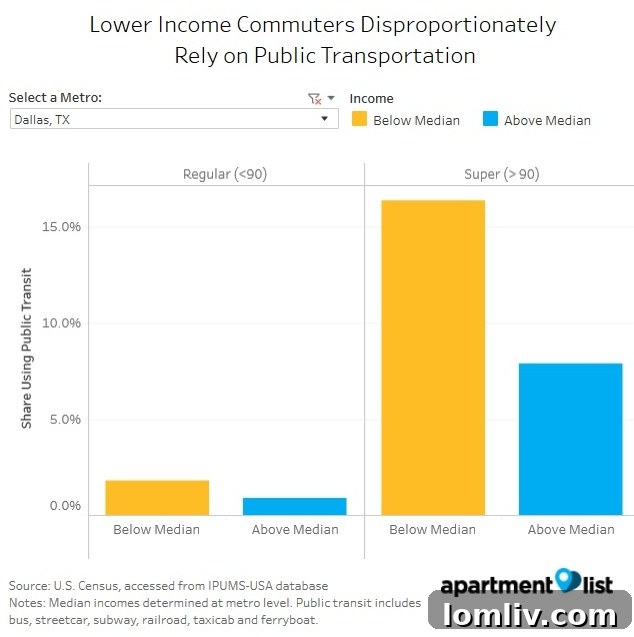
The relationship between income and transportation choices among super commuters further highlights an important socioeconomic dimension. In Dallas, lower-income super commuters demonstrate a significantly higher reliance on public transportation compared to their higher-income counterparts. An estimated 16.3 percent of super commuters earning below the median income commute via public transit, as opposed to only 7.9 percent of those above the median income. This stark difference strongly suggests that for many, public transit usage is not a lifestyle choice driven by environmental concerns or convenience, but rather a financial necessity.
For individuals with lower incomes, owning and maintaining a private vehicle, including fuel, insurance, and parking costs, can be prohibitive. Public transportation, despite potentially longer travel times and less flexibility, offers a more affordable alternative, albeit often at the cost of personal time and comfort. This disparity raises crucial questions about equitable access to employment and the disproportionate burden placed on vulnerable populations who must endure the longest, most arduous commutes due to economic constraints. These long commutes can lead to less time for family, leisure, and personal well-being, perpetuating a cycle of disadvantage.
The Hidden Costs of Super Commuting
While super commuting remains the exception rather than the norm, its rapid growth across the country is undoubtedly alarming due to its multifaceted impact on individuals, economies, and the environment.
Individual Impact
For individuals, super commutes exact a heavy toll. The hours spent traveling translate into lost time for family, hobbies, sleep, and personal well-being. This can lead to increased stress, fatigue, and higher risks of chronic health issues. The mental and physical exhaustion from daily long commutes can diminish overall quality of life and contribute to burnout, affecting job performance and personal relationships.
Economic Impact
Economically, super commuting can lead to reduced productivity for businesses as employees arrive at work already fatigued. It also incurs significant costs in terms of fuel consumption and vehicle maintenance, eating into household budgets. From a broader perspective, increased traffic congestion strains infrastructure, necessitates costly road expansions, and contributes to environmental pollution through higher emissions.
Community Impact
The spread of super commuting also fragments communities. As people live further from their workplaces, they might spend less time engaging in local community activities, weakening social ties in both their residential and work areas. This can impact local businesses and civic participation, creating more dispersed and less connected societies.
Paving the Way Forward: Solutions for a Sustainable Future
Reversing the growth in super commuters and addressing long commutes more generally requires a multifaceted, coordinated approach involving policy makers, urban planners, and communities. No single solution will suffice; rather, a combination of strategies is essential.
Investment in Housing Supply and Affordability
A primary solution involves significantly increasing the supply of diverse and affordable housing options within and closer to job centers. This includes revisiting restrictive zoning laws, incentivizing the development of mixed-income housing, and exploring innovative housing models. Creating more housing where people work can directly reduce the need for extensive travel.
Enhancing Public Transportation Systems
Substantial investment in improving and expanding public transportation infrastructure is equally critical. This means not only increasing the reach and frequency of existing bus and rail lines but also developing new routes, particularly those connecting peripheral residential areas to major employment hubs. Making public transit more efficient, reliable, comfortable, and accessible can encourage more commuters to leave their cars at home, even for shorter commutes, thereby easing congestion for everyone.
Promoting Smart Urban Planning and Development
Forward-thinking urban planning strategies, such as transit-oriented development (TOD), can play a vital role. TOD focuses on creating dense, mixed-use communities around transit hubs, allowing residents to live, work, and shop without needing a car for every trip. Encouraging walkable and bikeable neighborhoods also reduces reliance on private vehicles and shortens local travel times.
Fostering Remote Work and Flexible Schedules
The rise of remote work and flexible scheduling, accelerated by recent global events, presents another powerful tool to combat super commuting. Companies that embrace hybrid work models or offer employees more autonomy over their schedules can significantly reduce daily traffic volumes and improve employee well-being. Supporting broadband infrastructure in remote areas can further enable this shift, allowing individuals to live where they choose without being tied to a physical office location every day.
Conclusion
The rise of super commuting in Dallas and across the nation is a clear indicator of evolving urban challenges, deeply intertwined with housing affordability, infrastructure limitations, and socioeconomic disparities. While the sheer number of individuals undertaking these lengthy journeys is alarming, it also serves as a critical call to action. Addressing this trend requires comprehensive solutions that prioritize both increasing housing supply and robustly improving public transportation, alongside innovative urban planning and flexible work arrangements. By investing in these areas, cities can aspire to create more sustainable, equitable, and livable environments where a long commute doesn’t dictate one’s quality of life. The future of our cities depends on our collective ability to mitigate the burden of the super commute and foster more accessible, connected communities for all.
Sydney Bennet is a senior research associate who writes about apartments and more for ApartmentList. Contact her at [email protected].