For Dallas to truly evolve into a connected, pedestrian-friendly urbanscape, city planners and developers must shift their gaze from an imagined future to the tangible lessons of the past. It’s an intriguing paradox: the blueprint for a walkable Dallas already exists, etched into the very fabric of its historical neighborhoods. A prevailing misconception among many contemporary urban stakeholders is that walkability is a novel concept, a futuristic amenity. This perspective likely stems from an observational memory confined almost exclusively to the pervasive influence of the automobile era.
Reclaiming Walkability: A Journey Through Dallas’s Past and Future
The recent global shifts, particularly the widespread quarantines, inadvertently spurred many of us to rediscover our immediate environments on foot. For me, this meant embarking on numerous exploratory walks across Dallas (explorations of the city’s forgotten corners, and reflections on the overlooked spaces of Dallas). My initial forays along new routes often brought a startling realization of how close seemingly distant places truly are. Subsequent walks then allowed me to meticulously connect the disparate pieces of the urban puzzle, revealing a coherent narrative. It became abundantly clear that the inner-core neighborhoods of Dallas were established long before the car became the dominant mode of transportation, inherently designed for human-scale interaction and movement.
The early 1900s represented a vastly different landscape; personal automobiles were a luxury few Americans possessed. In the pre-World War II era, if a home even featured a garage, it was almost invariably a single-car structure. While the men of the household might commute to work, the daily necessities of running a home fell to the “little woman,” who relied heavily on public transportation or, more commonly, her own two feet. Thus, the inherent walkability of pre-WWII neighborhoods wasn’t a matter of fleeting fashion or elevated status; it was a fundamental aspect of their design, crucial for the everyday functioning of the communities they housed.
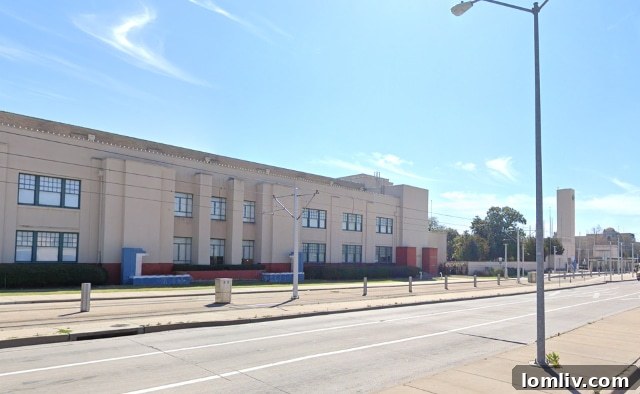
These walks, unexpectedly prompted by recent global events, have proven to be an illuminating journey back in time. Take, for instance, a walk to Fair Park. I can reach it in under an hour, a fact that initially stunned me. The first time, as I rounded the corner from Haskell Avenue onto Perry, catching my initial sideways glimpse of The Women’s Museum – with its weathered, broken fountains – a sense of revelation washed over me. Stepping onto the Esplanade and walking towards the majestic Hall of State, the sheer experience of arriving there on foot was profoundly different and far more impactful than any car journey.
Equipped with a deeper understanding of Fair Park’s complex racial and State Fair history, a circumnavigation of the park’s perimeter unveils a deliberate, planned “moat of blight.” The scant few period houses still standing nearby bear silent witness to a once-prosperous neighborhood systematically shorn away, largely due to demographic shifts as Black residents moved in. Standing amidst this history, devoid of the usual State Fair pageantry, the past is revealed with a poignant clarity often obscured by the insulating barrier of a car window. My previous encounters with Fair Park were always by car, typically battling the frustrations of rush hour traffic. The stop-and-go stress of driving always seemed to amplify its perceived distance in my mind. For those accustomed to the mechanical rhythm of traversing the Katy Trail, a walk to Fair Park from Turtle Creek covers a comparable distance, yet offers an exponentially richer and more engaging urban tapestry to explore.
A Pedestrian’s Perspective: Unearthing Dallas’s Architectural Heritage
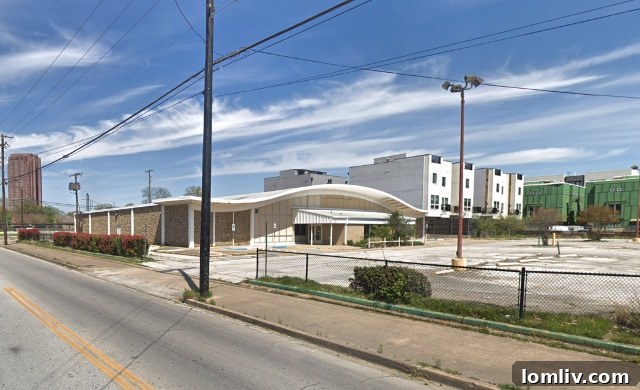
Navigating the various routes from central Dallas towards Fair Park is akin to strolling through a living museum of architecture, unfolding eras before your eyes. You’ll encounter venerable old churches, charming 1910s and ’20s homes, leading seamlessly into the sleek lines of modern townhouses. This visual chronology allows for a mental rewinding of time, offering insights into the evolving character of a neighborhood. The quality and design of early church construction, for example, can speak volumes about the era’s prosperity and craftsmanship. You can still spot relics like the old 1950s pebble-dash Safeway at Ross Avenue and Washington Street, stubbornly clinging to its once-signature arched eyebrow roofline – a testament to an earlier retail aesthetic.
This particular block is a fascinating palimpsest of Dallas’s urban development, a story waiting to be meticulously pieced together. While the Safeway building technically occupies a significant portion of the corner, the actual corner lot now houses “It’s Your Florist,” a charming establishment nestled within what was once a 1930s gas station. Journey just behind the Safeway, onto Roseland Avenue, and you’ll discover one of those older 1950s churches, built just before the waves of “white flight.” Yet, directly adjacent to the former Safeway, a few original 1930s houses still stand, increasingly overshadowed and threatened by the relentless march of modern townhouse developments.
This single block encapsulates three distinct eras of urban transformation: the foundational 1930s, an initial wave of gentrification in the 1950s, and the ongoing, intensified infill of townhomes and apartments currently reshaping much of its landscape. To truly comprehend Dallas’s foundational walkability, one must ask: how did the residents of the 1930s navigate and interact within their neighborhood? The answer reveals the essence of genuine pedestrian integration.
The Historic Shopping Strip: A Microcosm of Community and Commerce
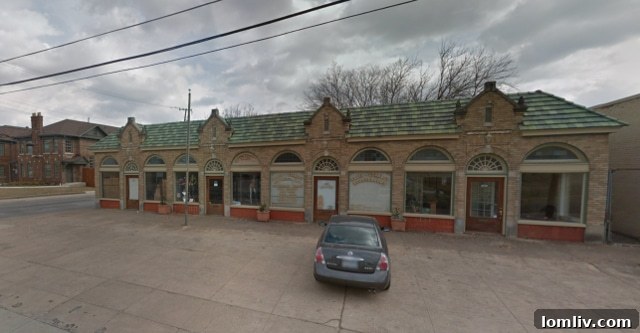
A crucial clue to this historical walkability lies at Swiss and Haskell, a small, unassuming remnant of four shops. This cluster of commercial spaces vividly illustrates how people shopped in an era preceding vast department stores (the “Amazons” of their time). Originally, these shops likely followed a theme – perhaps a butcher, a baker, a grocer – but all were of modest size, characterized by pairs of large display windows gracefully flanking a central entrance. The expansive cement pad in front of these shops also narrates a significant part of the story. Barely visible to the left, a series of small apartment blocks from the same era stand, boasting generously green lawns and unheard-of setbacks that fostered a sense of openness. These shops mirrored a similar setback, indicating that in the 1930s, instead of today’s sprawling parking lots, there was likely ample street parking complemented by a wide, grassy parkway, with a sidewalk positioned conveniently close to the shop windows. This design encouraged lingering and pedestrian traffic.
These types of local establishments were inherently designed for foot traffic, strategically interspersed throughout neighborhoods with a rhythm that made walking for daily errands not just convenient, but enjoyable. Further back on Ross Avenue, a thoroughfare that has always been bustling, it was the streetcar system that facilitated daily commutes and errands. Passengers could easily hop on and off, performing their daily tasks – a concept particularly relevant when considering the 1930s was not an era of universal home refrigeration. Even for those with refrigerators, they were far smaller and less efficient than the colossal units we now consider standard, necessitating more frequent trips to the market for fresh provisions.
One particularly insightful route to Fair Park skirts the vibrant district of Deep Ellum. This area remarkably retains a significant portion of its older buildings, each a silent narrator of what eastern downtown once looked like and how it functioned as a vital commercial and cultural hub. It’s a rich history that has been largely erased from today’s homogenized urban core. Walking these streets, it’s easy to see how they align seamlessly with those across the barrier of Central/US-75/I-345 highway, providing undeniable proof that this entire area was once a unified, interconnected urban landscape, brutally severed by infrastructure.
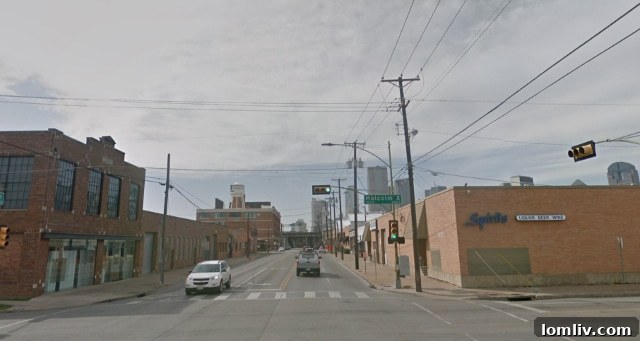
Standing at the intersection of Malcom X and Canton Street, looking towards the downtown skyline, one cannot help but notice the iconic Adam Hats Lofts building, jarringly abutting the elevated highway. Its proximity is shocking; downtown feels just a stone’s throw, literally under the highway’s shadow. Then, the realization hits: the Dallas Farmers Market is immediately on the other side – that incredibly close. This stark visual evidence instantly reinforces the conviction that the raised I-345 highway simply must go underground, a long-held belief of mine and many urban advocates.
The Lingering Scars: Highways as Dividers of Community
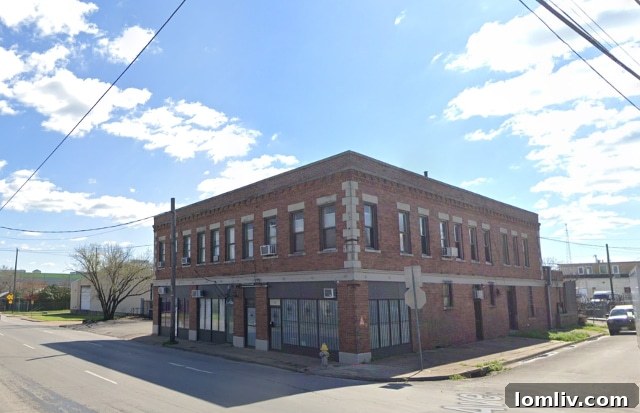
Continuing southward from Deep Ellum, echoes of the old neighborhood and its former vibrancy persist. At Haskell and East Side Avenue, a building stands as a quintessential example of early 20th-century urban development: ground-floor retail spaces with shopkeepers and tenants residing directly above. This integrated model is precisely what developers across Dallas, particularly in areas like Oak Cliff, are now striving diligently to replicate, recognizing its inherent value in fostering vibrant street life and local commerce.
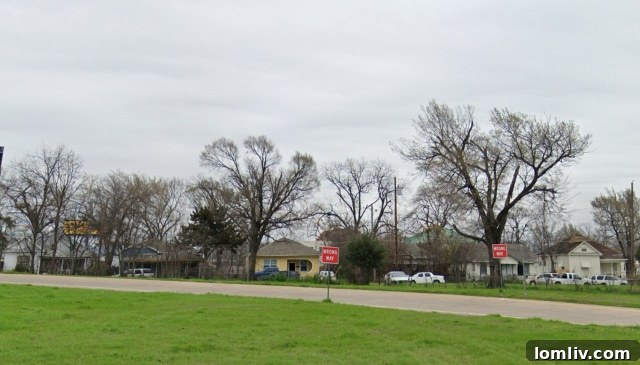
Passing beneath the imposing structure of I-30, you immediately encounter a block of original houses, now precariously bordering a voracious, space-eating exit ramp. It’s at this moment that the full tragedy of urban planning comes into sharp focus: these homes, and the countless others callously torn down to make way for the highway, once housed the very customers who frequented those charming shops on East Side, mere blocks away. The direct, convenient access to goods and services was the natural incubator of walkability, a delicate ecosystem obliterated by the intrusion of massive infrastructure.
The experience of simply walking under I-30 provides an undeniable, visceral understanding of just how abrupt and devastating an incision it made, effectively severing South Dallas and abandoning Fair Park to a fate of isolation. What remains in its wake is a noisy, inhospitable no-man’s land, a testament to severed connections. Mentally erasing these monumental highways and stitching the urban fabric back together reveals the immeasurable community spirit and economic vitality that have been irrevocably lost. This profound understanding is simply unattainable from the detached perspective of a car.
Walking Towards a More Authentic Understanding of Dallas
Dallas offers a multitude of other connective walks that can profoundly deepen one’s understanding of its past as a truly walkable city – a time when pedestrian infrastructure was a matter of utility, not a trendy amenity. Consider a 45-minute stroll along Swiss Avenue, from the former home of the now-closed Lizard Lounge to Swiss Avenue’s eastern terminus at La Vista Drive. This walk instantly clarifies the historical straight-shot convenience Swiss Avenue offered Dallas’s elite for their daily commute to downtown. The grand architecture and tree-lined streets whisper tales of an era when arriving on foot was a mark of respect and practicality.
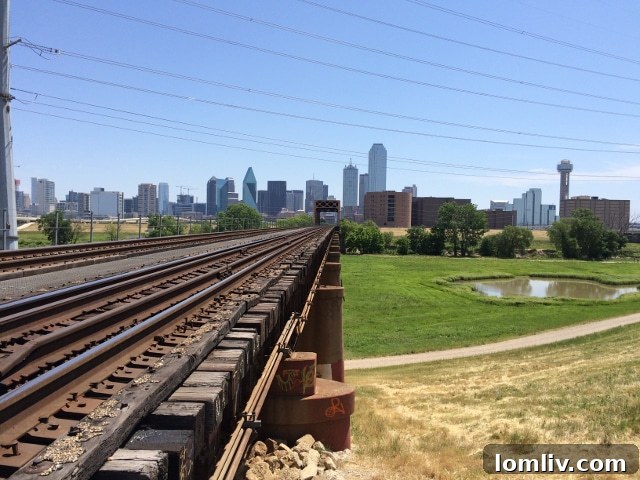
Another illuminating journey is to walk the west upper bank of the Trinity River levee, from Sylvan Avenue to the iconic Continental Avenue bridge. From this elevated vantage point, you witness the dynamic changes unfolding on both sides of the river, observing development and natural restoration in real-time. Downtown Dallas is revealed from a unique angle, an perspective typically only glimpsed in a fleeting moment through the window of a speeding car (and let’s be honest, we all tend to speed on the highways). More critically, this walk makes it starkly, painfully clear why a highway running between the levee banks was always a fundamentally misguided, absurd idea, likely belched forth by short-sighted opportunists driven by greed.
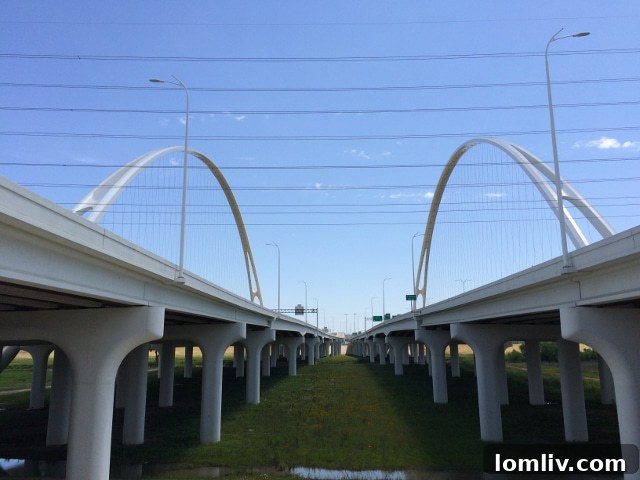
Having embarked on these many walks and countless others, I am convinced that such experiences should be mandatory for all politicians and urban plan commissioners. These individuals, who wield immense power in shaping Dallas’s future trajectory, desperately need to step out of their cars and immerse themselves in the city at a human scale. Only then can they truly comprehend how Dallas once functioned as a cohesive, walkable entity. The vision of a walkable Dallas is not an innovation; it is, in essence, a restoration project. The very first step towards recapturing that dream lies in remembering, understanding, and honoring how it was originally achieved.
Confronting the Legacy: Racial Division and Broken Neighborhoods
Crucially, the broken interconnections and functionalities within Dallas’s neighborhoods are inextricably linked to a dark legacy of systemic racism. From discriminatory redlining practices to the strategic placement of massive highway construction, our city’s neighborhoods were deliberately fractured based on an insidious ideology of exclusion, specifically designed to keep Black communities isolated and marginalized. The automobile, far from being a neutral tool of progress, was simply one of the powerful instruments wielded to achieve these segregationist aims, facilitating white flight and deepening urban divides.
However revolting and painful that historical past may be, it has, paradoxically, left us with invaluable tools for understanding, provided we are willing to look. When white Dallas largely abandoned Deep Ellum and South Dallas, it left behind an irreplaceable collection of buildings – structures that, under different circumstances, might have been summarily bulldozed in the name of “progress.” Today, these resilient historical structures serve as powerful mnemonic devices, helping us remember what was lost and guiding us in the intricate work of crafting a revived, truly walkable city. More importantly, this restoration project can be designed to foster genuine equity, ensuring that a more connected and accessible Dallas ultimately helps all of its diverse citizens, bridging divides rather than perpetuating them.