As the Texas Legislature continues its dynamic work in Austin, a significant wave of new state laws, enacted during the recent regular session, is poised to reshape local governance and daily life across the state, with many taking effect on September 1st. These legislative efforts extend beyond the regular session, as reports indicate the Texas Legislature will convene for a third special session in October, primarily to address contentious issues like school vouchers. This follows two earlier special sessions that intensely focused on property taxes – a perennial hot-button concern for residents and policymakers alike in communities throughout Texas, including Dallas.
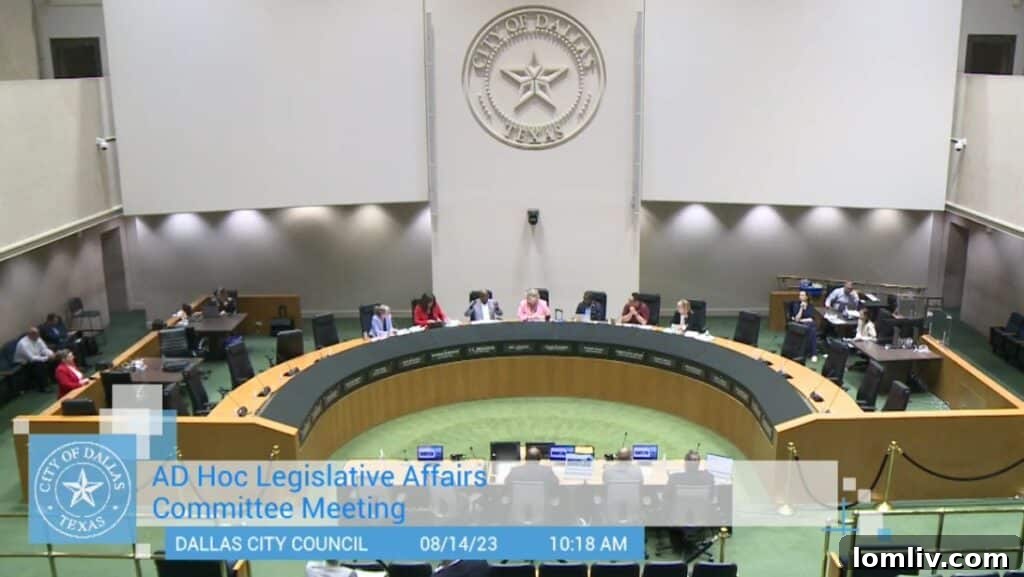
For a major metropolitan hub like Dallas, deciphering and adapting to these legislative shifts is a continuous, complex undertaking. The Dallas City Council’s Ad Hoc Committee on Legislative Affairs, during its critical August 14th meeting, diligently worked to unravel the intricacies of recent legislation and assess its profound implications for local policymakers, city operations, and the vibrant residents of Dallas. This proactive approach underscores the city’s commitment to navigating the evolving landscape of state mandates while championing local interests.
Leading this vital committee is District 12 Councilwoman Cara Mendelsohn, who emphasized a paramount priority: resolving the city’s substantial $3 billion police and fire pension deficit. This monumental financial challenge is not merely a local concern but a legislative requirement handed down by the state, highlighting the deep financial interdependence between state mandates and municipal budgets. The city’s ability to manage such a significant deficit directly impacts the stability and morale of its crucial first responders, making it a top-tier item on Dallas’s legislative agenda.
Dallas’s Legislative Engagement: A Comprehensive State Update
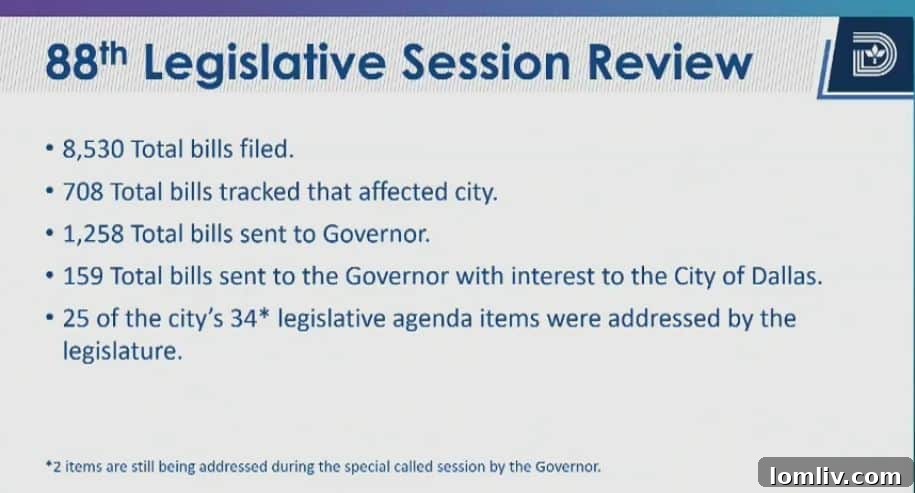
The intricate dance between state legislation and local governance requires relentless advocacy and strategic engagement from city officials. Clifford Sparks, the dedicated Legislative Director from the city’s Office of Government Affairs, provided an insightful overview of Dallas’s achievements during the Texas legislative session, which concluded in May. His team successfully accomplished 25 out of the 34 priority objectives meticulously set forth by the Dallas City Council, a testament to their focused efforts and collaborative spirit.
Despite these significant wins, Sparks candidly acknowledged the inherent give-and-take nature of the legislative process. “The legislature was very generous, but they give and they take away,” Sparks remarked, encapsulating the dual reality of state engagement. He further noted, “There were definitely some things that happened that we didn’t want to happen,” alluding to measures that potentially restrict local autonomy or create unforeseen challenges for municipalities.
The sheer scale of Dallas’s legislative involvement is remarkable. The city’s representatives testified on behalf of, or actively participated in discussions surrounding, approximately 700 pieces of legislation. This extensive engagement highlights Dallas’s proactive stance in shaping state policy and protecting its local interests, ensuring the city’s voice is heard on a multitude of issues.
Sparks underscored the collective effort essential for such a formidable task. “It takes a team to get this done,” he emphasized, crediting not only the professional lobby team but also the invaluable contributions of chairpersons, council members, and various staff who traveled to Austin to testify. Their direct presence and personal accounts are instrumental in swaying legislative outcomes. He proudly added, “It’s also been said that we testify more than any other city. They would agree that we carry the water for the entire state when it comes to legislation that affects municipalities.” This statement reflects Dallas’s crucial role as a leading advocate for urban centers across Texas, often setting precedents and fighting battles that benefit all local governments.
Key Legislative Triumphs for Dallas
Among the notable successes, House Bill 2017, focusing on workforce housing initiatives, was hailed as “a huge step in the right direction.” For Dallas, a rapidly growing city grappling with escalating housing costs, securing state support for affordable and workforce housing is critical to maintaining economic diversity and ensuring equitable access to opportunities for all residents. This bill provides a much-needed framework and potential resources to address one of the city’s most pressing challenges.
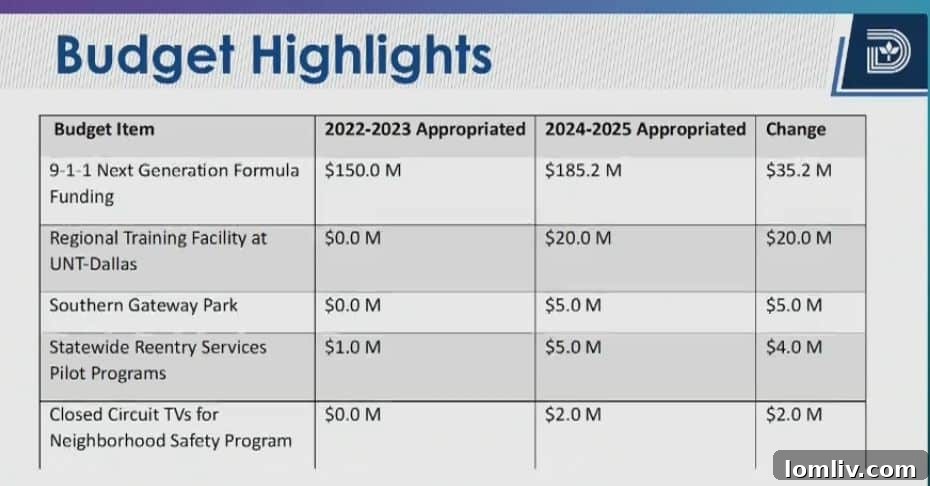
Further bolstering critical infrastructure, the city successfully secured increased funding for its vital 911 center. This achievement was significantly aided by the tireless advocacy of Republican Sen. Kelly Hancock of Tarrant County, whom Sparks laudably described as a “one-man wrecking crew” for his unwavering support. Enhanced funding for emergency services ensures that Dallas can continue to provide rapid and effective responses to residents in times of crisis, a cornerstone of public safety.
Dallas lobbyists also secured substantial funding for several key local projects that will enhance the city’s educational, recreational, and public safety landscape:
- $20 million for a regional training facility at the University of North Texas Dallas: This investment is vital for workforce development, offering advanced training opportunities that will equip residents with skills for high-demand jobs and strengthen the local economy.
- $5 million for the Southern Gateway deck park: This significant allocation will help bring to life a transformative urban greenspace project, connecting communities and offering valuable recreational amenities, while contributing to the beautification and connectivity of Dallas.
- $2 million for closed-circuit TVs (CCTVs) for a neighborhood safety program: This funding directly supports public safety initiatives, providing technological tools to deter crime and enhance community surveillance, contributing to safer neighborhoods across the city.
Crucially, the city’s legislative team successfully blocked legislation that would have preempted the Dallas City Council from enacting local governance around short-term rentals (STRs). Sparks highlighted the immense relief this outcome brought. “We’ve had a huge burden of trying to allow you to keep your ability to make decisions locally,” he explained. The issue of STRs has been a contentious one for many Texas cities, with debates centering on neighborhood character, housing affordability, and local control. Preventing state preemption on this matter allows Dallas to tailor regulations that best suit its unique urban environment and resident concerns. “Bills like that, that would thwart your attempt to even be able to make some decisions that you’ve made recently, that could’ve been a huge problem,” Sparks added, emphasizing the critical importance of preserving municipal authority on such sensitive local issues.
The Shadow of State Preemption: The “Death Star Bill”
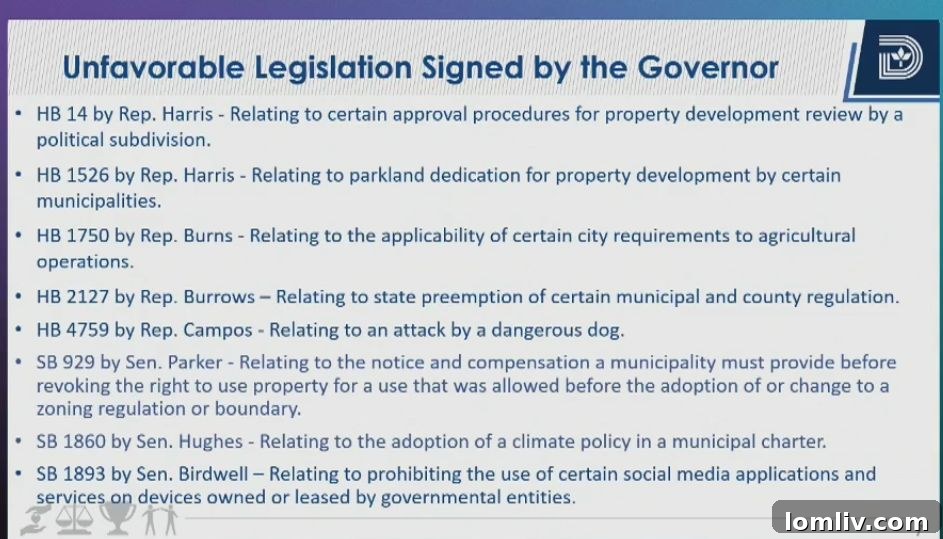
While Dallas celebrated its legislative victories, the session also brought forth significant challenges to local control, epitomized by Texas House Bill 2127, widely dubbed the “Death Star Bill.” This controversial legislation is seen by many municipalities as a direct assault on the “home-rule” authority guaranteed to cities by the Texas Constitution, effectively circumscribing local governments’ ability to enact ordinances beyond a limited scope. The bill broadly preempts cities from regulating areas already covered by state law, leading to concerns that it could invalidate thousands of local ordinances on everything from noise complaints to construction standards.
In response to this perceived overreach, a growing coalition of Texas cities has initiated legal action. The City of Houston is leading a lawsuit against HB 2127, challenging its constitutionality. Significantly, Denton, Arlington, Plano, and Waco have joined Houston’s legal action, underscoring the widespread concern among municipalities regarding state legislative preemption. A critical hearing on the matter was set for Wednesday, highlighting the ongoing legal and political battle over the fundamental balance of power between state and local government in Texas. Dallas, while not explicitly mentioned as a party to the lawsuit in the original context, certainly shares the concerns regarding the erosion of home rule authority that this bill represents.
Translating State Mandates: Adjustments to Dallas City Code
The passage of new state laws inevitably triggers a cascade of necessary adjustments at the municipal level. Executive Assistant City Attorney Casey Burgess elaborated on the extensive administrative process required to integrate these changes into Dallas’s local governance framework. His office undertook a rigorous review of 150 bills that emerged from the legislative session. Of these, approximately 15 bills necessitate a code amendment, which will be formally presented to the Dallas City Council for approval in the near future. Additionally, 14 bills require significant policy changes at the staff level, impacting city department operations, even if they don’t necessitate a formal code amendment. This meticulous review process ensures that Dallas’s local ordinances remain compliant with state law while minimizing disruption to city services and residents.
The Unforeseen Impact: The Case of Residential Roosters
Among the myriad of legislative changes, one particular provision sparked a surprisingly lively discussion at the August 14th committee meeting: the issue of residential roosters. House Bill 1750, a new state law, explicitly grants property owners the right to keep roosters, a direct contradiction to Dallas’s existing city code which currently prohibits these animals within residential areas. This specific example vividly illustrates the practical challenges and sometimes unexpected consequences of state preemption on local ordinances.
“The roosters are really all the talk of this bill,” Councilwoman Mendelsohn observed, highlighting the community interest in this seemingly minor but impactful change. She then posed a critical question: “Are we just not going to enforce it?” This query encapsulates the dilemma faced by city officials when state law overrides local regulations – how to reconcile existing enforcement practices with new mandates.
Mayor Pro Tem Tennell Atkins quickly brought a dose of reality to the discussion, pointing out that in his District 8, the issue of roosters is far from trivial. He described a widespread problem involving thousands of roosters and, more significantly, a direct link to illegal gambling and cockfighting – activities strictly prohibited by the penal code. “We need to do something starting today,” Atkins urged, emphasizing the urgency. “It’s not about discussion. It’s about, are you going to do something? It’s on the books right now. It’s one of the biggest problems we’ve got in District 8.” His comments underscore how a seemingly innocuous state law can have complex and unintended consequences on local public safety and quality of life.
Officials clarified that while the city code may prohibit roosters, their regulation and enforcement falls under the purview of Dallas Animal Services (DAS), not Code Compliance. Interim City Attorney Tammy Palomino reminded committee members that HB 1750 takes effect on September 1st, meaning the city would soon need to adapt its enforcement approach. “Right now they are enforcing against that and we will make sure it’s communicated to council the plan going forward,” she assured, indicating that DAS would need to develop and communicate new policies for handling rooster-related complaints post-September 1st.
The discussion also touched upon the intricate question of how this new state legislation might intersect with existing homeowners’ association (HOA) guidelines. Many HOAs have specific covenants prohibiting certain animals, including roosters. State attorneys explained that some of these bills “just flew through” the legislative process without adequate opportunity for clarification or consideration of their impact on local nuances, leading to potential conflicts between state law, city ordinances, and private contractual agreements like HOA rules.
Broader Code Modifications for Urban Development
Beyond the rooster debate, city attorneys are diligently reviewing other potential code changes stemming from the legislative session. These include adjustments related to various aspects of urban development and governance, such as development review processes, regulations concerning cemeteries, updates to parkland dedication fees – which are crucial for funding the city’s green spaces – and procedures for residents requesting removal from the city’s extraterritorial jurisdiction (ETJ). Each of these areas requires careful consideration to ensure Dallas’s codes are efficient, fair, and compliant with state requirements, while continuing to promote sustainable growth and quality of life for its residents.
Looking Ahead: Dallas’s Continuous Advocacy for Local Control
The recent Texas legislative session and its subsequent special sessions vividly illustrate the continuous, dynamic interplay between state law and local governance. For a bustling metropolis like Dallas, navigating this complex landscape is not merely an administrative task but an ongoing strategic imperative. The city’s proactive engagement, robust lobbying efforts, and diligent review of new legislation are crucial for safeguarding local interests, addressing unique urban challenges, and preserving the vital home-rule authority that allows Dallas to effectively serve its diverse population. As the Texas Legislature prepares for further discussions on critical issues like school vouchers and cities continue their legal battles against bills like HB 2127, Dallas remains steadfast in its commitment to advocating for policies that empower local communities and ensure a vibrant, well-governed future for its residents.