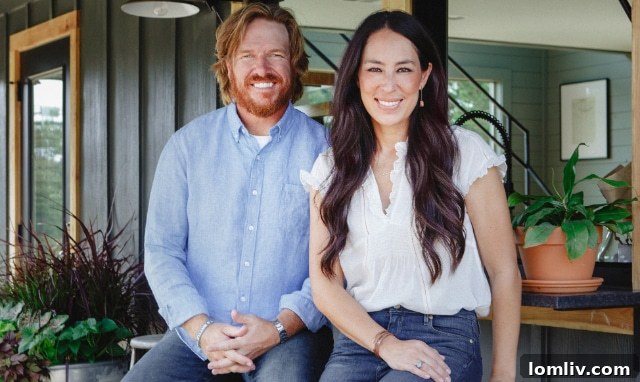
Magnolia’s Latest Conquest: Chip and Joanna Gaines Acquire Historic Waco Tribune-Herald Building for New Headquarters
The iconic aroma of newsprint and ink, a scent deeply ingrained in the memories of journalists and readers alike, is poised to be gently replaced by the fresh, clean fragrance of shiplap. This symbolic transition marks a significant moment for Waco, Texas, as the city’s landscape continues to be reshaped by its most famous residents, Chip and Joanna Gaines.
Last week, news broke that the entrepreneurial power couple behind the Magnolia empire is set to expand their already vast holdings by acquiring the historic Waco Tribune-Herald building. This landmark purchase signifies more than just a real estate transaction; it represents the establishment of Magnolia’s new, sprawling headquarters, further cementing their deep roots and transformative influence within the heart of Waco.
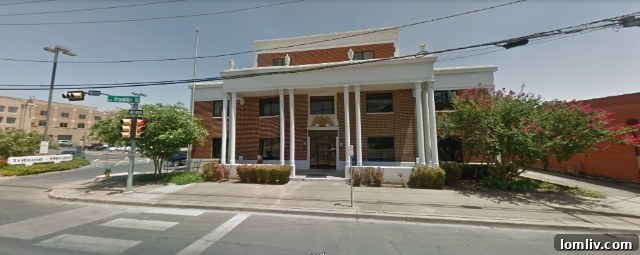
Earlier this month, representatives from Magnolia formally informed Waco city officials of their ambitious plans to relocate their operational core to the building situated at 900 Franklin Avenue. This prime location, just to the west and a mere three blocks from the bustling Magnolia Silos shopping district—Waco’s undisputed top tourist attraction—places their new central hub strategically within their existing ecosystem. The company has committed a substantial investment of $13.6 million towards the meticulous renovation of the three-story, 111,000-square-foot structure, promising to breathe new life into a building steeped in local history.
This latest venture is merely one piece of a much larger puzzle that Chip and Joanna Gaines have been diligently assembling across Waco. Their ongoing projects include the ambitious redevelopment of another downtown office building into a boutique hotel, a testament to their vision for a revitalized urban core. Beyond this, their portfolio boasts a thriving furniture store, a curated collection of six small shops, and the thoughtful renovation of an old church, transformed into a charming event space. The Gaineses also successfully operate a popular restaurant, Magnolia Table, which has become a pilgrimage site for fans and foodies alike. These diverse undertakings highlight Magnolia’s comprehensive strategy to create a holistic visitor experience, drawing millions to Waco annually and injecting considerable vitality into the local economy.
A Bittersweet Farewell: The Legacy of the Waco Tribune-Herald
As Magnolia prepares to usher in a new era for the Franklin Avenue address, the esteemed Tribune-Herald staff will be vacating their 70-year-old home, relocating to another downtown building. This move, while practical for the newspaper, evokes a profound sense of bittersweet nostalgia for the countless journalists, editors, and staff members, both past and present, who have dedicated significant portions of their careers within its walls. The building stands as a repository of Waco’s daily narratives, chronicling everything from local triumphs to challenging times for generations. To truly grasp the emotional weight of this transition, Candy’s Dirt, a local publication, reached out to four individuals with deep ties to the newspaper:
- Alan Cochrum: A copy editor who served from 1978-84, bringing precision and clarity to countless stories.
- Brian Medricka: Connected through The Lariat, Baylor University’s student newspaper, from 1993-94, representing a younger generation of aspiring journalists who honed their skills near the paper.
- J. Alan Nelson: The business editor from 1983-90, witnessing firsthand the economic shifts and growth of Waco.
- Carl Hoover: A dedicated Tribune-Herald staffer since 1984, embodying decades of continuous service and institutional memory.
These individuals shared their heartfelt remembrances and candid opinions on their time at the “Trib” and their perspectives on the building’s impending transformation.
Voices from the Past: Journalists Reflect on Magnolia’s New Headquarters
The news of the Gaineses’ acquisition sparked a range of reactions among these former and current newspaper professionals, reflecting both personal sentiment and broader observations about Waco’s evolution.
Alan Cochrum expressed a nuanced perspective, acknowledging the positive implications of the transfer. “It’s nice to know that a structure that has been an important part of the Waco community will now be part of a business that has brought a whole new level of national familiarity to the area,” he remarked. His sentiment captures the balance between honoring the building’s past significance and embracing its future role in a venture that has put Waco on the national map.
Brian Medricka shared a deeply personal connection, emphasizing the building’s cherished place in his memory. “I spent many nights in that building when I was at Baylor more than 25 years ago, so it has a special place in my heart,” he recalled. However, his pragmatism shines through as he added, “But, I’d rather see a good company — in this case, Magnolia — move into the Trib headquarters rather than some random out-of-area company that won’t respect its prominent place in the budding downtown.” This reflects a desire for the building to be stewarded by an entity with local ties and a proven commitment to Waco’s development.
A more critical viewpoint was offered by J. Alan Nelson, who voiced concerns about the rapid pace of development and its strain on local resources. “Chip and Joanna continue to make Waco their own personal parking lot,” he stated bluntly. Nelson elaborated on the overwhelming influx of tourists, referring to them as “Silo zombies — hoards of pilgrims that travel to Waco to see and buy their bric-a-brac — come in major swarms and herds. The infrastructure of Waco’s roads, etc., are overloaded at the moment.” His comments underscore a common local apprehension about unchecked growth and its impact on the daily lives of Waco residents.
For Carl Hoover, whose career has been intertwined with the Tribune-Herald for decades, the emotional response to the building itself was surprisingly detached. “Not much sentiment for the building I’ve worked in for my career with the Trib. It’s utilitarian and hardly an architectural marvel,” Hoover admitted. His sense of loss, however, transcends the physical structure. “The major loss for me will be a spiritual or symbolic one, regardless of the Gaines or Magnolia,” he clarified, hinting at the deeper significance of the newspaper’s historical presence and its role in the community’s identity.
Unearthing History: Ghosts, Skeletons, and the Soul of a Building
The question of what hidden remnants, both literal and figurative, Magnolia might uncover during the renovation process prompted a mix of playful anecdotes and sobering reflections from the journalists.
Alan Cochrum mused about the possibility of historical artifacts. “A lot of the Tribune-Herald’s undead undoubtedly fled during the demo days that were part of a full-bore reno during the mid-1980s,” he jokingly recalled, referencing a previous major overhaul. “The newsroom and business operations separately spent weeks in a sort of warehouse near the main building during the project.” Yet, he offered a hopeful, if whimsical, suggestion: “However, if the Gaineses are lucky, they might find some vintage original scribbles by longtime sportswriter Dave Campbell, of Dave Campbell’s Texas Football fame.” This speaks to the enduring legacy of figures who once walked those halls.
Brian Medricka entertained the idea of lingering spectral presences. “There may be some ghosts of former publishers, staff members, or Lariat editors that the Gaines family may have to deal with,” he light-heartedly speculated. His solution was perfectly in line with the Magnolia brand: “But a little sage goes a long way, right? I’m sure Joanna has plenty on hand from her Magnolia Table cooking show. That should do it.” His response cleverly weaves the past with the present, suggesting a harmonious, if unconventional, coexistence.
A more profound and somber perspective came from J. Alan Nelson, who dismissed the notion of literal ghosts in favor of a metaphorical one. “No ghosts or skeletons. Just the broken hearts of the people who understand why a local newspaper is vital to our democracy,” Nelson articulated with gravitas. “The numbers of those people are fewer and fewer.” His words serve as a poignant reminder of the dwindling appreciation for local journalism and the societal void its decline might leave.
Carl Hoover, echoing Cochrum’s sentiment about past renovations, believed most physical “ghosts” had already been cleared. “A major newsroom renovation in 1986 or so wiped most of the reporting ghosts away,” he noted. He then touched upon the more systemic changes that altered the newspaper’s operational spirit: “and cost-cutting — some might say union-busting — in the decade or two later took care of the composing room and our press.” This reveals that the building’s internal character had already undergone significant transformations long before Magnolia’s arrival, reflecting the evolving economic realities of the media industry.
Preserving the Past, Building the Future: A Historic Building’s New Purpose
The acquisition of a historic newspaper building by a modern lifestyle brand naturally raises questions about the appropriate use and preservation of such a significant structure. The journalists offered varied opinions on this delicate balance.
Alan Cochrum succinctly highlighted the building’s resilience: “If a building can survive decades of reporters and editors, what can’t it deal with?” His comment implies that the robust structure, having endured the rigors of news production, is more than capable of adapting to its new purpose, underscoring its inherent strength and adaptability.
Brian Medricka expressed optimism for Magnolia’s approach, emphasizing their potential to honor the past while forging a new identity. “There’s nothing better than mixing old and new to create a completely awesome experience for Waco,” he asserted. “I have no doubt they will respect the history of the Trib property while creating new history for years and years to come.” This viewpoint champions the idea of respectful integration, where historical context enhances contemporary innovation.
J. Alan Nelson maintained his unsentimental stance regarding the physical building itself, differentiating it from the essence of journalism. “I’m not sentimental. The Trib lives to cover history and stories of the day, not itself,” Nelson explained. “While we have fond memories of the structure, the Trib is not a building. It’s a gestalt of people who share the idea that journalism is crucial.” While he acknowledged the Gaineses’ positive personal qualities—”The Gaineses are likable, nice people. That’s the hook to their success. I wish them well”—he raised a significant civic concern: “but I don’t like taxpayer dollars subsidizing their numerous ventures about town when those dollars are often denied to smaller businesses.” This highlights a tension between supporting large-scale, popular development and equitable resource distribution for local enterprises.
Carl Hoover offered a practical and commercially astute rationale for the acquisition. “It’s a logical and commercially viable one,” he affirmed. He pointed out the strategic proximity: “We’re one block away from Magnolia Market at the Silos, which reopened after a major addition and reoriented its major entrance in the process to the street that bounds the block the Trib is located on.” Hoover also highlighted the building’s suitability for Magnolia’s needs, envisioning its future as a versatile hub: “There’s space for offices, storage, and video studios for the Magnolia Network. Building a downtown facility with all of that would cost much more than this.” In a final observation that contrasts Magnolia’s vision with other local developers, Hoover concluded, “Honestly, the Gaineses have more of a forward-looking vision with that property than a host of other Waco businesspersons whose imagination are defined more by lofts, offices, and small retail.” His perspective champions the Gaineses’ strategic foresight and their capacity for large-scale, impactful development.
The Fixer Upper Phenomenon: Beyond the Shiplap
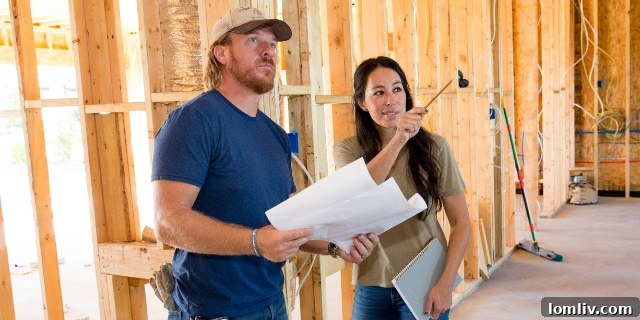
Given the Gaineses’ household name status largely stemming from their HGTV show, *Fixer Upper*, the journalists were asked about their viewership habits and impressions of the wildly popular series.
Alan Cochrum and his wife were once viewers but have since diversified their television preferences. “My wife and I have watched a number of episodes, although we’ve since mostly gone from American House Reno to Yorkshire Veterinary via the original 1970s-80s version of All Creatures Great and Small,” he shared, indicating a shift towards other forms of comforting, narrative-driven content.
Brian Medricka, by contrast, proved to be a dedicated fan from the very beginning. “I have watched Fixer Upper from its premiere in 2013 and was sad to see it go off the air in 2018,” he revealed. His loyalty extends to the new iteration of the show: “I now have Discovery+ so I can watch the new version, Fixer Upper: Welcome Home. I’m craving more new episodes soon.” His enthusiasm highlights the enduring appeal of the Gaineses’ brand and their unique approach to home renovation.
J. Alan Nelson, however, found himself unable to connect with the show’s format or content. “I’ve tried to watch Fixer Upper. I’ve tried. I fall asleep or do something else after five minutes,” he candidly admitted. This stark reaction suggests that the show’s particular style, while captivating to millions, does not resonate with everyone, perhaps due to personal taste or a preference for different kinds of entertainment.
Carl Hoover‘s family initially engaged with Fixer Upper, especially in its earlier seasons. “My family watched Fixer Upper in its early seasons, largely to play name that neighborhood on the houses chosen,” he recalled, pointing to a local’s interest in seeing familiar Waco locales on screen. Over time, however, he found the show’s formula became predictable: “Over time, the only variety was in the houses’ original condition. Chip would knock some walls down, find a hidden problem under or above the house, Joanna would open the kitchen and paint it white or a light shade and put some homely accents on a few walls (televisions, the central focus of most American families at home, btw, don’t exist in Fixer Upper houses).” He also noted a barrier to continued viewership: “Since the new season currently requires a Discovery + subscription to view, we haven’t opted to pay up.” Hoover’s critique offers a common observation about the show’s stylistic consistency and the increasingly fragmented landscape of content consumption.
Magnolia Market Influence: Consumer Choices and Brand Loyalty
The final question delved into the commercial impact of Magnolia, asking whether the building acquisition would influence their future purchasing decisions regarding Magnolia Market products.
Alan Cochrum responded with a humorous, yet pointed query, reflecting a journalist’s eye for value: “Will former Trib staffers get discounts?” His comment subtly questions the direct benefit to the local community members who have witnessed the transformation.
Brian Medricka, despite being a Fixer Upper fan, revealed a more selective approach to Magnolia merchandise. “I was already a fan to begin with. I don’t own much stuff, though — a few candles and a ‘you got this’ metal sign from the store — because I’m more of a modern-style person than rustic farmhouse,” he explained. He acknowledged the broader appeal of the brand, however: “All of the Gaineses stuff is nice, though, and appeals to different members of my family.” This demonstrates that while the brand is strong, individual aesthetic preferences still guide consumer choices.
J. Alan Nelson offered an unequivocal and emphatic rejection. “Nope. No, no, no,” he stated, leaving no room for ambiguity. This firm stance likely stems from his previously expressed reservations about the scale of Magnolia’s ventures and the perceived use of public funds.
Waco’s Evolving Identity: A Look Ahead
The acquisition of the Waco Tribune-Herald building by Chip and Joanna Gaines for their Magnolia headquarters marks a pivotal moment in the ongoing narrative of Waco’s revitalization. It symbolizes the confluence of old and new, tradition and progress, as a beacon of local journalism transitions into a hub for a national lifestyle brand. While the move evokes a bittersweet nostalgia for those deeply connected to the newspaper’s legacy, it also ushers in an era of renewed commercial vitality and further national recognition for the city.
The mixed reactions from the former and current journalists underscore the complex feelings within the community: appreciation for economic growth, concern for infrastructure and equitable development, and a poignant awareness of the changing media landscape. Yet, through this transformation, the essence of the building, which once housed the daily chronicle of Waco’s life, will now be reimagined to support a vision that continues to shape the city’s future. The Gaineses’ forward-looking approach, coupled with their proven track record of respectful renovation and strategic development, promises a new chapter for 900 Franklin Avenue, one that is deeply intertwined with the evolving identity of Waco itself.