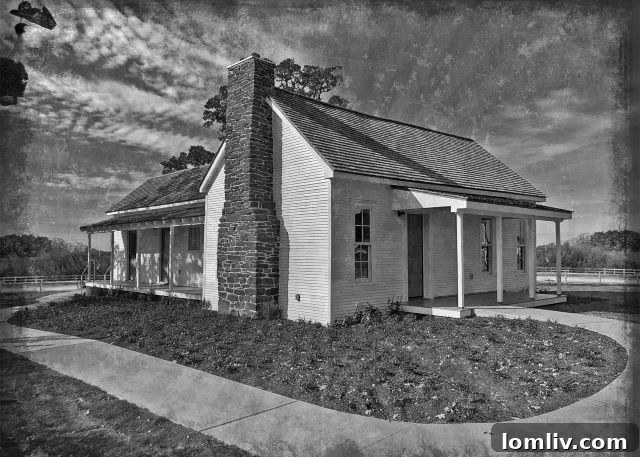
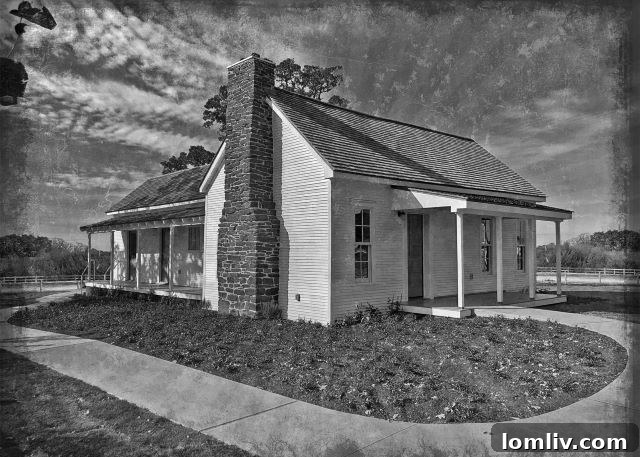
In the quiet Texas town of Flower Mound, a routine demolition project in 2015 turned into an extraordinary discovery, peeling back layers of modern construction to reveal a hidden treasure from the past. Developer Curtis Grant embarked on a seemingly ordinary task at 4801 Quail Run Road: razing an old house on a four-acre plot to make way for a new 12-home development. Yet, what he found beneath the drywall would change the course of this land’s future and enrich the community’s understanding of its heritage.
Grant, recalling a faint mention from the previous owner about a 1903 newspaper clipping found within the walls, decided on a whim to explore before the full demolition began. With the first punch through the living room drywall of the unassuming 1970s traditional house, a secret spanning over a century and a half was dramatically unveiled. Instead of insulation and modern framing, Grant discovered sturdy, hand-hewn logs – the unmistakable structure of a historic log house.
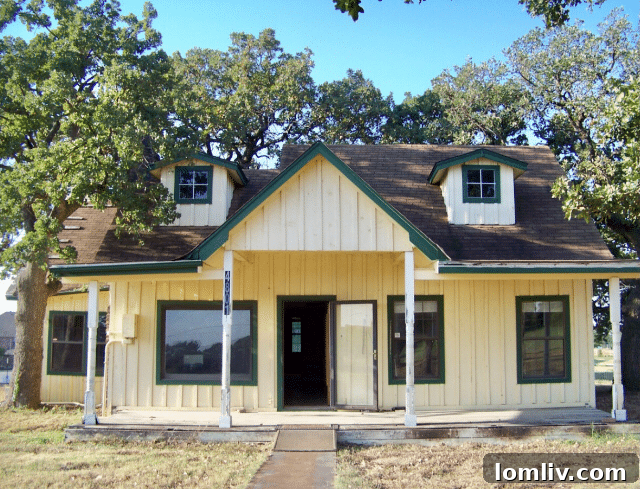
This ordinary 1970s residence had, for decades, effectively encased and concealed a much older dwelling, estimated to have been erected approximately 150 years prior. It was a remarkable instance of adaptive reuse, albeit one where the original structure was not just repurposed but entirely obscured. A subtle hint, almost lost in time, existed within the original Multiple Listing Service (MLS) description: “Original 1970 home added entire 2nd attached home in 2003, perfect for extended families. One story, 4.33 acre property in Flower Mound with exemplary schools. Diving pool, two 2 car garages plus car port for addtl parking. 3 sheds, 2 barns, 1 w-4 stalls, 2 pastures & well for watering. 1970 home has pergo flrs & 1800era FP.” The seemingly innocuous mention of an “1800s-era fireplace” was a fleeting whisper of the significant history hidden within.
The journey of this property through time reveals why its secret remained guarded for so long. Between 1937 and 1978, the home changed hands a staggering 11 times. According to the comprehensive Gibson-Grant Log House Historic Structure Report, “The frequent change in ownership over those four decades stands to reason why knowledge of the log house’s existence inside the walls of the house was lost over time.” Each new owner likely layered upon the existing structure, inadvertently burying the original dwelling deeper under modern conveniences and aesthetics, until its true identity became a forgotten legend.
Upon his incredible discovery, Curtis Grant’s instincts shifted from developer to preservationist. Recognizing the profound historical significance of the log house, he decided that it deserved preservation, not demolition. This unexpected find was not merely an architectural curiosity but a tangible link to Flower Mound’s pioneering past. Demonstrating remarkable civic generosity, Grant donated the log house to the Town of Flower Mound, a community eager to embrace and celebrate its unique heritage. “It’s just something that needs to be preserved as difficult as that is on a developer,” Grant thoughtfully shared with NBC5 in 2015, highlighting the personal and financial commitment required to save such a piece of history.
Fast forward to the present, and the transformation is complete. The hidden structure has been meticulously restored to reflect an earlier design, breathing new life into a forgotten era. On December 11th, the Gibson-Grant Historic Log House will proudly open its doors as a public museum, inviting visitors to step back in time. Dendrochronology tests, conducted on the tree rings of post oak logs found within the cabin, precisely dated its construction to between 1860-1861. This scientific precision not only confirms its age but also offers a fascinating insight into the historical context of its construction.
It’s also important to note a key distinction: this is, in fact, a log *house*, not merely a log cabin. Log cabins were typically rudimentary, basic shelters built with bark-intact logs by early settlers upon their immediate arrival, designed for quick construction and temporary habitation. A log *house*, however, represents a second, more permanent dwelling. It features carefully hewn timbers, often a robust stone fireplace, and wood plank floors, signifying a more established homestead and a settled life on the frontier. The Gibson-Grant structure clearly falls into this more sophisticated category, underscoring the permanence and ambition of its original builders.
The significance of the Gibson-Grant Historic Log House extends far beyond its unique discovery. According to the executive summary of the historic structure report, the house holds dual importance: “For its association with William Gibson, a Peters Colonist, and because it exemplifies the evolution of early homesteads on the Texas frontier.” William Gibson, as a Peters Colonist, represents a crucial chapter in Texas history, where land grants were offered to encourage settlement. The log house therefore not only connects to a specific individual but also embodies the broader narrative of perseverance, adaptation, and the establishment of communities in a challenging frontier environment.
To ensure the future viability of the historic site, Curtis Grant further contributed by donating two additional plots of land surrounding the log house. This generous act provides ample space for the historic site’s conversion and development into a fully functional museum complex. The ambitious master plan for the restoration and site development was significantly bolstered by a substantial $1.5 million state grant, reflecting governmental recognition of the project’s historical and cultural value. This funding was critical in transforming a vision of preservation into a tangible reality.
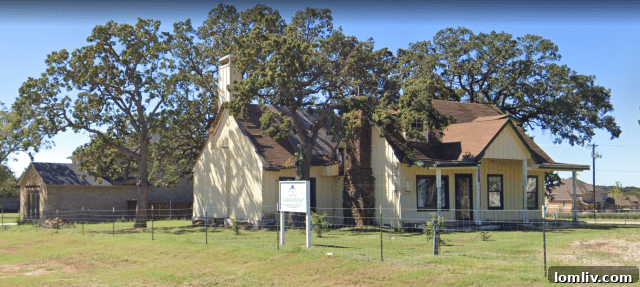
Through dedicated efforts, the Town of Flower Mound is creating an immersive experience for visitors, offering an invaluable opportunity to connect with the lives of Denton County’s earliest settlers. The restoration project aims to accurately depict the cabin’s appearance and functionality during the 1890-1925 time period. This involved carefully removing later additions, thereby returning the structure to its original, authentic form: a one-story, 950-square-foot, six-room museum. This meticulous approach ensures that the historical integrity of the building is honored, providing an authentic setting for educational engagement.
Part of the restoration also focuses on preserving a significant portion of the house’s original siding and underlying paint layers. This painstaking process, often involving microscopic analysis and careful reconstruction, ensures that the building itself tells a story, revealing the subtle changes and aesthetic choices made by its various occupants over the decades. It’s a commitment to historical accuracy that adds depth and authenticity to the museum experience.
“Visiting the cabin will be such a cool experience,” Flower Mound Mayor Derek France enthusiastically shared with Community Impact Newspaper. “It’s not every day that we’re given a chance to revitalize a structure so that we can use it to learn about the history of our area and how early settlers here lived.” The sentiment underscores the profound impact this discovery and restoration have had on the community, fostering a deeper appreciation for local history and providing a unique educational resource for generations to come. The Gibson-Grant Historic Log House stands as a beacon of unexpected history, a testament to the power of one person’s decision to preserve, and a vibrant new chapter in Flower Mound’s cultural landscape.
This remarkable journey from hidden relic to cherished museum highlights the importance of historic preservation and the often-unseen stories embedded within our built environment. The Gibson-Grant Historic Log House is more than just a building; it is a time capsule, offering an authentic window into the lives of those who forged the path in early Texas, inspiring reflection on our roots and the continuous evolution of our communities.
In-Depth Resources & Further Reading:
- About the Gibson-Grant Historic Log House – Discover more details about its origins and ongoing significance.
- Gibson-Grant Log House Master Plan – Review the comprehensive strategy for the museum’s development and future.
- Gibson-Grant Log House Historic Structure Report – Delve into the detailed historical and architectural analysis of the log house.