McKinney Residents Resoundingly Reject $200 Million Airport Expansion Bond
McKinney, Texas – In a pivotal moment for the city’s future infrastructure and economic development, residents of McKinney recently cast their ballots to decisively vote down a proposed $200 million bond package. This significant bond initiative, had it passed, would have paved the way for a major expansion of McKinney National Airport, with the ambitious goal of transforming it into a hub for commercial air travel. The outcome underscores a clear community sentiment regarding the trajectory of their local airport and its role within the broader North Texas landscape.
The bond, which sought to fund crucial upgrades and infrastructure necessary for commercial operations, faced a formidable opposition that ultimately swayed the election. Of the 22,252 votes meticulously counted on Saturday, a substantial 58.69 percent of residents voiced their disapproval, opting to reject the measure. Conversely, 41.31 percent of voters supported the bond, highlighting a notable division of opinion within the community regarding the airport’s commercial aspirations.
A Decisive Vote: Community Speaks on Commercial Airport Future
The results of the May 6 bond election send an unmistakable message from McKinney’s electorate regarding large-scale public investment and the potential transformation of local infrastructure. This was more than just a vote on a budget; it was a referendum on the future character of McKinney, weighing potential economic benefits against concerns about quality of life, environmental impact, and financial prudence. The turnout itself, for a local bond election, suggests a highly engaged citizenry keen on participating in decisions that directly impact their daily lives and the city’s long-term vision.
The proposed expansion aimed to elevate McKinney National Airport from primarily serving general aviation and corporate jets to accommodating commercial passenger flights. Proponents argued that such a move would bring significant economic advantages, including job creation, increased local spending, and enhanced regional connectivity. However, the electorate’s decision indicates that these perceived benefits did not outweigh the various reservations held by a majority of voters.

Mayor Fuller’s Reaction: Acknowledging Misinformation, Respecting the Electorate
Following the bond’s defeat, McKinney Mayor George Fuller offered his perspective on the election’s outcome, revealing that he had “actually expected the bond to fail.” Mayor Fuller attributed this expectation, in part, to what he described as a “mountain of misinformation” that proliferated during the campaign leading up to the election. While the specific nature of this misinformation was not detailed, it often encompasses exaggerated claims about financial burdens, environmental damage, noise pollution, or traffic congestion – all common points of contention in airport expansion debates.
Despite his disappointment regarding the misinformation, Mayor Fuller underscored his respect for the democratic process and the will of the people. “That said, I respect the fact that voters declined to support the issuance of $200 million in bonds to fund the terminal,” Fuller stated, acknowledging the community’s clear stance on utilizing public debt for this specific project. His remarks highlight the delicate balance local leaders must strike between pursuing strategic growth initiatives and heeding public opinion, especially on matters involving substantial financial commitments.
Looking ahead, Mayor Fuller indicated the city’s commitment to moving forward and exploring alternative pathways to achieve what officials deem “the highest and best use of the airport.” This redirection comes with the explicit understanding that utilizing bonds for commercial expansion is “not the will of our community.” This pivot signals a need for innovative solutions and potentially a more collaborative approach with residents to redefine the airport’s future trajectory without resorting to the rejected funding mechanism.
In a prior interview last month with daltxrealestate.com, Mayor Fuller had previously noted an “overwhelming” interest in the city’s airport from various stakeholders. This interest typically spans from potential commercial carriers eyeing new markets to businesses and general aviation users appreciating the airport’s strategic location. The challenge now for city leadership is to harness this interest in a manner that aligns with the community’s expressed preferences and does not rely on the bond funding strategy.
The Path Not Taken: A Vision for Commercial Service
The defeated bond package represented the culmination of extensive planning and strategic foresight by McKinney city officials. The McKinney City Council had formally approved placing the May 6 bond election on the ballot back in February, following what they described as years of dedicated effort. This effort involved working in close collaboration with the Federal Aviation Administration (FAA) and a host of expert consultants to formulate a comprehensive plan for the airport’s expansion and its transition to commercial service.
The vision outlined for the airport was ambitious. Reports, including one from WFAA, previously indicated that McKinney National Airport was targeting the initiation of commercial operations as early as 2026. This timeline suggested a rapid transformation to meet growing regional air travel demand. City leaders estimated that once operational, the expanded airport could serve approximately 500,000 passengers annually, significantly enhancing travel options for residents of McKinney and the wider Collin County area.
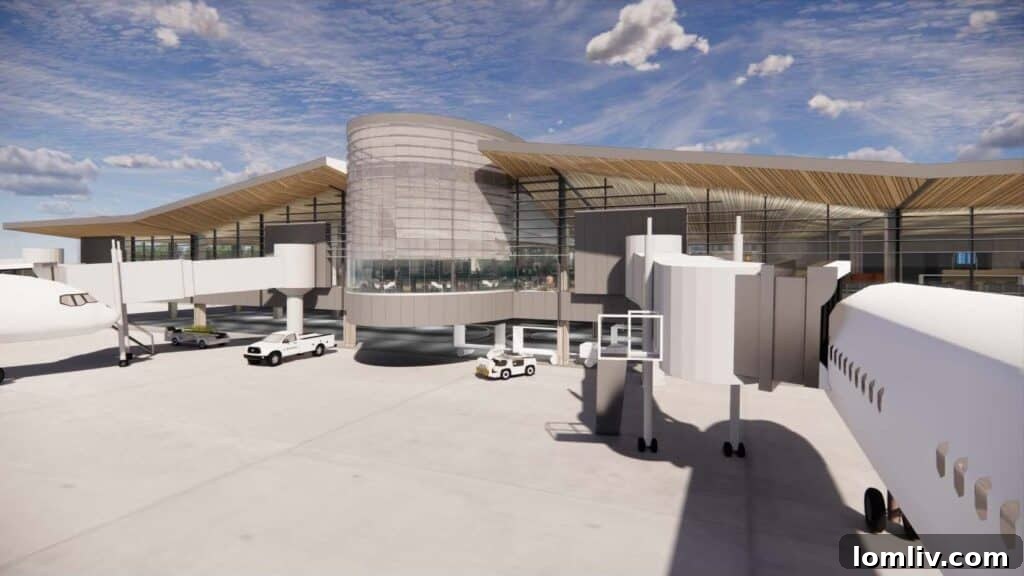
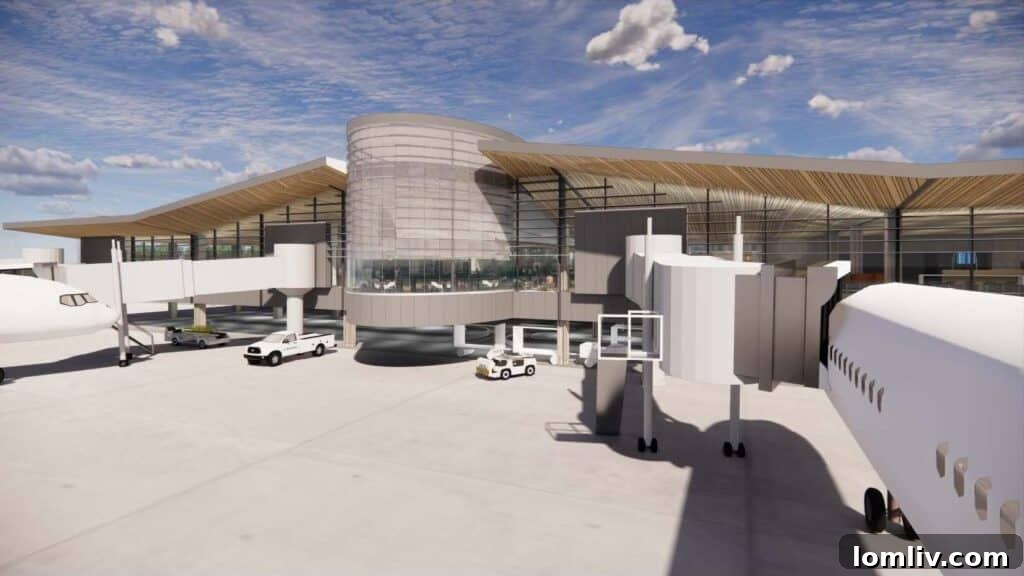
The proposed project, with its $200 million price tag, was designed to introduce modern commercial passenger facilities. Initial plans called for the construction of four new gates, with a strategic foresight for future expansion, allowing the terminal to ultimately accommodate up to 16 gates. This phased expansion capability underscored a long-term vision for McKinney National Airport to become a significant regional player, potentially easing the burden on larger airports like Dallas/Fort Worth International (DFW) and Dallas Love Field, and providing greater convenience for North Texas travelers.
Behind the Ballot: Years of Planning and FAA Scrutiny
During the February meeting where the bond election was approved, Mayor Fuller emphasized the rigorous and long-term planning that had gone into the airport expansion proposal. This involved continuous engagement with federal agencies, particularly the FAA, which plays a critical role in all aspects of airport development and operation. One of the most significant components of this extensive preparatory work, as highlighted by the Mayor, was the FAA’s environmental analysis.
Assistant City Manager Barry Shelton further elaborated on the importance of this environmental assessment, noting that its detailed results would be made public well in advance of the May 6 election. Such analyses are paramount in airport projects, meticulously evaluating potential impacts on air quality, noise levels, water resources, wildlife, and surrounding communities. The transparency around this FAA assessment was intended to provide voters with a comprehensive understanding of the project’s potential environmental footprint, ensuring that decisions were made with full access to critical information. While the assessment’s findings were presumably made available, the bond’s rejection indicates that other factors, or perhaps the interpretation of these findings, played a more dominant role in the public’s decision.
Unpacking the Opposition: Concerns Shaping the Vote
The unequivocal rejection of the $200 million bond package suggests that a broad range of concerns resonated deeply with the voting public. While Mayor Fuller pointed to “misinformation,” common objections to such large-scale infrastructure projects often revolve around several key areas. Financial prudence is frequently at the forefront; voters may have been wary of incurring substantial public debt, particularly given current economic uncertainties or competing needs within the city. The $200 million figure, funded through bonds, would ultimately be repaid by taxpayers, leading to questions about the necessity and return on investment for a commercial airport in a region already served by two major international hubs.
Environmental impacts and quality of life issues are also persistent concerns. An expanded commercial airport inevitably brings an increase in air traffic, which translates to heightened noise pollution for residents living under flight paths. Increased ground traffic around the airport, leading to congestion on local roads, is another frequently cited worry. Residents often express apprehension about how such development might alter the character of their community, potentially leading to a more industrialized or bustling environment that detracts from McKinney’s existing appeal. These social and environmental considerations, coupled with the sheer scale of the proposed change, likely played a significant role in shaping the prevailing opposition.
The Road Ahead: Charting a New Course for McKinney National Airport
With the bond rejected, McKinney National Airport now finds itself at a crossroads. The city’s administration and airport authorities must now embark on a re-evaluation of the airport’s strategic direction, understanding that the community has not endorsed commercial expansion through public bonds. This necessitates a proactive approach to identify viable alternatives that align with the public’s will while still leveraging the airport’s inherent value as a regional asset.
One immediate focus will be to reassess the airport’s “highest and best use.” This could involve a deeper exploration of its role in general aviation, corporate travel, cargo operations, or specialized aviation services. There might be opportunities for private investment partnerships that do not rely on public bond financing, allowing for incremental development or niche services that could still generate economic benefits without the comprehensive commercial passenger service model. The city will likely need to engage in enhanced public dialogue, perhaps through town halls or citizen committees, to gauge community priorities and foster a shared vision for the airport’s future.
Economic Implications and Regional Context
The bond’s failure has immediate economic implications for McKinney. While it avoids the immediate public debt, it also means foregoing the potential economic stimulus that a commercial airport could have brought, such as new businesses, tourism, and direct and indirect job creation. However, it also presents an opportunity for the city to explore other avenues of economic development that might be more aligned with residents’ preferences, perhaps focusing on existing strengths or different sectors that pose fewer quality-of-life concerns.
In the broader North Texas region, the decision at McKinney National Airport maintains the current landscape of air travel, with DFW and Love Field continuing to serve as the primary commercial hubs. While McKinney’s airport was envisioned as a complementary option, its current status means that regional air travel demands will continue to be absorbed by existing facilities. This situation might prompt other cities or regional entities to consider their own aviation infrastructure plans, highlighting the competitive nature of regional development.
Future Engagement and Alternative Funding Models
Moving forward, sustained community engagement will be paramount. The city must articulate its revised plans clearly, addressing the very concerns that led to the bond’s defeat. Transparency in financial planning, environmental impact mitigation strategies, and potential traffic management solutions will be key to rebuilding trust and securing public buy-in for any future airport-related initiatives. Exploring diverse funding models, including federal grants for general aviation, private sector investment, public-private partnerships, or even smaller, targeted bond packages for specific, less contentious improvements, will be essential.
Conclusion: A New Chapter for McKinney’s Aviation Aspirations
The rejection of the $200 million airport expansion bond marks a significant turning point for McKinney. It is a powerful affirmation of direct democracy and the community’s active role in shaping its urban development. While the path to commercial air service via public bonds is now closed, the underlying assets and the “overwhelming interest” in McKinney National Airport remain. The challenge and opportunity for McKinney now lie in forging a new, collaborative vision for its airport—one that respects the will of its residents while still pursuing strategic growth and ensuring the airport’s highest and best use for the benefit of the community and the region.