- Two of the Indicted Executives Reside in Highland Park
- Kyle Bass’s Long-Standing Accusations Gain Further Vindication
In a significant development that has sent ripples through the real estate investment community, federal prosecutors in the Northern District of Texas have taken decisive action, indicting four key executives of United Development Funding (UDF). UDF, a Grapevine-based real estate investment trust, first came under intense scrutiny following an FBI raid in February 2016, sparking a multi-year investigation into its financial practices.
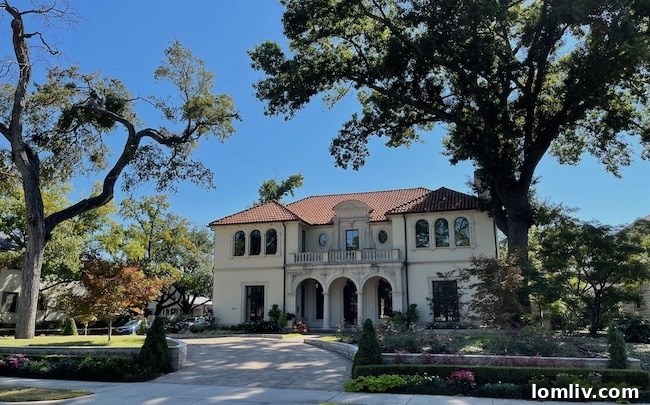
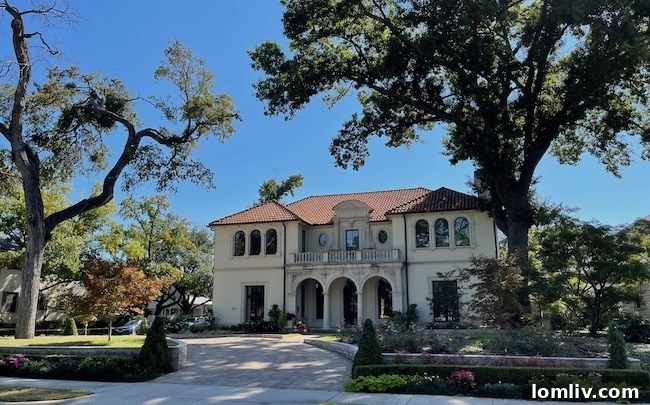
Among those indicted are two Highland Park residents, whose $6 million home, located just south of Beverly Drive, was reportedly acquired shortly before the initial FBI raid. This detail adds a layer of intrigue to a complex case that has captivated financial observers and legal experts for years.
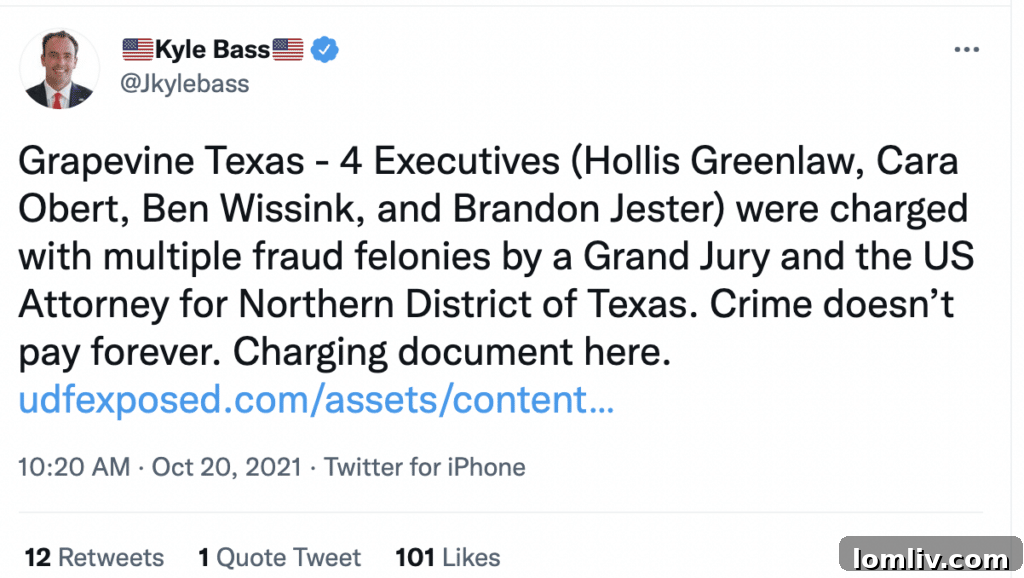
More than five years after the initial law enforcement action, the U.S. Attorneys’ office officially charged UDF’s CEO, Hollis Greenlaw, along with three of his colleagues. The charges allege a conspiracy to systematically deceive both banks and investors through a sophisticated series of real estate investment funds. The named defendants include Hollis Greenlaw of Colleyville, Benjamin Wissink and Cara Obert, both residing in Highland Park, and Jeffrey Brandon Jester of Wylie.
Hollis Greenlaw, a former Washington tax attorney with degrees from Columbia University School of Law and Bowdoin University, previously held a partnership at The Hartnett Group, Ltd. Public records indicate that Greenlaw and his wife, Angela, purchased their Colleyville residence in 2004. Interestingly, Greenlaw also sold a home in the exclusive Vaquero community shortly after the FBI raid on UDF, a transaction that has drawn attention in the ongoing narrative.

Benjamin Wissink and Cara Obert share a residence on Miramar in Highland Park, a property valued at approximately $6 million, while Jeffrey Jester resides in Wylie. The geographic spread of the defendants’ residences underscores the broad reach of UDF’s operations and the lives impacted by the allegations.
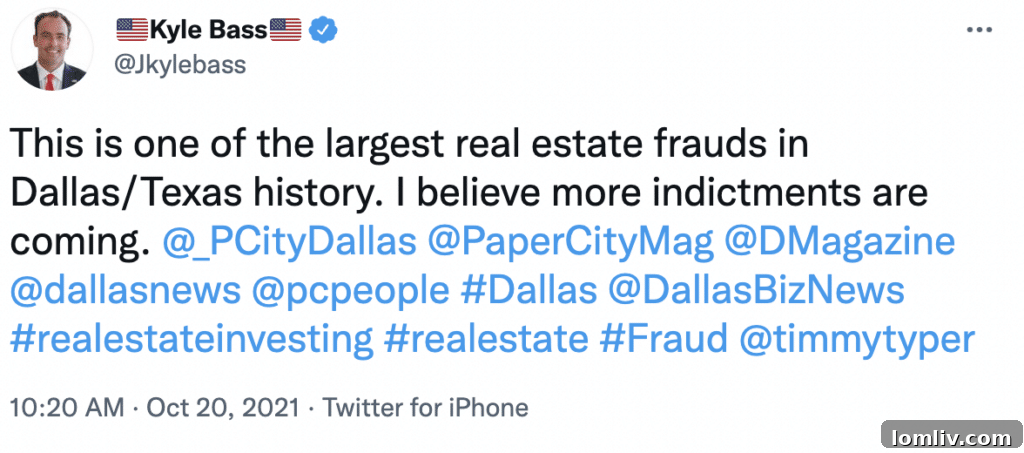
The UDF case is marked by its intricate nature and prolonged legal battles. At its core, it raises fundamental questions about corporate ethics, investor trust, and the potential for financial manipulation within the real estate sector. What would compel seasoned executives to potentially jeopardize lucrative careers for illicit gain? Adding to this complexity is the relentless pursuit of a Dallas-based fund manager, Kyle Bass, who has spent over five years and millions of dollars on a very public campaign and extensive legal efforts. Bass’s unwavering mission has been to prove that UDF was indeed defrauding its investors, a claim that now appears to be affirmed by federal authorities.
The U.S. Attorney’s charge centers on the illegal commingling of investment dollars sourced from three of the firm’s distinct investment funds. However, for some observers, this legal phrasing merely scratches the surface of a far more serious alleged scheme.
Prosecutors contend that the four defendants conspired to intentionally obscure UDF’s true business performance and precarious financial condition. Their alleged motive was to artificially inflate investment levels and thereby enrich themselves. The indictment further specifies that Greenlaw and other UDF managers defrauded investors and financial institutions by failing to disclose critical information: namely, that shareholder funds were being illicitly channeled to repay developer loans and distribute payments to earlier investors. This practice, described as a “Ponzi-like” scheme, forms the cornerstone of the government’s case.
Bloomberg Law, one of the first to report on the detailed charges, summarized the indictment:
A 10-count indictment that dropped Oct. 15, first reported by Bloomberg Law, says that from 2011 through 2015, the four defendants (Greenlaw, UDF partnership president and committee member Benjamin Lee Wissink, UDF CFO Cara Delin Obert, and UDF director of asset management Jeffrey Brandon Jester) “did knowingly execute and attempt to execute a scheme to defraud the investing public and shareholders” by obtaining “money and property by means of materially false and fraudulent pretenses.”
Unpacking the Alleged Complex Scheme at UDF
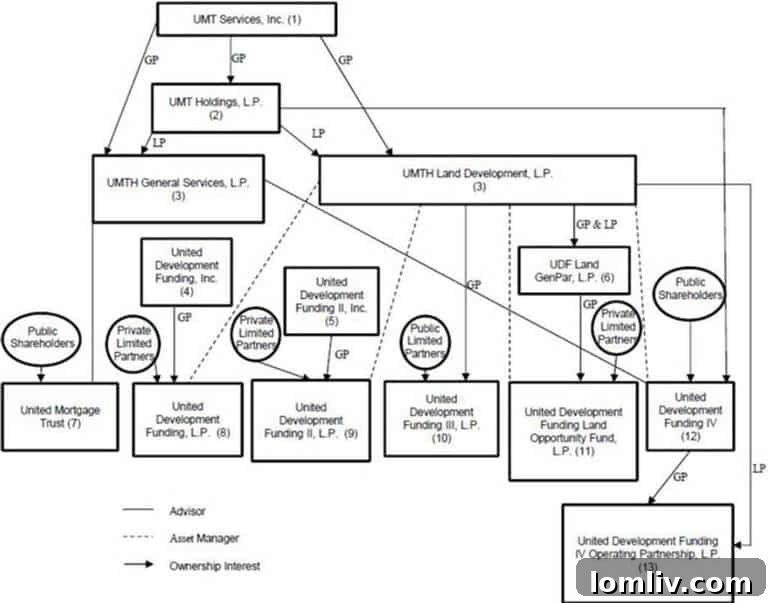
The alleged fraud orchestrated by UDF executives is a multi-layered and sophisticated operation, so intricate that it almost demands visual aids to fully comprehend. Federal authorities contend that the defendants at UDF marketed and sold real estate investment packages to the public, enticing investors with promises of substantial annual returns, ranging from 8 to 9.57 percent. Investors were led to believe these attractive returns would stem from the financing of land and various real estate developments, particularly in North Texas, one of the nation’s fastest-growing regions with hundreds of development projects over the past decade.
While most Real Estate Investment Trusts (REITs) typically focus on financing tangible, income-generating assets such as shopping centers, hotels, or office buildings, UDF’s strategy largely involved lending over $1 billion to residential developers. This emphasis on residential development loans, as reported by the Fort Worth Star-Telegram, distinguished UDF’s approach:
Over more than a decade, UDF has made more than $1 billion in secured loans to residential developers under the guidance of CEO Hollis Greenlaw. It is organized in a web of more than a dozen corporate entities, with UDF IV fund as its only publicly traded unit.
According to federal prosecutors, to meet the promised dividend payments to early investors and to support struggling developer loans, the defendants allegedly resorted to a classic Ponzi-like tactic. They established successive investment funds, each time repeating the same promises of high returns, and then used capital raised from newer funds (e.g., Fund II, III, IV) to pay off investors in older funds. This cyclical process of using new money to pay old debts allegedly continued through Fund V, creating an illusion of profitability and stability.
Adding to the gravity of the charges, the defendants are also accused of fraudulently securing loans from several FDIC-insured banks. The indictment states that the executives intentionally misrepresented the true purpose of these loans to the lending institutions, further concealing the alleged scheme and jeopardizing federally protected assets.
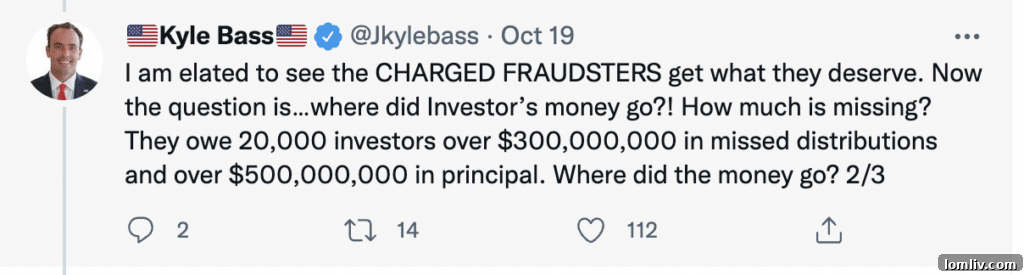
Dallas-based hedge fund manager Kyle Bass, a vocal critic of UDF for years, starkly articulates the human impact of the alleged fraud: “They stole the savings of 20,000 people. Mom and pop investors, I have spoken to some of them. No one knows how much money is actually missing.” Bass claims that the defendants collectively raised approximately $1 billion across their five funds, yet failed to provide adequate audited financial statements to account for these substantial sums.
Kyle Bass’s Crusader Role and the Nuances of Short Selling
Kyle Bass’s involvement in the UDF saga is a narrative in itself, marked by an unconventional and aggressive public campaign. Since 2015, Bass has been relentlessly scrutinizing UDF, taking the unprecedented step of establishing a dedicated website and public relations network specifically designed to expose UDF’s alleged misconduct. This extraordinary move came after one of his analysts, Parker Lewis, uncovered suspicious financial patterns within UDF’s operations, including unusually high dividends and undisclosed accounting discrepancies.
After months of research, he locked onto an explanation: When borrowers struggled to repay their loans, UDF used cash raised by newer funds to pay investors in older ones. Sometimes the newer funds would buy pieces of loans owned by the older ones in an effort to ensure that cash was available. These actions allowed UDF to keep paying the sizable dividends investors had grown to expect, which meant that it could continue attracting new investments.
Parker Lewis concluded that UDF was operating a Ponzi-like scheme, a revelation that immediately raised red flags about significant potential losses for investors. Bass asserts his primary motive was to protect vulnerable investors, recounting stories of individuals like a man who invested his retirement savings after working over 40 years at Bell Helicopter, only to potentially lose it all in UDF funds.
Bass and his firm, Hayman Capital, did not stop at public accusations; they also short-sold UDF stock. Short selling is an investment strategy where an investor borrows shares of a stock, sells them, and then buys them back later (hopefully at a lower price) to return them to the lender, profiting from the price decline. While most investors “buy low to sell high,” shorters “sell high to buy low.” This tactic, used by traders for centuries, can be controversial. Proponents argue it helps maintain market efficiency and expose corporate malfeasance, acting as a check on overvalued or fraudulent companies. Critics, however, contend that it can be a tool for market manipulation and predatory behavior.
The public condemnation by Bass and Hayman quickly garnered media attention, leading to multiple civil lawsuits against UDF filed by shareholders. Furthermore, UDF disclosed in 2016 that it had been the subject of a “fact-finding” investigation by the Securities and Exchange Commission (SEC) since 2014. Initially, the SEC stated this investigation was “not an indication of any violations of law” and that UDF had not been accused of wrongdoing. However, this preliminary phase was merely the beginning.
The “fact-finding” phase concluded in 2018 when the SEC officially sued UDF and five of its senior executives, including Greenlaw, Obert, and Wissink, for violating various SEC rules. While the executives paid approximately $8.2 million in fines, they continued to deny any wrongdoing. The company itself, notably, was spared direct fines from the SEC in this action.
The regulatory scrutiny extended beyond UDF to its auditors. Whitely Penn LLP, one of UDF’s auditing firms, faced sanctions from the Public Company Accounting Oversight Board (PCAOB). The PCAOB levied a $200,000 fine against Whitely Penn for violations of “PCAOB rules and standards” in connection with their audits and financial statements for UDF, highlighting the auditors’ alleged failure in their oversight responsibilities.
In response to Bass’s aggressive campaign, UDF retaliated by filing a lawsuit against Bass and Hayman Capital. UDF accused them of business disparagement, tortious interference, and orchestrating their actions specifically to profit from shorting UDF stock – a fact Bass and Hayman readily acknowledge. The historical context of short selling underlines its long-standing presence in financial markets:
“Traders bet against the first public company, the Dutch East India Company, 400 years ago.”
Current Case Status and Anticipated Legal Battles
The legal landscape surrounding UDF remains highly active, with multiple fronts progressing simultaneously. The civil lawsuit filed by UDF against Kyle Bass and Hayman Capital is currently in discovery, with a trial tentatively scheduled for May 2022. Recent developments in this civil case have seen a mandamus granted to Bass, which found an error in a lower court’s ruling concerning certain confidential documents. Jeffrey Tillotson, now lead counsel for Bass and Hayman, expresses confidence in their position.
“We believe strongly that evidence is going to show that postings by Mr. Bass were not only completely accurate, but the facts are much worse,” states Tillotson. He adds, “Mr. Bass views it as further vindication that his initial review and assessment is now confirmed by the authorities,” referring to the federal indictment. This sentiment reflects Bass’s conviction that his long-standing allegations are being progressively substantiated by official channels.
Bass’s credibility in the financial world is significant, partly owing to his prescient recognition of the impending subprime mortgage crisis. In 2007, he made highly profitable bets against subprime mortgages – a scenario famously depicted in the book and film The Big Short – leading to substantial gains for him and his investors. This foresight positions him as an astute observer of financial markets, further lending weight to his current crusade against UDF.
Despite the federal charges, UDF’s lawyer, Paul Pelletier, vehemently denies all allegations, maintaining the government is over-reaching. This stance has been consistent for over six years. All defendants entered pleas of not guilty during their initial court appearance in Tarrant County on Friday, October 15. According to Bass, the four executives were fingerprinted and booked the following Tuesday. The high-profile criminal trial is set to commence on December 6 in Fort Worth.
Pelletier issued a strong statement, encapsulating UDF’s defense:
“For the past 6½ years UDF has endured an illegal predatory short and distort attack, an unlawful FBI search and a transitory government investigation with ever-changing theories of alleged liability,” Pelletier said.
However, Kyle Bass, undeterred and seemingly emboldened by the indictments, suggests that the full extent of the UDF story is yet to unfold, hinting at further revelations to come. The ongoing trials and legal proceedings are poised to shed more light on the intricate web of finance, real estate, and alleged fraud that has defined the United Development Funding saga for years, with potentially significant implications for corporate accountability and investor protection within the real estate investment trust sector.