The Resurgence of Urban Living: An In-Depth Look at the Thriving Texas Condo Market
Texas, a state synonymous with expansive growth and opportunity, is experiencing a remarkable transformation in its housing landscape. While single-family homes traditionally dominated the market, a significant shift towards urban, high-density living is rapidly gaining momentum. This trend is nowhere more evident than in the booming condominium market, which has emerged as a cornerstone of the state’s real estate sector. According to the comprehensive Texas Condominium Mid-Year Sales Report from the esteemed Texas Association of Realtors, condo sales across the state were not just growing but thriving, particularly during the first five months of 2014.
The report highlighted an impressive average increase of 10.5 percent in statewide condo sales year-over-year between January and May 2014. This robust growth underscores a fundamental change in buyer preferences and market dynamics, signaling a strong demand for urban housing solutions. From vibrant metropolitan centers to burgeoning suburbs, condos are increasingly becoming the housing type of choice for a diverse range of buyers seeking affordability, convenience, and a dynamic lifestyle.
Texas’ Urban Core Thrives: A Snapshot of Condo Sales Across Major Metros
While the statewide average painted a picture of widespread prosperity, the individual performances of Texas’ major cities showcased unique strengths and varied growth rates within the condominium market. Each urban center contributed significantly to the overall upward trajectory, reflecting the diverse economic engines and lifestyle appeals that define the Lone Star State.
Leading the charge in condo market expansion was San Antonio, which registered an impressive 18 percent surge in sales. This growth can be attributed to San Antonio’s unique blend of rich history, cultural vibrancy, and a steadily expanding economy, particularly in the tech and medical sectors. Its appealing blend of tradition and modernity, coupled with relatively more affordable urban options, drew a significant influx of residents looking for an authentic city experience without the premium price tags of some other major Texas cities.
Following closely behind, Austin, the state’s capital and a renowned tech hub, saw a substantial 14 percent rise in condo sales. Austin’s appeal to a young, dynamic population, its thriving job market, and its reputation for a vibrant cultural scene have consistently fueled demand for urban living spaces. The city’s rapid population growth and status as a magnet for innovation and creativity naturally lead to a higher demand for diverse housing options, with condos perfectly fitting the bill for those seeking proximity to downtown amenities and a lock-and-leave lifestyle.
Houston, with its vast and diversified economy anchored by the energy sector, experienced a respectable 6 percent increase in condo sales. As the largest city in Texas, Houston’s sheer scale and continuous urban development efforts have made it a consistent player in the condo market. The city’s sprawling nature has seen more concentrated development efforts in its downtown, Galleria, and Medical Center areas, providing attractive condominium options for professionals and those seeking convenience in a metropolitan setting.
Dallas, a powerhouse of finance, commerce, and corporate headquarters, recorded a 4 percent gain in condo sales. While its percentage increase was lower than some counterparts, Dallas’s robust economic foundation and ongoing revitalization of its downtown and surrounding urban core signify a steady and healthy demand for condominium properties. The city’s strong employment growth and upscale amenities continue to attract residents looking for sophisticated urban living.
The Driving Forces Behind the Condo Boom
The burgeoning Texas condo market is not an isolated phenomenon but rather a direct reflection of several powerful economic, demographic, and spatial trends converging to reshape urban living. Understanding these underlying drivers provides crucial insight into the sustainability and future direction of this housing segment.
One of the primary catalysts for the condo market’s strength is the remarkable economic expansion witnessed across Texas’s major metropolitan areas. “The thriving economic growth in Texas’ major metro areas has led to a revitalization and redevelopment of our urban centers, providing new needs and opportunities for condo development,” noted Dan Hatfield, chairman of the Texas Association of Realtors. This sustained economic vitality, characterized by robust job creation and an influx of new residents, has reignited interest in urban centers. As more people move to cities for employment and lifestyle opportunities, the demand for housing within these cores intensifies, pushing condos to the forefront as a viable and attractive option.
Furthermore, condos offer tangible benefits that resonate deeply with modern buyers: affordability and increased inventory compared to traditional single-family homes. Hatfield elaborated, stating, “Condos offer greater affordability and inventory than other housing types on the market and, as a result, are playing an increasingly important role in the Texas housing market as a whole.” For first-time homebuyers, young professionals, and even empty nesters looking to downsize without sacrificing lifestyle, condos present a more accessible entry point into highly sought-after urban neighborhoods. They often come with a suite of amenities – such as gyms, pools, and concierge services – that enhance the quality of life, all while minimizing maintenance responsibilities, a significant draw for busy individuals.
Another critical factor fueling the vertical growth of Texas cities is the dwindling supply of available land within their core areas. As cities become more densely populated and desirable, open land for new construction becomes increasingly scarce and expensive. This scarcity inevitably forces developers to maximize their land footprint by building upwards rather than outwards. “There is little available land for housing development in Texas’ major metro areas, particularly in its urban centers where housing demand is strongest,” explained Jim Gaines, Ph.D., an economist with The Real Estate Center at Texas A&M University. He added, “Developers are now looking upward for opportunities to build and investing in multi-family developments both in these centers and even in some suburban areas. Condo sales will likely be a strong driver in the Texas housing market for the rest of the year.” This strategic shift towards multi-family developments is a pragmatic response to urban planning challenges and market demand, ensuring that housing supply can keep pace with population growth in prime locations.
Dallas’s Dynamic Condo Market: A Closer Look at Key Metrics
While Dallas’s 4 percent growth in condo sales was more modest compared to San Antonio or Austin during the January-May 2014 period, a deeper dive into the market’s specific metrics reveals a nuanced and highly competitive environment. The city’s condo sector, though experiencing flat inventory year-over-year, showed clear signs of strong demand and upward pricing pressure, indicative of a healthy and sought-after market.
During this five-month period, Dallas saw 2,383 condominiums sold. Despite this significant volume, the total available inventory remained relatively flat compared to the previous year. This flatness in inventory, in conjunction with rising sales, suggests a rapid absorption rate – meaning that available units were quickly being purchased. The median price for a condominium in Dallas climbed to $160,000, representing a respectable 4 percent gain from the prior year. This price appreciation, even with stable inventory, is a strong indicator of sustained buyer confidence and the intrinsic value buyers place on urban Dallas properties.
Further analysis of market activity provides even more granular insights. New listings for condos remained statistically unchanged at 3,470, indicating a consistent, but not dramatically increasing, supply entering the market. However, active listings – the total number of condos available for sale at any given time – witnessed a notable 14 percent drop, falling to 1,383 units. This significant reduction in active listings points directly to a tightening market and increased competition among buyers. Fewer available options typically drive up prices and accelerate the sales process. Complementing this, pending sales, which track properties under contract but not yet closed, rose by 5 percent to 2,361. This increase in pending sales is a strong forward-looking indicator, suggesting that the upward trend in closed sales was likely to continue in subsequent months, reflecting continued buyer enthusiasm and commitment.
One of the most compelling metrics highlighting the dynamism of the Dallas condo market was the average days on market (DOM). This period dropped significantly to just 62 days, a substantial 15 percent decrease from the previous year. A lower DOM is a clear signal of a seller’s market, where properties are selling much faster due to heightened buyer interest and urgency. For potential buyers, this meant needing to act quickly and decisively to secure a desired property, while sellers could anticipate quicker transactions and potentially multiple offers.
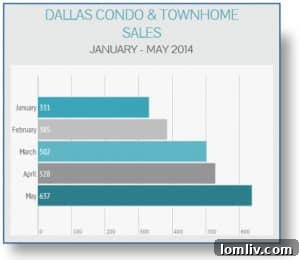
Examining monthly sales patterns within Dallas reveals interesting seasonal dynamics. May emerged as Dallas’s hottest month for condo sales during this period, with a robust 637 closings. This strong performance in May typically reflects the peak of the spring buying season, as warmer weather and the end of the school year often motivate families and individuals to make housing transitions. In stark contrast, January recorded only 331 condo sales, illustrating the typical slowdown during the colder, holiday-affected winter months. The dramatic increase from January to May underscores the cyclical nature of the real estate market and the significant ramp-up in activity as the year progresses.
When comparing price per square foot, Dallas offered a competitive yet premium option within the Texas market. The average price per square foot for Dallas condos stood at $136 during this period. This was notably higher than Houston’s $120, reflecting Dallas’s stronger average property values and potentially more compact, amenity-rich urban developments. However, it remained more accessible than Austin’s $205 per square foot, which commands a premium largely due to its concentrated tech industry, highly desirable lifestyle, and limited land availability. Dallas’s position offers a balance of urban sophistication and relative value for those seeking a vibrant city lifestyle.
The Future of Texas Condo Living: Projections and Perspectives
The trends observed in the first half of 2014 posed an intriguing question for market watchers: would the record pace of condo sales continue throughout the second half of the year, or would they cool alongside the broader Dallas housing market? Based on the underlying economic drivers and demographic shifts, the prognosis suggested continued strength and increasing importance for the condo sector.
The factors propelling the condo market – sustained job growth, urban revitalization, evolving lifestyle preferences, and the practical necessity of vertical development due to land scarcity – were not short-term anomalies. They represented fundamental shifts in how Texans desired to live and where they chose to reside. As the urban centers continued to attract talent and investment, the demand for accessible, convenient, and amenity-rich housing options like condominiums was poised to endure and even intensify. This meant that condos were not just a passing trend but a structural component of the evolving Texas housing market.
For developers, the sustained demand for condos presented significant opportunities, encouraging further investment in multi-family projects, often integrated into mixed-use developments that offer retail, dining, and entertainment options alongside residential units. This integration creates vibrant, walkable communities that appeal directly to the urban dweller. For homebuyers, particularly millennials entering the housing market and baby boomers seeking to downsize, condos offered an attractive solution that balanced affordability with lifestyle aspirations.
Spotlight on Neighborhoods: The Allure of Dallas’s Cedars and Beyond
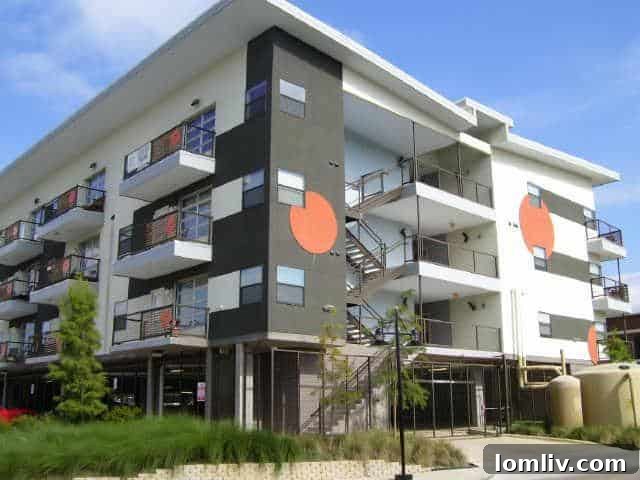
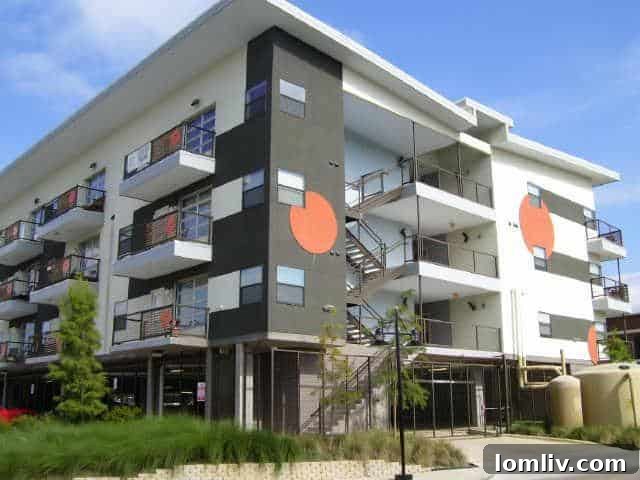
The burgeoning appeal of condo living in Dallas is exemplified by neighborhoods undergoing significant revitalization, such as The Cedars, located just south of downtown. As highlighted by Buzz Lofts, these areas offer an irresistible proposition for those seeking an authentic urban experience without the often-prohibitive costs associated with prime downtown real estate. The Cedars, for instance, has transformed into a popular destination, blending its historic industrial character with modern residential and commercial developments.
The allure of “loft living” in particular, as seen with Buzz Lofts, is a significant draw. Lofts typically feature open-concept layouts, high ceilings, large windows, and exposed architectural elements, offering a contemporary and stylish aesthetic. This type of housing appeals to individuals who appreciate unique living spaces, artistic flair, and proximity to cultural venues, entertainment districts, and the bustling energy of downtown Dallas. These properties often attract artists, young professionals, and those seeking a dynamic, walkable lifestyle where work, leisure, and home seamlessly intertwine.
Proximity to downtown Dallas is a key selling point for neighborhoods like The Cedars. Residents benefit from easy access to the city’s major employment centers, a diverse array of restaurants, vibrant nightlife, and world-class cultural institutions like the Dallas Arts District. This strategic location minimizes commute times and maximizes opportunities for leisure and social engagement, enhancing the overall quality of urban life. The continued investment in these near-downtown neighborhoods underscores their growing importance in providing accessible and desirable housing options for Dallas’s expanding population.
Conclusion: Condos as a Central Pillar of the Texas Housing Market
The mid-2014 condominium market report from the Texas Association of Realtors painted a clear and compelling picture: condos were not merely a niche market but a rapidly growing and essential segment of the Texas housing landscape. Driven by robust economic growth, a strategic shift towards urban revitalization, and the practical constraints of land scarcity, condominiums offered vital affordability and diverse housing options across the state’s major metropolitan areas. From San Antonio’s historic charm to Austin’s tech-driven dynamism, Houston’s expansive economy, and Dallas’s financial prowess, each city contributed to a statewide surge in condo sales.
In Dallas specifically, while overall sales growth was steady, the significant decrease in days on market, the rise in median prices, and the tightening of active listings pointed to a highly competitive and desirable market. These trends collectively underscored the increasing demand for urban living, characterized by convenience, access to amenities, and a vibrant city lifestyle. As Texas continues its trajectory of economic prosperity and population growth, the role of condominiums in shaping the state’s housing future is set to become even more central, offering sustainable and appealing solutions for a diverse and growing populace.