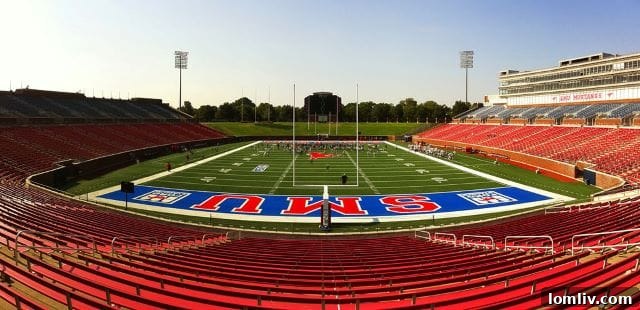
College Football Stadiums and Their Impact on Local Home Values: A Deep Dive into Real Estate Trends
For many, the allure of college football is undeniable – a thrilling spectacle of athleticism, tradition, and fervent community spirit. However, beyond the roar of the crowd and the passion of game day, the presence of a major Division-I football stadium can cast a significant, and often surprising, shadow over the local real estate market. A recent comprehensive study by the moving service moveBuddha has shed light on this intriguing relationship, revealing just how much homebuyers are willing to pay for properties situated near college football arenas across the United States.
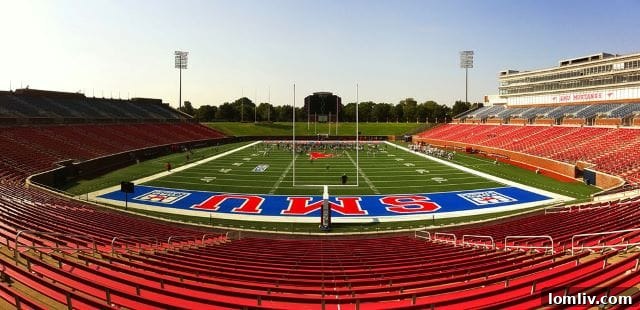
While teams like Southern Methodist University (SMU) and Rice University may not consistently dominate the top spots in national college football rankings, they certainly lead the pack in a different, equally competitive arena: local home values. According to moveBuddha’s insightful analysis, these two Texas institutions stand out for having some of the most expensive surrounding real estate markets relative to their respective city averages. This phenomenon highlights a fascinating dynamic where the prestige and amenities associated with a university, rather than just its athletic prowess, can significantly inflate property prices in the immediate vicinity of its stadium.
Methodology: Unveiling the Data Behind Stadium Impact
To conduct this unique study, Athens, Georgia-based moveBuddha embarked on a meticulous data collection process. Their methodology involved several key steps designed to provide a comprehensive overview of the relationship between college football stadiums and residential property values:
- Stadium Identification: A complete list of all Division I Football Bowl Subdivision (FBS) and Football Championship Subdivision (FCS) teams was compiled.
- Attendance Data: Average home game attendance figures for each team were collected, offering a proxy for the level of engagement and community interest.
- Geographic Mapping: The specific ZIP codes for each college football stadium were identified and mapped. This precise geographic pinpointing was crucial for localized real estate analysis.
- Home Value Index Utilization: The widely recognized Zillow Home Value Index was employed to determine the average home value. Specifically, the study focused on two-bedroom homes within each identified stadium ZIP code. This standardization allowed for a fair comparison across diverse housing markets.
By correlating stadium locations with granular real estate data, moveBuddha was able to draw compelling conclusions about which university environments create the most desirable, and consequently the most expensive, housing markets.
The Leaders in Luxury: Housing Near the Gridiron
Rice University: A Houston Gem
Rice University in Houston, Texas, emerged as the undisputed leader in this study, showcasing an extraordinary influence on local property values. Its iconic Rice Stadium is strategically nestled within West University Place, a neighborhood consistently ranked among the wealthiest and most desirable residential areas in Houston. The study revealed that homes located near Rice Stadium command prices that are, on average, a staggering $459,733 more expensive than the average home value across the greater Houston area. This significant premium is not merely a coincidence but a direct reflection of West University Place’s elite status, exceptional school districts, lush green spaces, and proximity to major employment hubs, all factors amplified by the university’s presence. Indeed, West University Place’s reputation extends far beyond Houston, having been recognized on 24/7 Wall St.’s prestigious list of America’s 50 Best Cities to Live in 2019.
SMU and University Park: Dallas Prestige
Not far behind Rice, Southern Methodist University (SMU) secured a commendable fourth place in the rankings for the highest increase in home value near a stadium. Located in the affluent enclave of University Park, a highly coveted neighborhood within Dallas, homes surrounding SMU’s Gerald J. Ford Stadium boast an average price tag that is $189,500 higher than the average Dallas home. University Park is renowned for its meticulously maintained properties, top-tier public and private schools, vibrant community atmosphere, and convenient access to upscale shopping, dining, and cultural attractions. The university itself acts as a cultural and intellectual hub, further enhancing the desirability and perceived value of properties in its immediate vicinity. Residents here enjoy the dual benefits of a peaceful, tree-lined suburban feel combined with the intellectual stimulation and athletic excitement of a major university.
Stanford University: The Silicon Valley Effect
While Rice and SMU highlighted impressive increases relative to city averages, Stanford University topped the overall list for the most expensive teams among the 254 schools analyzed. This comes as little surprise given its location. Two-bedroom homes in Palo Alto, California, specifically in the ZIP codes surrounding Stanford Stadium, average a staggering $1.66 million. This exorbitant price point is largely attributable to Palo Alto’s position at the heart of Silicon Valley, a global epicenter for technology and innovation. The demand for housing in this region far outstrips supply, driven by high-paying tech jobs, world-class educational institutions like Stanford, and an unparalleled quality of life, albeit at a premium. The university’s global prestige and its role as a hotbed for entrepreneurship significantly contribute to the enduring appeal and astronomical property values of the area.
Texas Titans: A Different Story for Larger Universities
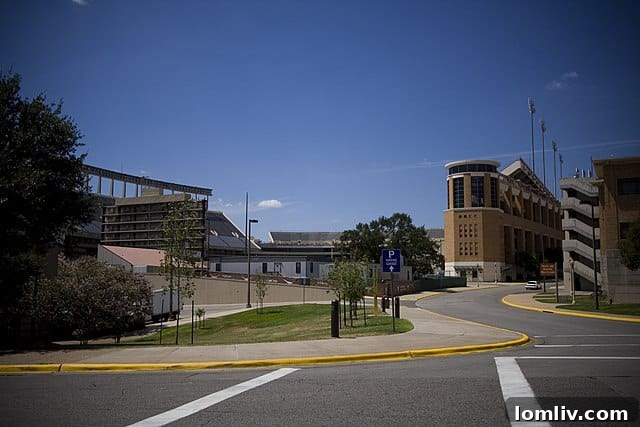
Intriguingly, the narrative shifts when examining some of Texas’s larger and more celebrated college football programs. For institutions like Texas A&M University in College Station and the University of Texas at Austin, the impact on surrounding home values appears to be inversed. The study found that homes near their respective stadiums—Kyle Field for Texas A&M and Darrell K. Royal-Texas Memorial Stadium for UT Austin—were actually less expensive, by nearly $50,000, than the average home value for their respective cities. This counter-intuitive finding can be attributed to several factors:
- Student-Centric Housing: Areas immediately adjacent to large university campuses often feature a higher concentration of student rental properties, which can depress median home values for owner-occupied residences. These properties are typically designed for short-term occupancy, are often smaller, and may not command the same premium as family homes further afield.
- Infrastructure and Development: While universities bring economic activity, the immediate campus perimeter might be characterized by commercial strips catering to students, older housing stock, or high-density apartment complexes rather than luxury single-family homes.
- City Size and Diversity: In larger, more diverse metropolitan areas like Austin, the economic and residential landscape is vast. The influence of a single university, even one as prominent as UT, can be diluted across a broader market. Many highly desirable residential areas are intentionally situated away from the constant hustle and bustle of campus life, offering a different kind of appeal.
- Specific Campus Layouts: The sheer size of some university campuses means that the actual stadium might be surrounded by other university facilities, academic buildings, or open spaces, rather than dense residential zones, thus limiting the direct impact on traditional home values.
The Other End of the Spectrum: Decreasing Home Values
The moveBuddha study also brought to light instances where a college football stadium’s presence correlates with a decrease in local home values. This intriguing contrast highlights the diverse socio-economic and urban planning contexts surrounding different universities.
Fordham University: The Bronx Complexities
Taking the top spot for the largest decrease in home value near a stadium was Fordham University in the Bronx, New York. Homes located around Jack Coffey Field were found to be, on average, a substantial $508,870 cheaper than the rest of the neighborhood. This stark difference underscores the complex interplay of factors that can influence property values in highly urbanized environments. In densely populated areas like the Bronx, proximity to a stadium might not always be seen as a premium amenity. Instead, it could be associated with increased traffic, noise, limited parking, and a higher density of commercial establishments or older housing stock. Additionally, broader economic conditions and specific neighborhood characteristics within the Bronx play a significant role in determining real estate demand and pricing, often overshadowing the potential positive impact of a university’s presence. The immediate vicinity of such an urban stadium might cater more to commuter students or staff, rather than attracting high-end residential buyers seeking tranquility or large family homes.
Beyond the Goalposts: Factors Influencing Real Estate Near College Stadiums
The moveBuddha study compellingly demonstrates that the relationship between college football stadiums and local home values is multifaceted, extending far beyond the simple presence of an athletic venue. Several intertwined factors contribute to whether a stadium elevates or diminishes property values:
- Neighborhood Prestige and Demographics: As seen with Rice and SMU, stadiums situated within already affluent, desirable neighborhoods tend to amplify existing high property values. These areas often boast high-income residents, strong community associations, and a perception of exclusivity.
- Quality of Local Schools: Access to top-rated public and private schools is a primary driver for family homebuyers. Universities often contribute to a strong educational ecosystem, which can make nearby residential areas highly attractive.
- Amenities and Infrastructure: Proximity to parks, upscale retail, fine dining, cultural institutions, and efficient public transportation networks significantly enhances property appeal. Well-developed infrastructure signals a robust and livable community.
- Economic Vibrancy and Job Market: Strong local economies with diverse job opportunities, particularly high-paying sectors (like tech in Palo Alto), fuel housing demand and price appreciation. Universities themselves are major employers and economic engines.
- Urban vs. Suburban/Rural Context: The impact differs significantly based on the environment. In dense urban settings, stadium proximity might bring congestion; in more suburban or collegiate towns, it might be a central point of community pride and activity.
- University Type and Focus: Research universities, especially those with strong engineering or medical schools, often attract a highly educated and affluent demographic, impacting the surrounding housing market differently than, say, a smaller liberal arts college.
- Student Housing Dynamics: The proportion of student rentals versus owner-occupied homes can dramatically influence the median home value. Areas dominated by student housing often see lower median values, even if rental yields are high.
- Historical Development and Zoning: The way an area has developed over time, coupled with local zoning laws, dictates the type of housing available and its density, which in turn affects pricing.
Implications for Homebuyers and Investors
For potential homebuyers and real estate investors, the moveBuddha study offers valuable insights:
- Strategic Investment: Investing in properties near stadiums in prestigious, amenity-rich neighborhoods (like those around Rice or SMU) can yield substantial long-term appreciation due to sustained demand and the prestige associated with the university and its locale.
- Understanding Market Nuances: It’s crucial to differentiate between areas dominated by student rentals and those catering to permanent residents. While student rentals can offer attractive yields, they may not contribute to the same capital appreciation as traditional family homes.
- Weighing Pros and Cons: The excitement of game day must be balanced against potential downsides like traffic, noise, and parking challenges. Some buyers prioritize proximity to the action, while others seek tranquility.
- Long-Term Vision: The enduring appeal of a university, its academic reputation, and its contribution to the local economy can provide a stable foundation for property values, even through economic fluctuations.
Conclusion: The Complex Interplay of Sports and Real Estate
The relationship between Division-I college football stadiums and surrounding home values is a complex tapestry woven from threads of prestige, economics, demographics, and urban planning. While the electrifying atmosphere of game day is a transient experience, the long-term presence of a major university and its athletic facilities undeniably shapes the character and value of its host community’s real estate. From the sky-high prices in Palo Alto to the significant premiums in Houston’s West University Place and Dallas’s University Park, to the more nuanced markets around Austin and College Station, and even the inverse effect seen in parts of the Bronx, this study underscores that location, as always, remains paramount. However, when it comes to college stadiums, “location” is defined not just by geography, but by the unique ecosystem of a university town – an ecosystem that continues to fascinate both sports enthusiasts and real estate professionals alike.
To delve deeper into the full findings and explore specific team rankings, you can view the complete moveBuddha study here.