 The real estate market is a dynamic landscape, constantly shifting and presenting new opportunities and challenges for buyers, sellers, and investors alike. This comprehensive real estate news roundup delves into several key trends shaping the housing sector, providing crucial insights for anyone navigating its complexities. We’ll explore the remarkable recovery of home values in major U.S. metros, particularly in the thriving Texas markets, highlighting the economic forces driving this rebound. Furthermore, we’ll examine the persistent hurdles preventing millennials from achieving homeownership, analyzing the critical role of affordability and generational differences in housing aspirations. The steady climb of mortgage rates, a pivotal factor influencing purchasing power and market sentiment, will also be scrutinized. Lastly, we’ll dive into the ambitious expansion strategies of industry giants like Zillow, who are increasingly integrating services to streamline the entire home transaction process, signaling a profound transformation in how homes are bought and sold. Understanding these developments is paramount for making informed decisions in today’s evolving housing market.
U.S. Home Values Soar: Post-Recession Recovery Reaches Peak Levels in Key Metros
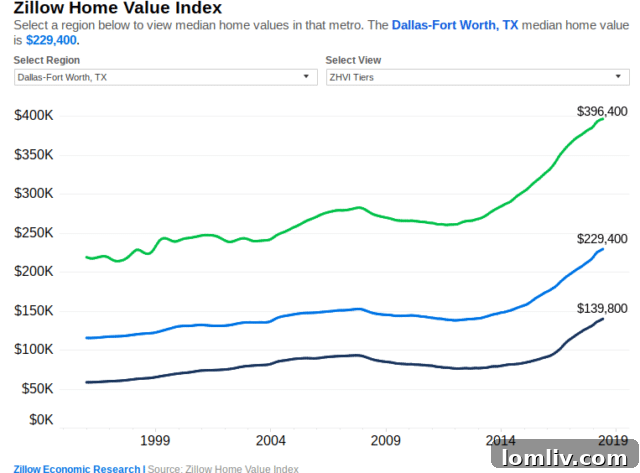
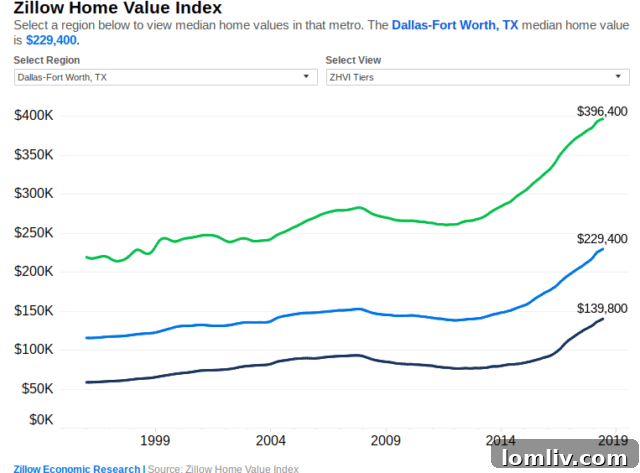
A significant milestone in the post-recession housing recovery has been achieved, marking a period of robust growth and renewed confidence across the nation’s real estate sector. According to Zillow’s detailed monthly Real Estate Market report, nearly half of all homes across the United States have now successfully regained or surpassed their peak values from before the 2008 housing crisis. This impressive recovery reflects a decade of sustained economic expansion, job growth, and a resurgence in buyer demand that has collectively bolstered property values.
Among the leading metros spearheading this remarkable rebound, several major cities in Texas have demonstrated exceptional performance. Dallas, a vibrant economic hub, stands out as one of nine major U.S. cities where an overwhelming majority of homes – 95 percent or more – are now valued above their highest point during the pre-recession housing bubble. This phenomenal recovery is not an isolated phenomenon within Texas; San Antonio, Austin, and Houston also proudly made this exclusive list. The inclusion of these major Texas urban centers underscores the state’s dynamic economic vitality, characterized by consistent job creation, significant corporate relocations, and a steady influx of new residents, all of which have collectively fueled a robust demand for housing and driven property values upwards at an accelerated pace.
Nationally, the median home value, which has reached an impressive $217,300, has also surpassed its pre-recession peak in a total of 21 housing markets across the country. This widespread return to peak valuations is a strong indicator of a healthy and maturing market, albeit with varying paces and patterns of recovery across different property segments. Zillow’s analysis brought to light an intriguing disparity in these recovery patterns: luxury properties have consistently demonstrated the fastest rebound trajectory. A substantial 57.1 percent of high-end homes have already returned to their pre-recession valuations, reflecting strong investor confidence and wealth accumulation among affluent buyers. In stark contrast, homes in the most affordable markets have lagged significantly, with only 39.7 percent reaching comparable recovery levels. This pronounced difference highlights a growing wealth gap within the housing market, suggesting that higher-income brackets have benefited more swiftly and substantially from the economic upswing, while entry-level buyers continue to face persistent challenges in accessing affordable housing options.
Millennial Homeownership Stalls Amidst Persistent Affordability Challenges
 The timeless dream of homeownership, often considered a cornerstone of the American ideal, appears increasingly elusive for a significant portion of the millennial generation. A recent CoreLogic Home Price Insights report for June 2018 meticulously details the formidable barriers preventing this large demographic from successfully entering the housing market. Despite expressing a strong and pervasive desire to own a home, particularly among younger millennials, the prevailing lack of affordability consistently emerges as the most significant and often insurmountable obstacle.
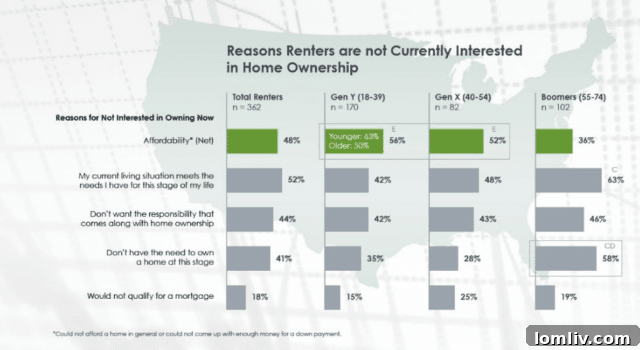
CoreLogic’s comprehensive consumer housing sentiment study, which carefully assessed attitudes towards both home buying and renting across various age groups, uncovered a compelling paradox. The aspiration for homeownership was notably higher and more pronounced among younger demographics compared to their older counterparts. However, this fervent desire is persistently tempered by stark financial realities. The report specifically underscored that “younger millennial renters (those under the age of 29) are significantly more likely to want to buy a home in the next 12 months than older millennial or Generation X renters.” Delving deeper into the specific reasons behind this stalled ambition, a striking 63 percent of younger millennials who expressed no immediate interest in homeownership unequivocally cited the “inability to afford a home or down payment” as their primary deterrent. This compelling data vividly illustrates the immense financial pressure weighing on younger generations, who are frequently burdened by substantial student loan debt, facing stagnant wage growth relative to rapidly escalating property prices, and struggling to save for a sizable down payment in competitive markets.
While affordability is undoubtedly a critical and widespread factor for younger millennials, its impact and perceived importance vary across different generations. Approximately 50 percent of older millennial renters and 52 percent of Generation X renters also identified affordability as a key consideration in their complex decision-making process to rent rather than own a home. In contrast, baby boomers often cited a distinct lack of personal interest in homeownership as their primary reason for renting, a choice frequently driven by their current life stage, evolving needs, and a preference for flexibility over long-term property commitments. This nuanced generational divide effectively illustrates the intricate interplay of financial capacity, shifting life priorities, and prevailing market conditions that collectively influence housing choices across the demographic spectrum.
The national housing market continues its upward trajectory, demonstrating remarkable resilience and growth, with year-over-year home prices increasing by a robust 6.8 percent, a positive trend observed across all states. Texas, a perennial engine of economic and population growth, recorded a substantial 5.5 percent increase year-over-year and is projected to see another 3 percent increase by June 2019. While impressive, this consistent and often rapid price appreciation further exacerbates existing affordability issues for prospective buyers, particularly in high-demand urban areas where supply struggles to keep pace with demand. CoreLogic Market Conditions Indicators (MCI) data from June 2018 notably flagged 41 percent of the country’s 100 largest metropolitan areas as having an “overvalued housing stock.” Significantly, both the Dallas-Plano Metro market and the Fort Worth-Arlington markets fall into this concerning category, signaling potential risks of unsustainable price levels and increased difficulty for average-income earners to enter these markets. This “overvalued” classification suggests that current home prices in these regions may be higher than what fundamental economic factors would typically support, potentially leading to a future market correction or rendering homeownership unattainable for a growing segment of the population.
Rising Mortgage Rates Signal a Shifting Landscape for Homebuyers and the Housing Market
After a period of surprising stability throughout the summer months, mortgage rates have initiated a discernible ascent, signaling a crucial shift in the broader dynamics of the housing market. Data recently released by Freddie Mac confirmed this upward trend, which carries significant implications for the purchasing power of potential homebuyers and the overall velocity of real estate transactions across the nation. Understanding the multifaceted factors driving these rate increases is now more essential than ever for anyone contemplating a home purchase or considering refinancing an existing mortgage.
According to comprehensive reports, including those widely cited by the Washington Post, the average rate for a 30-year fixed-rate mortgage experienced an increase, climbing to 4.54 percent with an average 0.5 point. This represents a slight yet notable uptick from the 4.52 percent recorded just the previous week, and a more substantial rise from the 3.92 percent observed in the same week a year prior, indicating a clear trajectory. Similarly, the 15-year fixed-rate mortgage also moved upwards to 4.02 percent, up from 4 percent the week before and a significant jump from 3.20 percent a year ago. Even the five-year adjustable-rate mortgage (ARM), while remaining unchanged from the prior week at 3.87 percent, stands considerably higher than its 3.18 percent position a year ago. These figures collectively illustrate a tightening of borrowing conditions, which directly translates into home loans becoming incrementally more expensive, thereby impacting monthly payments and overall affordability for prospective buyers.
Several powerful macroeconomic factors are converging to exert this upward pressure on mortgage rates. Aaron Terrazas, a senior economist at Zillow, provided valuable insight to the Post, explaining that a complex interplay of renewed trade tensions between the U.S. and China, recent hawkish comments from various Federal Reserve officials hinting at future monetary policy adjustments, and a shifting monetary policy outlook in Japan have all played a pivotal role. Global investors vigilantly react to these geopolitical and economic signals, which in turn significantly influence bond yields—the primary underlying driver of long-term mortgage rates. Upcoming Q2 GDP data is also being keenly watched by market participants, as its findings are anticipated to inform and potentially impact the Federal Open Market Committee’s (FOMC) interest rate policy decisions. Any robust indication of stronger economic growth or persistent inflationary pressures could very well prompt further rate hikes from the Federal Reserve, thereby pushing mortgage rates even higher and potentially dampening housing market activity.
The immediate impact of these rising rates is already becoming palpable across various segments of the housing sector. Sam Khater, chief economist at Freddie Mac, voiced considerable concerns in a recent statement, observing that “existing sales appear to have peaked, sales of newly built homes are slowing and unsold inventory is rising for the first time in three years.” This unsettling confluence of factors paints a clear picture of a cooling market, where the robust and sometimes frenzied activity observed earlier in the year is beginning to wane. Khater further emphasized that “affordability pressures are increasingly a concern in many markets, as the combination of continuous price gains and higher mortgage rates appear to be giving more prospective buyers a pause.” This suggests that potential buyers are becoming increasingly cautious, taking longer to commit to purchases, or in many cases, being priced out of the market entirely, even amidst a generally healthy economy and strong labor market.
Further supporting this emerging trend, data released by the Mortgage Bankers Association (MBA) revealed that mortgage applications remained largely flat last week, with the overall loan application volume experiencing a slight decrease of 0.2 percent from the previous week. While the refinance index saw a modest one percent increase, indicating that some existing homeowners are still looking to capitalize on current rates or improve their loan terms where possible, the purchase index, which specifically tracks applications for new home purchases, notably fell by one percent. Refinance activity accounted for 36.8 percent of all applications, underscoring its continuing relevance. These statistics collectively reinforce a growing sense of caution pervading the housing market, where the era of historically low mortgage rates appears to be drawing to a close, forcing both prospective buyers and sellers to recalibrate their expectations, strategies, and financial plans in response to this evolving economic landscape.
Zillow Expands Its Ecosystem: Venturing Into Mortgage Lending and Streamlining the Home Transaction
In its relentless and ambitious pursuit of becoming the preeminent, all-encompassing platform for comprehensive real estate transactions, Zillow has officially announced yet another significant strategic move: its direct entry into the mortgage lending business. This bold and expansive initiative underscores the company’s overarching vision to create a seamlessly integrated, end-to-end ecosystem that effectively covers every conceivable facet of the home buying and selling journey, from the initial property search to the complex processes of financing and final closing. This latest development follows earlier strategic efforts by Zillow to offer enhanced and diversified services, such as facilitating rental applications and streamlining rent payments, signaling a much broader and more aggressive strategy to exert greater control and provide enhanced value across the entire housing lifecycle.
As officially disclosed by the company on Monday, Zillow is poised to acquire Mortgage Lenders of America. This pivotal acquisition is not merely an expansion into a new vertical; rather, it is a meticulously calculated strategic step specifically designed to “shorten the home-buying process for consumers who purchase homes through Zillow Offers.” By strategically bringing mortgage lending capabilities in-house, Zillow aims to systematically eliminate friction points and significantly accelerate the notoriously complex and often time-consuming home transaction process. This integration is projected to offer a more convenient, transparent, and integrated experience to its vast and growing user base, simplifying what has historically been a fragmented and stressful endeavor for many homebuyers.
Following the successful acquisition, Mortgage Lenders of America will seamlessly continue its established operations, serving its existing client base with a full and robust suite of traditional mortgage products. Crucially, however, the firm will concurrently become the exclusive and dedicated mortgage provider for the burgeoning Zillow Offers program. This powerful synergy is central to Zillow’s overarching long-term strategy. Through Zillow Offers, the company directly purchases homes from motivated sellers in select and rapidly growing markets, including Denver, Atlanta, Las Vegas, and Phoenix. After acquiring a property, Zillow diligently undertakes any necessary repairs, renovations, and aesthetic updates to significantly enhance its market appeal before officially listing it for resale. The strategic integration of an in-house mortgage lender means that buyers interested in purchasing Zillow Offers homes will now have a streamlined and readily accessible financing option directly within the comprehensive Zillow ecosystem, theoretically simplifying and considerably speeding up their entire purchase journey.
A particularly pivotal aspect of this transformative announcement is Zillow’s definitive decision to become the sole and exclusive buyer participating in the Zillow Offers program. The company explicitly articulated its new strategy in a direct letter to investors, stating, “Going forward, we will be the only buyer participating in the Zillow Offers program. We no longer facilitate third-party investors to make offers to home sellers through a marketplace. This will ensure the process is as efficient and seamless as possible for sellers, agents and brokers.” This significant move unequivocally signifies a departure from a traditional marketplace model where multiple third-party investors could previously submit offers via the Zillow platform. By deliberately consolidating the entire buying process under its direct control, Zillow aims to substantially enhance consistency, predictability, and operational efficiency, thereby providing sellers with a more direct, transparent, and less complicated selling experience. This strategic shift further solidifies Zillow’s commanding position as a dominant, vertically integrated player in the rapidly evolving real estate technology space, potentially reshaping traditional real estate brokerage models and offering a new, innovative paradigm for how homes are bought and sold in the increasingly digital age. This bold and calculated step unmistakably demonstrates Zillow’s unwavering commitment to fundamentally transforming the entire real estate industry by strategically owning and optimizing more critical parts of the transaction flow, ultimately aiming to deliver an unparalleled, end-to-end user experience.