Preserving History: The Quest for Landmark Status for Dallas’s Maple Terrace
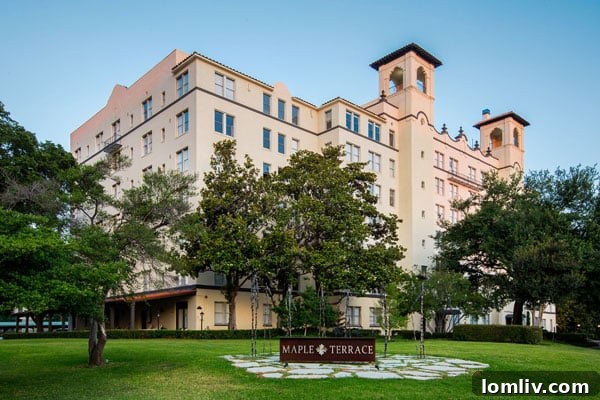
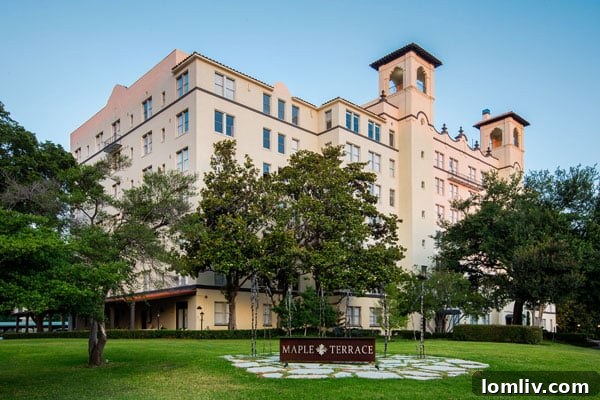
Dallas, a vibrant metropolis celebrated for its dynamic growth and ever-evolving skyline, also holds deep reverence for its rich historical roots. This blend of progress and preservation often creates a unique tension, particularly when iconic structures like the Maple Terrace become targets for modern development. The Maple Terrace, with its distinctive architecture and historical significance, currently faces the familiar threat of demolition by developers keen to capitalize on prime real estate. For many, especially within the dedicated preservation community, the critical question is whether this cherished building can be protected and preserved for future generations through a landmark designation.
Maple Terrace: A Prime Candidate for Historic Designation
To ascertain the potential for safeguarding Maple Terrace, we consulted with David Preziosi, the Executive Director of Preservation Dallas. His organization plays a pivotal role in advocating for and protecting the city’s architectural heritage. When posed with the question of Maple Terrace’s eligibility for landmark status, Preziosi’s response was immediate and resolute.
“The Maple Terrace would definitely qualify,” Preziosi affirmed without hesitation. He went on to outline the fundamental criteria that a building must meet to achieve historic recognition in Dallas. “To be considered historic, a structure generally needs to be at least 50 years old. However, this rule isn’t absolute; if a building is younger than 50 years, it must demonstrate a profound association with something historically significant. This could be a groundbreaking technological innovation, a crucial moment in the civil rights movement, or a direct link to a person of extreme historical importance connected to the site itself.” This flexible guideline ensures that both long-standing architectural gems and more recent, culturally impactful sites can receive the vital protection they deserve. Given Maple Terrace’s age, which comfortably exceeds the 50-year threshold, and its undeniable architectural and community prominence, it stands as a strong and compelling candidate for official historic designation.
Dallas’s Rich Historical Tapestry: A Legacy of Preservation
Our discussion with Preziosi also cast a spotlight on Dallas’s extensive commitment to preserving its heritage, revealing an impressive dedication that often goes unnoticed amidst its modern development. It was inspiring to learn that the city is home to more than 1,000 historic buildings. These treasured structures span a wide architectural and historical spectrum, from the opulent Beaux-Arts grandeur of the Adolphus Hotel, a downtown landmark since 1912 that has hosted countless dignitaries, to the distinctive Magnolia Building, instantly recognizable by its iconic Pegasus emblem and symbolizing Dallas’s deep ties to the oil industry, and the charming Wales Apartments, which exemplify the residential architecture of the early 20th century. Each of these buildings tells a unique chapter in Dallas’s story, collectively enriching the city’s character and providing tangible links to its past.
Beyond individual landmarks, Dallas actively preserves its collective history through 21 formally designated historic districts. These include the picturesque Lake Cliff Historic District, celebrated for its beautiful homes and tranquil park settings, the architecturally significant Sears Building, a testament to the city’s commercial and retail evolution, and the nationally renowned Swiss Avenue Historic District. The latter holds particular distinction as Dallas’s very first historic district, boasting an unparalleled collection of meticulously preserved mansions from the early 20th century. Complementing these districts, the city also maintains 17 conservation districts, which offer a protective framework for neighborhoods, allowing for preservation without the more stringent controls applied to historic districts.
Further solidifying its preservation efforts, Dallas proudly includes 25 National Register Districts. This prestigious federal designation, administered jointly by the National Park Service and the Texas Historical Commission, encompasses sites of national significance. Notable examples include Dealey Plaza, a location etched into American history, and Fair Park, a stunning Art Deco complex that famously hosted the 1936 Texas Centennial Exposition. Significantly, all City of Dallas historic districts are automatically listed on the National Register, underscoring the comprehensive and integrated nature of the city’s approach to heritage protection and ensuring widespread recognition of its historical assets.
Navigating the Landmark Designation Process in Dallas
The journey toward securing landmark status for a property in Dallas is a meticulously structured, multi-stage process designed to ensure thorough evaluation and broad community consensus. This rigorous procedure typically commences with the submission of a nomination to the Designation Committee. This committee, composed of experts in fields such as architecture, history, and urban planning, undertakes a detailed review of the property’s historical significance, its architectural integrity, and the potential impact of its designation on the surrounding community and urban fabric.
Should the Designation Committee issue a favorable recommendation, the nomination then advances to the Landmark Commission. At this stage, the process becomes more public, involving hearings where community members, property owners, and passionate preservation advocates can present their perspectives and arguments both for and against the designation. The Landmark Commission meticulously evaluates the property against a stringent set of established criteria, weighing its historical, cultural, architectural, and aesthetic merits. Gaining approval from the Landmark Commission represents a crucial milestone, signifying that the property indeed meets the city’s rigorous standards for historic designation and is worthy of protection.
The final decision-making authority in the designation process rests with the Dallas City Council. Following the Landmark Commission’s approval, the City Council conducts its own comprehensive review, often considering broader policy implications, economic impacts, and extensive community feedback. A conclusive vote by the City Council grants the official landmark status, which legally protects the building from demolition and ensures that any future exterior alterations are carefully regulated and in harmony with its historical character. This elaborate and systematic process guarantees that only truly deserving properties receive this prestigious and protective designation, reflecting a shared community commitment to safeguarding invaluable heritage assets.
Responsibilities and Challenges of Landmark Ownership
Once a property achieves the coveted landmark status, its owners embrace a new set of responsibilities centered on the meticulous preservation of its original features and historical character. While owners retain the fundamental rights to enjoy and utilize their property, they are simultaneously entrusted with a stewardship role—maintaining its integrity for the benefit of the community and future generations. Consequently, any proposed changes to the exterior appearance of a landmark-designated property, regardless of how minor they might seem, require a formal review and the issuance of a Certificate of Appropriateness from the City of Dallas. This mechanism is crucial for ensuring that all modifications remain aesthetically compatible with the building’s historic architecture and do not diminish its intrinsic significance. It establishes a collaborative partnership between the city and the property owner, with the overarching goal of long-term, responsible care for a precious historical asset.
A significant, and often decisive, obstacle in the landmark designation process is the requirement for the property owner’s explicit approval and cooperation. Without the owner’s voluntary agreement, the path to landmark status becomes considerably more arduous, if not entirely blocked. Property owners may express reluctance or outright opposition to designation due to a range of concerns, including perceived restrictions on future development, the potential for increased maintenance costs associated with historical guidelines, or simply a desire for complete autonomy over their private property and its economic potential.
Nevertheless, there are rare and exceptional circumstances where landmark status can be imposed even over the strenuous objection of the owner. A prominent historical precedent in Dallas occurred in 2000 with the designation of the Dallas High School Crozier Tech. This case exemplifies the extraordinary situations in which a city may opt to exercise its authority to protect a heritage site deemed to possess irreplaceable importance to the public good, overriding individual property rights in favor of broader historical preservation objectives. Such decisions are typically subject to intense public debate and necessitate robust justification regarding the property’s paramount historical, cultural, or architectural value to the community.
Powerful Incentives: Driving Preservation Through Tax Credits
Beyond the inherent civic pride and profound cultural benefits of preserving historic buildings, there are substantial financial incentives designed to encourage property owners and developers to choose rehabilitation over demolition and new construction. These powerful incentives, primarily in the form of tax credits, make preservation an economically viable and often attractive option. Obtaining a historic designation on the National Register of Historical Places, a prestigious program collaboratively managed by the Texas Historical Commission and the National Park Service, unlocks access to significant financial benefits.
Under the federal program, owners who undertake a substantial rehabilitation of a National Register-listed property can qualify for a federal income tax credit equivalent to 20% of their qualified rehabilitation expenses. This credit is not merely a deduction; it provides a direct, dollar-for-dollar reduction in federal income tax liability. To be eligible, the rehabilitation project must be deemed “substantial,” meaning the investment must exceed a specific threshold relative to the property’s adjusted basis, and critically, all work must strictly adhere to the Secretary of the Interior’s Standards for Rehabilitation. These standards ensure that the historic character and materials of the building are meticulously preserved, guaranteeing that the incentive supports meaningful and authentic restoration, rather than merely cosmetic updates like “slapping on some paint.”
The landscape of preservation incentives in Texas has become even more robust and appealing. Starting January 1, 2015, the state tax credit for historic rehabilitation significantly increased to 25%. This state-level incentive operates in conjunction with the existing federal credit, creating a compelling combined financial impetus for preservation. Since Texas does not levy an individual or corporate income tax, this state credit is strategically applied towards a franchise tax credit. The franchise tax is Texas’s primary business tax, imposed on corporations and other business entities operating within the state. Therefore, for a developer or business entity considering an investment in the rehabilitation of Maple Terrace, this 25% state credit would directly reduce their franchise tax liability, making the preservation project considerably more financially appealing and competitive against new construction. This potent combination of federal and state tax credits presents a truly perfect scenario for the Maple Terrace, offering a powerful economic argument to sway developers towards preservation rather than demolition, by making restoration economically advantageous and rewarding.
The Future of Maple Terrace: A Call for Collective Action
The fate of Maple Terrace remains a poignant symbol in Dallas, reflecting the broader, ongoing challenge of balancing urban progress with the imperative of historical preservation in rapidly developing urban centers. Its potential landmark status transcends merely saving a single building; it embodies the commitment to safeguarding a tangible piece of Dallas’s identity, ensuring that future generations can connect with the architectural artistry and rich historical narratives embedded within its walls. The strong historical eligibility of the structure, coupled with the availability of robust financial incentives through tax credits, presents a compelling and undeniable case for its preservation.
As Dallas continues its dynamic expansion, the decisions made today concerning significant historical structures like Maple Terrace will irrevocably shape the city’s character for decades to come. The unwavering efforts of organizations such as Preservation Dallas, alongside the passionate engagement of citizens and the forward-thinking approach of property owners, are absolutely crucial in guiding the city towards a future where its invaluable past is not merely remembered, but actively celebrated, protected, and seamlessly integrated into its vibrant, evolving urban fabric. Securing landmark status for Maple Terrace would represent a profound victory for historical preservation and serve as a powerful testament to Dallas’s enduring commitment to its unique and cherished heritage.