Unraveling the Mystery: FBI Underwater Search Captivates Dallas’s Elite Turtle Creek Neighborhood
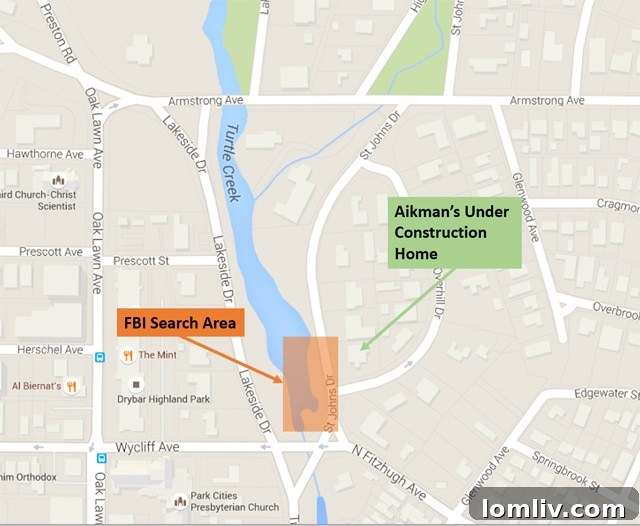
For two days, an intriguing scene has unfolded along the serene waters of Turtle Creek in Dallas, casting a shroud of mystery over one of the city’s most exclusive neighborhoods. Sources close to the investigation report a sustained and intensive operation involving a dedicated team of FBI agents. This highly unusual activity centers directly in front of a prominent $4 million lot on St. Johns, a property famously acquired by NFL legend Troy Aikman in October 2013. The Bureau has reportedly bolstered its efforts by adding ten more divers to its already robust team, intensifying the search. The burning question on everyone’s mind in Dallas, particularly within the affluent enclaves of Highland Park and University Park, is clear: What exactly are they looking for, and what critical evidence might prompt such a significant federal presence in a quiet residential waterway?
The Epicenter of the Investigation: Turtle Creek and St. Johns
Turtle Creek is more than just a waterway; it’s a defining feature of Dallas’s most prestigious areas, winding through Highland Park and linking some of the city’s most valuable real estate. The mention of St. Johns immediately brings to mind grand estates, meticulous landscaping, and a quiet luxury that rarely sees the disruption of federal agents. The property in question, located directly on this storied street, became part of local lore when Troy Aikman, a revered figure from the Dallas Cowboys, purchased it for $4.3 million. While Aikman has since moved from this particular residence, its historical association with such a high-profile individual naturally draws additional attention to any activity occurring nearby.
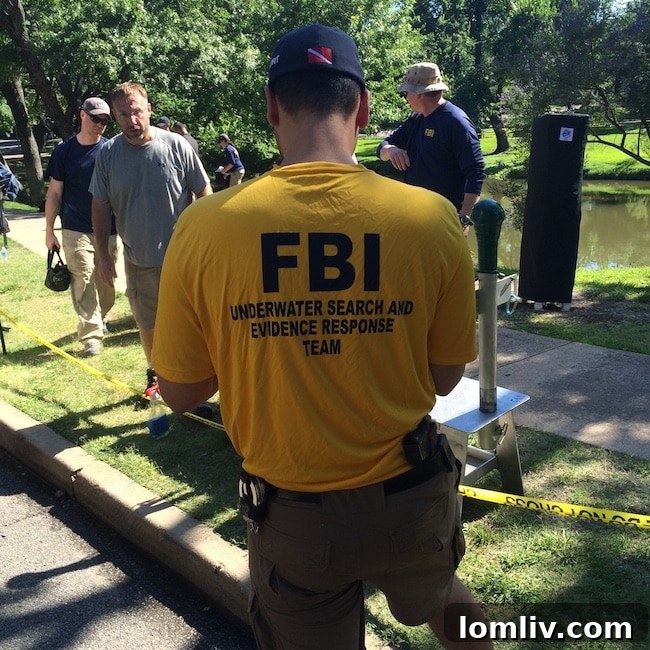
The very presence of the FBI, especially with a specialized underwater search team, signals an investigation of considerable importance. Such operations are resource-intensive and meticulously planned, typically reserved for cases where crucial evidence is believed to have been deliberately concealed or disposed of in a body of water. The sheer commitment—evidenced by the deployment of additional divers and multiple days of searching—suggests investigators are highly confident that something vital to an ongoing case lies beneath the surface of Turtle Creek.
Understanding FBI Underwater Search Operations
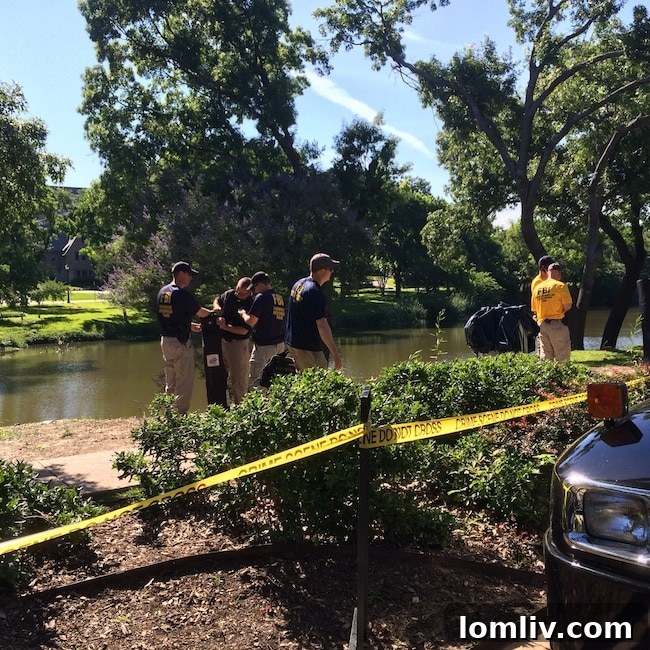
When the FBI deploys its Evidence Response Team (ERT) for an underwater search, it’s a testament to the complexity and seriousness of the investigation. These are not casual dives; they are highly systematic operations executed by agents specially trained in forensic diving, often involving cutting-edge sonar technology, magnetometers, and meticulous grid search patterns. The objective is to locate and recover evidence that could be pivotal in a criminal case, ranging from weapons and stolen property to electronic devices, documents, or even human remains. The murky waters of creeks and rivers can serve as clandestine repositories, making the recovery process both challenging and critical.
The increased number of divers indicates either a vast search area or the need for more intensive, detailed scrutiny of a specific section of the creek bed. Every pebble, every submerged branch, and every accumulation of sediment must be carefully examined. The conditions in Turtle Creek, with its varying depths, currents, and natural debris, undoubtedly add layers of complexity to the task at hand. What kind of evidence would warrant such an extensive effort? Typically, investigators seek items directly linked to a crime—a murder weapon, a hard drive containing incriminating data, a bag of stolen cash, or even items that could establish a timeline or provide a critical piece of a larger puzzle.
The Types of Evidence Sought in Aquatic Environments
- Weapons: Firearms, knives, or other implements used in violent crimes are frequently disposed of in water to destroy forensic evidence such as fingerprints or DNA.
- Electronic Devices: Cell phones, laptops, and hard drives can contain critical communications, financial records, or other digital evidence. Despite water damage, forensic experts can often recover data.
- Documents and Financial Records: Paper evidence, while susceptible to degradation, can sometimes be recovered, especially if protected in waterproof containers.
- Stolen Property: Valuables or items linked to theft or organized crime might be stashed or dumped.
- Forensic Samples: Clothing, jewelry, or other items that might carry DNA or other trace evidence related to a victim or suspect.
The Confidentiality of Federal Investigations
True to the nature of federal investigations, specific details surrounding this operation remain tightly guarded. The FBI is notoriously discreet, particularly in the early stages of a search, to protect the integrity of their investigation, prevent suspects from tampering with evidence, and avoid premature speculation that could hinder justice. This confidentiality, while frustrating for a curious public, is standard procedure designed to ensure a thorough and unbiased process. As such, local residents and media alike are left to observe and wonder, awaiting an official statement that might shed light on the purpose of this high-stakes underwater search.
The community, accustomed to the quiet prestige of their surroundings, is naturally abuzz. An FBI presence of this magnitude is a rare sight, and its location—a stone’s throw from some of Dallas’s most recognizable properties—only amplifies the intrigue. While there is no indication whatsoever that Troy Aikman or his former property are subjects of the investigation, the proximity to a landmark property serves as an unavoidable point of reference for media and onlookers. It underscores the fact that federal investigations can unfold in any setting, irrespective of its perceived tranquility or prominence.

The Broader Implications for Dallas and Highland Park
This ongoing FBI operation serves as a stark reminder that even in areas synonymous with affluence and perceived safety, the reach of law enforcement can extend to uncover hidden truths. For residents of Highland Park and University Park, this event is a significant departure from the norm. While it is too early to draw any conclusions, such an investigation could potentially be linked to a wide array of criminal activities, including financial crimes, drug trafficking, organized crime, or even a cold case that has finally yielded a new lead. The disposal of evidence in water bodies is a common tactic for criminals attempting to evade detection, making waterways like Turtle Creek critical areas for forensic recovery.
The careful and methodical nature of the search highlights the FBI’s commitment to thoroughness. They are not simply looking; they are systematically mapping, scanning, and retrieving. This level of dedication indicates that the potential evidence, whatever it may be, is deemed crucial enough to justify the substantial resources being deployed. The outcome of this search could potentially impact a significant federal case, bringing justice or closure to an ongoing mystery. As the days pass and the search continues, the Dallas community watches with bated breath, hoping for answers that will clarify the dramatic scene unfolding in their midst.
Historical Context: Troy Aikman’s Dallas Real Estate Legacy
Troy Aikman’s presence in Dallas, both on the field and in its real estate market, is legendary. His acquisition of the St. Johns property in 2013, highlighted by the article linked, the one he bought in October of 2013, was a notable transaction. These luxury homes along Turtle Creek are not just residences; they are statements of success and integral parts of Dallas’s high-end property landscape. The value of these properties, often exceeding multi-million-dollar figures, reflects the desirability of the location, its exclusive amenities, and its proximity to the heart of the city while offering a tranquil, secluded environment. The creek itself is a cherished natural asset, often featuring walking trails and scenic views, making the FBI’s disruption of its usual serenity all the more striking.
The juxtaposition of this serene, opulent setting with a high-stakes federal investigation creates a compelling narrative. It reminds us that no area, no matter how exclusive, is entirely immune from the realities of criminal investigations. The diligent work of the FBI divers continues, an unseen drama unfolding beneath the surface, promising revelations that will undoubtedly capture national attention once they are brought to light. Until then, the tranquil flow of Turtle Creek holds its secrets, guarded by the unwavering efforts of federal agents determined to uncover the truth.
What Lies Ahead? The Anticipation Builds
As the FBI’s underwater search in Turtle Creek enters its third day, the air of anticipation and speculation in Dallas only grows thicker. The sustained effort, the specialized resources, and the strategic location near a significant Dallas landmark all point to an investigation of profound importance. While the details remain elusive, the unwavering commitment of the federal agents suggests that they are on the trail of something substantial. The eventual public disclosure of what the FBI uncovers, and the nature of the case it pertains to, will undoubtedly provide significant insights into a facet of Dallas life that has, until now, remained hidden beneath the surface of its most picturesque waterway. The community and indeed, the nation, await further developments with keen interest, eager to understand the full scope of this enigmatic operation.