MetroTex Forecast 2016: Navigating the Future of North Texas Real Estate
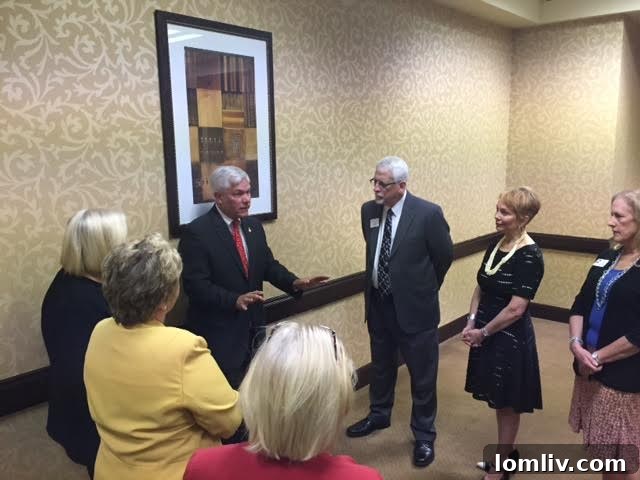
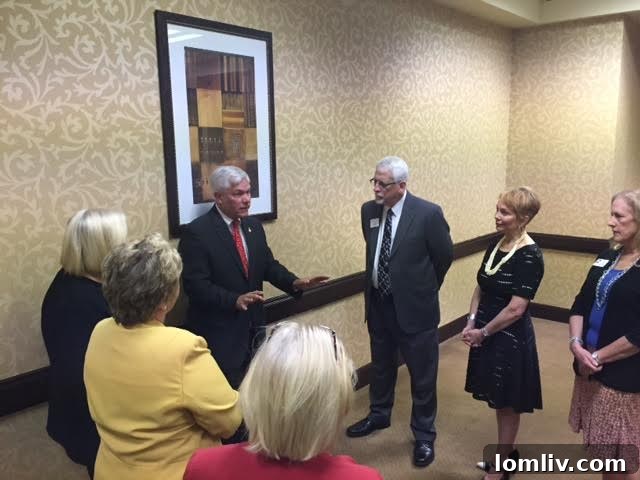
The MetroTex Association of Realtors’ highly anticipated Forecast 2016 event brought together a robust panel of experts and influential figures to discuss the trajectory of the Dallas-Fort Worth real estate market and the broader economic landscape influencing it. With an audience comprising virtually every Realtor in Dallas, the morning promised invaluable insights into both local and national trends.
The event kicked off with opening remarks from Steven Garza of the Texas Association of Realtors, shedding light on Proposition 1, a critical topic for the industry. Britt Fair skillfully served as the emcee, guiding attendees through a dynamic agenda that included a legislative update from Congressman Pete Sessions, an economic forecast by Jim Gaines, Chief Economist at the Real Estate Center, Texas A&M University, and a specialized panel on corporate relocation. This panel featured industry leaders such as Karen Greene, Director of Corporate Relocation Services at Ebby Halliday Real Estate; Frank Obringer, President of Dallas-Fort Worth Coldwell Banker Residential Brokerage; and Ginny Taylor, Senior Vice President of Relocation Services at Briggs Freeman Sotheby’s International Realty, each offering perspectives on the significant influx of new residents to the region.
Congressman Pete Sessions: A Deep Dive into National Economic Policy and Local Impact
Congressman Pete Sessions took the stage, immediately connecting with the North Texas audience by noting the welcome forecast of rain, a small but significant detail reflecting local concerns. His address quickly transitioned to macro-economic issues, emphasizing Dallas’s pivotal role as an “epicenter of world events,” yet drawing attention to a concerning statistic: fewer people were employed in the U.S. today than in 1980. This stark comparison served as a powerful springboard for his core message: the urgent need to revitalize job creation, echoing the vibrant economic growth seen in the 1980s. Sessions underscored that Realtors inherently grasp this principle, recognizing that robust employment is the fundamental driver of housing demand.
“We learned years ago that Realtors understood how important it is to create jobs to sustain our schools and cities,” Sessions stated, evoking a sense of historical economic wisdom. “This is the way we were.”
The Erosion of Innovation: Challenges to U.S. Patent System
Sessions delved into the critical issue of patent system reforms, arguing that the Obama administration’s policies had inadvertently disincentivized innovation within the United States. He contended that the lack of robust protections and incentives was pushing entrepreneurs and inventors overseas, leading to a significant decline in U.S.-generated patents and, consequently, job creation linked to these inventions. This trend, he warned, not only stifled domestic innovation but also forced American talent and potential economic growth to other parts of the world, highlighting a structural impediment to economic resurgence.
Fiscal Prudence vs. Entitlement Growth: The Government Spending Dilemma
Shifting focus to government spending, Sessions acknowledged significant reductions in modern history but noted that public expectations for more services persist. He outlined the formidable challenge of balancing infrastructure and military spending with the escalating costs of entitlement programs. Sessions identified Medicare, Medicaid, Obamacare, and Social Security as the primary drivers of growth in government expenditure. He cited the alarming statistic of 8,000 Americans retiring daily, observing that many of these positions are being filled by part-time workers, partly due to the cost efficiencies for corporations and potentially as a response to the Affordable Care Act. This trend, he suggested, was contributing to lagging corporate profits. Sessions contrasted this with the 2004-2007 period under President Bush, where significant military, transportation, and infrastructure spending (accounting for 20% of total spending) was accompanied by a thriving free enterprise system. Today, he lamented, free enterprise faces headwinds, and funds for critical infrastructure are dwindling.
Global Trade, Fair Play, and Intellectual Property Theft
With 95% of the world’s population residing outside the U.S., Sessions emphasized the strategic importance of building international trade agreements. He highlighted his efforts to champion the Trans-Pacific Partnership (TPP) as a means to foster trade with nations committed to fair rules and transparent practices. This initiative, he argued, was crucial for expanding U.S. economic influence and market access, particularly by seeking alternatives to trade relationships with countries like China and Russia.
Sessions explicitly criticized China and Russia for what he termed “ripoffs,” recounting a vivid anecdote from a Coca-Cola Company executive in Shanghai. Despite holding a license with 50 million Chinese consumers, the executive noted that Coca-Cola products were widely available across China, often produced and sold by the Chinese government itself, without regard for intellectual property rights. This blatant copying and unauthorized reproduction of American goods, Sessions stressed, represented a profound threat to U.S. businesses, innovation, and economic integrity. Protecting intellectual property and reforming patent laws, he asserted, were therefore not just legal battles but fundamental economic imperatives.
Tax Reform for Economic Growth and Housing Stability
Central to Sessions’ economic vision was comprehensive tax reform. He adamantly advocated for protecting key real estate-related tax provisions, including the mortgage interest deduction (MID), like-kind exchanges (1031 exchanges), and capital gains tax benefits. He argued against viewing tax reform as a zero-sum game, instead promoting an approach focused on stimulating economic growth and reducing government overreach in daily life. Sessions also highlighted the debilitating effect of the U.S. having the highest corporate tax rate in the world, which he contended was actively driving businesses and investment away from American shores.
Legislative Victories and Future Endeavors for Housing
In his newsletter, Congressman Sessions provided a concise summary of his legislative efforts and their impact on the North Texas community:
“This morning I participated in the MetroTex Association of Realtors Forecast 2016 event. I gave a legislative update and discussed how current initiatives would impact the North Texas business and real estate communities. The House has passed numerous pieces of legislation to help the housing market, including H.R. 685, the Mortgage Choice Act of 2015, and H.R. 650, the Access to Manufactured Housing Act. In addition, at the end of this month Congress is expected to consider a long-term transportation funding bill to address our nation’s growing infrastructure needs. I have diligently worked with North Texans to expand and bolster our existing infrastructure, ease the regulatory burdens on homebuyers, and fight against this Administration’s continued assault on the free-enterprise system. Despite interference from Washington the North Texas economy is booming and I remain committed to ensuring our region has the tools necessary to thrive.”
Q&A Session: Addressing Realtor Concerns and National Issues
The subsequent Q&A session offered Realtors the opportunity to probe deeper into pressing national issues and their potential local repercussions. Sessions provided candid insights into a range of topics:
The Speaker of the House Vacancy
Regarding the then-unfolding situation with the Speaker of the House, Sessions described a fractured political landscape within Congress, comprising distinctly different groups: moderates, centrists, and the Freedom Caucus. He suggested that former Speaker Boehner’s leadership style, at times, made decisions without sufficient consultation across these diverse factions. The political consensus, Sessions observed, was that everyone was looking to Paul Ryan to potentially fill the void. He somberly predicted that whoever accepted the Speakership would likely be taking on their final political role, emphasizing the immense challenges of uniting such disparate elements. He urged prayer for the future Speaker, highlighting the gravity of the position for the good of the country.
The “Trump Phenomenon” and American Identity
When asked about Donald Trump’s presidential campaign, Sessions acknowledged Trump as an “interesting character,” noting how his media omnipresence inadvertently benefited Mrs. Clinton by consuming vast amounts of TV time. Sessions elaborated that Trump had skillfully tapped into a deeply rooted sentiment across America: a pervasive feeling that the nation was losing its core identity. He drew a parallel to a similar “crosswind” observed in Europe, where countries grapple with their own evolving identities. Sessions expressed a personal belief that America, too, was grappling with a loss of its essence. He addressed the contentious issue of birthright citizenship, pointing out that its definition is not explicitly detailed in the Constitution. He cited the staggering figure of over 60,000 children born in the U.S. annually to parents who later return to their home countries, creating dual citizenships and raising questions about border control. While personally hesitant to fully endorse Trump, Sessions affirmed his commitment to supporting him if he became the party’s nominee, underscoring a pragmatic approach to party unity.
Fannie Mae, Freddie Mac, and Infrastructure Funding
A significant concern among Realtors revolved around proposals to tax Fannie Mae and Freddie Mac’s credit risk guarantee fees (g-fees) to fund transportation programs. Sessions confirmed that the National Association of Realtors (NAR) and most Realtors vehemently opposed this measure, arguing that it would disproportionately impact low and moderate-income homebuyers by adding further costs to the homebuying process. He stressed that the current economic climate was not conducive to introducing additional taxes on homeownership. The responsibility for finding alternative infrastructure funding, he indicated, would fall squarely on the shoulders of the next Speaker of the House. Sessions offered a potential solution, suggesting a reform of the U.S. territorial tax system, which he argued was skewed against repatriating American business dollars earned overseas. He noted that American companies were often investing profits in Europe to avoid U.S. taxes, proposing that rectifying this could free up billions needed for a six-year infrastructure repair plan.
The State of the U.S. Military and Global Security
Addressing questions about the military, Sessions painted a somber picture of a world that is “more dangerous, not less dangerous.” He highlighted the troubling phenomenon of ISIS acquiring equipment left behind, underscoring critical security challenges. The U.S. military, he noted, found itself in a severe crunch, struggling with budget constraints and a contracting economy. Sessions revealed that the military was losing 700 members daily, resulting in dedicated career personnel being forced out of their jobs, a significant drain on human capital and morale. He expressed his conviction that the next Speaker would need to forge an agreement with the next President to stimulate economic growth, which he saw as essential for adequately funding and supporting the nation’s defense.
Global Disruptions and Government Overreach
Sessions also touched upon broader global disruptions, including the instability in the world oil market and alarming levels of hacking and theft by Russian and Chinese entities. He ominously noted that these nations were also increasingly investing in U.S. real estate, hinting at complex geopolitical dynamics. He concluded this segment by criticizing “big government,” arguing that it continued to attack viable economic entities through excessive regulation. He drew an analogy to the breakup of AT&T, recalling how the colossal company, despite its formidable legal resources, eventually grew weary of fighting government regulations. He lamented that today’s government, unlike the private sector, seems perpetually engaged in battles through “rules and regulations and lawyers,” stifling growth and innovation.
Entitlement Programs and Fiscal Responsibility
On the perennial issue of reining in entitlement programs, Sessions acknowledged the political realities of the past seven years: the American people had elected Barack Obama twice, while simultaneously electing conservatives to control the House. The Senate, he noted, had only recently shifted political alignment. He pointed to constitutional revisions that must be met and reminded the audience that the House had frozen Congressional pay seven years prior. Sessions stated:
“We put Obamacare on each of us (more cost). We cut spending in House by 35%. That’s what we have done in House. We are trying to mirror what you see and how all of you live.”
He emphasized that the ability to curb government power is constitutionally vested in Congress, particularly the House, which holds the “power of the purse.” However, he stressed the difficulty of overturning existing laws without the agreement of both the Senate and the President. Sessions highlighted the more than 60 votes taken by the House to repeal Obamacare, explaining that such efforts are futile without bipartisan and presidential consent. He also warned of the severe consequences of government shutdowns, where military personnel face reduced pay and vital government functions cease. Sessions concluded by stating that Congress was fighting a difficult but necessary battle to prevent further losses, ultimately relying on the American people to enact significant change in the upcoming elections.
Conclusion: A Call to Action for a Stronger North Texas Economy
The MetroTex Forecast 2016 provided an incisive look into the intricate relationship between national policy and local real estate dynamics. Congressman Pete Sessions’ address underscored the urgent need for job creation, patent protection, fiscal discipline, and fair trade agreements to bolster the U.S. economy and, by extension, the thriving North Texas housing market. His insights into legislative challenges, from the Speaker’s role to the complexities of entitlement reform and infrastructure funding, offered Realtors a clearer understanding of the forces at play. The discussions highlighted that the prosperity of Dallas-Fort Worth’s real estate sector is inextricably linked to sound economic policies, robust innovation, and effective governance. As the region continues to attract new residents and businesses, the takeaways from this forecast serve as a vital guide for real estate professionals navigating an ever-evolving economic and political landscape, emphasizing that active engagement and informed advocacy remain crucial for sustaining growth and ensuring a vibrant future.