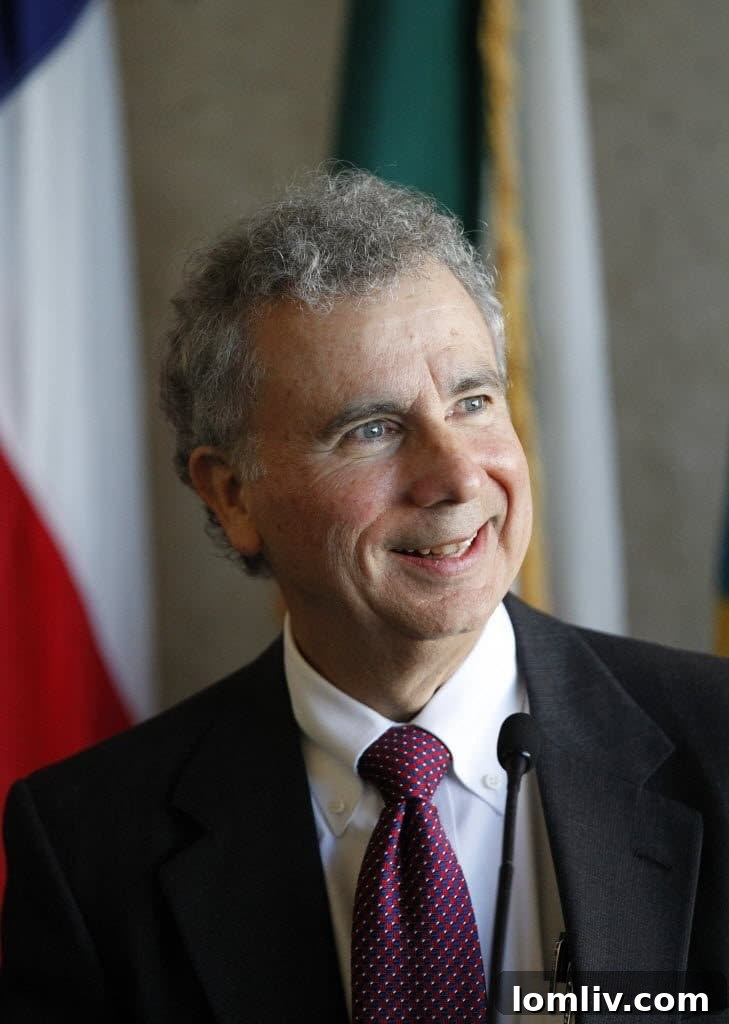
Dallas City Manager A.C. Gonzalez Retires: Reflecting on a Challenging Tenure
Dallas, Texas — A significant shift in Dallas’s leadership landscape unfolded on a recent Monday when WFAA-TV announced the retirement of City Manager A.C. Gonzalez. After serving for two-and-a-half years, Gonzalez is stepping down from what is widely considered the most influential administrative position within Dallas City Hall. His departure marks the end of a demanding period characterized by both progress and persistent scrutiny, prompting a broader conversation about the challenges inherent in governing a major American metropolis.
The role of Dallas City Manager is a colossal undertaking. This chief executive oversees a vast municipal operation, managing a substantial $3.1 billion budget and leading a workforce of approximately 13,000 dedicated employees. During his tenure, Gonzalez, married to the respected motivational psychologist Melinda Marcus, commanded one of the highest salaries for a city manager in the nation, earning around $400,000 annually. This figure was ratified by the Dallas City Council in January 2014, when he assumed the position following Mary Suhm’s retirement, prevailing over a field that included two external candidates. It’s worth noting that while Gonzalez’s salary was significant, San Antonio’s Sheryl Sculley, for instance, has commanded even higher compensation, highlighting the competitive nature of attracting and retaining top talent for these demanding roles. The City of Dallas, historically, has shown a preference for promoting from within its ranks rather than recruiting “outsiders,” a strategy that some argue provides continuity while others believe can stifle innovation and prevent the injection of “fresh blood” into the city’s administrative core.
The Decision to Step Down: A Quest for Work-Life Balance
In an interview with News 8 on Monday afternoon, A.C. Gonzalez candidly expressed his readiness to reclaim a more balanced life. Coinciding with his birthday week, he articulated a desire to achieve a better equilibrium between his professional responsibilities and personal life, a sentiment many high-level executives can undoubtedly relate to. While his official statements emphasized a personal decision, the timing of his retirement inevitably sparked speculation, given the backdrop of increasing criticism from various city council members regarding his management of city staff and financial oversight.
Gonzalez maintained that he was not being forced out, asserting that criticism is an inherent part of a City Manager’s public role. He firmly believed he retained the support of a significant majority—two-thirds—of the City Council. Moreover, he enjoyed unwavering endorsement from Mayor Mike Rawlings, who publicly lauded Gonzalez as a “class act” and lamented the instances where some council members treated him unfairly. Mayor Rawlings offered high praise for Gonzalez’s performance, underscoring the immense pressure and “24/7 nature” of the job, which he felt citizens often fail to fully appreciate.
Council Dynamics and Divisive Criticisms
Despite the Mayor’s staunch defense, Gonzalez’s leadership faced vocal opposition from certain council members, most notably Scott Griggs and Phillip Kingston. Both had initially voted for Gonzalez but quickly became prominent critics, advocating for fundamental changes in the city’s operational management. Their ongoing critiques often created a contentious atmosphere within City Hall, reflecting deeper divisions on how Dallas should be governed. Council member Lee Kleinman, expressing disappointment over Gonzalez’s departure, openly criticized what he perceived as a “hostile work environment” fostered by council members who did not get their way, reiterating that Gonzalez “was clearly supported by the majority of the council.”
Conversely, Scott Griggs appeared to welcome the news of Gonzalez’s retirement, advocating for the next city manager to be recruited from outside Dallas City Hall – a call for “fresh blood” to invigorate city administration. Griggs consistently argued that Gonzalez’s management style was insufficient for the city’s complex needs, a stark contrast to Gonzalez’s own conviction that he had significantly improved transparency and efficiency within City Hall. These conflicting narratives underscored a fundamental disagreement on the effectiveness of his reforms and the overall direction of the city’s administrative leadership.
Navigating a Minefield of Controversies: Key Challenges of Gonzalez’s Term
A.C. Gonzalez’s tenure was indeed fraught with numerous challenges and controversies, many of which drew significant public attention and tested the resolve of City Hall. These incidents collectively contributed to the perception of a tumultuous period, putting immense pressure on the City Manager:
The Affordable Housing Contracts Scandal
One of the most damaging issues emerged from an audit released in March, which uncovered a “disturbing lack of documentation” in the awarding of approximately $30 million in affordable housing contracts. This revelation cast a shadow over City Hall’s financial oversight and prompted serious questions about accountability and transparency in significant public spending projects. The implications of such findings extended beyond mere procedural errors, suggesting potential vulnerabilities in the city’s contracting processes and raising concerns among residents about the prudent use of taxpayer money.
The Tragic Wild Dog Problem
Another deeply emotional and highly publicized crisis involved the tragic death of Antoinette Brown, who was mauled by a pack of wild dogs in South Dallas. This horrific incident brought the long-standing issue of stray and dangerous dogs in certain city neighborhoods to the forefront, sparking outrage and calls for immediate action. Gonzalez faced considerable public and political pressure for the city’s perceived slow response in addressing the pervasive problem, highlighting the City Manager’s direct responsibility for public safety and quality of life issues across all neighborhoods.
The Trinity River Standing Wave Project
The “Standing Wave,” an ambitious multi-million-dollar whitewater project on the Trinity River, became another point of contention. Intended to transform a section of the river into a recreational attraction, the project faced significant engineering challenges and ultimately proved to be a costly failure. Its inability to deliver on its promise raised questions about project planning, feasibility studies, and the allocation of substantial public funds towards initiatives that did not yield the anticipated results. This project served as a potent example for critics of what they perceived as mismanaged resources.
The Uber Debate
The rise of ride-sharing services like Uber presented complex regulatory challenges for cities nationwide. While Austin famously banned Uber, Dallas, under Gonzalez’s management, navigated a path toward regulation. This situation epitomized the challenge of balancing innovation with public safety, fair competition, and established industry interests. The City Manager’s approach to these new technologies was closely watched, reflecting the broader struggle of urban centers to adapt to rapidly changing economic and social landscapes.
“Griggs Gate” and Internal Tensions
Internal strife also plagued City Hall, notably in an incident dubbed “Griggs Gate.” This controversy involved Council member Scott Griggs, who was accused of allegedly threatening to break the fingers of a City Hall staffer during a heated discussion about the proposed Trinity Parkway – a topic known for its divisive nature and strong emotions. Such incidents not only created a toxic work environment but also exposed the deep ideological rifts and personal animosities that sometimes simmered beneath the surface of official council proceedings, making collaborative governance an uphill battle for the City Manager.
Indeed, compiling a list of these significant challenges and controversies during Gonzalez’s relatively short tenure paints a vivid picture of the immense pressures he faced. It makes one almost feel sympathetic enough to throw him a retirement party, acknowledging the relentless nature of the job.
Dallas: A City of Scale and Complexity
Dallas is far from a small town; it is a major economic and cultural powerhouse. The city boasts the third-largest concentration of Fortune 500 companies in the nation, trailing only New York City and Houston, and ranks 14th globally in terms of GDP. Dallas proper stands as the ninth-largest city in the United States, a sprawling urban center with a diverse population and a complex array of needs. Managing such a dynamic entity is an extraordinary feat, especially when confronted by an often-fractious City Council comprising 11 members, each fiercely advocating for their own district’s interests and priorities. It’s arguably an unrealistic expectation for any city to run “like clockwork,” particularly one of Dallas’s magnitude with inherent political complexities.
A.C. Gonzalez had a relatively brief period—just two and a half years—to implement his vision and steer the city towards greater efficiency and stability. His departure comes at a time when Dallas residents are grappling with one of the most substantial hikes in residential property values in recent memory, adding another layer of complexity to the city’s economic landscape and posing new challenges for his successor.
Looking Ahead: The Search for Dallas’s Next Leader
As Dallas prepares to search for its next City Manager, the debate over an “insider” versus “outsider” candidate will undoubtedly intensify. Proponents of an internal hire emphasize institutional knowledge, established relationships, and a deep understanding of Dallas’s unique political and operational intricacies. Conversely, those advocating for an external candidate believe that an outsider can bring fresh perspectives, challenge entrenched practices, and introduce innovative solutions without being constrained by existing political dynamics. The next City Manager will inherit ongoing challenges, from managing rapid urban growth and infrastructure demands to fostering inclusive economic development and ensuring public safety, all while navigating a dynamic political environment.
A.C. Gonzalez’s tenure, while marked by significant headwinds, also saw the city continue its impressive growth trajectory. As he steps down, the fundamental questions remain for the citizens of Dallas: What will be the lasting legacy of his time as City Manager? Will A.C. Gonzalez be remembered for his efforts to bring transparency, or for the controversies that shadowed his administration? And, perhaps most importantly, what qualities and vision will be paramount for the leader who steps into this incredibly powerful, yet perpetually challenging, role?