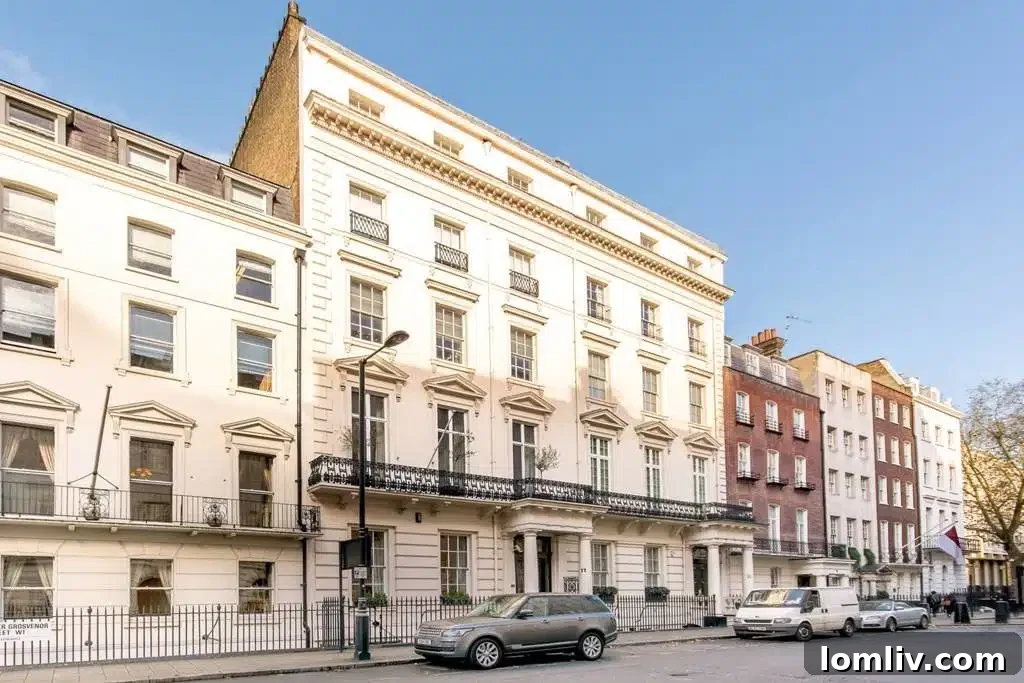
London’s Dynamic Luxury Housing Market: Unpacking Recent Price Adjustments in Prime Areas
The allure of London’s real estate market has long captivated global investors and high-net-worth individuals. Known for its steady appreciation and status as a safe haven for capital, the city’s prime property sector has shown remarkable resilience and growth over decades. However, recent observations suggest a nuanced shift is underway, particularly within its most exclusive postcodes. This deep dive explores the factors that have historically fueled London’s property boom and examines the forces currently reshaping its prestigious housing landscape.

The Unyielding Rise of London Real Estate: A History of Growth
For an extended period, the narrative surrounding the London housing market has been one of consistent and often spectacular growth. This enduring upward trajectory can be attributed to a confluence of powerful economic, social, and geopolitical factors, cementing London’s status as a premier global real estate destination.
Financial Sector Bonuses and Wealth Creation
At the heart of London’s property boom has been its robust financial services sector. As a leading global financial hub, the City of London and Canary Wharf attract top talent and generate substantial wealth. The consistent allocation of generous bonuses within this sector has historically translated into significant purchasing power for high-end properties, fueling demand in desirable neighborhoods. This continuous cycle of wealth creation and reinvestment in luxury assets has been a bedrock of the market’s strength, particularly in areas favored by finance professionals seeking prestigious residences close to work and amenities.
London as a Global Technology Hub
More recently, London has emerged as a formidable technology hub, often dubbed “Silicon Roundabout” and extending its influence across the capital. The proliferation of tech startups, venture capital firms, and established tech giants has drawn a new wave of highly paid professionals to the city. This burgeoning tech community, alongside its innovation-driven economy, has introduced a fresh stream of affluent buyers into the property market, diversifying the demand base beyond traditional financial sectors and contributing to sustained growth in various localities.
The Ever-Growing Expatriate Community and International Investment
London’s cosmopolitan appeal is undeniable, attracting a vast and ever-expanding expatriate community. Historically, a significant influx of residents from oil-exporting countries, particularly the Middle East, sought London properties as secure investments and second homes. In more recent years, this trend has broadened to include a substantial demographic from Asia, notably China and Southeast Asia, viewing London as a stable and lucrative investment opportunity amidst global uncertainties. These international buyers often seek prime real estate for both personal use and as a capital preservation strategy, exerting upward pressure on prices in key luxury segments.
The General ‘Wealthing’ of the Local Population
Beyond international investment and sector-specific wealth, the general ‘wealthing’ of the local UK population has also played a pivotal role. A prolonged period of low interest rates, rising asset values (including existing property portfolios), and a strong employment market contributed to increased disposable income and greater equity for many Londoners. This allowed for significant upward mobility within the property ladder, enabling more local buyers to access higher-value properties and contributing to the overall buoyancy of the market across various price points.
A New Chapter Unfolding: Price Adjustments in Prime London
Despite the long-term trend of escalating values, a discernible shift began to manifest in the first quarter of 2016. A constellation of new factors started to exert downward pressure on prices in London’s most sought-after and exclusive neighborhoods. For the first time in a while, buyers in these rarefied segments of the market found themselves with a slight, albeit cautious, advantage.
Notable Declines in Exclusive Postcodes
The impact of these conspiring factors was not uniform but concentrated within the city’s most prestigious districts. Areas synonymous with ultra-luxury living recorded significant price adjustments:
- Knightsbridge: Home to iconic landmarks like Harrods, this supremely opulent district saw property prices fall by nearly seven percent. This considerable dip highlighted a direct response to prevailing market conditions, signaling a cooling in one of London’s priciest enclaves.
- South Kensington: Renowned for its elegant garden squares and cultural institutions, South Kensington experienced a decline of nearly five percent. This area, a favorite among affluent families and international residents, mirrored the trend observed in its neighboring luxury zones.
- Hyde Park: Properties bordering the expansive greenery of Hyde Park, often among the most expensive in the world, also registered varying degrees of price softening.
- Chelsea: A byword for classic London elegance and fashionable living, Chelsea witnessed declines, reflecting a broader pattern of adjustment across central London’s prime locations.
- Notting Hill: Famed for its vibrant Portobello Road Market and charming pastel-colored houses, Notting Hill’s exclusive properties were not immune to the market recalibration.
- Belgravia: Often associated with aristocratic grandeur and classic British architecture (and famously the setting for “Upstairs, Downstairs”), Belgravia also recorded price drops, confirming a widespread trend across the capital’s most elite addresses.
Deciphering the Drivers Behind London Prime Property Cooling
The transition from relentless growth to a period of price adjustment in London’s luxury market was not arbitrary. Several key legislative changes, economic shifts, and looming political uncertainties combined to temper demand and buyer enthusiasm.
Stamp Duty Land Tax (SDLT) Reforms
A significant catalyst for the market slowdown was the series of Stamp Duty Land Tax (SDLT) reforms introduced by the UK government. Effective December 2014, changes to the SDLT system meant that buyers of higher-value properties faced significantly increased tax burdens. For instance, properties over £1.5 million saw a sharp rise in the percentage of tax paid. This was further compounded in April 2016 with the introduction of an additional 3% surcharge on stamp duty for second homes and buy-to-let properties. These fiscal adjustments directly impacted the cost of purchasing luxury real estate, particularly for international investors and those acquiring additional properties, making high-end London homes considerably more expensive to transact.
Pre-Brexit Referendum Uncertainty
The looming spectre of the Brexit referendum, held in June 2016, cast a long shadow over the UK economy and, by extension, its property market. As the debate intensified, uncertainty regarding the UK’s future relationship with the European Union led to a cautious approach among both domestic and international investors. Many potential buyers chose to defer investment decisions, adopting a ‘wait and see’ attitude until the outcome of the vote became clear. This pause in decision-making significantly reduced transaction volumes and contributed to the softening of prices, especially in the premium segments where investment decisions are often more sensitive to geopolitical stability.
Global Economic Headwinds and Currency Fluctuations
Beyond domestic policy and political considerations, broader global economic headwinds also played a role. A slowdown in key economies, particularly in some emerging markets that are significant sources of international investment into London, reduced the flow of capital. Furthermore, fluctuations in exchange rates could make London property less attractive for certain foreign buyers if their local currency weakened against the pound, increasing the effective cost of acquisition. While a weaker pound post-Brexit would later make UK property more appealing to dollar-denominated buyers, the period leading up to Q1 2016 saw different dynamics at play, with sterling generally strong, potentially deterring some.
Increased Supply and Buyer Leverage
In some prime London areas, an increase in the supply of new luxury developments, coupled with a slight retraction in demand, led to more choice for buyers. This shift from a seller’s market to one with greater buyer leverage allowed for more negotiation on prices. Sellers, keen to conclude sales in a less frenetic market, were often more willing to accept offers below their initial asking prices, contributing to the reported declines.
Navigating the Current Climate and Looking Ahead
The adjustments observed in London’s luxury housing market in early 2016 represented a significant moment – a “sale of sorts” as some might describe it, for those astute enough to capitalize on the shift. It marked a departure from the seemingly unstoppable growth of previous years, introducing a more nuanced and potentially more accessible landscape for certain buyers.
For potential investors and discerning homeowners, understanding these dynamics is crucial. While the long-term fundamentals of London as a global city remain incredibly strong, periods of adjustment offer unique opportunities. It suggests that the market is maturing, responding to both internal policy changes and broader global economic currents. Whether this period of price softening will be short-lived or usher in a more protracted phase of stability remains a subject of ongoing debate among property experts.
The evolution of London’s luxury real estate is a continuous saga, influenced by a delicate balance of economic prosperity, governmental policy, and global investor sentiment. Keeping a keen eye on these interconnected forces is essential for anyone looking to navigate the unparalleled opportunities and complexities of one of the world’s most coveted property markets.
For further insights into the continuing developments in London’s housing market, explore more expert analysis.