By Claire Stanard
Guest Contributor
Protecting Dallas Neighborhoods: The Transwestern Rezoning Battle and Upholding the Vision of forwardDallas!
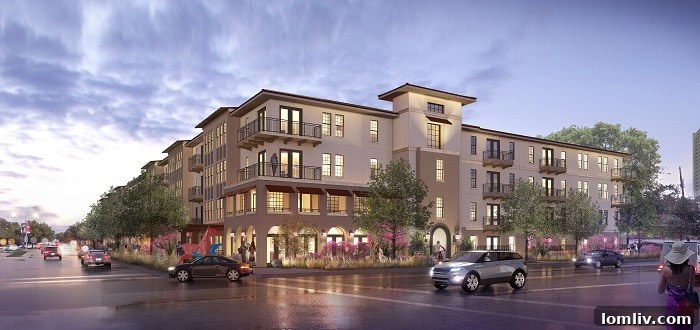
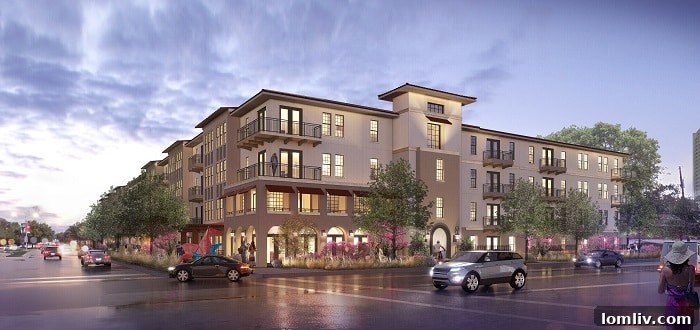
The urban landscape of Dallas is constantly evolving, a testament to its vibrant growth and economic dynamism. Yet, this evolution often brings contentious debates, particularly when proposed developments clash with the established character and resident-defined quality of life in cherished neighborhoods. One such ongoing battle, deeply impacting the Preston Hollow East community, revolves around Transwestern’s controversial proposal for four-story apartments. This project has ignited a passionate discussion about responsible urban planning, the role of community input, and the true meaning of “highest and best use” for Dallas land.
Following a pivotal Town Hall meeting on August 27, discussions highlighted a critical disconnect. A common sentiment expressed was that the Dallas City Council’s ultimate decision on zoning changes would primarily hinge on what is deemed the “highest and best use of the land” for the City of Dallas as a whole, rather than for the specific residents or immediate neighborhood. This perspective raises profound questions:
“Is the pursuit of increased property tax revenues from developers the sole driver behind such decisions, perhaps a symptom of the city’s struggle to establish a quality public school system that would naturally attract homeowning families?”
Such a narrow focus on immediate financial gain risks setting a dangerous precedent, potentially paving the way for a “domino effect” of unchecked development. Rumors have persisted for years that influential developers, including Mark Cuban, are closely watching the outcome of Transwestern’s zoning application, ready to proceed with their own projects should the variance be granted. Before Dallas succumbs to this potential cascade of uncontrolled development, there is an urgent and undeniable need for a comprehensive, overarching strategy for neighborhood development—one that truly safeguards the existing fabric of our communities.
The Illusion of a Moratorium: A Lost Opportunity for Strategic Planning
Many residents initially believed that the City of Dallas was, in fact, working on such a strategic plan. This optimism was partly fueled by reports, like the Dallas Observer’s October 23, 2014 article, which had triumphantly declared the Transwestern project withdrawn and “toppled.” The report further suggested that, learning from the Transwestern and Crosland examples, Councilwoman Gates had taken a significant step. Following Laura Miller’s suggestion, she reportedly instituted a de facto moratorium on major rezoning cases. This pause was intended to allow the city to conduct a crucial land-use study, with the express aim of establishing a clear template for future development. The focus areas for this template were specifically identified: the northeast corner of Preston and Northwest Highway, the northern tract on Northwest Highway owned by Mark Cuban, and the vital Preston Center area.
(Editor’s note: Real estate development and its intricate policy landscape are often complex, and not all media reports fully capture the nuances.)
However, what was widely perceived as a proactive moratorium proved to be an illusion. The city, in reality, already possessed—and continues to possess—a robust, legally binding framework for evaluating rezoning requests: the “forwardDallas!” Comprehensive Plan. This pivotal document, formally adopted on June 14, 2006, via Ordinance No. 26371, serves as the developmental policy roadmap for the entire City of Dallas. It explicitly charges both the Dallas City Council and its Planning Commission with adhering to a very specific set of policies and implementation measures. Crucially, “forwardDallas!” includes a dedicated nine-page section specifically addressing “Neighborhoods.” Within these guidelines, the directive for rezoning requests is unequivocally clear: to “protect existing neighborhoods,” ensure “safety,” promote “walkability” and “pedestrian friendliness,” implement measures for “minimizing spillover parking” onto residential streets, strive for “maintaining the scale and character of existing neighborhoods in relation to adjacent buildings,” and, fundamentally, guarantee “maintaining the quality of life” for the neighborhood’s residents.
It is particularly relevant that the area commonly referred to as “Behind The Pink Wall” is explicitly designated on the “forwardDallas!” Vision Illustration map as a “Residential Neighborhood.” This designation stands in stark contrast to its proposed re-development, firmly establishing that it is neither an urban nor a commercial zone, and should be treated as such within development considerations.
Transwestern’s Stealth Re-Submission: Undermining Community Trust
The community’s trust was further eroded when it came to light that Transwestern had quietly amended and re-submitted their zoning variance application on April 13, 2015. This crucial development largely flew under the radar, with notification primarily limited to those residing within a mere 200-foot radius of the proposed Planned Development. It is entirely understandable that immediate residents experienced profound anxiety, fearing that an even more undesirable project than Transwestern’s latest plan for 165 apartments might be developed on the site.
However, if the Planning Commission were to rigorously adhere to the clear and prescriptive guidelines outlined in “forwardDallas!” concerning the redevelopment of this specific neighborhood tract, every single developer, including Transwestern, would be mandated to strictly abide by the existing MF(1)(a) zoning regulations. This adherence is not merely a bureaucratic formality; it is a fundamental commitment to safeguarding the future, ensuring the safety, and preserving the overall quality of life for the entire neighborhood. “forwardDallas!” explicitly champions a balanced approach to growth:
“Dallas needs to develop its skills at encouraging alternative HOMEOWNERSHIP products that fit a small site. Although this goal represents a change for Dallas, it will not be achieved at the expense of existing residential neighborhoods.” (forwardDallas! Section 3.1)
“Recognize adopted area/neighborhood plans in guiding development and zoning decisions.” (forwardDallas! Section 7.1.5.4)
The Critical Importance of MF(1)(a) Zoning: A Case for Thoughtful Density
The 3.2-acre site in question was originally zoned as MF(1)(a) for compelling and well-reasoned purposes. This specific zoning designation was carefully chosen to establish an appropriate maximum number of residential units, taking into account both the limited amount of land available and the critical location of the parcel. Situated at the Preston/Averill entrance to the “Behind The Pink Wall” area, this site serves as a gateway to a residential community of over 1,100 residents. The existing zoning reflects a thoughtful urban planning decision aimed at preventing overdevelopment and preserving the neighborhood’s integrity.
Numerous successful and well-integrated developments within the vicinity stand as examples of projects that thrived within the MF(1) provisions. The Drexel, for instance, managed to develop 131 units on 6.8 acres, incorporating essential underground parking to mitigate traffic and visual impact. Similarly, The Renaissance, The Edgemere, and Edgemere on The Park all established beautiful, high-quality complexes while respecting the MF(1) guidelines. Furthermore, many condominiums in the area are bound by deed restrictions limiting structures to two stories, underscoring the long-standing commitment to a particular architectural and density scale within the community.
Yet, Transwestern’s proposal brazenly seeks to add a staggering 55 units more than what the established zoning designation permits for this critical thoroughfare entrance. The implications of this significant increase are dire. What is already a notoriously congested bottleneck intersection off Preston Road will inevitably transform into a truly “corked” artery, choking with intensified traffic flow, constant moving vans, relentless ingress and egress from parking facilities, frequent trash pickups, and a projected increase in traffic accidents. Such a development would not only disrupt daily life but also compromise the safety and tranquility of the entire neighborhood.
This raises a fundamental question: Is this unchecked density, with its inevitable strain on infrastructure and quality of life, truly what “forwardDallas!” was designed to represent? The plan explicitly champions thoughtful growth, not unbridled expansion.
The Power of Community Self-Determination: A Pillar of forwardDallas!
The “forwardDallas!” plan recognizes the invaluable role of resident engagement in shaping the city’s future:
“Dallas has a strong tradition of neighborhood self-determination which should be promoted to ensure the continued vitality of all neighborhoods.” (forwardDallas! Section 7.1.1.1)
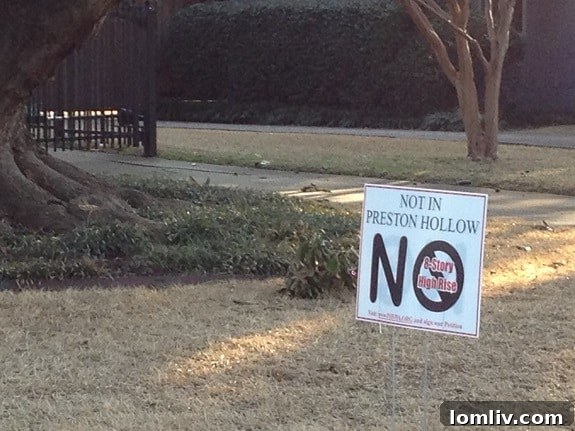
The residents of Preston Hollow East and “Behind The Pink Wall” have exemplified this tradition of self-determination through an extraordinary display of community activism. In February 2014, residents united, holding powerful rallies that drew over 300 attendees. They widely distributed more than 500 yard signs, unequivocally protesting any change to the MF(1) designation, citing critical concerns about escalating traffic congestion and excessive density. Their dedication extended to gathering over 1,500 signatures through online and door-to-door petitions and dispatching hundreds of letters to key city officials, including Mayor Mike Rawlings, Councilwoman Jennifer Gates’ office, and Councilman Lee Kleinman, all voicing strong opposition. Furthermore, they pooled resources to retain an attorney, ensuring their collective views were professionally represented in the complex legal and zoning processes.
Despite this overwhelming demonstration of organized and sustained opposition, the August 20 Planning Commission online video astonishingly dismissed these dedicated citizens as “people not willing to spend their time attending the meeting.” This statement is not only deeply disrespectful but also fundamentally inaccurate. It conveniently overlooks the extensive efforts made by the community to engage with the city on this very issue. Moreover, there was never any formal polling conducted among the residents of “Behind The Pink Wall” regarding the Transwestern proposal, further undermining the notion of genuine community input. The involvement of a PHSNA committee, while well-intentioned, lacks official authority in zoning matters, making direct resident engagement and formal communication paramount.
A Glaring Failure in Communication and Accountability
The “forwardDallas!” plan also explicitly mandates clear communication between the city and its residents:
“The City will create and maintain a neighborhood network database, and develop and provide resource materials to establish regular communication between residents and the City.” (forwardDallas! Section 7.1.1.4)
This commitment to regular communication makes the city’s failure to adequately inform residents about the crucial August 20, 2015, Planning Commission meeting particularly egregious. Had residents been properly notified, there is no doubt they would have attended in force, as their history of activism clearly demonstrates. Despite Councilwoman Jennifer Gates’ and Councilman Lee Kleinman’s offices having been provided with over 1,500 email addresses of concerned citizens, only a notification for a budget meeting on August 25, 2015, was received by many, with no mention of the far more impactful Planning Commission meeting five days earlier.
While Councilwoman Gates may have recused herself from voting or personal involvement in the Transwestern case, her office still bore the unequivocal responsibility to inform the neighborhood about such a critically important meeting, especially given the undeniable and highly visible community activism demonstrated. While residents within the immediate 200- and 500-foot radii might have received legally mandated notifications, the overwhelming majority of the other 1,000 residents were not directly informed. This oversight should have been a top priority, not an afterthought, out of basic respect for the deep and sustained involvement the neighborhood had consistently shown in this development debate.
Preserving Dallas’s Future: A Call for Controlled Development and Visionary Leadership
The trajectory of uncontrolled redevelopment represents a perilous regression, not progress. History unequivocally demonstrates that cities that disregard sound zoning principles and allow unbridled development rarely stand the test of time, often succumbing to issues of congestion, diminished quality of life, and loss of distinct character. The temptation to approve every zoning variance application solely for the promise of increased tax dollars, while simultaneously overlooking the safety, integrity, and established character of existing neighborhoods, is a shortsighted approach that ultimately undermines the very foundation of a thriving city.
The City of Dallas meticulously crafted a visionary blueprint for its future in “forwardDallas!” This comprehensive plan is not merely a document; it is a commitment to thoughtful, sustainable growth that prioritizes the well-being of its residents and the preservation of its unique communities. It is imperative that Dallas leadership — the City Council, Planning Commission, and all relevant departments — honor this forward-thinking vision. This means embracing controlled zoning and responsible redevelopment that aligns with the spirit and letter of “forwardDallas!”, ensuring that development serves the long-term interests and quality of life for all Dallas residents, rather than merely catering to short-term financial gains.
Claire Wright Stanard is a long-time resident of the neighborhood and lives on Bandera, actively advocating for her community’s preservation.