Navigating Change: The Critical Rezoning Debate in Historic Oak Cliff
By Michael Amonett
Guest Columnist
A significant authorized hearing has been initiated to rezone a pivotal area in Oak Cliff, specifically at the vibrant intersection of Hampton and Clarendon roads. This process holds the potential to profoundly reshape a community steeped in history and characterized by its unique urban fabric. The decision before us will determine whether this cherished neighborhood embraces thoughtful evolution or succumbs to unchecked development that erodes its core identity.
Understanding the roots of this community is essential. The area now at the heart of this rezoning discussion was once the small farming settlement of Jimtown, established in the 1870s. Clarendon Road, originally known as Jimtown Road, was strategically built alongside the old Santa Fe Railroad right-of-way, a testament to the area’s early agricultural and transportation significance. Today, this historic legacy is visible in the array of unique buildings and long-standing car repair shops that punctuate the landscape. A notable landmark is the Sunset Theater, erected in 1922 at 1112 S. Hampton. Though partially damaged by fire in 1957, its remnants continue to stand as part of the M.S. Lumber Yard, a silent witness to decades of community life. Oak Cliff itself became part of Dallas in 1903, with Jimtown subsequently annexed in 1915, weaving its distinct character into the broader urban tapestry of Dallas.
The Rezoning Initiative: Origins and Current Landscape
Authorized hearings, such as the one currently underway, can be set in motion through various channels: an application from a private entity, a directive from the City Council, or an initiative from the City Planning Commission (CPC). This particular hearing was authorized by the CPC, spearheaded by former CPC member Chad West, acting at the request of several commercial property owners within the area. This demonstrates the influence of both public bodies and private interests in shaping the urban development agenda.
The existing zoning classifications for this critical intersection paint a complex picture. The properties fronting Hampton Road are primarily zoned Community Retail (CR), designed to accommodate commercial establishments serving the immediate neighborhood. Clarendon Road shares this CR designation but also includes parcels zoned for Community Services (CS), typically intended for facilities like community centers or public utilities. Adjacent to the CS zoning on Clarendon is a small plot exclusively dedicated to parking. Adding another layer of complexity, approximately 45 single-family homes in the southwest corner of the area are currently zoned multi-family. This mosaic of zoning classifications, developed over decades, presents both challenges and opportunities for future development.
The Perils of Outdated Zoning: Threats to Character and Commerce
It is widely recognized that the current zoning classifications governing this Oak Cliff neighborhood are not only outdated but also inherently unstable. This instability poses a significant threat to the preservation of the area’s unique character and the sustainability of its local businesses. Under the existing framework, for instance, the single-family homes currently zoned multi-family could, by right, be converted into apartments or shared-access condominiums at any given moment. This “by right” development means that such transformations could occur without extensive public review, potentially altering the residential landscape dramatically and quickly.
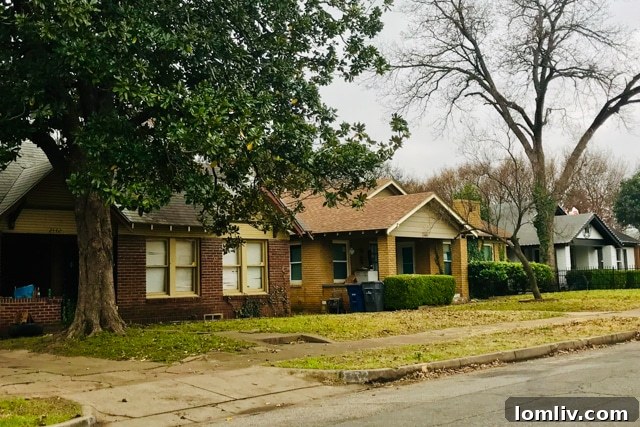
Even more critically, the charming one- and two-story historic buildings that directly line Clarendon and Hampton roads are vulnerable. These irreplaceable architectural gems could legally be demolished to make way for generic chain establishments, such as a CVS pharmacy or a Wells Fargo bank. Such developments often entail a standardized design that pulls buildings back from the street, replacing active storefronts with expansive, asphalt parking lots. The consequences of this type of development are far-reaching. Not only would the community lose invaluable historic resources—structures that tell the story of Jimtown and early Oak Cliff—but it would also sacrifice the current urban streetscape. This vibrant streetscape fosters pedestrian and cyclist interaction, creating a sense of community and place. Replacing it with isolated parking lots would fragment the historic block-face, diminishing walkability and erasing the very essence of a pedestrian-friendly environment.
Furthermore, the businesses thriving within these historic buildings are, for the most part, stable, cherished mom-and-pop enterprises, many of them Latino-owned. These businesses are more than just commercial entities; they are integral to the social fabric and economic vitality of the neighborhood, providing essential services, local employment, and cultural authenticity. The loss of these unique establishments to homogeneous corporate chains would represent a significant blow to the community’s economic diversity and cultural identity.
Community Voices: Fears and Hopes for the Future
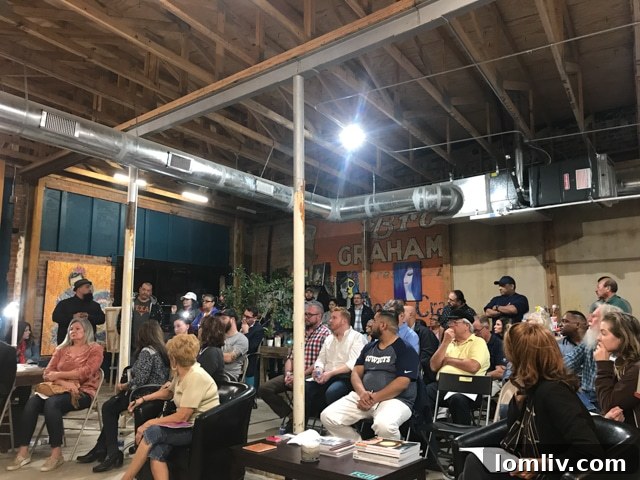
The authorized hearing process mandates an initial neighborhood meeting to gather community input, a vital step in ensuring resident perspectives are heard. At a crucial meeting held on November 29th, neighbors voiced significant reservations and concerns about the rezoning process. A predominant fear articulated was the potential for gentrification, a phenomenon that has already begun to ripple through other parts of Oak Cliff as development intensifies. Residents expressed legitimate anxieties about unaffordable property taxes, which can displace long-term residents and businesses, as well as increased traffic congestion that strains existing infrastructure and diminishes quality of life. The potential loss of neighborhood character to out-of-scale development—buildings that are too large, too tall, or simply do not fit the existing aesthetic—is a deeply felt concern.
However, the community’s perspective is nuanced. Neighbors also recognize that strategic zoning changes could offer a path to stabilize the neighborhood, shielding it from unpredictable exterior economic forces. There’s a hopeful vision that new zoning could breathe new life into old buildings through adaptive reuse—repurposing historic structures for modern functions while preserving their architectural integrity. Yet, this hope is tempered by the understanding that the same powerful economic forces that could bring positive change also carry the risk of exploiting the process. Drastic upzoning, allowing for significantly denser or taller development, could paradoxically destabilize the area even further, leading to rapid displacement and irreversible changes to the community’s fabric. The balancing act between revitalization and preservation is therefore central to this debate.
Lessons from History: The Risks of Overzealous Upzoning
History provides crucial lessons regarding the consequences of overzealous upzoning—rezoning that permits significantly larger, wider, or taller buildings than what currently exists. Such drastic changes can have a cascading effect on a community. First, they often over-inflate land values, making properties unaffordable for existing residents and small businesses. As land values soar, so do property taxes, creating an unsustainable financial burden for many. Second, inflated land values coupled with increased development potential can unfortunately incentivize demolitions. For example, a charming one-story historic building, even one in need of repair, becomes economically unattractive when a developer can replace it with a lucrative four-story, block-long new construction. This drives a cycle where irreplaceable heritage is sacrificed for immediate, often short-sighted, profit.
During the complex rezoning process, residents must exercise extreme caution and vigilance, particularly concerning several key development concepts. They must be wary of proposals for out-of-scale building heights that would overshadow existing structures and disrupt the neighborhood’s visual harmony. They should also scrutinize incentives that encourage the aggregation of several small, historically distinct lots into massive, monolithic developments, which can erase the fine-grain character of a street. Lastly, insensitive residential proximity slopes, which dictate how new structures relate to adjacent residential properties, can lead to issues of privacy, light, and air quality for existing homes. These technical concepts can often be presented through elaborate power points and disingenuous sales pitches that paint an overly optimistic picture. However, residents must demand clarity and honesty, understanding that the glossy presentations often fail to discuss the true, often harsher, reality of what will ultimately be built. Moreover, the economic repercussions are tangible: commercial property taxes that jump by 100 percent in a single year are inevitably passed along to tenants, threatening the viability of older, established businesses that are unprepared for such dramatic increases.
The Path Forward: A Multi-Stage Process Demanding Engagement
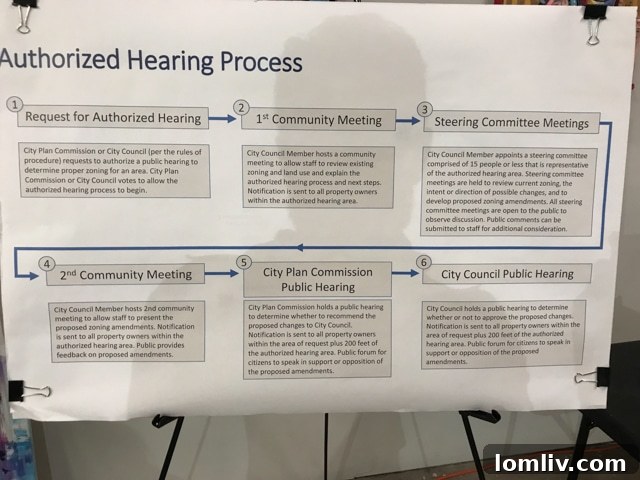
The initial neighborhood meeting was just the first step in what is a multipronged and intricate process. The subsequent stages require sustained community engagement to ensure that the eventual outcome truly reflects the neighborhood’s best interests:
- Steering Committee Appointment: The next critical step involves Councilman Scott Griggs appointing a steering committee. This committee must be truly representative of the diverse interests within the area. Its mandate will be to thoroughly review the current zoning ordinances, identify specific areas for potential change, and develop proposed amendments that align with a community-centric vision.
- Second Community Meeting: Following the steering committee’s work, another community meeting will be held. This session is crucial, as the proposed zoning changes and amendments will be presented to the public for feedback. This is a vital opportunity for residents to scrutinize the proposals, ask clarifying questions, and offer constructive criticism before they move to formal review.
- City Planning Commission Review: After community input is gathered, the matter will move to the City Planning Commission (CPC). The CPC, composed of experts in urban planning, will review the proposals, consider all feedback, and formulate their official recommendations based on city planning principles and community needs.
- City Council Decision: Finally, the recommendations from the CPC, along with all gathered community input, will be presented to the City Council for their ultimate decision. The City Council’s vote will determine the future zoning for the Hampton and Clarendon roads area, shaping its development trajectory for decades to come.
Sustained Engagement: The Key to a Positive Future
Throughout this entire, extended process, it is paramount that the neighborhood remains actively and consistently engaged. The power to shape a positive outcome lies squarely with the community. If residents collectively drive the process—attending meetings, voicing concerns, asking tough questions, and offering thoughtful solutions—the new zoning has the potential to stabilize the area, foster sustainable growth, and genuinely enhance community well-being. The quality and benefit of any new zoning will directly correlate with the level of local involvement and vigilance.
Conversely, if the neighborhood disengages, leaving the complex details to others, there is a very real risk that the outcome will serve the interests of those who specialize in urban development and policy. These professionals, while often well-intentioned, inherently operate within frameworks that may prioritize large-scale development or specific commercial outcomes. Without strong community representation and consistent advocacy, these individuals can, in effect, “write the rules to favor themselves,” leaving long-term residents and local businesses vulnerable. Therefore, active participation in every community meeting, commission hearing, and council session, until the very final decision, is not merely an option, but a fundamental responsibility for safeguarding the future of this cherished Oak Cliff neighborhood.
Michael Amonett is a dedicated Oak Cliff business owner and a lifelong resident of the community. His profound commitment to preserving Oak Cliff’s unique heritage is evident through his tireless work with Heritage Oak Cliff, an organization dedicated to safeguarding the area’s historic character. Amonett’s significant contributions to urban preservation have been formally recognized by the City of Dallas, underscoring his expertise and passion for thoughtful community development.