By Norman Alston, FAIA
Special Contributor
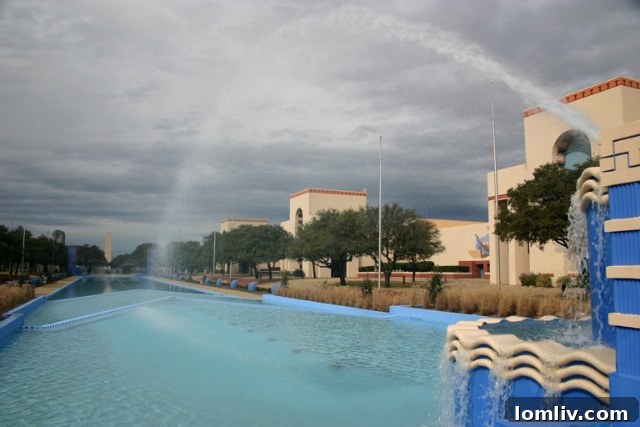
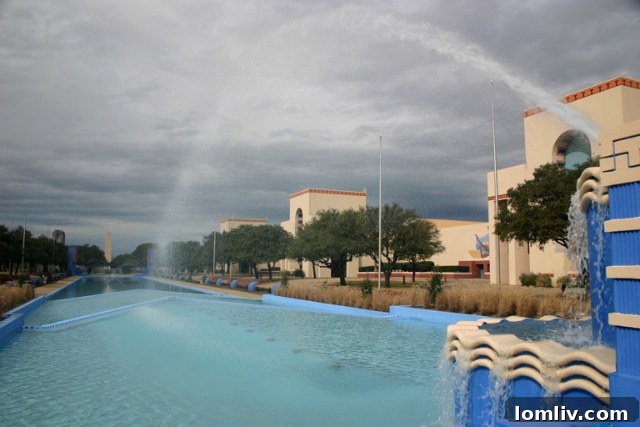
At the very heart of Dallas’s historic Fair Park lies the magnificent Esplanade, an architectural and historical masterpiece that captures the essence of grand public spaces. This iconic area is meticulously organized around a vast, shimmering reflecting pool, stretching elegantly from the park’s main entrance on Parry Avenue to the recently restored and equally remarkable Hall of State. It is a captivating realm where art, architecture, and a rich tapestry of history converge, inviting visitors to step back in time while enjoying a vibrant urban landmark. The Esplanade doesn’t merely connect two points; it creates an experience, a journey through a legacy of grand visions and enduring design that defines Fair Park.
The Enduring Legacy of the Esplanade at Fair Park
The genesis of this grand promenade traces back to the visionary planning of internationally acclaimed landscape architect George Kessler, who, in its earliest iteration, envisioned it as the “Promenade.” However, its true potential was fully realized during the pivotal mid-1930s when celebrated architect and planner Paul Cret was consulted for the initial planning of the Texas Centennial Exposition. Cret, recognizing the profound power and inherent importance of this central feature, masterfully re-imagined and significantly expanded it, bestowing upon it the dignified and now universally recognized name: the Esplanade. Today, it stands as arguably the most recognized, photographed, and cherished feature within Fair Park, a testament to its timeless beauty and monumental scale. Its broad walkways, majestic fountains, and commanding views make it an unforgettable centerpiece, drawing countless visitors year after year.
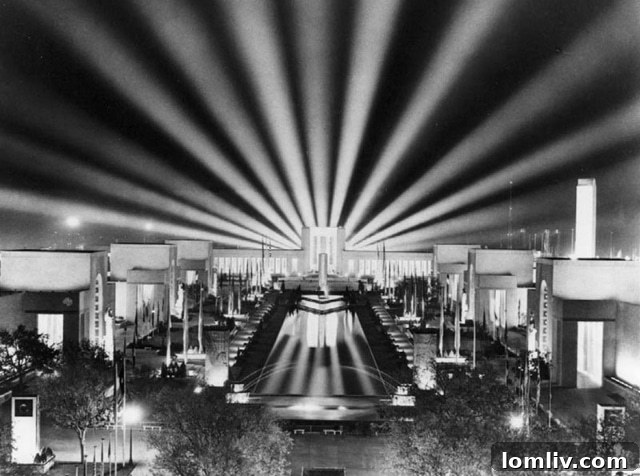
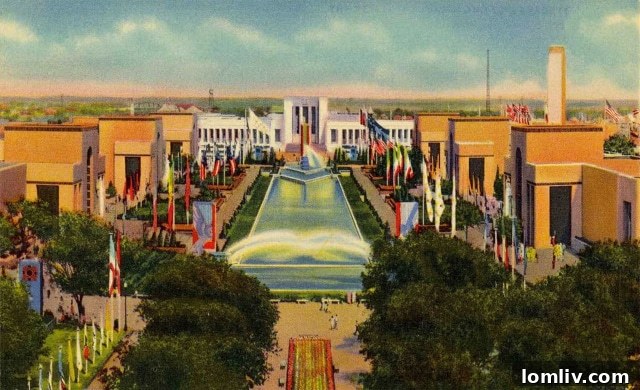
Fair Park itself was initially conceived and built as an expansive fairground, later gaining international prominence as the designated site for the monumental Texas Centennial Exposition in 1936. From its inception, the park’s primary objective has consistently been to serve as a premier venue for housing large-scale expositions and events. Central to this mission, the Esplanade is majestically flanked on its long northern and southern sides by two of the most significant and largest of the seven remaining exposition halls within Fair Park. These structures are not merely buildings; they are integral components of the park’s architectural identity and historical narrative.
These two colossal structures are known today as the Centennial Building on the north side and the Automobile Building on the south side. They have not only endured but have thrived, remaining the largest and most frequently utilized elements of the powerful economic engine that has continuously supported Fair Park for many decades since the grand Texas Centennial Exposition of 1936. These buildings are quintessential examples of the distinctive “Texanic” architecture, a style championed by luminaries such as George Dahl. Beyond their architectural significance, they proudly feature some of the most important and dramatically impactful public art found anywhere at Fair Park. Despite their grandeur and historical importance, they unfortunately share common, persistent physical challenges that have long plagued many of Fair Park’s historic structures. While both are strikingly similar in their monumental scale and design, they each possess uniquely compelling stories. Today, our focus will be dedicated to unraveling the fascinating history and architectural nuances of the Centennial Building.
Unveiling Fair Park’s Centennial Building: A Journey Through Time
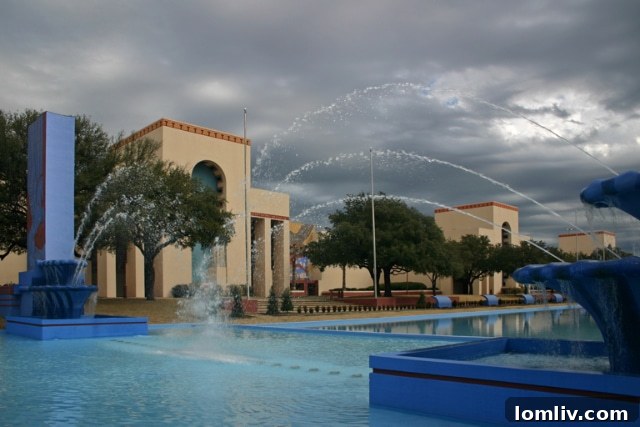
Spanning an impressive 113,000 square feet, the Centennial Building reigns as the largest of all the exposition structures at Fair Park, a true titan among its peers. Its rich history actually predates the Texas Centennial by several decades, commencing in 1905. It was in that year that a pioneering, fire-proof exposition building, then officially known as the State Fair Auditorium and Exposition Building, was meticulously constructed on this very site. This ambitious project was a direct and crucial response to the near-catastrophic 1902 fire that had tragically devastated Fair Park’s original, much larger, and predominantly wooden exposition building. The decision to build with fire-resistant materials reflected a forward-thinking commitment to safety and longevity, challenging the misconception that early Fair Park structures were not built to last.
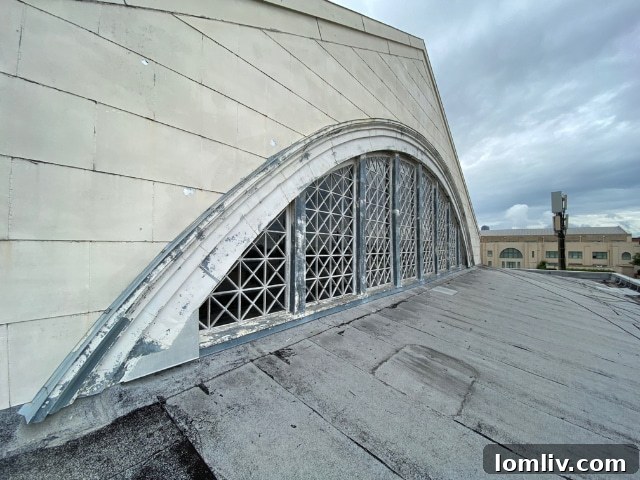
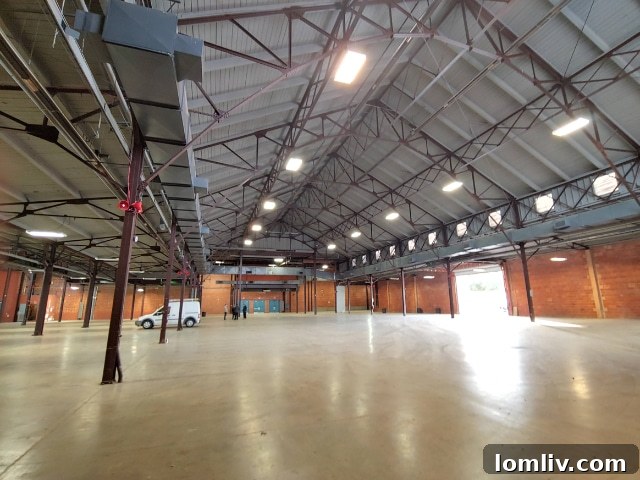
Indeed, contrary to the popular, yet often mistaken, belief that Fair Park buildings were not engineered for permanence, the remarkable truth is that the fundamental framework of the 1905 building still stands proudly today. Far from being demolished, this resilient structure was thoughtfully retained, skillfully enlarged, and elegantly re-skinned for its grand re-debut at the 1936 Texas Centennial. A keen eye can still discern elements of its original design: its distinctive three high-pitched roofs and the elaborate, intricately crafted wooden gable-end windows remain clearly visible, offering tantalizing glimpses into its past, both from within and from the exterior vantage points of the building. This architectural layering tells a story of adaptation, resilience, and a deep respect for foundational design, showcasing how a building can evolve while preserving its historical integrity.
The Vanished Splendor: Losing the Centennial’s Chrysler Hall
During the monumental Texas Centennial Exposition, the Centennial Building assumed a new identity, becoming widely known as the Hall of Transportation. In this capacity, it served as a magnificent showcase primarily dedicated to the burgeoning world of railroad exhibits. Visitors marvelled at everything from intricately detailed model railroads to full-scale, breathtaking replicas of elaborate railroad cars, each telling a story of innovation and progress in an era defined by industrial might. Beyond the captivating train displays, the building also housed the illustrious Chrysler Hall. This opulent space was uniquely centered around the Salon of Mirrors, a dazzling spectacle that doubled as an extravagant showroom for Chrysler automobiles, symbolizing the pinnacle of modern transportation and luxury.
According to the authoritative and highly regarded book Fair Park Deco, penned by esteemed authors Jim Parsons and David Bush, Chrysler Hall was widely considered by many contemporaries to be the most stunning and artistically significant exhibit featured at the entire Centennial. Its blend of modern design, mirrored surfaces, and technological displays created an unforgettable experience that captivated audiences. Tragically, and quite unfortunately for future generations of historians and enthusiasts, Chrysler Hall was completely dismantled and removed following the exposition. To this day, no photographs or detailed architectural plans of its interior have been definitively discovered, rendering its former beauty and intricate design a haunting mystery and a significant loss to the visual record of Fair Park’s celebrated past. This absence underscores the often-ephemeral nature of exposition displays, even those deemed most beautiful.
Fair Park’s Artistic Legacy: A Treasure Trove of Public Art
Beyond its architectural grandeur, the Centennial Building, like its Esplanade counterpart, the Automobile Building, is a vibrant canvas for an extraordinary collection of public art. Each of the Esplanade’s exposition buildings is distinguished by three monumental porticos, forming a total of six prominent entrances that famously represent the six nations that have historically claimed sovereignty over Texas. This concept is widely believed to be the profound origin of the iconic “Six Flags Over Texas” idea, weaving history and symbolism directly into the park’s fabric. Each of these striking porticos serves as a magnificent frame for a large, captivating statue, masterfully crafted by the renowned artists Lawrence Tenney Stevens and Raoul Jossett. These statues stand as sentinels, embodying strength and historical narrative.
Beneath these commanding statues, visitors are treated to an even more expansive visual feast: very large and intricately elaborate murals by the talented artist Carlos Ciampaglia. These dynamic murals typically resonate with the theme of transportation, celebrating various modes of movement and progress. While trains often feature prominently, reflecting the Centennial Building’s original role as the Hall of Transportation, Ciampaglia’s artistic vision was not restricted solely to railway motifs. His work frequently encompasses broader themes of travel, industry, and the spirit of exploration, creating a rich visual tapestry that complements the architectural surroundings and educates visitors about historical advancements.
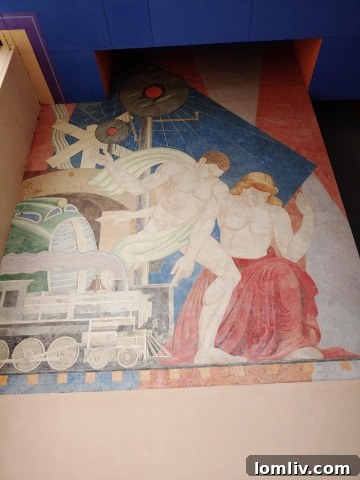
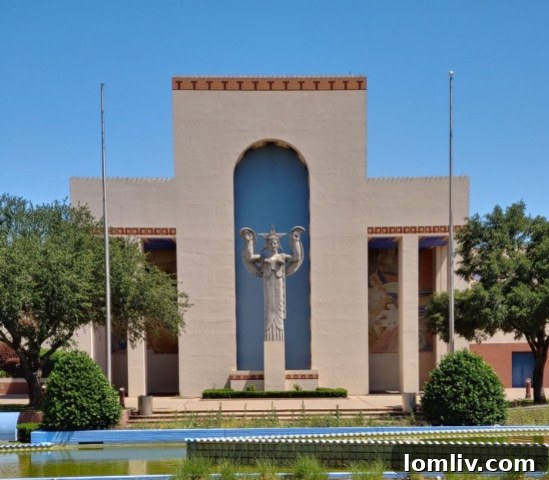
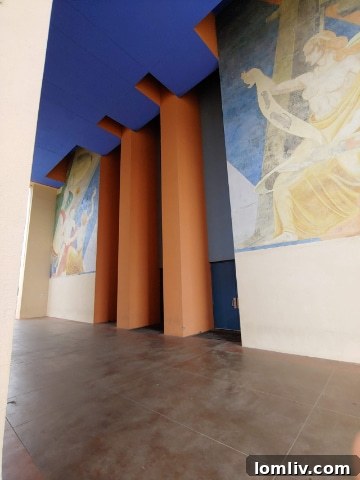
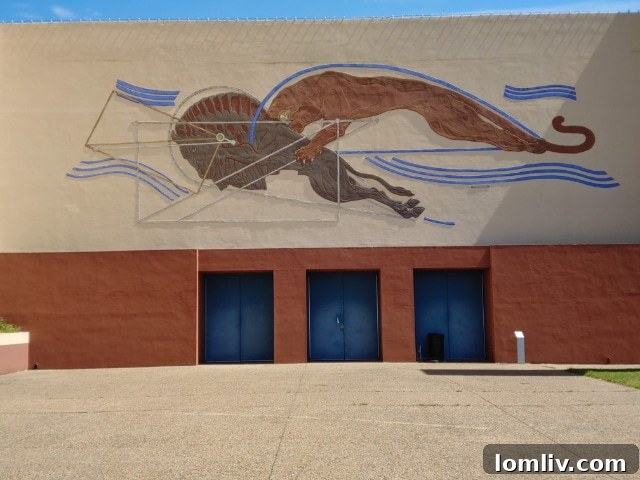
However, the artistic treasures of the Centennial Building extend even further, notably through the remarkable bas-reliefs created by the distinguished artist Pierre Bourdelle. These works are truly unique and stand apart due to Bourdelle’s innovative and meticulous technique. Rather than merely carving into existing surfaces, Bourdelle tinted the stucco itself, building it up in layers to be subtly thicker than the surrounding wall. He then expertly carved back into this specially prepared, tinted material, meticulously shaping and refining it to create the intricate and vibrant images that grace the building’s exterior today. This distinctive method not only gives his bas-reliefs an unusual depth and texture but also imbues them with a lasting artistic presence that is both visually captivating and historically significant, a testament to his groundbreaking approach to public art.
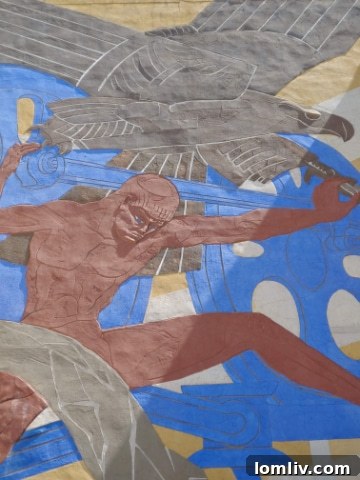
Despite their enduring beauty and cultural significance, the artistic installations of the Centennial Building, particularly those crafted from stucco, vividly illustrate the pressing need for ongoing preservation and restoration efforts. The challenges faced by these artworks serve as a microcosm for the broader physical problems affecting many of Fair Park’s historic structures. For reasons that remain largely unexplained by historical records, the stucco installations of that era did not adequately account for the natural and inevitable expansion and contraction that stucco materials are known to undergo as they are exposed to fluctuating temperatures, heating and cooling with the seasons.
In contemporary construction practices, it is standard procedure to install carefully designed control joints at regular intervals. These joints are specifically engineered to manage and relieve the inherent stresses caused by this thermal movement, preventing the material from cracking. However, in 1936, this critical understanding and practice were largely absent from the construction methods employed. The unfortunate consequence of this oversight is that these natural stresses, accumulating over decades, have produced extensive cracking in the stucco. These cracks, initially minor, subsequently lead to insidious moisture infiltration, which exacerbates the damage, resulting in worse cracks, spalling, and ultimately, the structural failure of the stucco over time. This cycle of deterioration has been a constant and formidable battle for Fair Park since the very construction of these magnificent buildings, necessitating continuous maintenance and, more recently, comprehensive restoration initiatives.
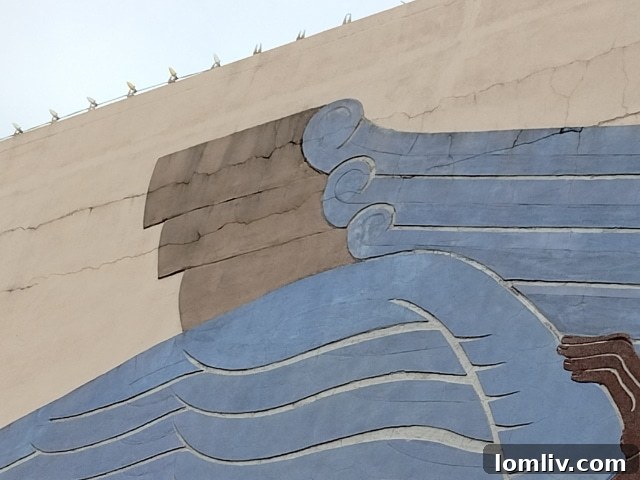
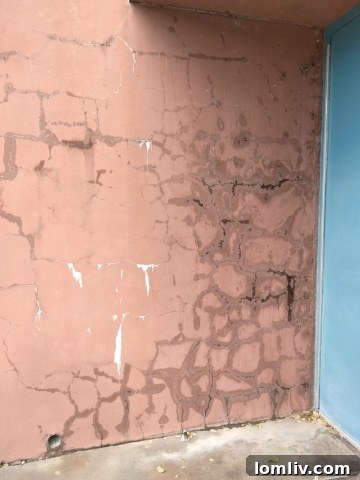
While some of these long-standing issues are currently being diligently addressed by the dedicated Dallas Parks and Recreation Department through the allocations from the 2017 Bond Program, a comprehensive assessment has revealed that many more critical repairs and vital improvements are urgently required to ensure the long-term integrity and splendor of these historic structures. Among the most practical and impactful improvements that Proposition A, if passed, would be instrumental in funding, catching up on the essential repairs to the building exterior, particularly the intricate and vulnerable stucco work, stands as paramount. These repairs are not merely cosmetic; they are fundamental to preserving the historical authenticity and structural soundness of the Centennial Building, safeguarding its artistic legacy for future generations. Investing in these improvements through initiatives like Proposition A ensures that Fair Park’s architectural treasures continue to stand as testaments to Dallas’s rich history and cultural heritage, ready to inspire and educate visitors for decades to come.
[Editor’s Note: This is the third in a compelling series from Preservation Dallas Board Chair Norman Alston, FAIA, offering insightful perspectives on how Dallas’ Proposition A on the Nov. 8 ballot could profoundly transform and meticulously preserve Fair Park. For a deeper dive into the initial columns of this illuminating series, please click here and here.]
Norman Alston, FAIA, is a distinguished architect who founded Norman Alston Architects three decades ago. His firm was established with a singular and unwavering focus: to dedicate his architectural practice primarily to historic preservation, a pursuit that embodies the very fulfillment of his profound architectural passion. Through his meticulously crafted restoration designs, extensive educational outreach, and tireless advocacy, Alston endeavors to seamlessly integrate historic buildings into the dynamic tapestry of the urban fabric. Concurrently, he strives to cultivate a broader culture of preservation that deeply embraces and celebrates the unique character and invaluable architectural legacy of the community he serves. His work stands as a testament to the enduring power and irreplaceable value of historical architecture in shaping contemporary urban environments.