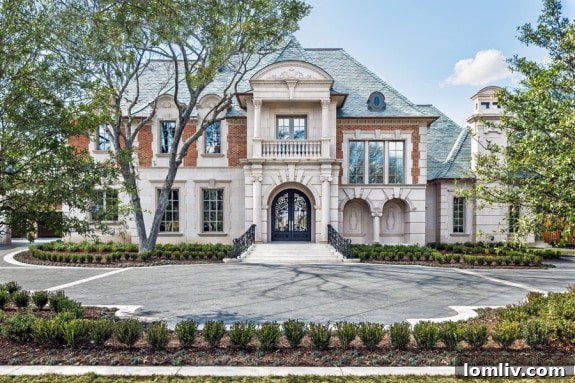
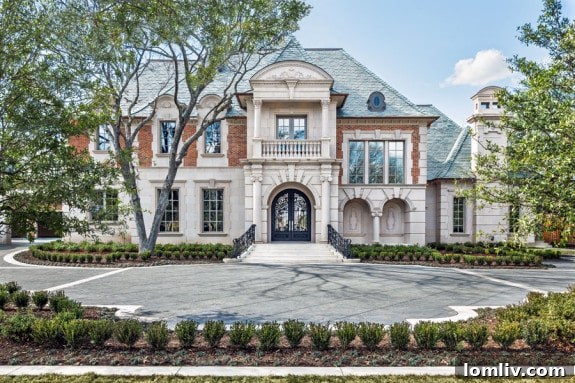
Dallas’s Soaring Executive Salaries Fueling a Mega-Mansion Boom in Luxury Real Estate
The Dallas-Fort Worth metropolitan area is witnessing an unprecedented surge in its luxury real estate market, a phenomenon directly linked to the burgeoning wealth of its top executives. Recent weeks have seen a flurry of mega-mansion sales, signaling robust health in the region’s exclusive housing sector. This exciting trend is propelled by a significant increase in the number of high-net-worth individuals calling Dallas home, largely due to the remarkable growth in executive compensation.
A comprehensive analysis compiled by Longnecker & Associates, a prominent Houston-based consulting firm, for The Dallas Morning News, reveals that Dallas-area top executives are enjoying substantially larger paychecks. This escalation in earnings is primarily driven by lucrative stock dividends, as stock prices for many Dallas-Fort Worth-based companies experienced a phenomenal rise last year, culminating in hefty financial packages for the region’s corporate leaders.
DFW’s Economic Engine: A Closer Look at Executive Compensation
The Dallas-Fort Worth metroplex stands as a powerhouse of economic activity, home to numerous Fortune 500 companies and a thriving business environment. This robust economic landscape naturally translates into significant rewards for its top leadership. The data from Longnecker & Associates provides a clear picture of this financial prosperity:
The median total compensation for D-FW chief executives — encompassing base salaries, stock awards, stock options, cash bonuses, and pension benefits — experienced a remarkable 20 percent increase last year. This surge propelled the median from $2.85 million in 2012 to an impressive $3.4 million last year, according to the compensation data compiled for The Dallas Morning News. The largest component of this increase originated from stock awards, which climbed 12 percent to reach $2.4 million.
Beyond the impressive total compensation figures, median base salaries also saw a healthy rise, moving from $691,801 in 2012 to $731,315 in 2013, representing a 5.7 percent increase. For an executive earning a base salary of $731,315, this translates to the potential qualification for a home valued at approximately $2.1 million, assuming excellent credit and a substantial down payment – funds often sourced from those very stock dividends and year-end bonuses. While these figures are still slightly below the compensation packages of many chief executives in the broader Standard & Poor’s 500 index outside of Dallas, experts anticipate a continued upward trajectory for these attractive CEO salaries within the DFW region, further fueling the demand for ultra-luxury homes.
The Impact on Dallas Luxury Real Estate: From “Frothy” to Flourishing
The dramatic increase in executive wealth has had a profound and undeniable impact on the Dallas luxury real estate market. What was once a concern for some, including local developers who pondered whether the mega-mansion market might be getting “frothy” due to the rapid development of multi-million dollar speculative homes, now appears to be a sustained boom. With more affluent buyers actively seeking high-end residences, any previous market anxieties have largely dissipated, giving way to confident optimism.
Dallas’s most prestigious neighborhoods, such as Preston Hollow, Highland Park, and University Park, are particularly vibrant, showcasing an array of magnificent estates and custom-built luxury homes. These properties often feature expansive grounds, state-of-the-art smart home technology, chef’s kitchens, private gyms, media rooms, and lavish outdoor living spaces with resort-style pools. The demand for such exclusive amenities and prime locations continues to drive property values upwards, solidifying Dallas’s reputation as a top-tier destination for luxury living. The $2.1 million home qualification for top executives represents not just a potential purchase, but often an entry point into a market segment that frequently sees properties listed and sold for significantly higher amounts, reflecting the robust spending power within the executive class.
The Dodd-Frank Act and Shareholder Oversight: A National Perspective
The discussion around executive compensation often brings into focus the Dodd-Frank financial reform law, enacted to introduce greater transparency and accountability in corporate governance. A key provision of Dodd-Frank grants shareholders a “say-on-pay” vote, allowing them to express their approval or disapproval of executive compensation packages. While these votes are typically non-binding, they are intended to provide shareholders with a voice and potentially influence corporate boards. This mechanism sparks ongoing debate about the balance between executive performance rewards and overall shareholder value.
Nationally, there have been instances where shareholders have exercised this right, albeit with varying degrees of success. Longnecker & Associates reported that shareholders across the country voted “no” at 42 companies in the year of the report, a slight decrease from 48 the previous year. This indicates a persistent level of shareholder scrutiny regarding executive pay. However, the situation in Dallas-Fort Worth presented a notable contrast:
Notably, no D-FW companies received “no” votes from shareholders in 2013, according to Longnecker’s analysis.
This absence of dissenting votes within the DFW corporate landscape suggests a strong alignment between executive compensation strategies and shareholder approval, or perhaps, a different corporate governance culture compared to other regions. Interestingly, outside of DFW, one high-profile “no” vote came from shareholders of the popular restaurant chain, Chipotle Mexican Grill Inc. Despite co-chief executive officers Steve Ells and Monty Moran both receiving total compensation packages in the $25 million range, only 23 percent of shareholders voted in favor of their pay. This example underscores that while DFW executives enjoy broad shareholder support, the debate over the magnitude of executive pay remains a significant point of contention in corporate America.
DFW’s Richest Executives and Their Lavish Lifestyles
The immense wealth generated by DFW’s leading executives directly translates into significant investments in luxury residences, further stimulating the region’s high-end real estate market. Let’s delve into the top earners and their impressive abodes, offering a glimpse into the lifestyles driving Dallas’s mega-mansion boom.
Tony Aquila: Solera Holdings Inc.’s Visionary Leader
Leading the pack as DFW’s highest-earning CEO is Tony Aquila of Solera Holdings Inc., with an astonishing $29.9 million in total compensation. Solera, based in Westlake, Texas, is a global leader in providing software and services to the automotive and property insurance industries, specializing in estimating and tracking auto repairs, vehicle history, and claims processes for 165,000 customers. Aquila’s impressive earnings are a testament to the company’s innovative success in a critical sector.
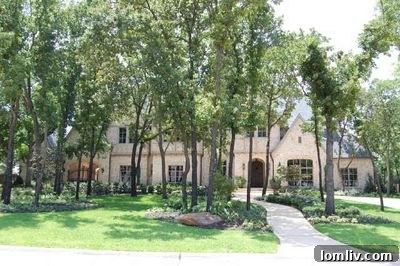
While executive residences are often private, public records sometimes offer clues. A home owned by an Anthony and Shelly Aquila in The Enclave, an exclusive community on Enclave Court in Southlake, stands as a potential reflection of this high-earner’s lifestyle. This expansive residence spans approximately 8,760 square feet, featuring five bedrooms, a luxurious swimming pool, and a four-car garage. Southlake is renowned for its upscale communities, top-rated schools, and sprawling estates, making it a prime location for DFW’s wealthiest inhabitants.
Rex Tillerson: Exxon Mobil’s Former Chief
In second place is Rex Tillerson, the former chief of Exxon Mobil, whose total compensation reached $28.1 million. Tillerson and his wife reside on an impressive 18-acre homestead situated near their expansive 83-acre horse ranch in Bartonville, Denton County. A look at Denton County tax records reveals a home under Rex W and Renda Tillerson valued at $1,257,925. This valuation, while substantial for many, stands in stark contrast to the multi-million dollar properties often associated with individuals of his wealth. This raises an intriguing question: are some of Dallas’s billionaires adopting a more understated approach to their primary residences, reminiscent of figures like Warren Buffett? This contrasts sharply with the visible opulence of homes like that of Harry Longwell, who owns a $7,025,000 residence on Park Lane. It’s plausible, of course, that the Tillersons, like many global executives, possess an extensive portfolio of other properties worldwide, with their Bartonville residence serving as a more private, functional home base.
Randall Stephenson: AT&T’s Leader and the Walnut Hill Compound
Rounding out the top three is Randall Stephenson, the highly respected leader of AT&T Inc. His total compensation package amounted to $23.2 million, a testament to his leadership of one of the world’s largest telecommunications companies. This package comprised a $1.6 million salary, supplemented by a significant $5 million cash incentive award, $13.4 million in stock awards, and an additional $3.2 million in other compensation.
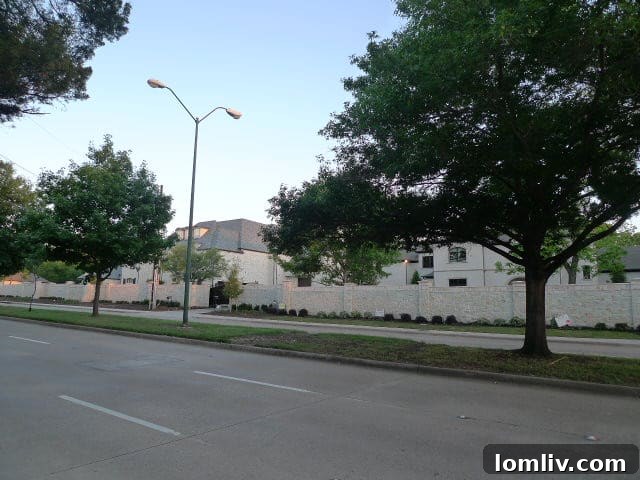
Stephenson’s residence is a notable “compound” on Walnut Hill Lane. According to Dallas Central Appraisal District (DCAD) records, his three interconnected property tracts are collectively valued at approximately $7.8 million. The concept of a private compound, often encompassing multiple parcels for enhanced privacy, extensive amenities, and security, is a hallmark of ultra-luxury living for the most discerning and high-profile residents of Dallas.
Other Influential DFW Executives Shaping the Market
The top 10 highest-paid CEOs in Dallas-Fort Worth showcase a diverse array of industries and further underscore the region’s prosperity. Their salary packages ranged from an impressive $22.7 million down to a still substantial $13.2 million. This elite group included two key executives from American Airlines Group Inc.: Tom Horton, with a compensation of $19.3 million, and Doug Parker, former CEO of US Airways, who earned $17.7 million. The presence of airline executives highlights DFW’s critical role as a global transportation hub, further diversifying the sources of wealth pouring into the local economy.
Conclusion: A Thriving Market Driven by Top Talent
The current landscape of the Dallas luxury real estate market is undeniably vibrant and robust, largely energized by the significant and growing wealth of the region’s top executives. The sustained increase in executive compensation, particularly through stock-based awards, directly translates into elevated purchasing power for high-end homes and mega-mansions. From the sprawling estates of Southlake to the exclusive compounds of Dallas’s most prestigious neighborhoods, these affluent buyers are not just acquiring property; they are investing in a lifestyle that reflects their success and contributes profoundly to the local economy.
While discussions around executive compensation and shareholder accountability remain relevant, the immediate effect on the DFW luxury housing market is unequivocally positive. The demand for these magnificent residences continues unabated, driven by a thriving corporate sector and a growing population of highly compensated leaders. As these trends persist, Dallas-Fort Worth is set to remain a premier destination for luxury living, with its real estate market continuing to benefit immensely from the prosperity of its executive class.