The Dallas City Council’s Controversial Vote on the Lincoln Katy Trail Project: An Affordable Housing Illusion?
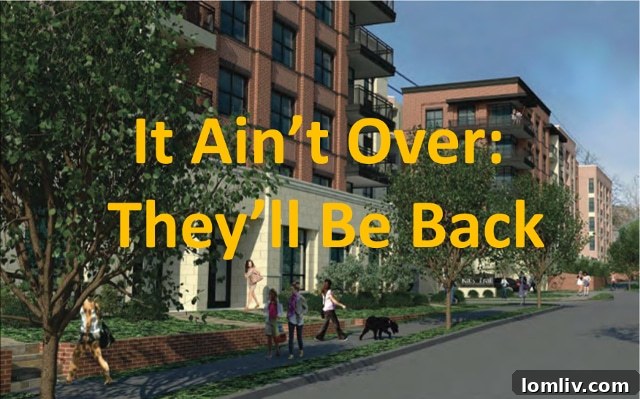
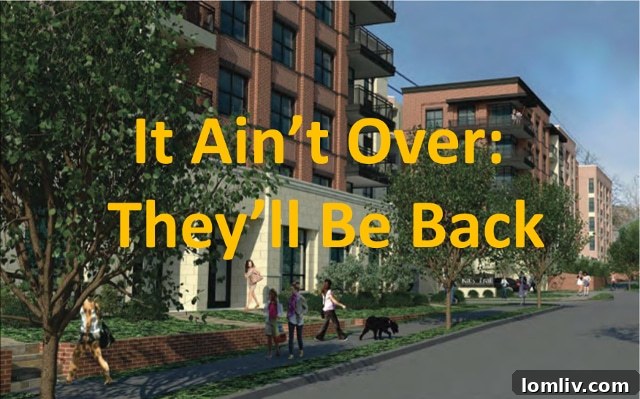
The Dallas City Council recently revisited the long-debated Lincoln Katy Trail project during a contentious evening meeting. This reconsideration came after the project had previously failed to gain approval from the City Plan Commission in November, highlighting persistent concerns within the community and various city departments. In a strategic move to garner support from a City Council keenly focused on addressing the city’s affordable housing challenges, Lincoln developers increased their proposed affordable housing component from a mere five percent to a more substantial fifteen percent. This translated to an increase from 15 to 45 designated affordable units within the development. Many council members, including Mayor Mike Rawlings, appeared to embrace this revised offer as a significant step forward.
Mayor Rawlings, in particular, demonstrated an overt eagerness to see the project through. His enthusiasm was so pronounced that he directly questioned Oak Lawn District 14 Council Member Philip Kingston, asking if he would support the deal should Lincoln purchase a home for a visually impaired woman residing in the existing complex, a scenario Kingston had previously brought to the council’s attention. Other council members pressed Kingston further, seeking to pinpoint an exact “affordable percentage” that would secure his endorsement for the project. The prevailing sentiment among proponents was, “It’s just math,” implying a straightforward calculation should lead to approval. However, a deeper look reveals that the math was, in fact, being selectively interpreted.
Unpacking the Numbers: A Closer Look at “Affordable” Housing Claims
What many council members seemingly overlooked, or perhaps chose to disregard, was the fundamental mathematical reality of the situation. The existing complex at the heart of this debate already provides 115 market-rate affordable housing units. Despite Lincoln’s revised offer to increase their “affordable” housing contribution to 15 percent (45 units), the neighborhood would still face a substantial net loss of 70 affordable units compared to the current configuration. This critical discrepancy underscores a flawed approach to evaluating genuine affordable housing solutions. Furthermore, the discussion often bypassed a crucial aspect of housing dignity: the positive self-esteem associated with being able to rent or purchase a market-rate affordable home, as opposed to enduring an intrusive application process designed to “prove” one’s financial hardship to qualify for subsidized housing.
Adding another layer of complexity to this issue is the stark financial comparison between existing and proposed rents. Forgotten in the heated debate was the fact that the rents currently generated by the investor-owned condominiums within the existing complex are, today, often lower than the projected rents Lincoln would charge for their new “affordable” units. This revelation raises serious questions about the true affordability and community benefit of the proposed development. Under the current structure, the units comprising Turtle Creek Terrace are individually owned, with many rented out by individual investors. The proposed Lincoln development, however, would consolidate ownership, placing all units under the control of a single corporate entity.
In essence, the city, driven by a perceived urgency to secure affordable housing “wins,” appears to be prioritizing a set of objectives that may inadvertently undermine the very goal it seeks to achieve. A quick recap reveals a concerning pattern:
- The prioritization of new, developer-led affordable units over the preservation and maintenance of a larger number of existing, naturally occurring affordable units.
- A move towards fewer affordable units overall, despite the appearance of increasing a percentage, resulting in more than double the number of existing units being displaced.
- A shift from individual resident and investor-owned housing to large-scale corporate ownership, potentially altering the long-term character and accessibility of the neighborhood.
This approach to affordable housing strategy prompts a critical re-evaluation of what constitutes effective and genuinely beneficial urban development. Is this truly a commendable effort in expanding affordable housing options?
Political Maneuvers and Contradictory Statements
The council meeting was rife with political paradoxes. Mayor Rawlings asserted that the deal would “set a new standard for affordable” in future dealings with developers, implying a groundbreaking precedent. Yet, moments earlier, another council member explicitly stated that upzoning cases, like the Lincoln Katy Trail project, were not precedent-setting. This glaring contradiction leaves observers questioning the sincerity and consistency of the council’s messaging. Is an action only deemed precedent-setting when it serves a favorable narrative, but dismissed as such when it exposes potential liabilities or future challenges?
When the initial motion to approve the project failed, District 5 Council Member Rickey Callahan made a curious move, inviting Jeff Courtwright, a representative for Lincoln, to address the council and outline his next steps. Unsurprisingly, Courtwright responded that he intended to return to the City Plan Commission – the very body where the project had previously been rejected by a two-vote margin. His aim was clear: to sway those dissenting votes, thereby eliminating the need for a politically challenging three-fourths majority vote at the City Council level. The transparency of this maneuver, while perhaps strategic, felt disingenuous to many.
The meeting saw a series of complex and often confusing votes. Council Member Philip Kingston’s motion to deny the project ultimately failed with a 6-9 vote. Subsequently, Mayor Rawlings’ motion to approve the project also did not pass, receiving a 10-5 vote, which was insufficient for approval. Following considerable procedural “kerfuffling” and debate, a vote was taken to reconsider Kingston’s original motion to deny the project. This vote to revote passed decisively with a 14-1 margin, effectively granting Lincoln the immediate right to refile their case. The revote on Kingston’s motion then passed 12-3. The procedural labyrinth and the ultimate outcome left many with a sense of exasperation.
Ignoring the Community: A Precedent for Disregard?
Throughout these proceedings, Council Member Kingston often found himself in a confrontational position, at one point famously telling fellow council member Lee Kleinman from District 11, “You’re a liar, dude.” Beyond the heated exchanges, Kingston consistently highlighted a crucial point that seemingly fell on deaf ears among his colleagues: the Oak Lawn Committee, a vital community organization, was vehemently against the project. Furthermore, the neighborhood itself overwhelmingly opposed it, and the City Plan Commission had already rejected it. Residents had invested countless hours and considerable effort in fighting against this development, presenting a unified front of opposition.
By consciously ignoring this loud, varied, and well-documented opposition, the City Council sent a clear and concerning message to its residents. It communicated that when elected officials disagree with their constituents, they possess the power, and perhaps the inclination, to simply “wait them out” and “wear them down.” This strategy aims to diminish the opposition to a point where it becomes politically acceptable to push through controversial projects, irrespective of widespread public sentiment. This take-home message should resonate deeply with residents in other parts of the city. It serves as a stark reminder that elected officials, when determined to pursue an agenda contrary to public will, can leverage parliamentary procedures and sheer endurance to bypass and ultimately exhaust local opposition.
How’s that for a political bedtime story – one that serves as a cautionary tale for democratic engagement and local governance?

About the Author: My focus consistently lies in high-rises, homeowners’ associations (HOAs), and renovation projects within the real estate landscape. Beyond these areas, I hold a deep appreciation for the delicate balance between modern and historical architecture, particularly in the context of the evolving YIMBY (Yes In My Backyard) movement. My commitment to insightful real estate journalism has been recognized by the National Association of Real Estate Editors. I was honored with three Bronze awards in 2016, 2017, and 2018, as well as two Silver awards in 2016 and 2017 for my writing. If you have a compelling story to share, an important perspective on urban development, or perhaps even a marriage proposal, please don’t hesitate to reach out via email at [email protected]. While I encourage you to look for me on Facebook and Twitter, a successful search might prove to be a fascinating challenge.