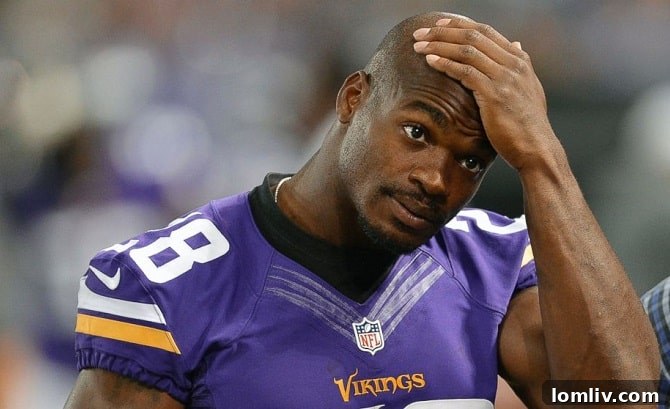
Adrian Peterson to Dallas Cowboys: Unpacking the Buzz and Potential Impact
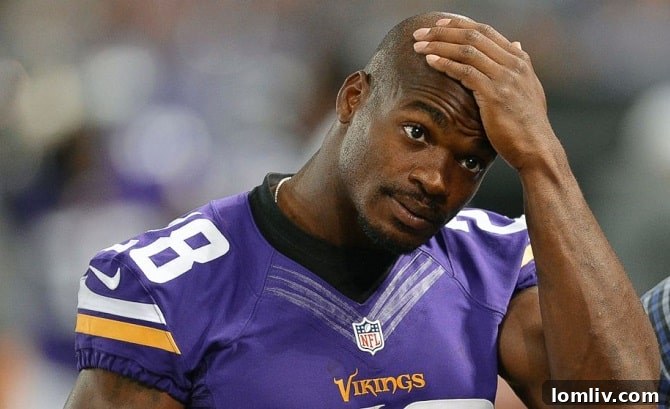
The National Football League (NFL) offseason is a period ripe with speculation, rumors, and potentially game-changing player movements. Among the most captivating narratives that frequently emerge are those involving superstar athletes contemplating a move to a new franchise. Few stories, however, captured the collective imagination and sparked as much fervent discussion as the prospect of Adrian Peterson, the legendary running back, potentially making a dramatic switch to the Dallas Cowboys. This was more than just a typical transfer rumor; it was a storyline woven with personal ties, strategic team needs, and the undeniable allure of one of football’s biggest stages.
Reports began to circulate with increasing intensity, hinting that “All Day” Peterson, renowned for his relentless power, explosive runs, and ability to single-handedly alter the course of a game, was exploring a new home. The whispers spoke of a chartered jet touching down at Love Field in Dallas, followed by rendezvous with agents and excursions into the city’s upscale neighborhoods for house hunting. For the passionate fanbase of the Dallas Cowboys, the mere thought of a talent of Peterson’s caliber donning the iconic Star was enough to ignite a firestorm of hope and anticipation. Peterson’s deep roots in Texas, hailing from Palestine and maintaining a residence in Houston, only added compelling layers to the speculative blaze, making a move back to his home state feel incredibly plausible. But what were the underlying factors driving such a significant potential shift, and how realistic was this blockbuster scenario?
Adrian Peterson’s Situation: A Star at a Crossroads
Adrian Peterson’s career with the Minnesota Vikings was nothing short of extraordinary. Selected as the 7th overall pick in the 2007 NFL Draft, Peterson swiftly established himself as one of the most physically gifted and statistically dominant running backs in NFL history. His resume boasts a remarkable 2,000-yard rushing season, an NFL MVP award, and numerous Pro Bowl selections. For years, he was the undisputed face of the Vikings franchise, carrying the offensive load with a punishing yet graceful running style that consistently defied expectations.
However, by the time the buzz about a potential Dallas move began to intensify, Peterson’s illustrious tenure in Minnesota had reached a pivotal crossroads. A tumultuous 2014 season, during which he was largely away from the team due to significant off-field legal issues, cast a considerable shadow over his future with the franchise. Despite his immense talent and undeniable on-field prowess, the Vikings faced a difficult strategic decision. They had to weigh the benefits of retaining a high-priced veteran running back who had missed substantial time against the need for salary cap flexibility and a clearer path for the team’s evolving direction. The possibility of a trade or an outright release became a very real and widely discussed consideration for the Minnesota front office as they prepared for the upcoming season.
Factors Influencing Peterson’s Potential Vikings Departure:
- Substantial Contract: Peterson commanded one of the largest contracts for a running back in the league, prompting the Vikings to evaluate his financial impact relative to his recent availability and age.
- Team Rebuilding Phase: Minnesota was a franchise in transition, actively looking to develop a younger core of players. Moving on from a veteran superstar, even one of Peterson’s caliber, could free up significant resources and cap space for future investments.
- Off-Field Distractions: While Peterson had resolved his legal issues, the public relations aftermath created a challenging environment. A fresh start for both the player and the team in a different location might have been seen as mutually beneficial.
This confluence of circumstances effectively opened the door for other NFL teams to seriously consider acquiring Peterson, should he become available via trade or release. Among the numerous potential suitors, with compelling reasons and a clear positional need, the Dallas Cowboys quickly emerged as a prominent and exciting possibility.
The Irresistible Allure of America’s Team: Why Dallas Was a Perfect Fit for AP
For the Dallas Cowboys, the timing of Adrian Peterson’s potential availability could not have been more opportune or strategically intriguing. Following a stellar 2014 season where running back DeMarco Murray led the entire league in rushing, the Cowboys found themselves at a critical juncture when Murray, unable to agree on a new contract, departed in free agency to a divisional rival. This left a significant void in their otherwise potent and meticulously constructed offensive scheme—an offense that heavily relied on a dominant ground game to control the clock, set up crucial play-action passes, and generally dictate the tempo of games. The sudden availability of Adrian Peterson felt like a providential answer to their immediate needs.
The prospect of Peterson running behind Dallas’s truly elite offensive line was a tantalizing vision for Cowboys fans and astute NFL analysts alike. This offensive line, widely regarded as one of the absolute best in the NFL at the time, featured perennial Pro Bowlers and future Hall of Famers such as Tyron Smith at left tackle, Travis Frederick at center, and Zack Martin at right guard. This unit was specifically built to create massive running lanes, often blowing open gaping holes that even average running backs could exploit. For Peterson, a runner with legendary vision, power, and tackle-breaking ability, this environment promised to be a playground where he could potentially rekindle his MVP-caliber form and dominate defenses once again. His powerful, north-south running style would perfectly complement the Cowboys’ existing offensive philosophy, which prioritized establishing the run to open up opportunities for quarterback Tony Romo and wide receiver Dez Bryant.
Why a Peterson-Cowboys Pairing Was So Appealing:
- Dominant Offensive Line: Dallas boasted a generational offensive line capable of maximizing Peterson’s legendary running style and extending his career.
- Tailored Offensive Scheme: The Cowboys’ run-heavy approach under offensive coordinator Scott Linehan was an ideal match for a workhorse, downhill runner like AP.
- Deep Texas Connection: Peterson’s personal ties and history with the state of Texas provided a compelling emotional narrative and a potential comfort level for the player.
- Immediate Super Bowl Contention: Dallas was widely perceived as a team on the cusp of legitimate Super Bowl contention, offering Peterson a prime opportunity to compete for the elusive championship ring.
- Massive Media Market: “America’s Team” provides an unparalleled platform and brand recognition, which could have helped Peterson re-establish his public image after a challenging period.
Furthermore, the Dallas Cowboys, as one of the most iconic and recognizable sports franchises globally, offer a massive platform and brand recognition that few other teams can rival. For a player like Peterson, looking to author a new chapter in his career, re-establish his narrative, and finally chase a Super Bowl ring, joining the Cowboys presented a unique, powerful, and almost poetic opportunity. It transcended a simple football transaction; it was a potentially career-defining move that blended deeply personal connections with soaring professional ambition.
The “House Hunting” Rumor: Separating Fact from NFL Fiction
The reports of Adrian Peterson’s chartered jet landing at Love Field and the subsequent house hunting expeditions in exclusive Dallas neighborhoods were the very sparks that truly ignited the sprawling fire of speculation. While such specific details often originate from a kernel of truth, the NFL offseason is notoriously rife with agents strategically leveraging perceived interest, sources leaking information (or sometimes calculated misinformation), and an eager fan base desperately piecing together fragments of news to form their desired outcomes. The inherent nature of these high-stakes rumors frequently blurs the distinct line between concrete action and strategic posturing in the cutthroat world of professional sports.
Peterson, a seasoned and savvy veteran, undoubtedly understood the immense power of perception within the NFL landscape. His mere presence in the Dallas area, whether his primary purpose was genuine house hunting, visiting family, or simply exploring future opportunities, would naturally be interpreted through the lens of a potential blockbuster move. Player agents frequently facilitate such exploratory visits for their high-profile clients, using them as opportunities to gauge genuine team interest, evaluate potential living conditions, and subtly send powerful messages to both their current team and prospective suitors. While Peterson certainly has strong, enduring ties to Texas and likely explores real estate opportunities there periodically, the specific timing of these widespread rumors during his uncertain future with the Vikings was highly significant and deliberate.
It is crucial to remember that in the high-stakes realm of professional sports, particularly during the critical free agency and trade periods, much of what transpires behind the scenes is meticulously choreographed to create maximum leverage. For Peterson and his representation, demonstrating a clear and public interest in a specific, high-profile market like Dallas could apply significant pressure on the Minnesota Vikings to make a definitive decision regarding his future. Simultaneously, it could also compel other potential suitors to increase their offers or accelerate their pursuit. For the Dallas Cowboys organization, allowing such rumors to circulate helped them gauge public reaction, build fan excitement, and subtly signal their intentions without committing to an official move or entering into formal negotiations prematurely.
Ultimately, the exact truth behind the “house hunting” might have been simpler than the speculation suggested: a superstar athlete with deep Texas roots merely exploring options, a perfectly normal activity for someone in his position. However, the profound impact of these rumors was undeniable, transforming a theoretical possibility into a vivid, immediate, and exciting image for millions of football enthusiasts across the nation and beyond. It underscored the player’s enduring star power and the media’s hunger for compelling narratives.
Beyond Dallas: The Wider Landscape of AP’s Future
While the Dallas Cowboys emerged as perhaps the most prominent and romanticized candidate for Adrian Peterson’s services, it was always essential to acknowledge that a player of his immense caliber would naturally attract widespread interest from numerous other NFL franchises. Any team in legitimate need of a dominant ground attack, possessing the necessary salary cap flexibility to accommodate his substantial contract, and looking to make an immediate impact would have been remiss not to inquire about his availability. During that period, teams like the Arizona Cardinals, Oakland Raiders, and Tampa Bay Buccaneers were also frequently mentioned as potential landing spots, each offering their own unique set of circumstances, roster strengths, and opportunities for the future Hall of Famer.
The potential bidding war, whether conducted overtly through public statements or covertly through private negotiations, was anticipated to be fierce, further complicating the Vikings’ decision-making process. Peterson’s agent would have undoubtedly been in contact with several teams, meticulously weighing various factors such as roster strength, coaching philosophy, team culture, market size, and, perhaps most importantly, the financial package on offer. This broader interest across the league served to underscore Peterson’s enduring value and his status as a coveted asset, despite the recent challenges he had faced, painting a clear picture of a player still very much in demand across the NFL.
The Lasting Impact: What Could Have Been, What Is
The potential move of Adrian Peterson to the Dallas Cowboys represented far more than just a player changing teams; it symbolized a potentially seismic shift that could have significantly altered the competitive landscape of the NFL for several seasons. For Peterson, it offered a tantalizing chance at career redemption, a fresh start in his beloved home state of Texas, and a clear, immediate path to contend for the elusive Super Bowl ring that had so far eluded him. For the Cowboys, it would have instantaneously elevated their Super Bowl aspirations, providing their already formidable offense with an undeniable focal point, an elite workhorse, and a legitimate game-breaking weapon against any defense in the league, effectively replacing the departed DeMarco Murray with arguably a superior talent.
The financial implications of such a move were also critically significant. Any deal for Peterson would have involved a substantial multi-year contract, requiring careful and strategic management of the salary cap, which is a perennial and complex challenge for all NFL front offices. The ultimate decision for the Vikings to either trade or release him was inextricably intertwined with these intricate financial considerations, alongside their broader strategic long-term goals for the franchise’s future. The entire saga served as a powerful reminder of the intricate dance between player ambition, team strategy, and financial realities that defines the NFL offseason.
As reports from highly reputable sources like ESPN indicated at the time, the ultimate likelihood of such a monumental move was often fiercely debated among analysts and fans, reflecting the inherent complexities and uncertainties of such high-stakes negotiations in professional sports. Ultimately, Adrian Peterson did not immediately join the Dallas Cowboys at that specific juncture, and his immediate future unfolded differently than some of the most ardent Dallas fans had eagerly hoped. Nevertheless, the compelling narrative of Adrian Peterson potentially joining the Cowboys remains one of the most intriguing and widely discussed “what-ifs” in recent NFL history, a profound testament to the enduring power of speculation, the tantalizing allure of superstar talent, and the never-ending drama of football’s biggest stars.
What are your thoughts on Adrian Peterson’s potential move to Dallas from that period? Do you believe it would have been a definitive game-changer for the Cowboys’ Super Bowl ambitions?