
The Dallas-Fort Worth (DFW) metropolitan area continues to be a vibrant epicenter for real estate activity, showcasing remarkable resilience and growth even amidst global uncertainties. The residential housing market, a cornerstone of the region’s economic health, experienced an extraordinary surge in home sales throughout 2020, setting new benchmarks that defied conventional expectations. This unprecedented momentum shows no signs of waning, with the opening months of 2021 indicating a sustained, robust demand that continues to reshape the DFW real estate landscape. Buyers, fueled by historically low interest rates, a thriving local economy, and a desire for more living space, are driving an incredibly competitive market across North Texas.
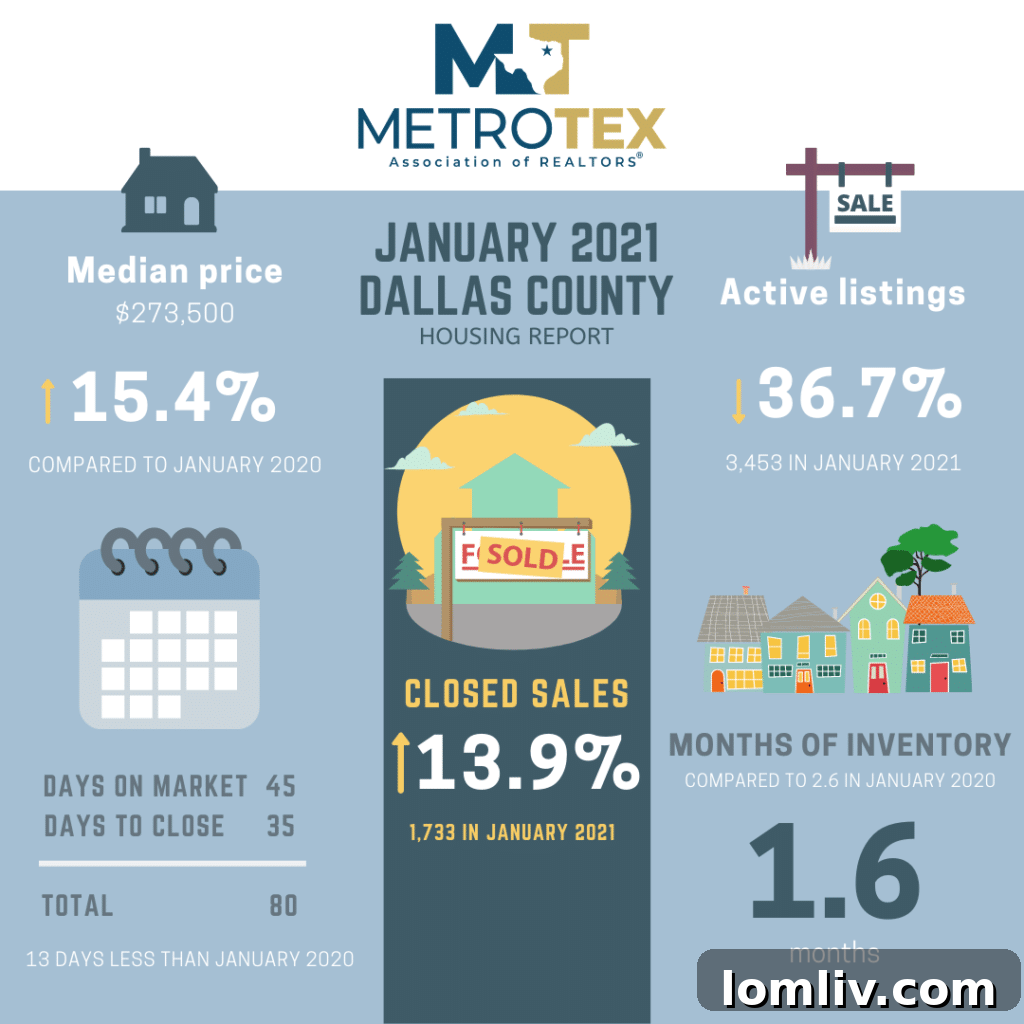
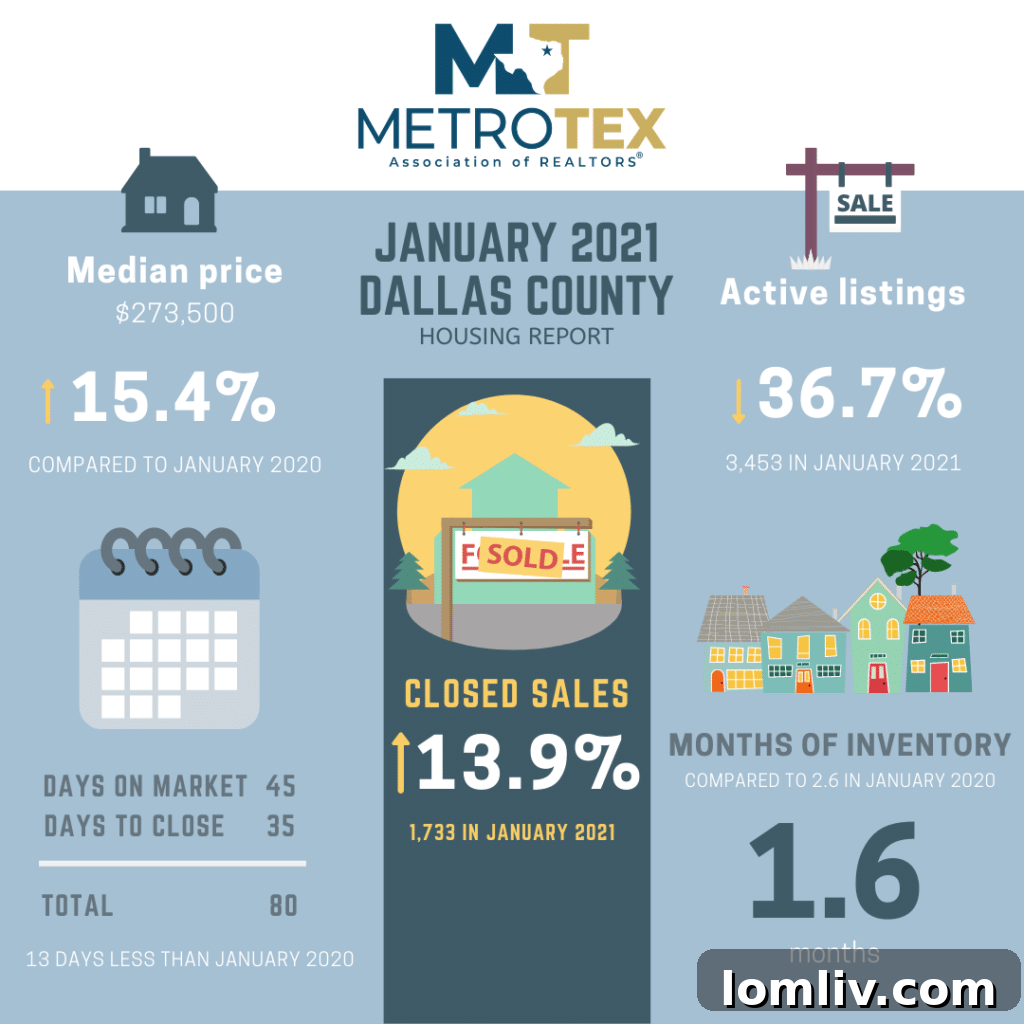
Within this dynamic environment, Dallas County emerged as a pivotal force, recording the highest volume of home sales in the entire North Texas region. Data compiled by the esteemed MetroTex Association of Realtors reveals that Dallas County alone facilitated the sale of an impressive 1,733 homes, marking a significant 13.9 percent increase when compared to the same period a year prior. This substantial year-over-year growth underscores Dallas County’s enduring appeal and its critical role in fueling the region’s overall market strength, drawing in both local and relocating homebuyers with its diverse housing options and economic opportunities.
Looking at the broader North Texas picture, the collective sales of single-family homes painted an equally compelling narrative of growth. The region collectively witnessed a robust 10 percent increase in sales from January 2020 levels, a testament to the widespread demand permeating across multiple counties. The sheer volume of transactions in 2020 was staggering, with real estate professionals successfully facilitating the sale of nearly 120,000 single-family homes across the entire North Texas market. This immense activity highlights not only the consumer confidence in the region but also the efficiency and dedication of local real estate agents navigating an exceptionally challenging, yet rewarding, market.
While the entire region flourished, Rockwall County distinguished itself as a true outlier, experiencing the most dramatic year-over-year sales gain in North Texas. With an astounding 35.7 percent increase, Rockwall County’s housing market performance became a vivid illustration of the surging demand for suburban properties. This explosive growth can be attributed to several factors, including its appealing community atmosphere, excellent school districts, relatively more affordable housing options compared to central Dallas, and the increasing preference for spacious homes with yards, a trend significantly accelerated by the shift towards remote work. Rockwall’s charm and strategic location have made it an undeniable magnet for families and individuals seeking quality living outside the immediate urban core.
However, these impressive sales gains are not without their complexities. They occur against a backdrop of persistently low housing inventory, a critical challenge that has defined the DFW real estate market for an extended period. The number of homes available for sale has remained at near-record-low levels, creating intense competition among buyers and consistently driving up property values. Counties like Collin, Denton, Ellis, and Rockwall, all highly desirable areas, reported particularly stark declines in listings, with available homes down by more than 60 percent from a year ago, according to MetroTex Realtors. This severe imbalance between supply and demand continues to exert upward pressure on prices, making it a seller’s market where homes often receive multiple offers and sell above asking price within days of listing.
The implications of such constrained inventory are profound. For prospective homebuyers, it translates into fewer choices, faster decision-making pressures, and often, engaging in bidding wars. For sellers, it presents an opportune moment to maximize returns on their investment, though finding their next home can prove equally challenging. The low inventory environment is a multifaceted issue, influenced by factors such as a shortage of new construction to meet booming population growth, homeowners’ reluctance to sell dueising concerns about finding their next property, and lingering effects of supply chain disruptions impacting building materials and labor. Addressing this fundamental supply constraint remains a top priority for developers and policymakers aiming for a more balanced and sustainable DFW housing market.
In-Depth Market Insights: Key Reports Shaping DFW Real Estate
To truly understand the intricate dynamics of the Dallas-Fort Worth real estate market, it’s crucial to delve into comprehensive analyses provided by leading research institutions. These reports offer valuable perspectives on various facets of the market, from homeownership demographics to rental trends, illuminating the underlying forces at play.
DFW Metro Housing Tenure by Birth Year: The Rise of Millennial Homeowners
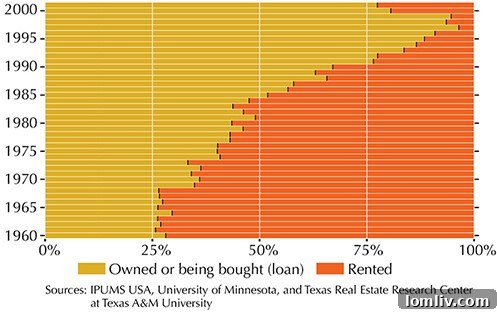
Texas Real Estate Research Center: Navigating the Future of DFW Housing. A compelling report from the Texas Real Estate Research Center, aptly titled “How Long Can It Last? Strong 2020 Housing Market Moves into Uncertain 2021,” provides critical insights into the DFW housing market’s trajectory. The study highlights that the fourth quarter of 2020 witnessed an impressive expansion in sales, building upon a robust third-quarter boom and ultimately culminating in a substantial 9.4 percent year-over-year gain. This sustained growth throughout 2020 underscored the market’s resilience, yet the report’s title subtly points to the nascent uncertainties that began to emerge as the calendar turned to 2021, prompting questions about the longevity of such intense market activity.
One of the most significant findings of this research centers on demographic shifts impacting homeownership. The report specifically identifies millennials in their mid-30s as a burgeoning force in the DFW market, noting they are now more inclined to own rather than rent in the region. This trend is a testament to the evolving economic landscape and the increasing financial maturity of this generation. According to detailed data from the U.S. Census Bureau, older millennials residing in Dallas have achieved above-average earnings, a crucial factor that, when synergized with today’s historically low mortgage rates, significantly amplifies their purchasing power. This confluence of factors has enabled a substantial segment of the millennial population to transition from renting to homeownership, contributing significantly to the demand side of the housing equation and solidifying their impact on the DFW real estate market. This demographic trend is expected to continue shaping housing demand for years to come.
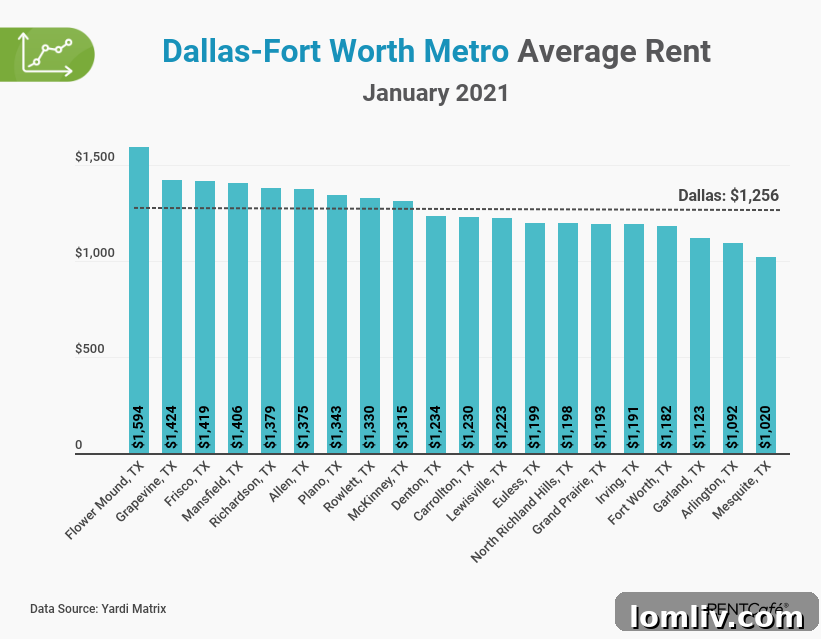
RENTCafé: Unpacking the Dynamics of the DFW Rental Landscape. Beyond home sales, the rental market in Dallas-Fort Worth also presents a fascinating and varied picture, as detailed in the RENTCafé January Rent Report for the Dallas-Fort Worth Metroplex. The report indicates a general upward trend in rental prices across key urban centers. In Dallas, the average rent experienced a modest yet notable increase of 0.8 percent compared to January 2020, reaching an average of $1,256. Fort Worth saw a more pronounced rise, with average rents climbing by 4.8 percent to $1,182, reflecting its growing popularity and development. Similarly, Arlington renters faced a 4.5 percent increase, pushing average rents to $1,092.
However, the rental market is not uniformly appreciating. The report also highlighted localized variations, with some areas experiencing slight dips. Addison, for instance, registered the largest rent decrease in the area, with its average rent of $1,379 representing a 1.6 percent decline. This might be indicative of new supply coming online or shifts in demand. Meanwhile, Flower Mound continued to command the most expensive average rent in the DFW area at $1,594, despite a slight dip of 0.5 percent. These localized fluctuations underscore the diverse appeal and differing market pressures within the vast DFW metroplex, where factors such as new apartment complex developments, job growth in specific submarkets, and varying levels of demand from both permanent residents and temporary relocations contribute to the dynamic rental environment. Understanding these nuances is crucial for both renters seeking housing and investors evaluating opportunities within the DFW rental market. For a more detailed breakdown of these trends and regional specificities, the full RENTCafé report offers comprehensive insights into the evolving costs and availability of rental properties across the Dallas-Fort Worth area. Explore the full RENTCafé report here for deeper analysis.
In conclusion, the Dallas-Fort Worth housing market stands as a beacon of growth and opportunity, driven by robust demand, favorable economic conditions, and demographic shifts. While facing challenges such as critically low inventory, its inherent strengths and ongoing development promise a continued active and competitive real estate environment for the foreseeable future, solidifying DFW’s reputation as a top destination for both homeowners and renters.