Dallas’s Blue House: A Historic Victorian Mansion on a Perilous Journey to a New Life
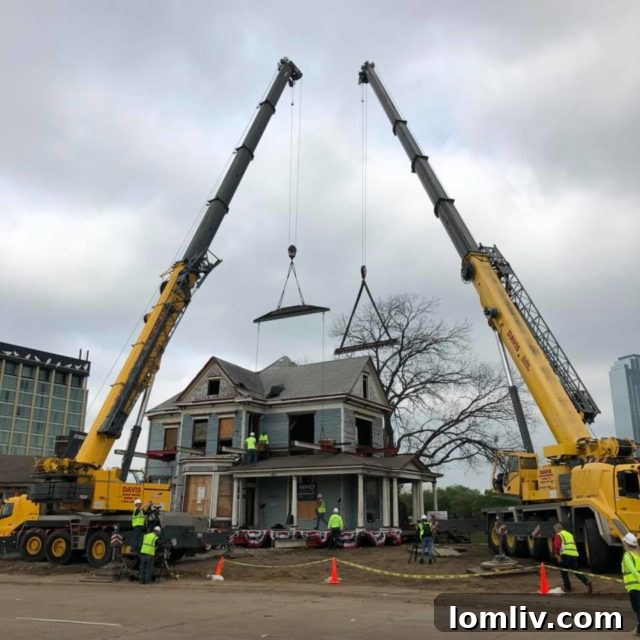
In a compelling narrative that intertwines historical preservation with modern urban development, one of Dallas’s most enchanting and historically significant homes, affectionately known as the Blue House, is undergoing a monumental relocation. This 1885 Victorian Queen Anne mansion, once teetering on the brink of demolition, is now painstakingly making its way across seven blocks to a new lot, promising it a vibrant future. This ambitious project, spearheaded by visionary Dallas developer Mark Martinek, represents a victory for local heritage and a remarkable feat of engineering.
The Perilous Journey of a Dallas Landmark
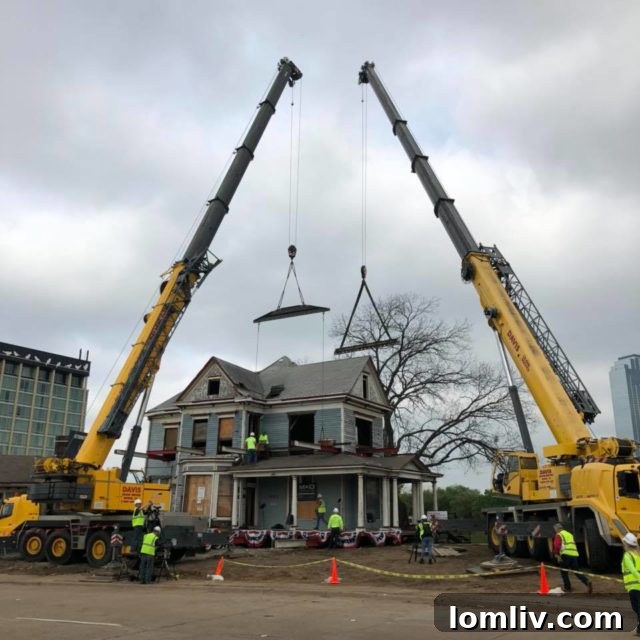
The journey of the Blue House is not just a physical displacement but a symbolic move, carrying with it over 130 years of Dallas history. Currently, the majestic structure finds itself in a temporary limbo, straddling two lots: its original home on Griffin Street and its eagerly awaiting new foundation at Beaumont and Browder. The delicate operation, requiring immense precision and the use of powerful cranes, has faced an unexpected adversary: the unpredictable Texas wind.
Dallas developer Mark Martinek, renowned for his meticulous approach to restoring some of the city’s oldest treasures, revealed the complexities of the move last week. “We’re still moving it,” Martinek explained. “It’s kind of half on the original location, half on the new location.” He emphasized that safety remains paramount. “Wind is always a major problem,” he noted, detailing how strong gusts render crane operations unsafe, causing delays. The meticulous process of relocating such a grand and aged structure cannot be rushed, and operators must wait for optimal weather conditions to proceed without endangering the building or personnel.
Martinek anticipates that the complete relocation of the house could take another two weeks, weather permitting. Once safely delivered to its new plot, the specialized house-moving company will begin the painstaking task of “restacking” the house from the ground up. This involves carefully reassembling the various sections of the house that were likely separated for the move, ensuring structural integrity before the extensive restoration work can commence. Martinek himself will personally oversee and approve this critical phase before his team dives into the detailed restoration.
Mark Martinek’s Vision: Blending History with Modern Comfort
For Mark Martinek, a long-time resident of the Cedars neighborhood, the Blue House project is a culmination of passion, expertise, and a deep respect for Dallas’s architectural legacy. His prior work, including award-winning restorations of two historic shotgun homes on Gould Street, has earned him a reputation for excellence in preservation. However, moving an entire Victorian mansion presents a unique set of challenges and triumphs, even for an experienced restorer.
“This is the first one I’ve moved,” Martinek confessed, acknowledging the novelty of the experience. He has partnered with what he considers the “best house mover in North Texas,” a collaboration crucial for minimizing complications in such an intricate operation. This careful selection of partners underscores Martinek’s commitment to quality and his understanding that such projects demand specialized skills beyond conventional construction.
Architectural Grandeur: The Queen Anne Style
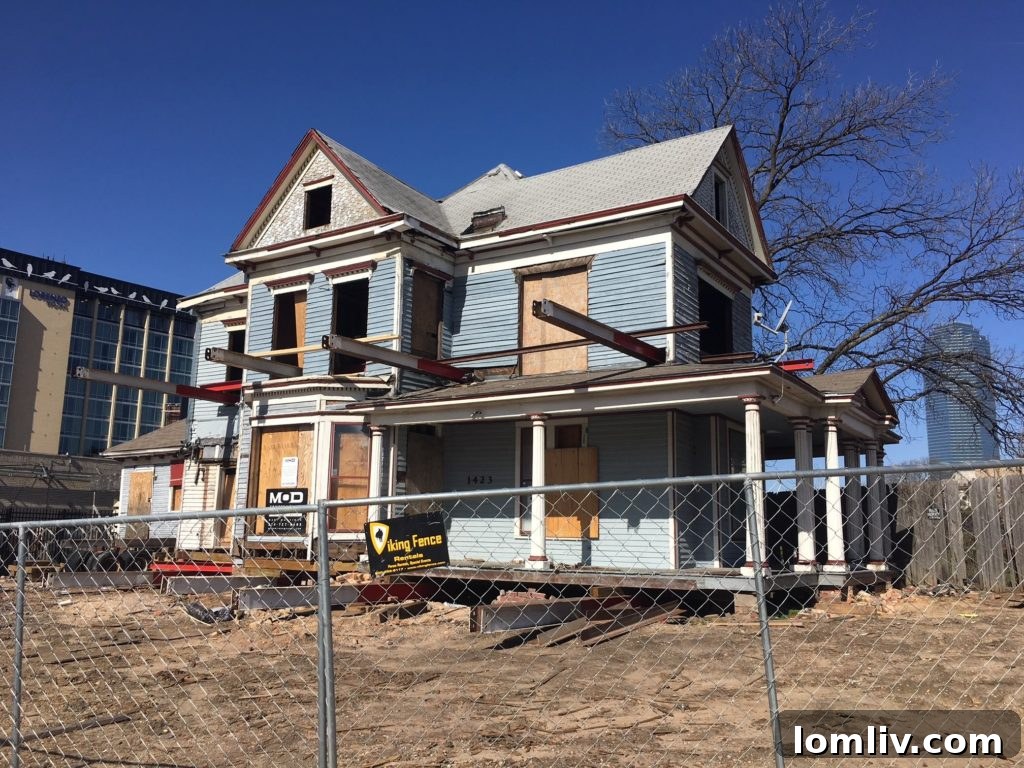
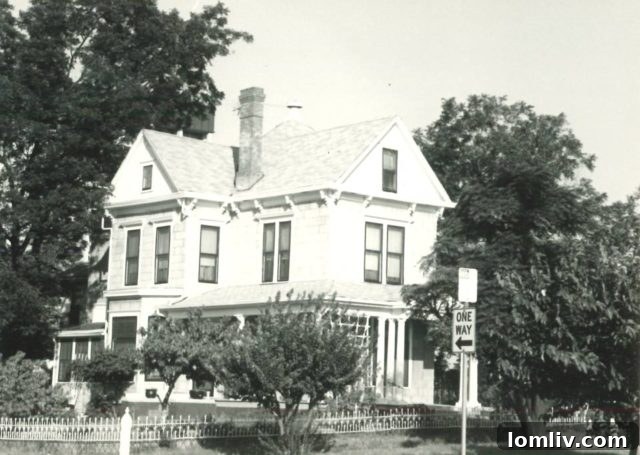
The Blue House is a splendid example of Victorian Queen Anne architecture, a style popular in the late 19th century known for its picturesque and often asymmetrical designs. Characterized by steep roofs, dominant front-facing gables, bay windows, elaborate turrets, and intricate spindlework porches, these homes were symbols of prosperity and individuality. Restoring such a structure means meticulously preserving these unique features while adapting it for contemporary living.
The Restoration Philosophy: Authenticity Meets Innovation
Martinek’s restoration philosophy for the Blue House is clear: to return it to its original glory while integrating modern conveniences. “We’re gonna more or less restore it to the exact same condition it was built in,” he explained, “but the plumbing will be modern, it will have air conditioning, and will be insulated.” This approach ensures that the house, while appearing historically accurate on the exterior, offers the comfort and efficiency expected by today’s residents. The original sash windows, a hallmark of its era, will be carefully rebuilt to eliminate drafts while retaining their authentic look and functionality.
Every detail of the exterior will be faithfully replicated, ensuring that any anachronistic materials added over the past 130 years are replaced with period-appropriate alternatives. For instance, modern Hardy board siding will be meticulously swapped out for solid pine, mirroring the original construction materials. Martinek’s commitment to authenticity is further aided by his extensive personal collection. “I’ve got a pretty good stash of old materials from other houses,” he proudly stated, emphasizing his intent to use salvaged old-growth southern yellow pine and cypress, materials that are not only historically accurate but also boast superior durability and character. Even the original bricks from the house’s foundation have been carefully saved and will be reused, ensuring that every element tells a part of its long story.
The Fight to Save a Piece of Dallas History
The story of the Blue House’s salvation is as compelling as its current relocation. In 2016, the future of the mansion looked grim when Time Warner (now Spectrum) purchased its original Griffin Street lot. For a period, it seemed inevitable that the venerable old house, which had gracefully witnessed over a century of Dallas’s evolution, would succumb to demolition. However, a passionate campaign to save the house quickly gained momentum, igniting a fervent desire within the community to protect this irreplaceable piece of local heritage.
The rallying cry of preservationists and history enthusiasts did not go unheard. The city of Dallas responded by issuing a critical 10-day demolition delay, providing a precious window of opportunity for advocates to organize. These dedicated individuals tirelessly lobbied Time Warner, presenting a compelling case for the house’s historical and architectural significance. Their persistent efforts paid off: the company eventually relented, agreeing not only to save the building but also to fund its costly relocation, provided a suitable new site could be secured.
This pivotal agreement was arguably the most crucial step in transforming a desperate plea into a tangible reality. As Martinek pointed out, “Typically the cost of moving a home like this is so high,” often making such projects financially prohibitive. The commitment from Time Warner removed this significant barrier, paving the way for the Blue House’s second act. The solution for a new home came through the remarkable generosity of Katherine Seale, the esteemed chairwoman of the Dallas Landmark Commission, who personally purchased a lot just seven blocks away at Browder and Beaumont, ensuring the house had a permanent new foundation.
The success of this preservation effort highlights the powerful impact that concerted community action and strategic partnerships can have on safeguarding urban heritage. It underscores Dallas’s growing recognition of the value of its historic buildings, not just as relics of the past but as vital components of its identity and future development.
Challenges Beyond the Move: Restoration in The Cedars
The journey and subsequent restoration of the Blue House are not without their unique complexities, especially given its new home in the rapidly developing Cedars neighborhood. Restoration here is far more intricate than simply settling an old structure onto a new plot. Martinek explained a significant hurdle: “The other real challenge in Cedars is that the way that the new PD (Planned Development) is written, the setbacks that are required don’t accommodate these old houses anymore.” Modern zoning regulations, designed for contemporary construction, often clash with the dimensions and placement of historic structures, making it challenging to integrate them seamlessly into new urban plans.
“It’s not an easy thing to just move an old mansion to a new spot,” Martinek reiterated, emphasizing the deep understanding required to navigate these regulatory landscapes while preserving historical integrity. Despite these challenges, Martinek is now poised to begin the meticulous work of restoration. This phase involves extensive research into the materials and construction techniques used in 1885, sourcing authentic replacement parts, and utilizing his carefully curated “stash” of vintage building materials.
Quality Over Speed: A Timeless Approach
Martinek is clear about his priorities for the Blue House. In the world of restoration and homebuilding, he notes that clients typically desire three things: speed, economy, and quality. “Most of the time, you only get to choose two of those,” he observed. For the Blue House, the choice is unequivocally “quality, and we’re going to choose economy, over speed.” This patient and deliberate approach means that the project is not a rushed production job but a thoughtful, careful endeavor. If custom moldings or other period-specific elements need to be specially fabricated, Martinek is prepared to wait, ensuring absolute authenticity.
“It’ll probably take us two years to get it done,” he projected, a timeline that reflects the depth of craftsmanship and attention to detail required for such a significant undertaking. This commitment to painstaking restoration will ensure that the Blue House stands as a shining example of how historical accuracy and modern functionality can coexist harmoniously.
A Glimpse into the Past: The Rosenfield Legacy
The Blue House, built in 1885 by Max Rosenfield, offers a fascinating window into Dallas’s burgeoning real estate market of the late 19th century. Martinek noted that, contrary to modern expectations, the house appears to have been originally designed with the flexibility for three units rather than a single-family residence. This wasn’t uncommon for the era, reflecting a practical approach to homeownership where multiple families or renters could share larger dwellings, providing both income and communal living arrangements.
Historical research, particularly a deep dive by Paula Bosse for Flashback Dallas, illuminates more about Rosenfield and his entrepreneurial spirit. Bosse’s findings reveal that Rosenfield, alongside Gersen Meyer, a coworker at the prominent Sanger Brothers department store, engaged in a lucrative side business of buying and selling real estate. “They bought and sold real estate (often to fellow Sanger’s employees), apparently as a lucrative side-business (Rosenfield even conducted his real estate transactions from his Sanger Bros. office),” Bosse meticulously documented. This venture was so successful that by 1886, they had acquired enough land to establish their own “Rosenfield and Meyer’s Addition” in East Dallas, underscoring their significant impact on the city’s early development.
The Future of a Rescued Landmark
When the restoration is complete, the Blue House will embrace its apparent original design intent, featuring three distinct units. This configuration will allow more people to experience and appreciate the beauty and history of this iconic structure, while also contributing to the vibrant residential landscape of the Cedars neighborhood. The successful relocation and meticulous restoration of the Blue House serve as a powerful testament to the dedication of preservationists, the generosity of community leaders, and the expertise of those like Mark Martinek.
This project is more than just saving an old building; it is about preserving the soul of Dallas, honoring its rich past, and demonstrating a commitment to integrating history seamlessly into the fabric of its evolving urban environment. The Blue House, once a symbol of neglect, will soon stand as a beacon of renewed life, ready to embark on another century of storytelling in its new, carefully chosen home.