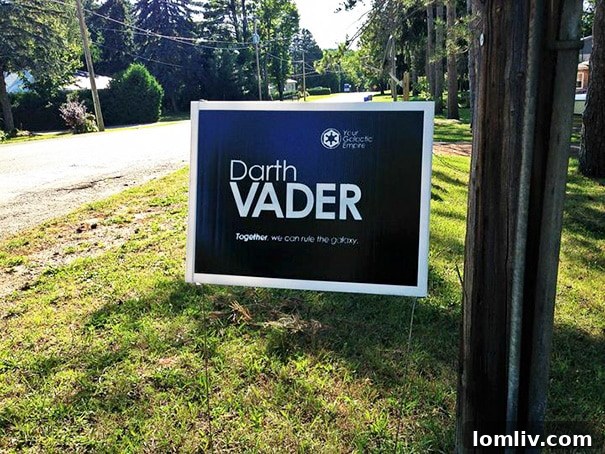
As election seasons unfold, particularly in a politically vibrant state like Texas, it’s common to see neighborhoods transform into a mosaic of political expression. From presidential races to local ballot measures, yard signs serve as a fundamental way for citizens to voice their support and engage with the democratic process. These signs, displayed prominently on private property, reflect the diverse opinions and preferences of a community. However, this visible display of political affiliation often sparks debate, especially concerning the role of Homeowners Associations (HOAs) and their ability to regulate such expressions.
In various communities across Texas, including bustling metropolitan areas like Dallas-Fort Worth, residents have encountered challenges when their HOAs request or demand the removal of political signs. These requests frequently ignite disputes, with homeowners often asserting their First Amendment rights to free speech. The critical question then arises: Can an HOA truly prevent the display of political signs in residential yards in Texas? The unequivocal answer, backed by state law, is no.
Understanding Your Rights: Political Signs and Texas HOAs
The tension between individual property rights and HOA regulations is a common thread in community living. While HOAs are established to maintain property values, aesthetic standards, and a harmonious living environment, their authority is not boundless, especially when it encroaches upon protected constitutional rights. In Texas, the right to political expression on one’s own property during an election period is robustly protected, superseding many HOA covenants.
Some might argue that homeowners voluntarily sign contracts agreeing to abide by HOA rules, including potential restrictions on political signage. However, in Texas, this argument generally does not hold sway. State law explicitly addresses this issue, ensuring that certain fundamental rights, like political expression, cannot be overridden by private contracts or association bylaws. This legal protection is a cornerstone of free speech and democratic participation within residential communities.
The Cornerstone of Protection: Texas Election Code §259.002
The legal framework protecting political yard signs in Texas is clearly defined within the Texas Election Code §259.002. This specific statute is crucial for homeowners and HOAs alike to understand, as it sets the definitive boundaries for what associations can and cannot regulate regarding political displays.
“Sec. 259.002. Except as otherwise provided by this section, a property owners’ association may not enforce or adopt a restrictive covenant that prohibits a property owner from displaying on the owner’s property one or more signs advertising a candidate or measure for an election: on or after the 90th day before the date of the election to which the sign relates; or before the 10th day after that election date.”
-Texas Election Code Sec. 259.002.
This section of the Texas Election Code provides vital safeguards for political expression. It explicitly states that HOAs cannot enforce or adopt rules that prohibit homeowners from displaying political signs for a significant window surrounding an election. This protection period commences 90 days before the election date and extends through the 10th day after the election date. This means that for nearly four months, Texas law ensures that residents have the freedom to display their political affiliations without fear of reprisal from their HOAs.
The scope of this protection is broad, covering signs for any candidate—whether for presidential, congressional, state, or local offices—as well as signs related to ballot measures, referendums, or other electoral propositions. This legal provision is a powerful affirmation of the right to political expression, emphasizing that freedom of speech during election periods is paramount and cannot be suppressed by community regulations.
What HOAs CAN Regulate: Balancing Rights and Community Standards
While Texas law firmly protects a homeowner’s right to display political signs, it does not leave HOAs entirely without recourse. The same statute that guarantees the right to display signs also outlines specific areas where associations retain regulatory authority. This balance aims to protect individual expression while allowing HOAs to maintain reasonable community standards for safety, aesthetics, and order. Understanding these permissible regulations is key to avoiding disputes.
The statute states that it “does not prohibit the enforcement or adoption of a covenant that: requires a sign to be ground-mounted; or limits a property owner to displaying only one sign for each candidate or measure.” This provides HOAs with clear guidelines for reasonable restrictions.
Permissible Regulations for Political Yard Signs:
- Sign Placement: Ground-Mounted Requirement: HOAs can insist that political signs be ground-mounted. This means signs should be placed directly in the ground, typically with stakes, rather than being attached to buildings, fences, or other structures. This regulation helps maintain a consistent aesthetic, prevents potential damage to property, and ensures signs don’t obstruct views or create safety hazards.
- Quantity Limits: One Sign Per Candidate or Measure: To prevent visual clutter and promote fairness, HOAs are permitted to limit homeowners to displaying only one sign for each candidate or ballot measure. This prevents a single property from being overwhelmed with multiple signs for the same political entity, which could be perceived as excessive or distracting.
- Size Restrictions: Maximum 4×6 Feet: HOAs can impose a size limit, stipulating that political signs should not exceed four feet by six feet (4′ x 6′). This regulation is critical for ensuring that signs do not become unduly large, which could be visually intrusive, pose a safety risk (e.g., in high winds), or obscure visibility for drivers and pedestrians. This size allows for clear messaging without dominating the landscape.
- Prohibition of Offensive Content: “Offensive to the Ordinary Person”: This is perhaps one of the most debated areas of regulation. Texas law allows associations to ban language or images in political signs which “would be offensive to the ordinary person.” This clause is designed to prevent the display of content that is objectively vulgar, obscene, hate-filled, or threatening, rather than simply content that is politically disagreeable.
Defining “Offensive to the Ordinary Person”
The interpretation of “offensive to the ordinary person” can be subjective and is often a flashpoint for disputes. It’s crucial to understand that this typically refers to content that is genuinely lewd, profane, or incites violence, rather than simply controversial political statements. A sign expressing strong opinions on a candidate or policy, even if many disagree with it, would generally not fall under this category unless it crossed into obscenity or hate speech. HOAs must be careful not to use this clause to suppress legitimate political discourse that they merely find distasteful. Legal precedent often requires a high bar for content to be deemed “offensive” enough to warrant removal, typically aligning with community standards for public decency and safety, not just differing political views.
This section does not prohibit the enforcement or adoption of a covenant that prohibits a sign that: contains roofing material, siding, paving materials, flora, one or more balloons or lights, or any other similar building, landscaping, or nonstandard decorative component; is attached in any way to plant material, a traffic control device, a light, a trailer, a vehicle, or any other existing structure or object; includes the painting of architectural surfaces; threatens the public health or safety; is larger than four feet by six feet; violates a law; contains language, graphics, or any display that would be offensive to the ordinary person; or is accompanied by music or other sounds or by streamers or is otherwise distracting to motorists.
-Texas Election Code Sec. 259.002.
This extended list of prohibitions further clarifies the types of signs and displays that HOAs can restrict. It covers a broad range of materials and presentation methods that could be deemed unsafe, visually disruptive, or outside the bounds of conventional yard signage. For instance:
- Prohibited Materials: Signs made from unusual building or landscaping materials (e.g., roofing material, siding, paving, flora) are not allowed, ensuring standard sign construction.
- Attachments: Attaching signs to natural elements like plants, or to infrastructure like traffic control devices, lights, trailers, or vehicles, is prohibited to prevent damage, obstruction, or safety hazards.
- Architectural Painting: Painting political messages directly onto architectural surfaces is not permitted, protecting property aesthetics and integrity.
- Public Safety Threats: Any sign threatening public health or safety is, naturally, banned.
- Distracting Elements: Signs that incorporate music, sounds, streamers, balloons, or lights are generally disallowed. These elements are considered distracting, especially to motorists, and could pose safety risks or create undue nuisance.
These detailed regulations provide HOAs with a clear framework for managing political signage without infringing on the core right of expression. They underscore a legislative intent to balance free speech with legitimate community concerns.
Navigating Disputes: What to Do if Your HOA Objects
Despite clear state laws, disputes over political signs can still arise. A notable case highlighted by Daltxrealestate.com in October 2018, involved a homeowner asked to remove a political sign because it was deemed “offensive.” Such instances underscore the challenge of subjective interpretation and the importance of being informed.
Advice for Homeowners:
- Know Your Rights: Familiarize yourself with Texas Election Code §259.002 and your HOA’s specific covenants regarding signs. Understanding the law is your strongest defense.
- Review HOA Rules: Even though the state law takes precedence during the election period, be aware of your HOA’s rules on size, placement, and number of signs to ensure you are compliant within legal boundaries.
- Communicate Respectfully: If your HOA sends a notice, respond politely but firmly, citing the relevant section of the Texas Election Code that protects your right to display the sign.
- Document Everything: Keep records of all communications with your HOA (emails, letters, dates of conversations). Take photos of your sign and its placement.
- Seek Legal Counsel: If the dispute escalates and your HOA continues to demand removal despite your compliance with state law, consider consulting an attorney specializing in real estate or HOA law.
Advice for HOAs:
- Understand Legal Limits: HOAs must recognize the limits of their authority, especially concerning state laws protecting constitutional rights. Arbitrary enforcement can lead to costly legal battles.
- Educate Board Members and Residents: Ensure that all board members and property managers are fully aware of Texas Election Code §259.002 and its implications for political signs. Educate residents on what is and isn’t permissible.
- Review and Update Covenants: Ensure that your HOA’s governing documents are compliant with state law. If any covenants contradict §259.002, they are likely unenforceable during the protected period.
- Focus on Permissible Regulations: Concentrate enforcement efforts on the regulations explicitly allowed by law, such as size limits, ground-mounting, and the prohibition of genuinely offensive or distracting elements.
- Avoid Subjective Enforcement: Be extremely cautious when deeming a sign “offensive.” This should only apply to content that meets a very high standard of obscenity or hate speech, not merely political disagreement.
Conclusion: Upholding Freedom of Expression in Texas Communities
In conclusion, while Homeowners Associations in Texas play a vital role in maintaining community standards and property values, their authority regarding political yard signs is explicitly limited by state law. The Texas Election Code §259.002 serves as a robust shield for homeowners’ First Amendment rights, ensuring that political expression is protected during the critical 90-day period before an election and the 10 days following it.
HOAs retain the ability to implement reasonable regulations concerning the size, placement (ground-mounted), quantity (one per candidate/measure), and the prohibition of genuinely offensive or distracting elements within signs. However, they absolutely cannot prohibit the display of political signs altogether during the protected electoral window. For both homeowners and HOAs, understanding these legal distinctions is crucial for fostering communities where residents can freely express their political views while still adhering to sensible, legally compliant community standards. This balance is fundamental to a healthy democracy and harmonious neighborhood living in the Lone Star State.