The Disappearing Dream: Navigating Dallas-Fort Worth’s Scarce Starter Home Market
For many, the dream of homeownership begins with a starter home—an accessible entry point into the real estate market, a place to build equity, and a foundation for the future. However, in the dynamic and ever-growing Dallas-Fort Worth (DFW) metropolitan area, this initial step has become increasingly challenging. Recent analyses consistently confirm a stark reality: entry-level or “starter” homes, typically priced in the median range below $200,000, are remarkably scarce. This trend is not isolated to DFW but reflects a broader pattern observed across Texas, creating significant hurdles for those hoping to enter the housing market, especially first-time homebuyers.
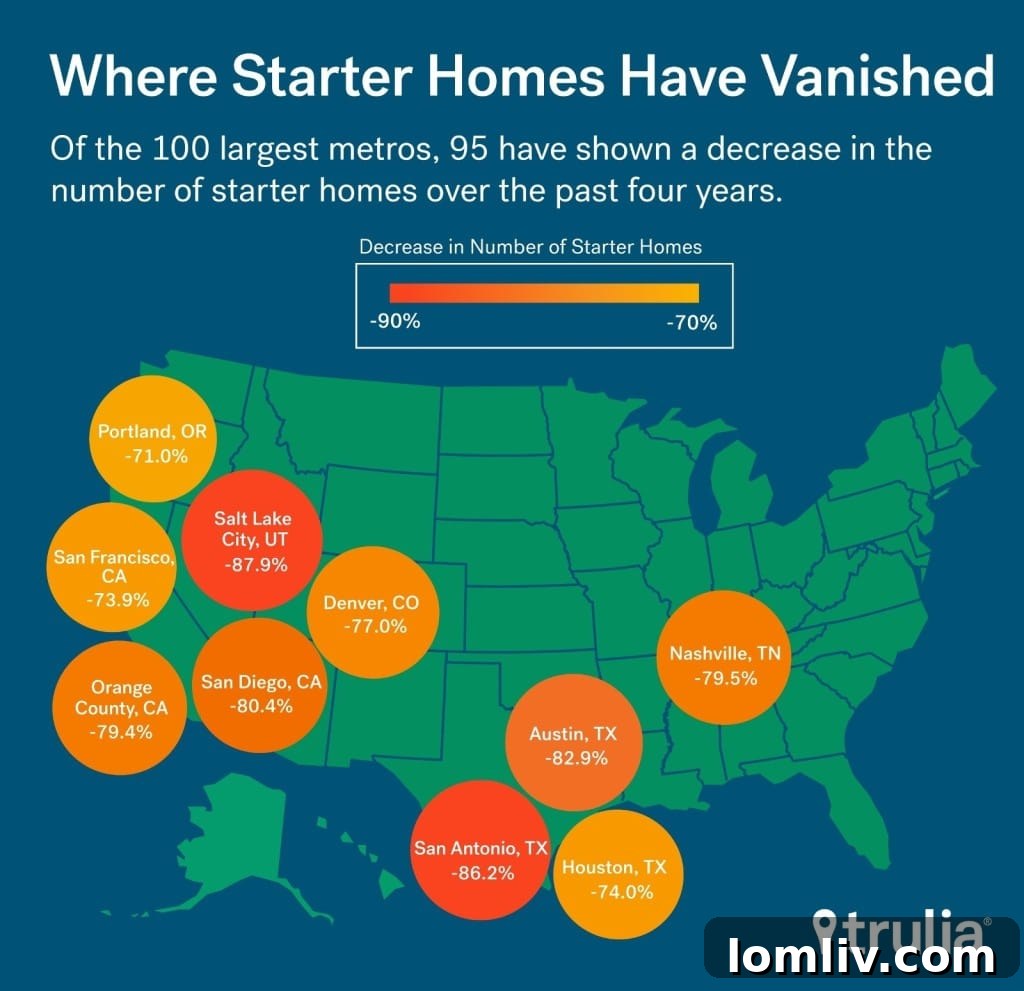
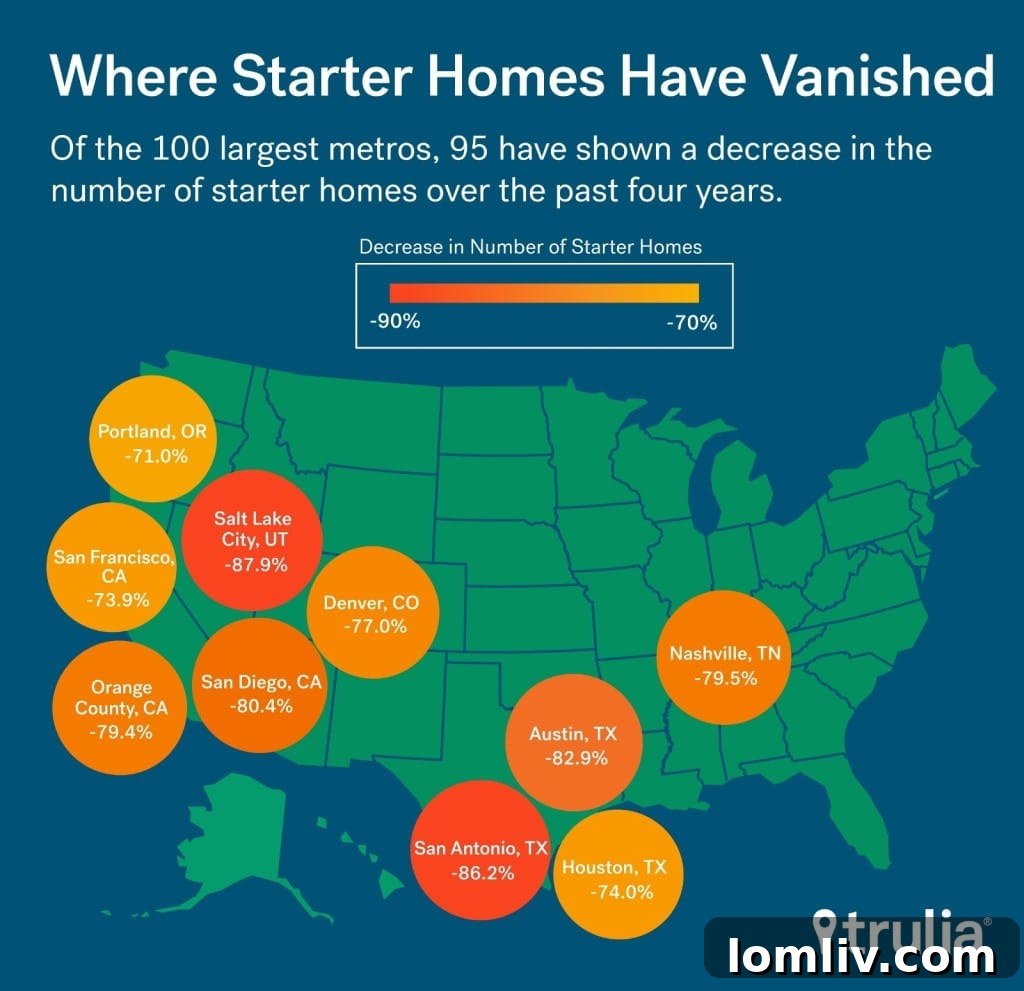
A comprehensive analysis by Trulia, a leading real estate data provider, vividly illustrates this challenging landscape. Their findings resonate deeply with the experiences of local real estate professionals and frustrated buyers: locating a new home in the sub-$200,000 bracket has shifted from being merely difficult to nearly impossible. This dramatic change not only impacts individual aspirations but also has profound implications for the overall demographic health and economic accessibility of our vibrant communities.
Understanding the Scarcity: Trulia’s Inventory and Price Watch
To shed light on the shrinking inventory available to first-time homebuyers, Trulia developed and launched its insightful “Trulia Inventory and Price Watch.” This robust tracking system meticulously measures housing affordability and availability across three distinct market segments, providing a nuanced view of real estate dynamics:
- Starter Homes: These are typically the most affordable properties in a given market, often targeted by first-time buyers, young families, or individuals looking to establish initial homeownership. They generally represent the lower one-third of available homes by price.
- Trade-Up Homes: Catering to existing homeowners who are looking to upgrade to larger properties, secure a more desirable neighborhood, or acquire homes with improved amenities. These properties typically fall within the middle one-third of the market’s price spectrum.
- Premium Homes: Representing the top one-third of the market, these are high-end properties boasting luxury features, prime locations, and a significantly higher price point, appealing to affluent buyers seeking top-tier residences.
By segmenting the market in this manner, Trulia offers a granular understanding of where supply and demand imbalances are most pronounced. As the data from Q1 2016 vividly demonstrated, the starter home segment across major Texas cities was, and largely continues to be, in a state of severe depletion, posing a significant barrier to entry for a crucial segment of the population.
A Closer Look at Texas’ Major Metros: Austin, Houston, and Dallas-Fort Worth
The “Trulia Inventory and Price Watch” map painted a concerning picture for first-time buyers across the entire state of Texas. While the scarcity is widespread, certain metropolitan areas have felt the brunt of this trend more acutely than others. Austin, a city renowned for its booming tech industry, rapid population growth, and vibrant culture, has experienced an astonishing erosion of its starter home market. In just four years leading up to Q1 2016, Austin witnessed a staggering 82.9 percent loss of its starter home inventory. This dramatic reduction underscores the intense demand, rapid appreciation, and limited new construction in affordable brackets that characterize the state capital’s housing market.
Houston, another colossal Texan metropolis with diverse industries and a continuous influx of new residents, also faced significant challenges in its entry-level market. The city recorded a 74 percent loss of its starter homes during the same period. While slightly less severe than Austin’s decline, this figure still represents a substantial barrier for those looking to purchase an affordable, entry-level property in one of the nation’s largest cities.
Dallas, and the broader Dallas-Fort Worth region, which is our primary focus, was certainly not immune to this trend. The DFW metroplex experienced a significant 70 percent reduction in its starter home inventory. As of the first quarter of 2016, a mere 15.3 percent of the entire housing market consisted of starter homes. This disproportionate scarcity in the most accessible price brackets has become a colossal impediment, particularly for Millennials and other first-time buyers who are eager to transition from the rental market to homeownership, highlighting a pressing issue for housing affordability in Dallas.
The Ripple Effect: Millennials and the Pressure of the Pricey Rental Market
The dwindling supply of affordable starter homes in Dallas-Fort Worth has profound and far-reaching implications, especially for the Millennial generation and other young professionals looking to settle down. Faced with severely limited purchasing options, many young families and individuals find themselves effectively trapped in the increasingly expensive rental market. This situation creates a challenging cycle:
- Delayed Wealth Accumulation: Unlike mortgage payments, which contribute to building equity over time, rent payments do not generate assets. This means Millennials are missing out on one of the most significant pathways to long-term wealth accumulation and financial stability.
- Struggling to Save for Down Payments: High and continuously rising rental costs consume a larger portion of household income, making it exceedingly difficult for prospective buyers to save the substantial funds required for a down payment and associated closing costs.
- Increased Financial Strain: The constant upward pressure on rents, often coupled with stagnant wage growth for many, places considerable financial strain on households. This can potentially delay other major life milestones, such as starting families, pursuing further education, or career advancements.
- Migration to Outer Suburbs: Many are compelled to extend their home search to far-flung suburbs and exurban communities, leading to increased commute times, higher transportation costs, and a potential detachment from desired urban amenities and primary job centers in Dallas.
This demographic, frequently burdened with student loan debt, finds itself at a significant disadvantage in a real estate market that appears increasingly skewed towards sellers and higher-income buyers, pushing the dream of homeownership further out of reach for a crucial segment of the workforce.
The Dynamics of a Highly Competitive Seller’s Market
The severe imbalance in housing inventory has fundamentally reshaped the dynamics of the Dallas-Fort Worth real estate market, transforming it into a formidable seller’s arena. As the Trulia analysis aptly summarized in 2016, a sentiment that largely holds true today:
Prospective first-time and trade-up homebuyers should consider that if the inventory of homes for sale continues to drop, finding a home will remain difficult. They likely will be faced with more competition for the few homes that are on the market, which can lead to bidding wars and homes selling higher than asking price. Sellers are in an increasingly better position to sell their home than in years past, but may have trouble finding another home to buy. Ultimately, premium home buyers will have a much better shot at finding a home, since over 46% of the listings in the last three months were in this segment.
This insightful quote encapsulates several critical points defining the current DFW market. Firstly, the dwindling supply intensifies competition exponentially, leading to scenarios where homes—especially those in the highly sought-after starter price range—receive multiple offers almost immediately after listing. This often escalates into aggressive bidding wars, driving sale prices well above the initial asking price and, at times, even beyond the property’s appraised value, further complicating financing for conventional buyers who rely on mortgage loans.
Secondly, while sellers are undoubtedly in a commanding position to offload their properties, they too face a unique predicament. Those looking to sell their starter or trade-up home often find it equally challenging to locate their next property in an equally tight market. This creates a significant bottleneck, as potential sellers hesitate to list their current homes without a clear next step secured, which, in turn, further constricts the already limited housing inventory. It’s a challenging paradox where selling is easy, but buying remains difficult.
Conversely, premium home buyers enjoy a distinct advantage in this market. With a much larger percentage of listings typically falling into this category (over 46% as of Q1 2016, a trend that persists), they encounter a far less competitive landscape and a broader selection of properties, making their home search considerably smoother and less stressful.
The Influence of Cash Buyers and Institutional Investors on Starter Homes
A significant and often debated contributing factor to the rapid disappearance of affordable starter homes in Dallas is the robust and strategic presence of cash buyers and institutional investors. These entities often operate with distinct advantages that put conventional, mortgage-dependent buyers at a substantial disadvantage:
- Speed and Efficiency: Cash offers streamline real estate transactions by eliminating the contingencies typically associated with financing and appraisals. This allows investors to close deals much faster than traditional buyers, a highly attractive factor for sellers eager for a quick and guaranteed sale in a hot market.
- Aggressive Bidding Strategies: Investors are frequently prepared to offer above the asking price, especially if they identify properties with strong rental income potential or clear opportunities for value-add renovations and subsequent flipping for profit. Their business model allows for higher risk tolerance and quicker decision-making.
- Flipping at a Breakneck Pace: Many investors specialize in purchasing starter homes, making cosmetic or minor structural improvements, and then quickly re-listing them at a significantly higher price. While this process can sometimes rejuvenate older properties, it frequently removes these homes from the affordable segment, making them inaccessible for owner-occupants.
- Bulk Purchases: Institutional investors, such as large real estate investment trusts (REITs) or private equity firms, sometimes acquire multiple properties simultaneously. This strategy further reduces the already limited pool of available homes for individual buyers, especially in desirable neighborhoods.
- Rental Market Focus: A substantial portion of these investor-purchased homes are converted into rental properties. This directly contributes to the demand-driven increases in rent prices across the DFW metroplex and reduces the overall stock of homes available for sale to aspiring homeowners.
This dynamic creates an uneven playing field where traditional buyers, who rely on mortgages, often have tighter budgets, and must navigate appraisal processes, frequently find themselves outbid and outmaneuvered by these agile and financially powerful players.
Strategies for Navigating the Dallas-Fort Worth Starter Home Market
Given the intense competition and pervasive scarcity, what viable options remain for determined first-time homebuyers in Dallas-Fort Worth? Local real estate agents consistently emphasize the need for an “insider baseball” approach—leveraging specialized market knowledge and proactive strategies to uncover opportunities that might not be visible to the general public or found on standard online listings.
The Indispensable Power of a Savvy Realtor
As one seasoned Realtor candidly remarked, finding a home in the $200,000 range before an investor snaps it up requires far more than just browsing online listings. It necessitates partnering with a Realtor who is deeply embedded in the local market and willing to go the extra mile:
- Door-Knocking in Preferred Neighborhoods: Proactive agents may physically canvass desirable areas, seeking out potential sellers who haven’t yet listed their homes. This “off-market” approach can provide a crucial head start, identifying homeowners who might be considering selling but haven’t taken formal steps yet.
- Leveraging Extensive Agent Networks: Experienced Realtors often cultivate extensive networks with other agents, allowing them to hear about properties before they officially hit the Multiple Listing Service (MLS). This can include valuable “pocket listings” or properties that are designated as “coming soon” but not yet widely advertised.
- Watching Obituaries (A Glimpse into Motivation): While a stark and somewhat morbid suggestion, the mention of “watching obituaries” speaks to the desperate lengths some buyers and agents are driven to in a hyper-competitive market. The underlying principle is to identify properties likely to come onto the market due to significant life changes, offering a potential opportunity to approach the sellers or their estate before they engage in a full public listing. This highlights the critical need to find motivated sellers who might prioritize a quick, uncomplicated sale.
- Expert Negotiation Skills: A skilled agent can help craft a compelling offer that stands out from the competition, even if it’s not the highest price. This might involve demonstrating strong financial standing, offering flexible closing dates, or strategically waiving certain contingencies (with careful consideration of the associated risks).
Additional Essential Tips for First-Time Homebuyers in DFW:
- Get Pre-Approved for a Mortgage: This crucial step demonstrates to sellers that you are a serious, qualified, and financially capable buyer, significantly strengthening the credibility and appeal of your offer.
- Be Flexible with Your Criteria: While you undoubtedly have a dream home in mind, being open to different neighborhoods, property types (e.g., townhomes or condos), or certain features can significantly expand your viable options in a tight market.
- Act Decisively and Quickly: In a fast-moving and competitive market, hesitation can directly translate into losing out on a desirable property. Be prepared to make a well-informed offer quickly if you find something suitable that meets your core needs.
- Consider New Construction (with caution): While it’s increasingly challenging to find new builds under $200K within core Dallas, some developers might offer incentives or have models that just fall into an accessible range, particularly in developing areas on the outskirts of the metroplex. However, be aware that new construction in desirable areas often exceeds this price point.
- Explore Down Payment Assistance Programs: Various federal, state, and local programs are available for first-time homebuyers to help with down payments and closing costs, which can be a significant hurdle. Researching these options can unlock possibilities.
Looking Ahead: The Future of Dallas-Fort Worth Housing Affordability
The challenges confronting the Dallas-Fort Worth starter home market are deeply ingrained and likely to persist as long as robust population growth continues to outpace housing construction, and real estate investment remains highly attractive. Addressing this complex issue effectively requires a multi-faceted approach involving strategic urban planning, targeted developer incentives, and potentially new policy initiatives aimed at preserving and expanding the affordable housing stock, thereby easing the path to homeownership for current and future generations.
For now, first-time homebuyers in DFW must arm themselves with comprehensive knowledge, unwavering patience, and the invaluable support of a highly competent and proactive real estate professional. The dream of owning a home in North Texas is still attainable, but it unequivocally requires strategic thinking, swift action, and a deep, nuanced understanding of the market’s unique complexities and competitive dynamics.
What’s your personal perspective on the availability and affordability of starter homes in Dallas and North Texas? We invite you to share your experiences and insights as we collectively navigate this incredibly dynamic and challenging real estate landscape.