Dallas Luxury Real Estate: Unpacking the $100 Million Walnut Place and Market Dynamics
The allure of ultra-luxury homes often captivates the imagination, offering a glimpse into a world of unparalleled opulence and scale. In Dallas, a city renowned for its robust economy and grand lifestyle, properties like the legendary Walnut Place stand as true testaments to the peak of high-end real estate. This iconic estate not only grabs headlines but also serves as a focal point for discussions about the trajectory and health of the Dallas housing market, particularly its most exclusive segment.
An Expert’s Take: Thomas Randall’s Rise in Dallas Real Estate Commentary
The conversation around Dallas’s elite properties recently gained significant traction through the insights of local real estate professional, Thomas Randall, an esteemed agent with Dave Perry-Miller. Randall was tapped by MarketWatch, a prominent Dow Jones financial news product, as one of 21 representatives tasked with chronicling the real estate pulse of their respective U.S. cities. For Dallas, Randall embraced the opportunity to delve into the most attention-grabbing aspects of the market.
His strategy proved highly effective. As Randall himself articulated, his realization about reader interest was simple yet profound: “My last article had about 6,400 views total and I started to think, what do people want to read about? Ultra-expensive, celebrity type homes of course! This article has 67,000 views in 18 hours.” This success underscores the public’s fascination with properties that transcend the ordinary, particularly those associated with high-profile individuals and exorbitant price tags. Randall’s role requires him to cover various facets of the city’s real estate, from intriguing listings to price shifts, aligning perfectly with his ambition to become a leading Dallas realtor. This platform provided a unique opportunity to showcase his expertise and engage a broad audience, offering a “boots on the ground” perspective that differentiates it from traditional journalism.
Walnut Place: A Glimpse into Dallas’s Most Prestigious Address
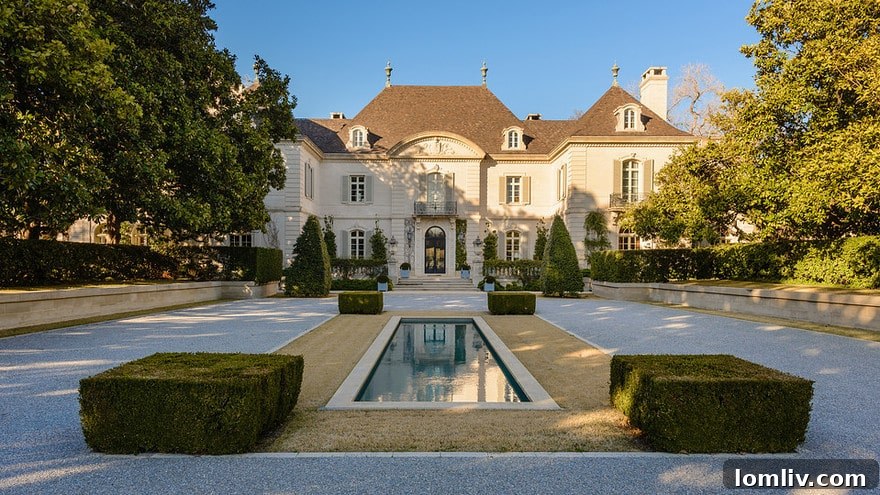
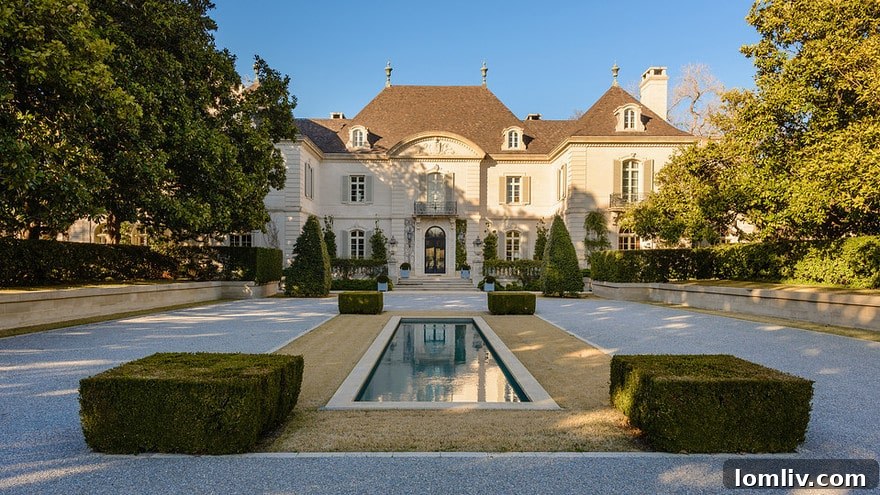
At the heart of Randall’s widely viewed MarketWatch piece was the magnificent Thomas Hicks estate, famously known as Walnut Place. This property is more than just a home; it’s a sprawling compound that redefines luxury. Originally listed at an astonishing $135 million, its current asking price of $100 million still positions it among the most expensive residential listings in the nation. Situated on a vast 25-acre expanse within the highly coveted Preston Hollow neighborhood, Walnut Place offers an unparalleled living experience.
The estate’s features read like a checklist for ultimate indulgence: 11 fireplaces to create an ambiance of warmth and grandeur, 12 bathrooms for supreme comfort and convenience, and two dedicated “staff wings” to ensure seamless service and privacy. The sheer size of the property is so significant that the entire surrounding subdivision bears the name of its distinguished owner, Thomas Hicks. For potential buyers, acquiring this estate means more than just a new address; it means becoming neighbors with figures like George W. Bush, a longtime friend of Hicks.
Thomas Hicks himself is a titan of industry and sports, known for his ownership stakes in iconic teams and clubs, including the soccer club Liverpool F.C., the Texas Rangers baseball team, the Dallas Stars hockey team, and the Mesquite Championship Rodeo. His legacy is deeply intertwined with Dallas’s economic and cultural landscape, adding another layer of prestige to Walnut Place.
The Dallas Luxury Market: Assessing the “Highest Point Ever” Claim
Randall’s article prompted a crucial question: does a $100 million listing truly signify that the Texas real estate market, particularly Dallas’s, has reached its “highest point ever”?
A $100 million single-family home is certainly a sign that the real estate market in Texas is at its highest point ever. The most expensive home ever sold (on record) was listed for sale at $30 million in 2009. Texas has a disclosure law, so the sales price is unknown. As of now, there are five listings in the city over $27 million.
While the existence of such an exceptionally priced property undeniably reflects a robust high-end market, it’s essential to consider the nuances. A property of Walnut Place’s magnitude and historical significance, with its expansive acreage and bespoke features, would command a premium price in virtually any economic climate. The fact that its price has adjusted from $135 million to $100 million also suggests a degree of market sensitivity, even at the ultra-luxury level.

Comparing this listing to previous record sales requires careful context. For instance, the most expensive home sold on record in Dallas, within the very same prestigious Preston Hollow enclave, belongs to Kelcy Warren at 5323 Park Lane. Acquired in June 2009 from Joyce and Larry LaCerte for approximately $29 million, this property, while substantial, highlights a different benchmark for what constitutes a “record sale” versus an active, aspirational listing. The Dallas Central Appraisal District (DCAD) currently appraises Warren’s property at $24.545 million, providing a more conservative valuation reference point.
Thomas Randall’s approach, facilitated by Dow Jones’s “Location Scout” initiative, offers a fascinating blend of informed commentary and strategic self-promotion. This media model empowers industry professionals to share their unique “boots on the ground” perspectives, providing readers with insights often distinct from those offered by staff journalists. For Dow Jones, it represents a clever method of curating compelling, specialized content—effectively a form of sophisticated native advertising that benefits both the platform and the participating experts.
Dallas’s Economic Engine: Fueling the Real Estate Boom
Beyond individual luxury listings, the broader health of the Dallas real estate market is intrinsically linked to the powerful economic forces driving growth across Texas. The state’s favorable tax environment, notably the absence of state-level corporate or individual income tax, acts as a magnet for businesses and talent alike. This fiscal advantage significantly enhances Texas’s appeal, fostering a flourishing economy and promoting a continuous influx of corporate relocations.
This economic dynamism is not merely theoretical; it’s evidenced by tangible growth. Texas consistently outpaces many other regions in economic expansion. Indeed, a remarkable half of the 16 U.S. metropolitan areas that reported a 6% or higher economic growth rate last year were located within Texas. Dallas, as a major economic hub, benefits immensely from this statewide prosperity.
The impact on real estate is direct and profound. Major corporations such as Toyota, State Farm Insurance, and Liberty Mutual Insurance have made substantial commitments to the Dallas area, establishing vast office complexes totaling nearly 8 million square feet. These corporate expansions translate directly into thousands of new jobs, bringing a steady stream of skilled professionals and their families to the region. This robust job growth creates an urgent demand for housing across all segments, from entry-level residences to luxury estates, underpinning the sustained strength of the market.
Real Estate Cycles and Dallas’s Resilient Future
The discussion around market peaks and potential corrections often brings up the concept of real estate cycles. Historically, markets tend to operate on roughly a seven-year cycle, moving through phases of expansion, peak, contraction, and recovery. As we approach the typical seven-year mark since the last major recession, questions naturally arise about whether the current boom is sustainable or if a “deflation or pop” of a perceived bubble is imminent.
Typically the real estate market is on a seven-year cycle. We are nearing that seven-year end point since the recession, and the bubble is certainly going to have to either deflate or pop in the near future. Dallas is a resilient city, and the tax laws in Texas (no state-level corporate or individual income tax) keep the economy flourishing and promote company moves to Texas.
Half of the 16 U.S. metro areas whose local economies grew at a 6% pace or better last year were in Texas. Toyota, State Farm Insurance, Liberty Mutual Insurance, and others have office deals totaling just shy of 8 million square feet, bringing thousands of jobs to the Dallas area.
However, Dallas possesses unique characteristics that suggest a degree of resilience against severe market downturns. The aforementioned strong fundamentals – a thriving job market fueled by corporate relocations, a diversified economy, and favorable state tax policies – create a robust foundation. Unlike markets primarily driven by speculative investment, Dallas’s growth is largely organic, stemming from genuine population and economic expansion. This continuous influx of people and capital ensures a persistent demand for housing inventory, mitigating some of the risks associated with typical real estate cycles.
The sheer volume of new jobs being created in the Dallas area, coupled with a persistent demand, indicates that the market is far from saturated. While ultra-luxury properties like Walnut Place operate in their own niche, the overall market vitality is powered by broad-based demand. The need for more housing inventory, from starter homes to executive residences, remains a critical factor. Therefore, despite natural market fluctuations, many analysts believe that Dallas is not yet “done peaking” and still has significant growth potential ahead, especially as its economic attractiveness continues to draw businesses and individuals.
What’s Next for Dallas Real Estate?
With thousands of jobs continually entering the region and robust corporate investment showing no signs of slowing, the demand for housing inventory across Dallas is projected to remain high. The city’s unique blend of economic incentives, quality of life, and strategic location positions it as a dynamic and enduring force in the national real estate landscape. While the extraordinary listings like Walnut Place provide captivating headlines, it is the underlying economic strength and population growth that truly define Dallas’s real estate story.
What are your thoughts on the future of the Dallas real estate market? Do you believe its economic engine will continue to defy typical cycles, or are we approaching a period of inevitable adjustment? Share your perspective below!