Mark Johnson
Chief Executive Officer, JP and Associates Realtors
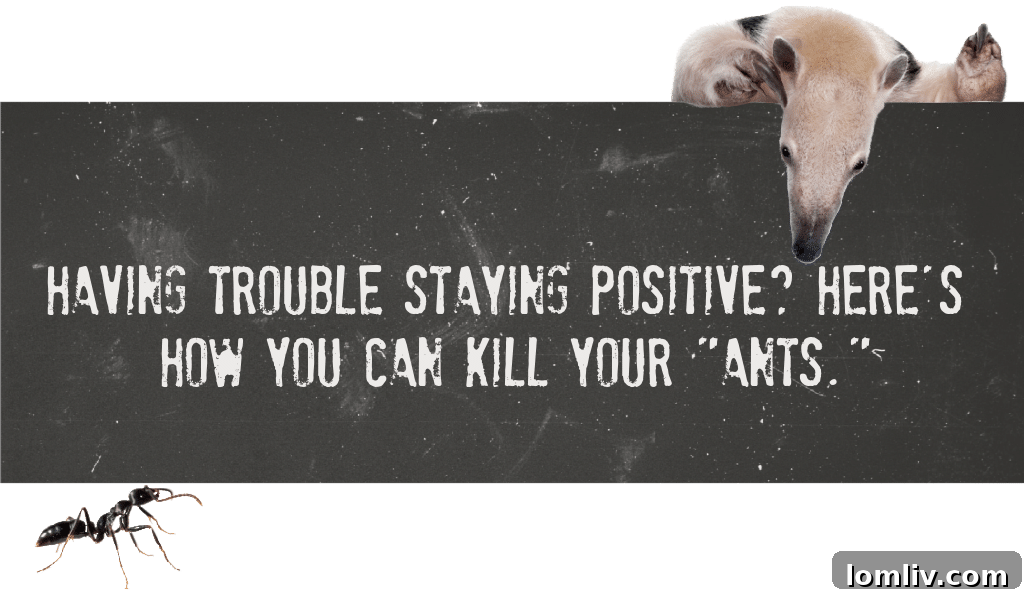
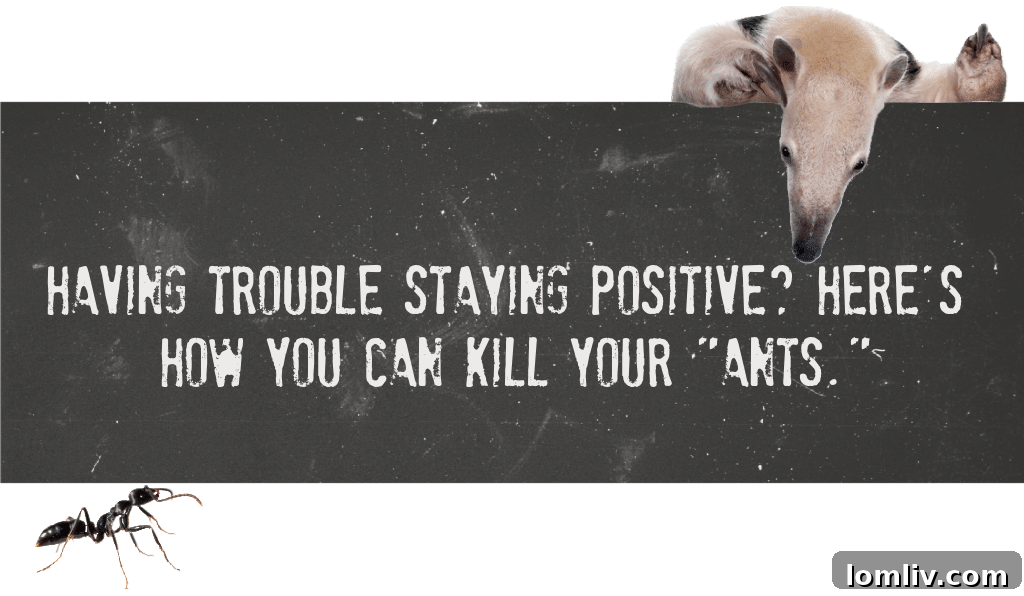
Imagine coming home after an exhausting day, only to find your kitchen floor teeming with thousands of ants. This vivid scenario, shared by my acquaintance Dr. Daniel Amen, became the catalyst for a profound insight into human psychology. As he began the arduous task of cleaning up the infestation, an acronym spontaneously formed in his mind: ANTs. These weren’t just ordinary insects; they represented something far more insidious invading our minds: Automatic Negative Thoughts.
Just like a kitchen overrun by pests, Dr. Amen observed that his patients’ brains were frequently besieged by these mental ANTs. These pervasive negative thought patterns were subtly, yet relentlessly, chipping away at their joy, stealing their happiness, and undermining their overall well-being. Recognizing the corrosive power of these thoughts, he embarked on a mission to empower his patients with the tools and strategies to effectively eliminate all ANTs, understanding that these are the primary fuel for negativity in our lives.
The Profound Impact of Your Thoughts: Brain Chemistry in Action
It’s not just a figure of speech; every single thought you entertain triggers a complex chemical reaction within your brain. Dr. Amen’s research illuminated a critical connection: when you harbor sad, hopeless, angry, irritable, unkind, judgmental, or helpless thoughts, your brain immediately releases a cascade of chemicals that physically impact your body in adverse ways. This internal alarm system can manifest as cold, clammy hands, tense muscles, a racing heart, and shallow breathing. Moreover, these negative thoughts can suppress activity in crucial areas like your frontal and temporal lobes, impairing vital cognitive functions such as judgment, learning, and memory. Prolonged exposure to such mental states can contribute to chronic stress, weakened immune response, and a diminished capacity for problem-solving.
Conversely, the power of positive thinking is equally tangible and transformative. When you cultivate happy, hopeful, loving, kind, or genuinely positive thoughts, your brain orchestrates the release of an entirely different set of beneficial chemicals. This positive internal shift leads to warmer, drier hands, deeper and more regular breathing, relaxed muscles, and a reduction in blood pressure. Most importantly, your brain functions optimally, enhancing clarity, creativity, and resilience. Understanding this direct link between your thoughts and your physiological and cognitive state underscores the critical importance of mental discipline.
Therefore, if your goal is to truly eradicate negativity from your life and cultivate a more fulfilling existence, the work begins with disciplining your mind. This involves actively recognizing and getting rid of the ANTs, and simultaneously developing powerful “ANTeaters” – mental strategies and habits that patrol your consciousness, ready to neutralize negative intrusions. (Side note: Two of my sons are University of California [UCI] Anteaters, so this metaphor holds a special personal resonance for me!)
Just as the natural world boasts myriad species of ants, our internal landscape is populated by various types of negative thought patterns. Dr. Amen meticulously outlined several key ANTs that are crucial for us all to learn to identify and confront:
Fortune Telling
This manipulative ANT specializes in the masterful art of predicting the worst possible outcome for any given situation, often with absolute certainty, even when there is no concrete evidence to support such a conclusion. Fortune Telling traps individuals in a cycle of anxiety and fear, preventing them from taking action or seeing potential opportunities. It fosters a self-fulfilling prophecy where imagined failures become paralyzing realities, eroding confidence and stifling ambition. To counter this, challenge your predictions by asking: “What evidence do I actually have for this outcome? What are other possible scenarios, and what steps can I take to influence a positive one?”
Mind Reading
Mind Reading is the deceptive belief that you inherently know what another person is thinking or feeling, even though they haven’t explicitly communicated it to you. This ANT frequently leads to misunderstandings and unnecessary conflict, often projecting your own insecurities or assumptions onto others. It’s a significant reason why relationships, both personal and professional, encounter difficulties, as it bypasses genuine communication in favor of arbitrary interpretations. I often refer to this as “false projecting,” as it’s more about your internal narrative than the other person’s reality. Instead of mind-reading, practice asking clarifying questions and focusing on observable behaviors rather than imagined intentions.
Guilt Beatings
This ANT manifests through self-talk laced with words like “should,” “must,” “ought,” and “have to.” While a healthy sense of guilt can motivate positive change, Guilt Beatings are destructive, creating feelings of inadequacy, burden, and resentment. Telling yourself, “I should go see my grandmother,” rather than “I want to spend time with my grandmother,” instantly shifts the experience from one of loving connection to one of obligation and negativity. The words we use in our internal dialogue are incredibly powerful; they shape our emotions and our motivation. Reframe these “shoulds” into “I choose to” or “I want to,” empowering yourself to act from a place of genuine desire rather than coercive obligation.
Blame
Whenever you fall into the trap of blaming someone else or external circumstances for the problems in your life, you effectively cast yourself as a victim. This victim mentality is disempowering, as it suggests you are powerless to change your situation. The “blame game” is a common human tendency, but it rarely, if ever, leads to constructive solutions or personal growth. It shifts responsibility away from where it truly lies – within your sphere of influence. To overcome this ANT, actively take personal responsibility for the challenges you face. Focus on what aspects you *can* control or change, and then devise actionable strategies, rather than dwelling on external factors beyond your power.
Labeling
Labeling involves attaching fixed, often derogatory, names or categories to yourself or others. This ANT oversimplifies complex human beings and situations, preventing a nuanced understanding. Calling yourself “a failure” or someone else “lazy” diminishes your ability to see the bigger picture, to recognize growth, potential, or situational factors. Labels can be incredibly harmful, limiting perspectives, fostering prejudice, and creating rigid self-concepts that hinder personal development. Instead of labeling, practice describing behaviors or specific situations. Recognize that people are multi-faceted and capable of change, and that a single label rarely captures the full truth.
So, now that you have identified some of the insidious ANTs that systematically rob you of your happiness and peace of mind, the crucial question arises: what effective strategies can you employ to combat them?
The journey to eradicating negativity begins with heightened awareness. Whenever you find yourself feeling mad, sad, nervous, overwhelmed, or out-of-control, pause and consciously bring your attention to your thoughts. The first step of the ANTeater strategy is to “Catch the ANT.” Ask yourself: “What am I thinking right now?” Write down these thoughts, without judgment, as a simple act of observation. This externalization helps create distance from the thought itself.
Once you’ve caught the ANT, the next vital step is to “Identify the Species.” Recognize which of the common negative thought patterns—Fortune Telling, Mind Reading, Guilt Beatings, Blame, Labeling, or perhaps another variant—is infesting your mind. Naming the ANT takes away some of its abstract power and makes it a tangible problem you can address.
Finally, and most powerfully, you must “Talk Back to It.” This is the essence of cognitive restructuring, an active process of challenging negative thoughts. Ask probing questions: “Is there concrete evidence for this thought? Is this thought 100% true, or are there alternative perspectives? What would I tell a close friend who had this exact thought? Is this thought helping me or harming me?” Challenging these negative thoughts, or “killing the ANTs,” systematically takes away their power. It shifts control from your automatic, often irrational, thoughts back to YOU, the conscious thinker. This deliberate practice empowers you to regain agency over your thoughts, moods, and ultimately, your behaviors.
Embracing this process of developing an internal ANTeater is a transformative choice. It allows you to consciously choose how you engage with life’s challenges, fostering resilience, mental clarity, and enduring joy. By consistently identifying, challenging, and reframing Automatic Negative Thoughts, you cultivate a healthier, more positive, and truly empowered mindset. The cool thing is we all get to choose how we play the game, and learning how to kill the ANTs and develop an internal ANTeater is a great choice that leads to lasting well-being and a more fulfilling life!
Mark Johnson is the Chief Executive Officer of JP & Associates, a rapidly growing full-service real estate brokerage. He is primarily focused on driving productivity and delivering exceptional service within the industry. With nearly 25 years invested in understanding the intricate workings of high-performing real estate agents, teams, managers, and leaders across major global markets, Mark brings a wealth of experience. In his prior assignments, he has served as a Business Coach and held progressive leadership capacities for the 5th largest US-based real estate brokerage firm. His background also includes leadership roles in sales and marketing for a major consumer goods company, alongside a distinguished stint in the US Army Medical Service Corps, where he was recalled to active duty during Desert Storm. Mark is a devoted father of three, a lifelong learner, a dedicated Spartan athlete, and an avid adventurer. He earned his MBA from California State University and holds a Behavioral Change Certification from the National Association of Sports Medicine. Several years ago, Mark made a conscious decision to make “One Helluva Move” and embrace challenges rather than playing it safe. Since that pivotal decision, he has embarked on and completed a series of remarkable adventures, including climbing the world’s tallest free-standing mountain, Kilimanjaro; conquering the demanding Spartan Trifecta; completing the Los Angeles Marathon; and successfully participating in the world-famous Iowa border-to-border RABGRAI ride, among many other incredible feats.