Discovering the Ideal Hub for Remote Work: Why Texas Cities Shine

The global shift towards remote work, profoundly accelerated by recent events, has fundamentally reshaped how and where we conduct our professional lives. For millions, the daily office commute has been replaced by a short walk to a dedicated home workspace, transforming daily routines and opening up new possibilities for personal and professional fulfillment. My own experience since making the transition to working from home has been overwhelmingly positive, characterized by a productive environment largely free from typical office distractions. The occasional background sounds – whether it’s the hum of a landscaping crew or the distant roar of a neighbor’s car – are a small trade-off for the unparalleled flexibility and comfort of working from my own space. Furthermore, the convenience of modern suburban living, with essential amenities like supermarkets and big-box stores offering readily available pickup, alongside the ease of online deliveries, ensures that daily necessities are never a concern.
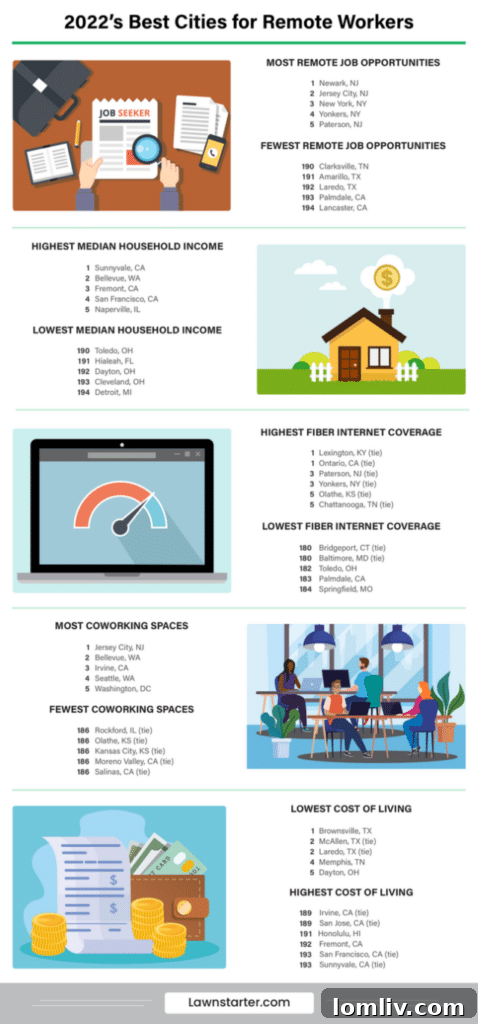
This personal reflection on the benefits of remote work resonates strongly with recent findings, particularly a comprehensive study by LawnStarter that spotlights Texas cities as prime destinations for the burgeoning remote workforce. The results are compelling, especially for the North Texas region, which proudly boasts an impressive four cities among the top 10 out of 194 evaluated locations nationwide. This regional dominance underscores a significant trend and offers invaluable insights for anyone considering a move to optimize their work-from-home experience.
North Texas: A Leading Destination for Remote Professionals
The LawnStarter study, which meticulously assessed various factors crucial for a thriving remote work experience, placed several North Texas cities at the forefront. Frisco, a city consistently lauded in livability studies for its high quality of life and rapid growth, secured the coveted top spot. Its recognition as the number one city for remote workers is a testament to its forward-thinking infrastructure, robust job market, and exceptional community planning. Following closely, Arlington ranked an impressive fourth, and Plano secured the eighth position. The region’s strength was further highlighted by other North Texas locales performing exceptionally well, with Irving at 25th, McKinney at 30th, Garland at 42nd, Mesquite at 59th, and Grand Prairie at 63rd. Even the major metropolitan centers of Dallas and Fort Worth, while not suburbs, demonstrated strong showings, ranking third and 78th respectively, proving their enduring appeal as economic hubs even for a remote workforce.
It’s also worth noting that this isn’t an isolated finding. Earlier in the year, another reputable financial technology company, SmartAsset, independently recognized Plano as the third-best city for working from home, further validating the region’s attractiveness. While Frisco didn’t appear on SmartAsset’s specific list, the consistent high performance of its neighboring cities paints a clear picture of North Texas as a preferred choice for those embracing flexible work models. This dual recognition from independent studies reinforces the region’s strong position in the evolving landscape of remote work.
Understanding the Metrics: What Makes a City Remote-Work Friendly?
The LawnStarter study, commissioned by the Austin-based startup itself – a company that operates fully remotely and offers valuable insights into home and yard care – appears to be a strategic business play to generate attention. However, its robust methodology and comprehensive effort lend significant credibility to its findings. Unlike studies that might rely on limited data, LawnStarter’s research delved into an extensive list of 20 distinct factors, painting a holistic picture of remote work viability across U.S. cities.
A key takeaway from the study’s intricate analysis is the stark contrast it draws with certain other states. California, for instance, fared remarkably poorly, with an overwhelming nine of the ten worst-ranking cities for remote work located within the Golden State. As LawnStarter concisely put it, “High on costs and low on good workplace factors like available personal space, California may be better for visiting than telecommuting.” This sharp divergence underscores the critical importance of considering a city’s overall economic and living environment when evaluating its suitability for remote professionals. Factors like housing affordability, tax burden, and the availability of essential services become paramount.
The 20 factors considered by LawnStarter provide a comprehensive framework for what truly constitutes a remote-work-friendly city. These critical categories include, but are not limited to:
- Remote Job Opportunities: Access to a diverse and robust job market that actively supports and creates remote positions, indicating a forward-thinking business ecosystem.
- Internet Connectivity: The availability of high-speed, reliable internet infrastructure across the city, a non-negotiable for seamless virtual collaboration, video conferencing, and cloud-based operations.
- Cost of Living: Affordability across key expenditure areas such as housing, utilities, groceries, and transportation, which directly impacts a remote worker’s disposable income and overall quality of life.
- Availability of Personal Workspace: The presence of suitable housing options that allow for dedicated home office spaces or flexible rooms, crucial for maintaining work-life balance, productivity, and professional focus.
- Quality of Life Metrics: Broader factors like low crime rates, access to diverse amenities, abundant recreational opportunities, and overall community satisfaction contribute significantly to a fulfilling remote lifestyle.
- Tax Environment: Favorable state and local tax policies that affect take-home pay, such as the absence of a state income tax in Texas, provide a substantial financial advantage.
North Texas cities, in particular, excelled in the “Opportunity” and “Connectivity” categories, reflecting their strong economic growth, diverse industries, and advanced technological infrastructure. The absence of a state income tax in Texas further enhances the financial appeal, allowing remote workers to retain a larger portion of their earnings – a tangible benefit that significantly boosts the region’s overall attractiveness.
Real Estate Adapts: Designing Homes for the Modern Remote Workforce
The profound shift to remote work has not gone unnoticed by the real estate development sector. Industry leaders are actively re-evaluating traditional home designs to better accommodate the evolving needs of modern professionals. Tom Woliver of Oxland Advisors, for instance, emphasizes the critical role of well-integrated home offices in contemporary living spaces. This thoughtful approach is evident in ambitious projects like the vast Painted Tree development in McKinney, where future-forward design principles are being applied to create residences that truly support remote living.
“People are going to be working from home,” Woliver observes, highlighting the long-term, structural nature of this trend. “They’re probably going to do more daytime activities because they’re not at the office.” This insight points to a broader transformation: homes are no longer just places to rest; they are becoming multi-functional hubs for work, recreation, and family life. Developers are now prioritizing features such as dedicated office nooks, soundproofing for concentration, integrated smart home technology for seamless connectivity, and flexible floor plans that can adapt to changing family and work needs. Beyond the individual home, master-planned communities are increasingly incorporating amenities like communal co-working spaces, enhanced green areas, and extensive walking trails, all specifically designed to support a balanced and productive remote lifestyle, fostering both individual well-being and community engagement.

Key Trends and Nuances of the Remote Work Landscape
The LawnStarter study offered several overarching conclusions that paint a detailed picture of the contemporary remote work landscape:
- The Enduring Appeal of Large Cities: Despite a popular narrative suggesting remote workers are abandoning bustling urban centers for spacious suburbs, the study indicates that large cities often remain safe bets. They offer a broader array of job opportunities, superior infrastructure, and a diverse range of amenities and services that can significantly enhance the remote work experience, from cultural institutions to specialized healthcare.
- Population Density and Performance: A significant majority of the top-ranking cities – eight out of ten – boast populations of at least 250,000 residents. The remaining two were mid-sized cities, with populations ranging between 100,000 and 250,000. This suggests that a certain level of urban development and population size correlates with the factors that support a robust remote work environment, such as strong internet infrastructure, diverse service industries, and a larger talent pool.
- Balancing Suburbia and Urban Cores: While suburbs undeniably offer more breathing room, larger plots of land, and often more family-friendly mainstream amenities like top-rated schools and quiet neighborhoods, bigger cities typically provide a wider spectrum of job opportunities and more diverse options in terms of culture, dining, and professional networking. The choice between urban and suburban remote work ultimately hinges on individual priorities regarding space versus access to a vibrant city life.
Navigating the Challenges: The Flip Side of Remote Work
While the allure of remote work is undeniable, it’s crucial to acknowledge its inherent disadvantages. The absence of daily office interactions can lead to feelings of isolation, reduce opportunities for spontaneous collaboration, and potentially hinder career advancement, as casual mentorship and collaborative brainstorming sessions often thrive in in-person settings. Project management, too, can suffer when teams are geographically dispersed, requiring more deliberate communication strategies, robust digital tools, and consistent effort to maintain cohesion and efficiency across remote teams.
However, for many, the profound benefits far outweigh these challenges. A primary driver behind the massive adoption of remote work has been the eradication of the dreaded daily commute. The sheer amount of time previously spent in traffic, navigating congested freeways like those prevalent in the D-FW metroplex, represented a significant drain on personal resources and well-being. As highlighted by M. Gloria González Morales of Claremont Graduate University, “Time is one of those valuable resources that are finite, and this is one of the advantages of flexible work arrangements: People have more control over the structure and management of their time.” This newfound control over one’s schedule allows for greater work-life integration, enabling individuals to pursue hobbies, spend more quality time with family, or simply reclaim precious hours for personal well-being and development. The long commute, once an unavoidable and often stressful part of professional life, is now, for many, a relic of the past, offering a powerful and ongoing incentive to embrace and optimize the remote work lifestyle.
The Future is Flexible: Embracing the Remote Revolution
The COVID-19 pandemic did not invent remote work, but it certainly accelerated its adoption and cemented its place as a viable and often preferred mode of employment for millions globally. What began as a necessity has rapidly evolved into a strategic advantage for both employees and employers. Cities and regions like North Texas, which proactively foster environments conducive to remote living and working, are exceptionally well-positioned to attract top talent, stimulate economic growth, and build resilient communities in this new era. The ongoing evolution of technology, combined with a growing societal appreciation for work-life balance and personal autonomy, strongly suggests that flexible work arrangements, whether fully remote or hybrid, are here to stay as a permanent fixture of the modern professional landscape.
For individuals, the power to choose where they live and work has never been greater, offering unprecedented opportunities for aligning career goals with lifestyle preferences. For cities, understanding and adapting to the unique needs of the remote workforce is paramount for future prosperity and sustainable urban development. The LawnStarter study, alongside other similar analyses, serves as an invaluable guide, illuminating the path forward for both remote professionals seeking their ideal home base and urban planners striving to build the innovative, adaptable cities of tomorrow that truly cater to the needs of a flexible workforce.