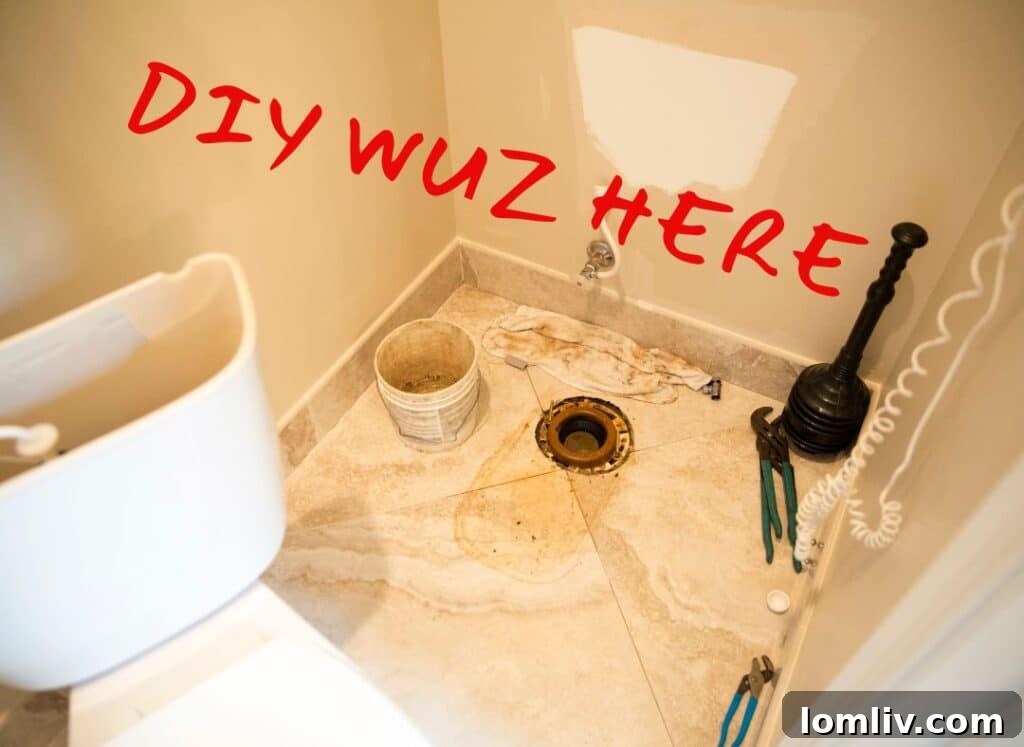
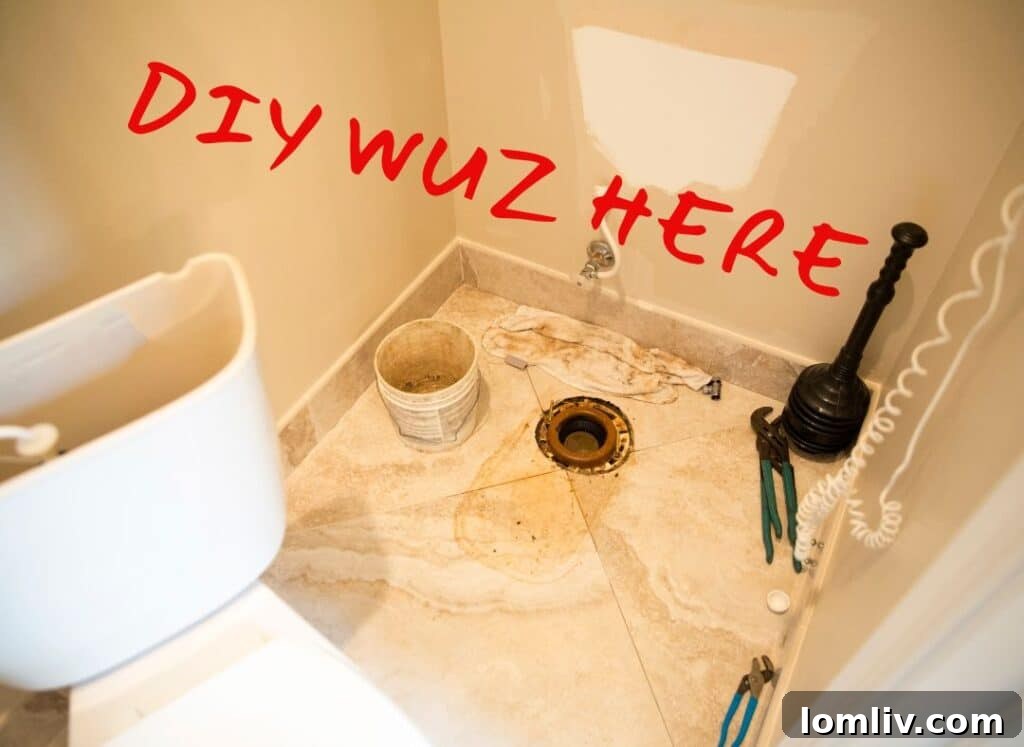
Understanding the fundamental systems of your home is crucial for any homeowner, whether you’re a first-time buyer or a seasoned veteran. Among these critical components, plumbing stands out as one of the “Big 5” — alongside electricity, roofing, foundation, and HVAC. These are the systems that significantly impact your home’s functionality, safety, and long-term value. Acquiring knowledge about these areas not only empowers you to make informed decisions but also helps you anticipate and budget for future maintenance and potential repair costs.
While the allure of saving money often drives homeowners to tackle DIY projects, certain areas, like plumbing and electrical work, are best left to licensed professionals. As experienced home inspectors, we frequently encounter the consequences of well-intentioned but misguided DIY plumbing attempts. It’s a common misconception that basic plumbing fixes are simple, leading many to rely on informal advice or online tutorials rather than certified expertise. Unfortunately, these efforts almost invariably lead to more significant problems, costly repairs, and potential safety hazards down the line. Even seemingly minor missteps can compromise the integrity of your home’s entire plumbing system.
The risks associated with improper plumbing extend beyond mere inconvenience. From hidden water damage and mold growth to serious health risks from sewer gas exposure and compromised structural integrity, the ramifications can be severe. This article will delve into some egregious plumbing fails we’ve uncovered during our professional home inspections, illustrating why professional installation and repair are not just recommendations, but essential investments in your home’s safety and longevity.
Decoding Dangerous Drainage: The S-Trap and Outdated ABS Pipes
During a recent inspection, our expert inspector, Luis, uncovered a common yet critical dual plumbing fail lurking beneath a bathroom sink. This scenario perfectly highlights the dangers of outdated installations and non-compliant materials, issues often missed by the untrained eye but easily spotted by a professional.
The first glaring issue was the presence of an S-Trap, an antiquated plumbing configuration that is, alarmingly, a code violation in all 50 U.S. states. Unlike its safer counterpart, the P-Trap, an S-Trap is notorious for siphoning water out of the trap, leaving a direct pathway for sewer gases, primarily methane, to enter your living space. Methane gas is not only unpleasant due to its distinct odor but can also pose serious health risks and, in rare circumstances, even explosion hazards. This immediate hazard alone makes an S-Trap a critical issue that demands prompt replacement, especially during any remodeling project. The fact that this particular S-trap appeared brand new suggests a recent installation by someone unaware or disregardful of current plumbing codes, underscoring the necessity of hiring qualified professionals.
Compounding this problem was the use of black ABS (Acrylonitrile Butadiene Styrene) pipe for the drainage system. While ABS pipe saw widespread use in plumbing applications during the 1960s and 70s, it has since been largely phased out and is no longer approved for use in residential plumbing in many areas. Early formulations of ABS pipe were found to be less durable than initially believed, exhibiting a tendency to degrade over time, leading to cracking and leaks. Furthermore, some ABS pipes contain BPAs (Bisphenol A), a chemical compound that has raised health concerns. Although this was an older home, the combination of a new, non-compliant S-trap with an outdated pipe material is a red flag. Identifying such issues requires a deep understanding of plumbing history, material science, and current building codes, knowledge that only experienced plumbing professionals and home inspectors possess. This discovery serves as a potent reminder that opting for cheap or quick fixes can lead to significant safety compromises and expensive overhauls.
The Critical Cost of Cheap Caulk: Hidden Water Damage Revealed
Sometimes, the most seemingly insignificant details can lead to the most catastrophic and costly plumbing failures. This was precisely the case in a compelling inspection led by our expert, Tracy, who utilized thermal imaging to uncover severe hidden water damage resulting from a neglected detail – a simple bead of caulk. The incident involved a second-floor bathroom shower that had been leaking for an extended period, causing silent destruction to the structural components below.
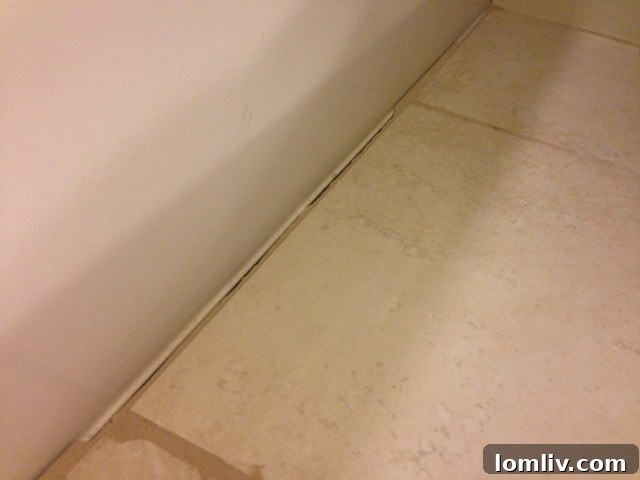
The backstory revealed a common scenario: a homeowner attempted to address a leaking shower faucet. While the faucet itself was fixed, the crucial step of re-caulking the shower enclosure was overlooked. Caulk, a flexible sealant, plays a vital role in preventing water from seeping into wall cavities, subflooring, and structural elements of your home. It creates a watertight barrier in areas exposed to moisture, like showers, tubs, and sinks. When this barrier fails or is absent, water can relentlessly penetrate the structure, leading to a cascade of problems.
In this instance, the water that was meant to stay within the shower pan was escaping through unsealed joints, silently making its way into the floor assembly and ceiling below. The brilliance of thermal imaging lies in its ability to detect temperature differentials caused by moisture. Tracy’s thermal camera vividly displayed cooler, damp areas within the ceiling, clearly indicating the presence of water damage that was otherwise invisible to the naked eye. This technology is invaluable for uncovering hidden leaks that, if left unaddressed, can lead to severe structural rot, extensive mold growth, compromised air quality, and astronomical repair bills. This case powerfully illustrates that neglecting routine maintenance, like replacing old or inadequate caulk, is a false economy. A small investment in proper caulking can prevent thousands of dollars in future water damage remediation and structural repairs. It underscores that even the “cheapest” components of your home’s plumbing system serve a vital protective function.
@greenscenehome #thermalimaging reveals #waterdamage from plumbingleaks! #askahomeinspector #homeinspectionfinds #dallashomeinspector #dallasrealestate #dallastx
♬ original sound – Green Scene Home Inspections
The caulk:
Unmasking a Shoddy Seal: The Case of the Compromised Plumbing Vent
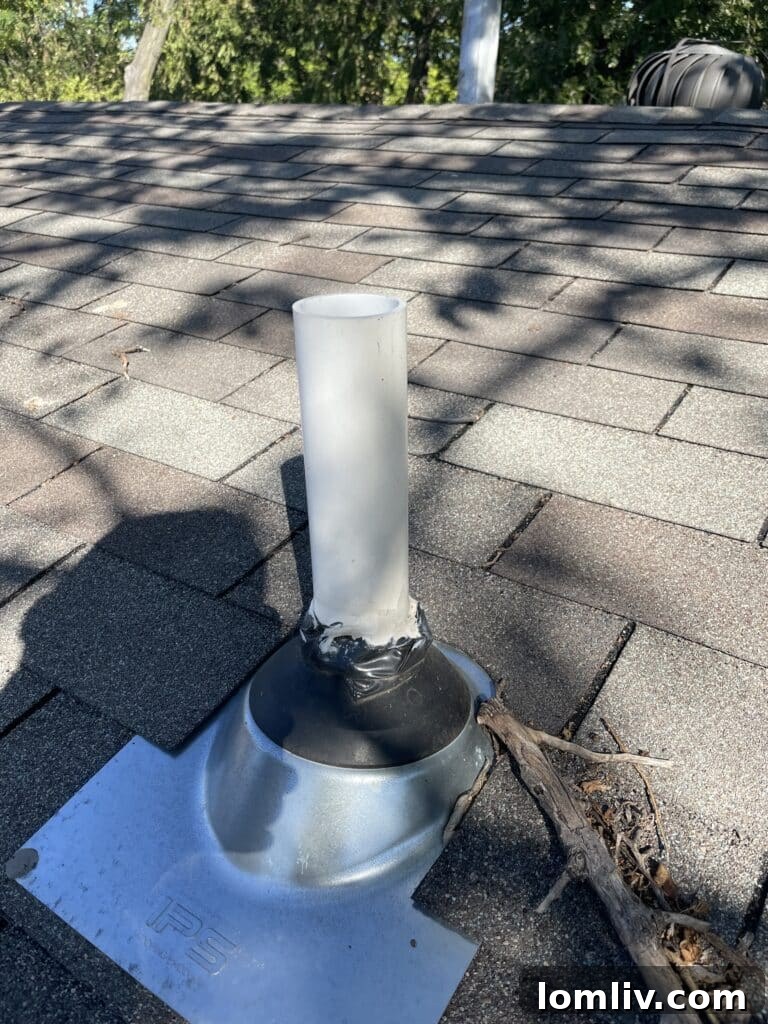
Even components of your plumbing system that are out of sight, like the vents poking out of your roof, are crucial for its proper function. Many homeowners, understandably, might not give these elements a second glance, assuming they are installed correctly. However, as inspector Alex emphatically stated during a recent discovery, “Whoever did this should be ashamed.” This potent remark highlighted a serious DIY blunder on a plumbing vent that could have far-reaching implications for the home’s entire drainage system and structural integrity.
Plumbing vents are essential for allowing air into the drainage system, preventing a vacuum from forming that could siphon water from P-traps and allowing wastewater to flow smoothly. They also provide an escape route for noxious sewer gases, preventing them from entering the home. The vent pipe in question was made of PVC (Polyvinyl Chloride) plastic, a common and acceptable material. However, PVC pipes exposed to the sun’s ultraviolet (UV) rays require a protective coating, typically a UV-resistant paint, to prevent degradation. Without this coating, the PVC becomes brittle, cracks, and eventually fails, leading to potential leaks and a compromised vent system. The lack of UV protection on this pipe was a clear oversight.
But the most shocking aspect of this installation was the sealing material used around the base of the vent pipe where it penetrates the roof: electrical tape. Electrical tape is designed for insulating electrical wires, not for waterproofing roof penetrations. It is not an approved material for this application due to its lack of durability, UV resistance, and waterproofing properties. Over time, electrical tape will inevitably deteriorate, crack, and peel under environmental stress, creating a direct pathway for rainwater to infiltrate the roof structure. This type of leak can lead to rot, mold, and extensive damage to the attic, ceilings, and walls. The combination of an unpainted PVC vent and an utterly inappropriate sealant material is a textbook example of a DIY project gone wrong, demonstrating a profound lack of understanding of both plumbing and roofing best practices. It’s a stark reminder that what looks “just fine” to an untrained eye can be a ticking time bomb for severe home damage.
The Misunderstood AAV: Why Proper Installation Matters
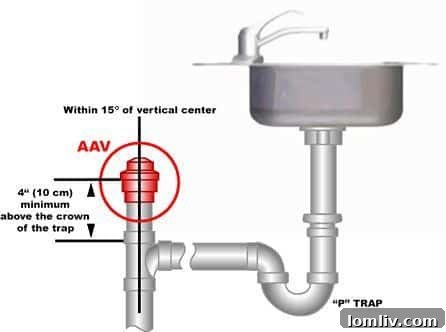
While some plumbing fails can be dangerous or illegal, others, though seemingly minor, can significantly impair the functionality and efficiency of your plumbing system. Take, for instance, the Air Admittance Valve (AAV), often found under sinks in situations where traditional venting through the roof isn’t feasible. Our inspector Cody has a particular knack for spotting incorrectly installed AAVs, often quipping, “It’s literally always wrong,” highlighting a pervasive issue that homeowners frequently misunderstand.
An AAV is a one-way mechanical valve designed to allow air into the plumbing drainage system when negative pressure occurs (like when water drains rapidly). This influx of air equalizes the pressure, preventing a vacuum from forming. Without adequate ventilation, a vacuum can siphon water out of the P-trap, allowing sewer gases to enter your home, creating gurgling noises in the drain, and causing slow or inefficient drainage. Essentially, the AAV helps the P-trap perform its critical function of blocking sewer gas while ensuring smooth wastewater flow.
The functionality of an AAV, however, is heavily dependent on its correct installation, specifically its vertical positioning. Building codes, and inspector Cody’s detailed observations, mandate that an AAV must be installed no lower than the horizontal trap arm it serves. In simpler terms, the bottom of the AAV should be at least at the same level as, or higher than, the bottom of the sink’s drain pipe where it connects to the P-trap. If an AAV is installed below this level, it can become submerged in wastewater during heavy drainage, preventing it from properly admitting air. This leads to the very problems it’s designed to prevent: gurgling, slow drains, and potential sewer gas infiltration.
While an improperly installed AAV might not pose an immediate life-threatening risk, it compromises the efficiency and hygiene of your plumbing system. It’s a subtle yet important detail that speaks volumes about the quality of the installation and adherence to building codes. Recognizing and correcting such an oversight can significantly improve your home’s plumbing performance and prevent minor annoyances from escalating into bigger issues. This is precisely why professional home inspections are invaluable – they catch these often-overlooked details that contribute to a fully functional and compliant home system.
We encourage you to take a moment and inspect under your own sink! See if you have an AAV vent, and if it’s installed correctly relative to your sink’s drain level. If you find a compliant installation, consider sharing a picture – Inspector Cody would be delighted to see a job well done!
The Indispensable Value of Professional Plumbing and Home Inspections
The examples detailed above – from dangerous S-traps and obsolete piping to neglected caulking, improper roof vents, and incorrectly installed AAVs – collectively paint a clear picture: plumbing is a complex system that demands professional expertise. While the desire to save money or embark on a DIY project is understandable, the potential costs and hazards associated with improper plumbing work far outweigh any perceived savings.
Engaging in DIY plumbing without adequate knowledge and adherence to current building codes can lead to a litany of problems: devastating water damage, hazardous mold growth, exposure to toxic sewer gases, structural deterioration, and ultimately, significantly more expensive repairs than if the job had been done correctly the first time. Moreover, faulty plumbing can negatively impact your home’s resale value and even prevent you from obtaining necessary insurance coverage in the event of a failure.
This is where the role of certified plumbing professionals and experienced home inspectors becomes not just beneficial, but absolutely critical. Licensed plumbers possess the specialized knowledge, tools, and understanding of local codes required to install, repair, and maintain your plumbing system safely and effectively. Home inspectors, on the other hand, provide an invaluable layer of protection, acting as a crucial second set of eyes for current homeowners and prospective buyers alike. They meticulously examine every accessible component of your home’s systems, uncovering hidden deficiencies, code violations, and potential future problems that could otherwise remain undetected until they manifest as costly emergencies.
Investing in professional plumbing services and regular home inspections is an investment in your home’s safety, longevity, and overall value. It provides peace of mind, ensures compliance with safety standards, and protects you from unforeseen financial burdens. Don’t let a seemingly small oversight or a well-intentioned DIY attempt turn into a major headache. Prioritize professional expertise when it comes to your home’s vital plumbing system – your home and your wallet will thank you for it.