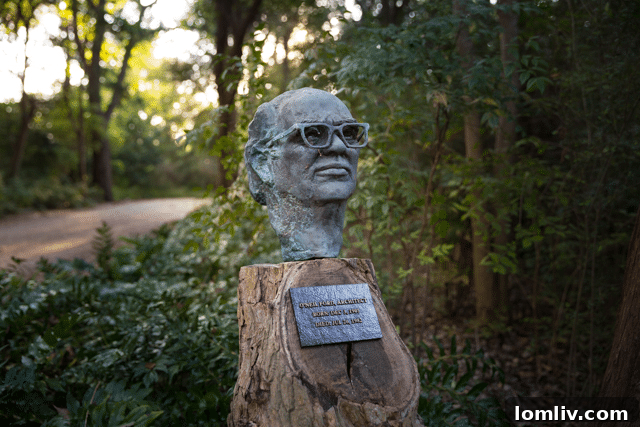
O’Neil Ford: The Visionary Architect Behind Texas Modernism and Dallas’s Iconic Homes
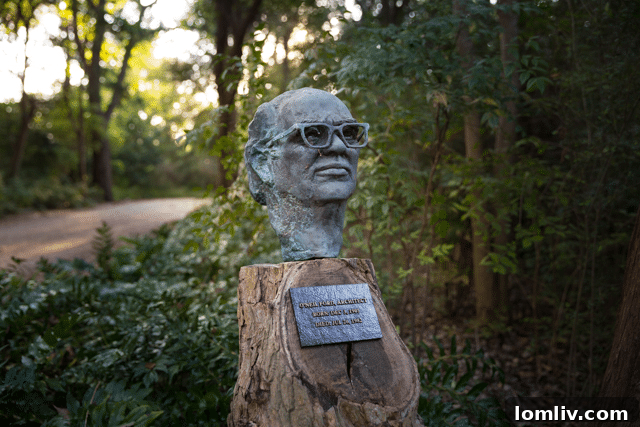
In the rich tapestry of American architectural history, few figures loom as large or as distinctively as O’Neil Ford. Credited alongside his esteemed mentor David Williams, Ford is widely recognized as the principal architect who sculpted the very essence of the Texas Modern style. Drawing profound inspiration from the groundbreaking work of architectural titan Frank Lloyd Wright, Ford forged a regional modernism that was deeply rooted in the Texan landscape, its culture, and its climate. His innovative approach transformed the architectural vernacular of the Lone Star State, leaving an indelible mark on its skylines and communities.
David Dillon, the esteemed architecture critic for the Dallas Morning News, eloquently captured Ford’s unique contribution in his 1999 seminal work, The Architecture of O’Neil Ford. Dillon wrote, “O’Neil Ford helped launch Texas architecture on a new path by showing that its roots were deep and often beautiful. He was born on the frontier and belonged to the last generation of American architects with genuine ties to the land — an agrarian and a Jeffersonian who chose a T-square over a bull-tongue plow. His small-town roots made him pragmatic and healthily skeptical, and thereby saved his architecture from becoming decorative or self-indulgent.” This profound connection to the land and a pragmatic, honest approach became the cornerstones of Ford’s design philosophy, differentiating his work from fleeting trends and superficial aesthetics.
Ford’s architectural signature was unmistakable: robust structures that eloquently combined the natural beauty and structural integrity of brick, glass, and wood. These materials were not merely chosen for their aesthetic appeal but for their intrinsic qualities and their ability to integrate harmoniously with their physical surroundings. Every building he conceived was brilliantly attuned to its site, reflecting a deep respect for topography, climate, and the surrounding environment. This philosophy fostered buildings that felt inherently “of” their place, resonating with the spirit of Texas itself.
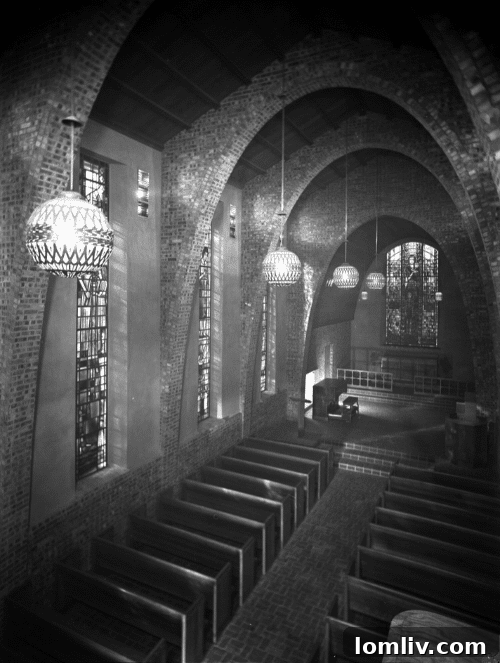
Courtesy Denton Public Library/University of North Texas Libraries
O’Neil Ford’s Enduring Legacy Across Texas and Beyond
The breadth of O’Neil Ford’s influence is best observed through his extensive body of work, particularly prominent on numerous Texas university campuses. He was instrumental in shaping the very landscape of the University of Dallas campus in Irving, designing key structures such as the striking Braniff Memorial Tower, the intellectually vibrant Braniff Graduate Center, the Gorman Lecture Center, the community-focused Haggar University Center, and the scientifically advanced Haggerty Science Building. His architectural genius also graced the Texas Woman’s University (TWU) campus in Denton, where he designed the exquisite Little Chapel in the Woods—a masterpiece of regional modernism—among many other significant buildings in the city.
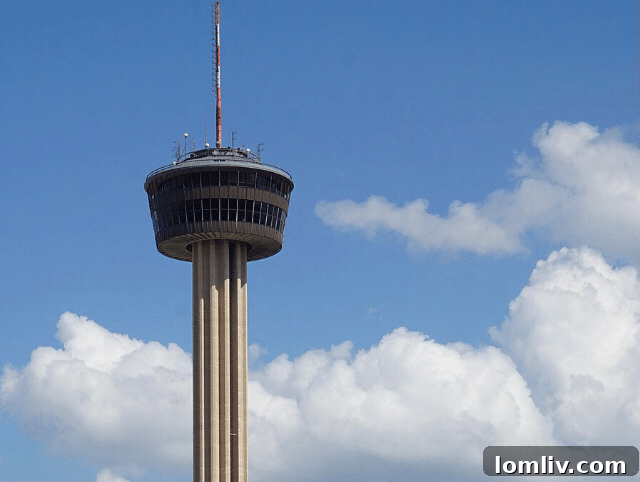
San Antonio, his cherished home base, proudly showcases a substantial collection of his work. Ford played a pivotal role in the sensitive renovation of La Villita, preserving its historic charm while infusing modern functionality. He designed the entire campus of Trinity University, a project that stands as a testament to his comprehensive vision for educational environments. Other notable contributions include the campus of Saint Mary’s Hall, the visionary main campus of the University of Texas at San Antonio, and perhaps his most iconic structure in the city, the soaring Tower of the Americas, a landmark that defines the San Antonio skyline.
Ford’s architectural footprint wasn’t confined to Texas. His talent reached upstate New York with designs for Skidmore College, and he contributed significantly to corporate architecture with projects for Texas Instruments. One of his final significant commissions, completed shortly before his passing in 1982, was the design of the Museum of Western Art in Kerrville, nestled in the picturesque Texas Hill Country. This project encapsulates his lifelong commitment to creating structures that resonate with their specific natural and cultural contexts.
Exploring O’Neil Ford’s Residential Masterpieces in Dallas
While O’Neil Ford was renowned for his large-scale commercial and institutional projects, earning him widespread acclaim, his residential designs offer a more intimate glimpse into his architectural philosophy. He designed several homes in Dallas, each a magnificent specimen of Mid-Century Modern architecture infused with his distinctive Texas Modern sensibility. These private residences, though fewer in number, are invaluable examples of his ability to scale his grand vision down to the human experience, creating spaces that were both functional and profoundly beautiful. From the extensive archives of Daltxrealestate, we present three exemplary Dallas homes by O’Neil Ford that continue to captivate and inspire, demonstrating why his residential work is just as significant as his public commissions.
The Historic 3201 Wendover Road: A Texas Modern Gem in Lakewood
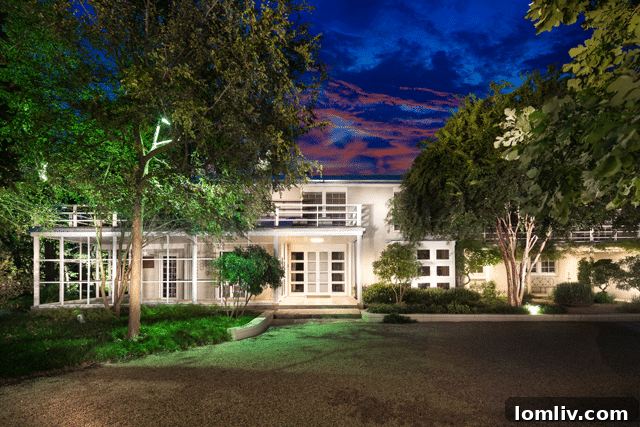
Address: 3201 Wendover Road, Dallas, TX
For those familiar with the vibrant Lakewood community, the address 3201 Wendover Road holds a special significance. It’s often recognized as the architectural marvel situated discreetly behind the LOLA — the Lakewood Outdoor Learning Area. Originally part of the sprawling Metzler Dairy Farm, this remarkable residence was envisioned and built by the Bromberg family in 1939, a time when its location would have been considered the serene outskirts of Dallas, a testament to the city’s growth. This home is a prime example of how O’Neil Ford and his collaborative partner, Arch Swank, masterfully blended innovative design with regional sensitivity.
The 5,500-square-foot home was a groundbreaking achievement in sustainable design, conceived with an acute focus on natural ventilation and climate control long before such concepts became mainstream. Ford and Swank ingeniously created dual exposures in every room, allowing for cross-ventilation that naturally cooled the interiors. This thoughtful design meant there was no need for conventional central air conditioning or heating systems. Instead, the home was efficiently cooled by strategically placed attic fans and warmly heated by seven exquisitely crafted fireplaces. These fireplaces were not merely functional but artistic statements, meticulously handcrafted by Ford’s brother, Lynn, a celebrated woodworker whose intricate skills contributed significantly to many of O’Neil’s projects.
Each of these seven fireplaces possesses a unique narrative, reflecting the personal touches and refined tastes of the original owners. The living room’s magnificent hearth surround, for instance, was custom-designed to replicate a cherished bracelet belonging to Mrs. Juanita Bromberg, intertwining personal history with architectural artistry. Similarly, the dining room fireplace was crafted to perfectly complement her elegant Wedgewood china pattern, demonstrating an extraordinary attention to detail and a commitment to integrating the home’s design with its inhabitants’ lifestyle and possessions. These elements underscore Ford’s belief that a home should be a deeply personal and reflective space.
Beyond its innovative climate control and personalized details, the Wendover home boasts four spacious bedrooms and five bathrooms, each space thoughtfully appointed with clever, custom-built-ins—a hallmark of Ford’s pragmatic and efficient design. An original telephone seating area on the second floor offers a nostalgic glimpse into the past, while the abundance of screened porches and balconies further accentuates Ford’s trademark emphasis on blending indoor and outdoor living, allowing residents to enjoy the Texas climate comfortably and stylishly. This integration of practical design, personal narrative, and sustainable features has earned 3201 Wendover Road a prestigious spot on the National Register of Historic Places, cementing its status as a significant piece of American architectural heritage.
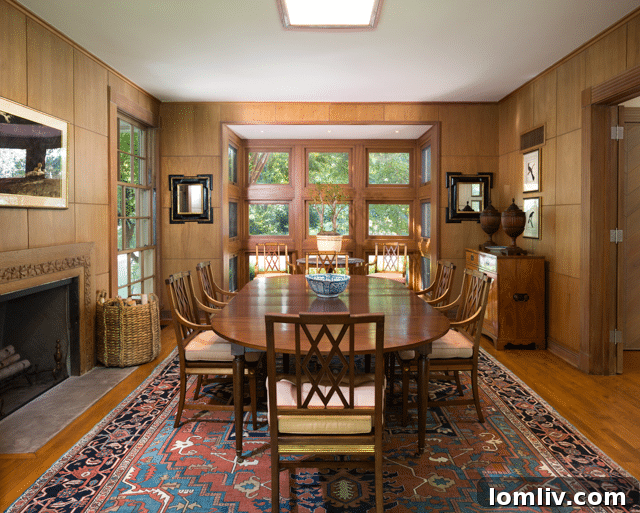
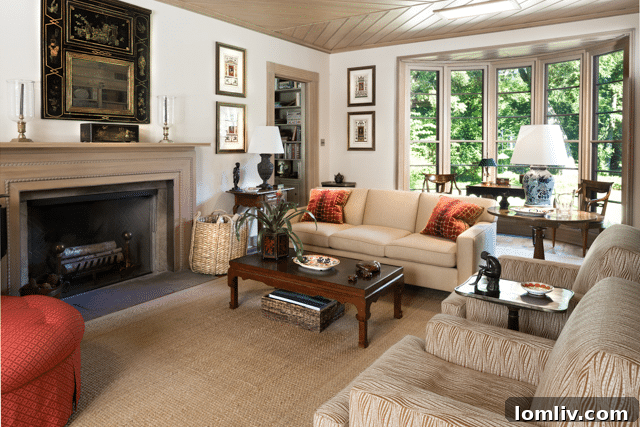
— See more photos and read more about 3201 Wendover Road, featured in the 2016 Lakewood Home Tour.
The Penson Estate: A Family’s Dream Home and a Preservation Heartbreak
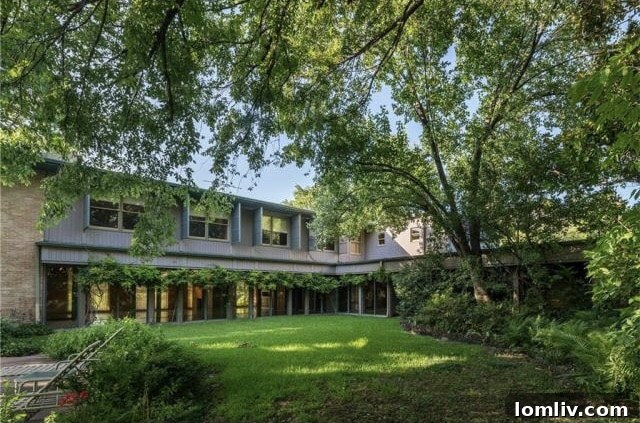
Address: 3756 Armstrong Parkway, Highland Park, TX
The story of the Penson Estate is, for many, a true heartbreaker within the annals of Dallas’s architectural history. Nestled at the prestigious intersection of two magnificent Highland Park thoroughfares, Armstrong and Overhill, this expansive 8,900-square-foot O’Neil Ford creation was commissioned in 1954 by Nancy and John “Jack” Penson. For decades, it remained a cherished one-family home, a testament to enduring legacy and architectural integrity in a neighborhood known for its grand residences.
The community watched with bated breath when the estate eventually went up for auction. Its sale for $4.95 million to auto dealership magnate Lute Riley marked a turning point. In September 2016, following the sale, reporter Candy Evans spoke with Read Penson Gendler, one of the Penson children, who reflected on her parents’ profound connection to their dream home. “They never talked about moving,” Gendler shared, “Both said they would go out of that house feet first.” When pressed by Candy about being prepared for the unthinkable, Read’s response was poignant: “Yes. I told my sister, in a way, this is our house and always will be the way our parents built it, and how our family lived there. If someone else tears it down, now, then we will have been the only ones — no one else gets to live there.”
This sentiment perfectly encapsulates the deep emotional attachment families develop with homes of such character and history, especially those designed by an architect of Ford’s stature. The potential loss of such a significant structure sent ripples of concern through the preservation community, creating that “knot in your stomach” feeling for anyone who valued architectural heritage.
As one of Ford’s largest residential designs in Dallas, gracing a generous 0.89-acre lot, the Penson Estate was rightly recognized by Preservation Dallas as one of the city’s major buildings facing an imminent danger of demolition. Dallas itself has established historic and conservation districts specifically designed to protect its treasured historic structures. However, a glaring vulnerability exists in the Park Cities—Highland Park and University Park—where, as Preservation Dallas highlights, there is no equivalent protection. Property owners in the Park Cities retain the unchecked right to demolish residences that have stood for decades, and sometimes even a century or more, requiring nothing more than a simple demolition permit, without any substantive review or oversight of historical or architectural merit.
Tragically, this loophole sealed the fate of the Penson Estate. On a somber Tuesday in December, the O’Neil Ford masterpiece was torn down, erasing decades of history and a family’s legacy. Lute Riley, the buyer, subsequently sold the cleared lot, paving the way for a new, anachronistic structure to rise where a piece of Texas Modern history once proudly stood. This event remains a stark reminder of the ongoing struggle for architectural preservation in rapidly developing urban areas and the critical need for broader protective measures for significant residential architecture.
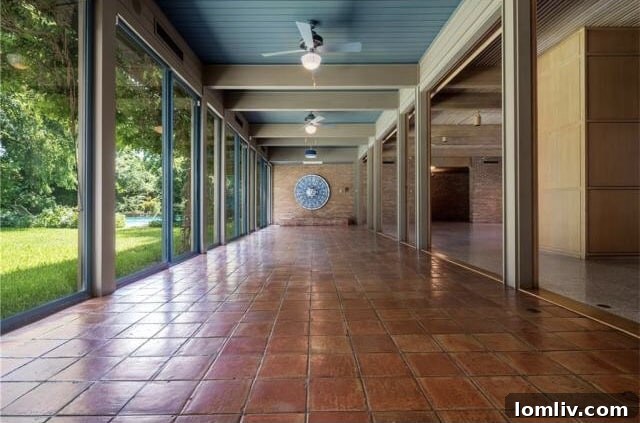
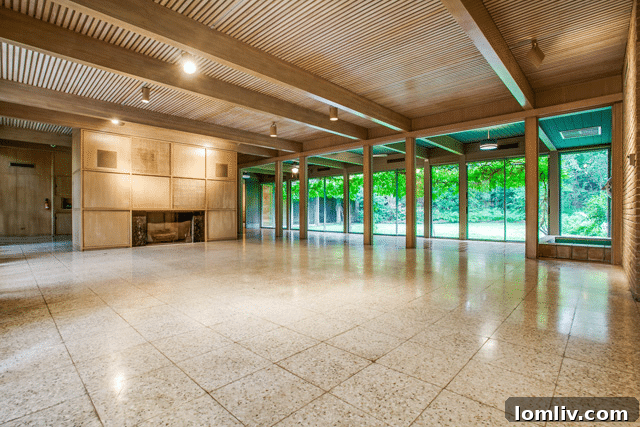
— See more photos and read more about the demise of 3756 Armstrong Parkway, and a possible happy ending for the site.
5455 Northbrook Drive: Is This O’Neil Ford’s Most Important Midcentury Modern Home in Texas?
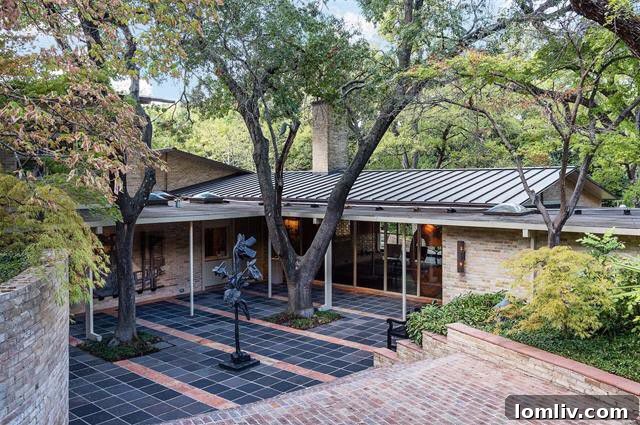
Address: 5455 Northbrook Drive, Dallas, TX
This brings us to a home that stands as a profound testament to O’Neil Ford’s residential genius: 5455 Northbrook Drive. Preservation Dallas has lauded this residence as arguably one of Ford’s most significant and influential designs in all of Texas. The question “Why?” naturally arises, and the answer lies in its meticulous design, integration with nature, and historical significance.
In 1958, Ford meticulously sited this Northbrook beauty on a sprawling, terraced 1.77-acre lake lot within the prestigious Dentwood Addition of Old Preston Hollow. This strategic placement maximized breathtaking views and fostered a seamless dialogue between the architecture and its lush surroundings. The home’s interior is a marvel of Ford’s signature style, shining with exceptionally rare features, including an exquisite indoor pool that epitomizes luxury and innovative living. Throughout the residence, the intricate and masterful woodwork of O’Neil’s brother, Lynn Ford, elevates the interiors, adding layers of warmth, texture, and bespoke craftsmanship that are simply unparalleled.
The Northbrook home was originally designed for the distinguished Haggerty family. Patrick Haggerty, a visionary co-founder of Texas Instruments, commissioned Ford for this project, making it a pivotal collaboration between a leading industrialist and a groundbreaking architect. Since its completion, 5455 Northbrook Drive has been recognized as a hot property, consistently featured in numerous architectural books, prestigious magazines, and influential newspapers, cementing its place in the canon of American modernism. Beyond its media acclaim, the home has also served as the distinguished venue for countless lectures and significant social gatherings, becoming a living testament to Ford’s enduring impact. Indeed, if these walls could talk, they would undoubtedly share tales of innovation, intellectual discourse, and elegant entertaining, underscoring the home’s role as a vibrant hub of Dallas society and a paramount example of O’Neil Ford’s Mid-Century Modern architecture.
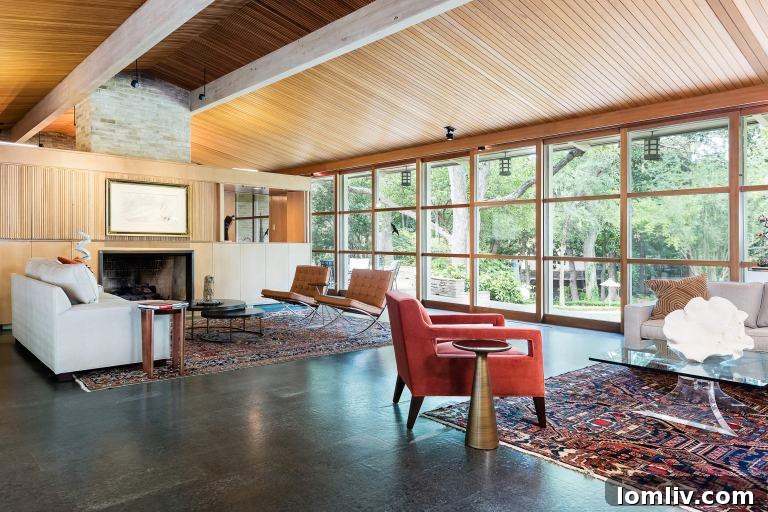
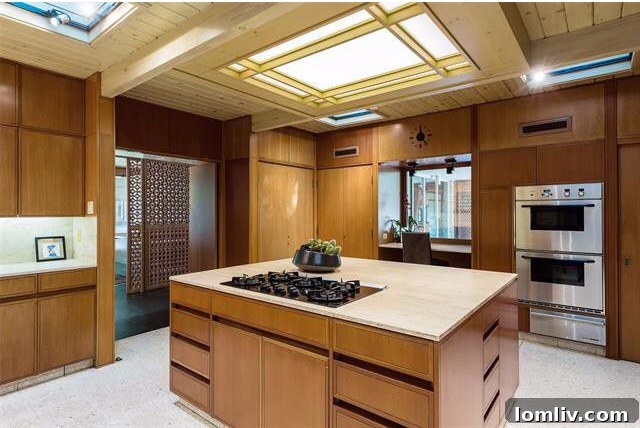
— See more of 5455 Northbrook Drive, listed in October 2019 for $5.6 million.