The highly anticipated redevelopment of the historic Pink Wall area, specifically within the PD-15 zoning district, has ignited fervent discussions and understandable concerns among local residents. A primary criticism, and perhaps the most emotionally charged, revolves around the potential for increased traffic. The fear, whether rooted in current observations or future projections, is that a surge in PD-15 density will inevitably overwhelm the quaint, interior neighborhood roads, transforming their peaceful character into congested thoroughfares. However, must this outcome be a foregone conclusion? Is there a way to embrace progress and revitalize this vital urban space without sacrificing the quality of life for its existing community?
Through innovative urban planning and a willingness to creatively reimagine existing infrastructure, I firmly believe that the impact of increased density on the Pink Wall’s interior roads could be rendered virtually unnoticeable. This sentiment often elicits skepticism, much like the disbelief that accompanies studies revealing a consistent decrease in traffic along major arteries like Northwest Highway and Preston Road over the past two decades. Yet, by strategically rethinking access and flow, we can mitigate congestion and enhance connectivity simultaneously, proving that growth and tranquility can coexist.
Let’s delve deeper into this proposed vision and the rationale behind it, exploring how meticulous design can alleviate community apprehension and pave the way for a more integrated future.
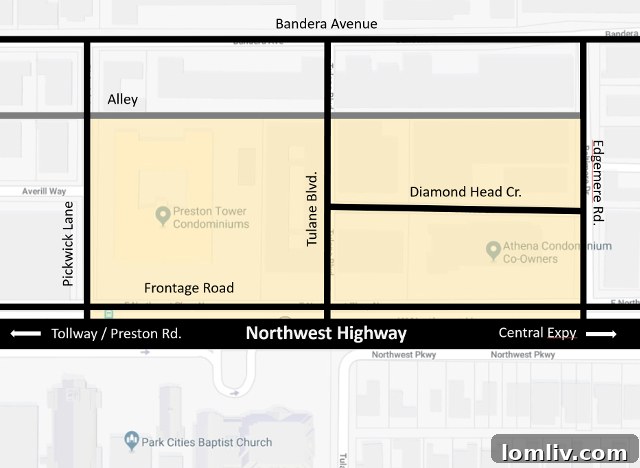
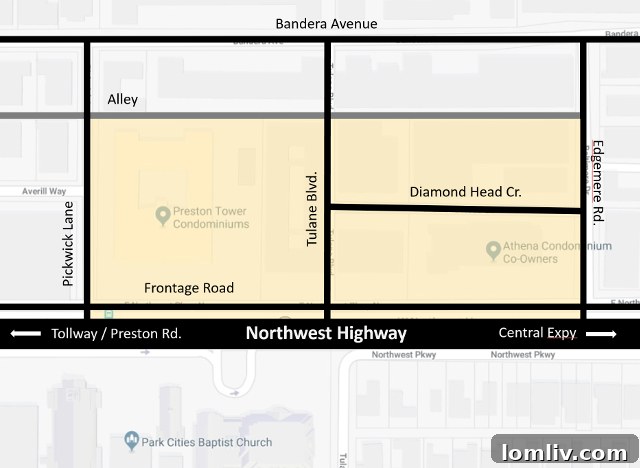
The initial graphic above provides a clear overview of the PD-15 area, depicted in light yellow, alongside its major interior streets situated just north of Northwest Highway. Presently, a solitary traffic signal governs the intersection of Pickwick Lane and Northwest Highway. Progressing westward, the next signaled intersection is located at Thackery, which falls beyond the scope of this particular map. Notably, Edgemere Road currently lacks a traffic signal, contributing to the existing traffic dynamics and potential bottlenecks within the residential network. These interior roads are typically characterized by their residential nature, often tree-lined and designed for local traffic, making them particularly vulnerable to increased cut-through volumes.
Any comprehensive strategy aimed at reconfiguring the traffic patterns within this sensitive neighborhood must first and foremost acknowledge and address these inherent fears. Subsequently, it must present a robust, actionable solution that not only alleviates existing anxieties but also promises tangible improvements for both residents and the future vitality of the Pink Wall district, ensuring a sustainable and harmonious coexistence of old and new.
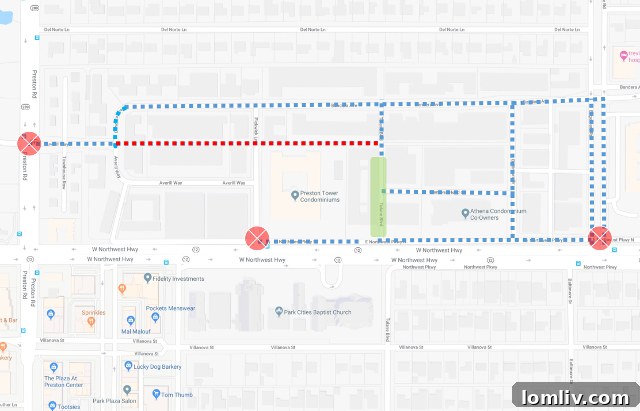
The core apprehension among residents is that new developments and buildings adjacent to Tulane Boulevard, clearly delineated by the green rectangle in the accompanying illustration, will generate a substantial volume of traffic. This new traffic is feared to disperse throughout the residential fabric of the neighborhood, with drivers actively seeking the quickest and most convenient routes to access major arterial roads such as Northwest Highway and Preston Road, marked by the red circles. The inevitable consequence, as many envision, would be an overwhelming influx of vehicles onto the relatively narrow, residential interior roads. This would lead to severe traffic jams and prolonged delays at the existing, limited exit points, which include Averill Way, Pickwick Lane, Edgemere Road, and further west, Thackery Street. These blue dotted lines vividly represent the predicted, undesirable flow of traffic through the neighborhood’s delicate internal network, impacting daily commutes, noise levels, and overall residential tranquility.
An even more pressing and potentially dangerous concern, highlighted by the dotted red line, involves the possibility of new traffic attempting to short-cut through residential alleys. This shortcut would aim to quickly connect to Averill Way and then directly onto Preston Road, bypassing official routes and significantly disrupting the tranquility and safety of these smaller, often unmonitored pathways. Such cut-through traffic poses a serious risk to pedestrians, especially children, as well as to cyclists and the overall residential character that defines the Pink Wall community, potentially turning quiet alleys into unintended rush-hour routes. This not only increases the risk of accidents but also degrades the quality of life, raising concerns about property values and neighborhood cohesion. It’s crucial to observe, however, that the current visualizations do not depict dotted lines on Tulane Boulevard itself, signifying its current status as a less utilized thoroughfare for such cut-through traffic, which presents a unique opportunity for strategic development.
Strategic Traffic Solution: Creating a New Opening in the Pink Wall at Tulane Boulevard
The cornerstone of a truly effective and sustainable traffic solution for the Pink Wall redevelopment lies in a bold yet pragmatic intervention: the creation of a new, fully signaled intersection at Tulane Boulevard where it meets Northwest Highway. This pivotal change must be coupled with a vital zoning or development requirement: any future replacement or redevelopment of iconic properties such as Preston Place, Diplomat, and Royal Orleans must orient their garage entrances and exits towards this newly established Tulane Boulevard connection. This dual approach marks the foundational step in redirecting anticipated traffic flows efficiently and safely, away from interior residential streets and directly onto a major thoroughfare.
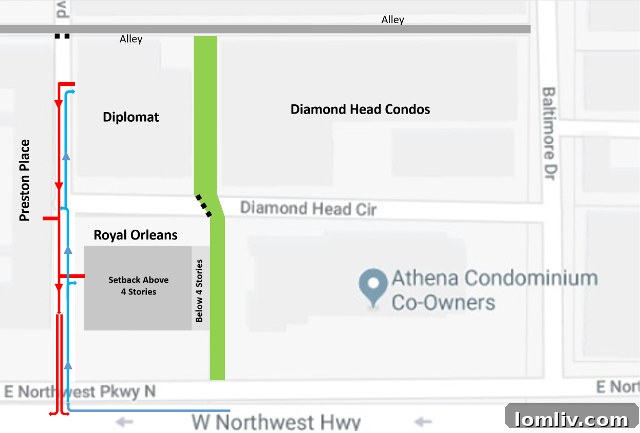
Envisioning Tulane Boulevard at its southern extremity, where it merges with Northwest Highway, I propose a three-lane configuration. This design would feature dedicated lanes for left and right turns onto Northwest Highway, allowing for swift and unimpeded dispersal of vehicles. The third lane would be dedicated to incoming traffic, ensuring a smooth and clear entry point into the PD-15 district. These dedicated left and right turn lanes are not merely an aesthetic choice; they are a critical functional enhancement. By providing distinct pathways, they are engineered to shed a significantly higher volume of traffic more rapidly than a single, shared lane. This efficiency is further bolstered by enabling a dedicated right turn onto Northwest Highway from Tulane, especially when eastbound Northwest Highway traffic receives a protected left turn arrow onto Tulane. This creates a synergistic flow that minimizes delays and reduces the likelihood of gridlock at this crucial junction.
To ensure this new configuration seamlessly integrates into the broader urban fabric and avoids exacerbating existing traffic woes on Northwest Highway, the Tulane and Pickwick signals must be synchronized with absolute precision. This perfect synchronization is paramount: when Northwest Highway traffic is halted for Pickwick, it must simultaneously be stopped for Tulane. This coordinated approach eliminates any additional strain or “suffering” on Northwest Highway, preventing a ripple effect of congestion further down the road. Furthermore, such synchronized signals serve as a powerful disincentive for drivers to abandon Tulane for Pickwick in search of a perceived shortcut, as there would be no benefit in doing so. This intelligent signal management ensures a harmonious and efficient traffic flow across a critical stretch of the highway, promoting predictability and reducing driver frustration.
Skeptics may argue that Tulane Boulevard, in its current state, is simply not wide enough to accommodate a three-lane configuration. While this is true presently, the path to achieving this vision is clear and attainable through thoughtful urban design and strategic planning. Firstly, the existing Preston Place property features a four-foot indentation or setback in the middle of its lot. This valuable, underutilized space can be strategically extended towards Northwest Highway, immediately providing additional width for the necessary roadway expansion. Secondly, any future rebuild of the Royal Orleans property can be designed to “shuffle” its footprint slightly to the right (east) during the initial floors of construction. This allows for the completion of the third lane without compromising the overall building integrity. The building’s footprint would then strategically shuffle back into its original, or a slightly adjusted, position on higher floors, as indicated by the varying gray boxes in architectural plans. This “Even-Steven” approach ensures that the necessary public infrastructure improvements are achieved while maintaining the developer’s buildable area and project viability, fostering collaboration between community needs and development goals.
This strategic “shuffle” on the Royal Orleans’ eastern side would also allow for a portion of the existing street width to be repurposed. The remaining portion of the street, combined with the Athena’s existing side yard, could then be transformed into valuable green space. This aligns perfectly with the type of inviting green amenity that A.G. Spanos had previously offered as a possibility on the eastern side of the Diplomat property, demonstrating a commitment to enhancing the urban landscape with natural elements, improving air quality, and providing recreational areas for residents. Ultimately, even if precise calculations or unforeseen challenges prevent the full implementation of a three-lane design, a robust two-lane configuration at Tulane Boulevard would still provide crucial, direct access to Northwest Highway. This, after all, remains the paramount objective: to create a clear, dedicated egress that channels traffic away from interior residential streets, safeguarding the neighborhood’s character.
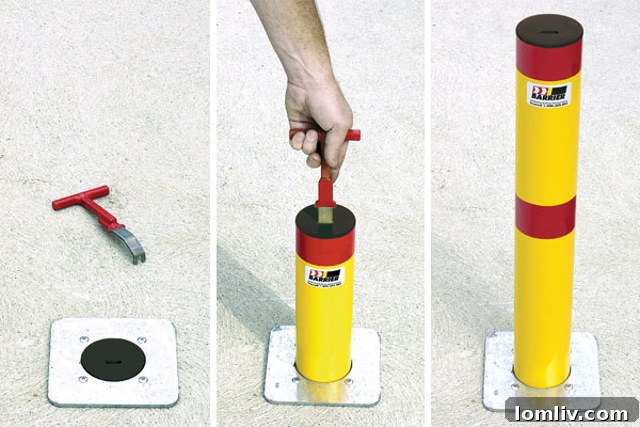
A natural follow-up concern, one that undoubtedly crosses many minds, is how to prevent new residents from seeking alternative, disruptive routes, such as cutting back to the alley and then via Bandera to quickly reach Averill Way and Preston Road. The solution is elegantly simple and highly effective, designed to maintain the integrity of residential zones. Observe the strategic black dots depicted at the northern end of Tulane Boulevard and along the Diamond Head green ribbon in the adjacent map. These signify the placement of advanced retractable barriers. These intelligent barriers are designed to prevent unauthorized vehicular traffic from traversing these sensitive residential pathways, effectively safeguarding the peace and safety of the interior neighborhood. Critically, these barriers are fully retractable by emergency services personnel, ensuring unimpeded access for police, fire, and ambulance vehicles whenever necessary. This dual functionality provides robust traffic control without compromising essential public safety operations, offering a comprehensive solution to maintain neighborhood integrity against undesirable shortcutting and preserving the quiet charm of the Pink Wall’s internal streets.
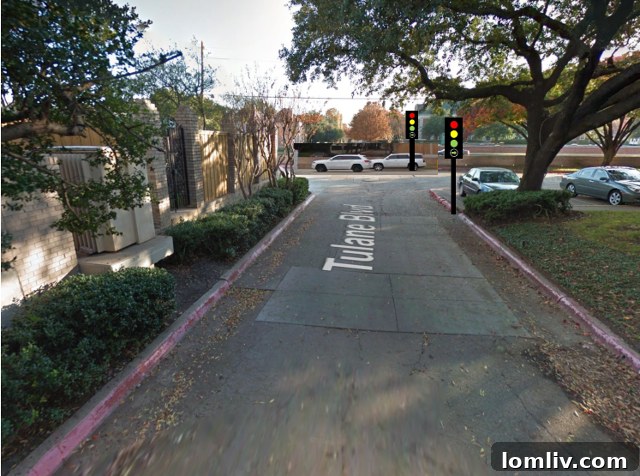
The implementation of a new, well-designed opening into the Pink Wall at Tulane Boulevard represents a transformative traffic management solution with far-reaching benefits for the entire PD-15 district. This strategic intervention offers a direct and efficient traffic solution for an estimated two-thirds of the developable acreage within PD-15, significantly alleviating pressure on existing infrastructure and minimizing congestion points. More importantly, it provides the incoming residents of new buildings with an almost dedicated, streamlined entrance and exit directly to Northwest Highway. This design fundamentally discourages the problematic behavior of “wilding” or cutting through the established, quiet interior streets of the neighborhood, thereby preserving their residential character and enhancing safety for all. Beyond optimized traffic flow, this comprehensive plan delivers additional, much-needed green space, contributing to the aesthetic appeal and ecological health of the area, and fostering a greener urban environment.
Crucially, it also integrates new sidewalks and a signaled intersection, significantly improving pedestrian safety and connectivity. This thoughtful design encourages walking across and along southern Northwest Highway, providing a safer and more convenient route for residents to access the vibrant Preston Center shopping district, fostering a more walkable and community-oriented environment. This visionary solution, combining thoughtful infrastructure with protective measures, truly offers a holistic approach to urban development. It not only addresses the most pressing traffic concerns but also enhances the overall quality of life within the Pink Wall neighborhood, making it a model for responsible growth. The only thing this meticulously crafted plan needs now is collective vision and the will to bring it to fruition – a big ol’ bow on top, as it were, to celebrate its comprehensive nature and its promise for a harmonious future.

Remember: High-rises, Homeowners Associations (HOAs), and urban renovation projects are central to my focus. I am deeply committed to analyzing the intricate balance between modern architectural innovation and the preservation of historical integrity, always considering the dynamic YIMBY (Yes In My Backyard) movement advocating for denser, more accessible housing. My contributions to real estate journalism have been recognized with numerous accolades from the National Association of Real Estate Editors, including three Bronze awards (2016, 2017, 2018) and two Silver awards (2016, 2017). If you have a compelling story to share, a perspective to offer, or even a whimsical marriage proposal to make, please don’t hesitate to reach out via email: [email protected]. You’re also welcome to look for me on Facebook and Twitter; while I maintain a low profile, the effort is always appreciated.