Natural Gas Safety at Home: A Comprehensive Guide to Preventing Leaks and Explosions
Last week, a local family experienced an unimaginable ordeal when their Thanksgiving celebration was abruptly and violently shattered by a devastating gas explosion at their South Dallas home. This tragic event, which destroyed their guest house and caused significant damage to the main residence, serves as a stark reminder of the inherent dangers associated with natural gas. While investigations into the exact cause of this specific incident are ongoing, it underscores the critical importance of understanding and practicing natural gas safety in our homes to protect ourselves and our loved ones from such unforeseen catastrophes.
Natural gas is a common and efficient energy source for heating, cooking, and generating hot water in millions of homes worldwide. Its convenience and affordability make it indispensable for modern living. However, its colorless and odorless nature, combined with its flammability, demands vigilant attention to safety protocols. A gas leak, if undetected, can lead to severe consequences, including fires, explosions, serious injury, or even fatalities. This comprehensive guide aims to equip homeowners with essential knowledge and practical steps to ensure a safe environment when using natural gas.
Ensuring Gas Fireplace Safety
As colder weather arrives and we seek comfort in the warmth of a fireplace, many homes feature gas fireplaces for their ease of use and clean burn. However, operating a gas fireplace requires adherence to specific natural gas safety measures. Unlike traditional wood-burning fireplaces, the combustion process and potential hazards are different, necessitating specialized precautions.
Key Safety Tips for Gas Fireplaces:
- Secure Gas Keys: Inspector Alex wisely advises keeping the gas key, which controls the flow of gas to your fireplace, out of reach of children. An unsupervised child could accidentally turn it on, leading to a dangerous gas buildup. Consider a lockable cover for the key if young children are present in the home.
- Verify Gas Shut-Off: If your gas fireplace does not have an automatic pilot shut-off system, it is absolutely crucial to ensure the gas supply is completely turned off after each use. A partially open valve can allow gas to slowly leak into your home. Always double-check to confirm the valve is fully closed.
- Install Carbon Monoxide Detectors: Carbon monoxide (CO) is a silent killer, an odorless, colorless, and tasteless gas produced by incomplete combustion in gas appliances, including fireplaces. Unlike wood-burning fireplaces where a visible smoke or poor draw might indicate an issue, a malfunctioning gas fireplace vent may not show obvious signs. Your home could be filling with toxic carbon monoxide without your knowledge. Install CO detectors strategically, particularly within range of your gas fireplace and on every level of your home, including sleeping areas. Regularly test these detectors and replace batteries as recommended by the manufacturer.
- Annual Professional Inspection: Have your gas fireplace and its ventilation system inspected annually by a qualified HVAC technician or plumber. They can check for proper gas line connections, vent blockages, and ensure the fireplace is operating efficiently and safely.
- Proper Ventilation: Always ensure adequate ventilation when your gas fireplace is in use. While most modern gas fireplaces are designed for safety, proper airflow helps prevent CO buildup.
- Keep Clearances: Maintain proper clearances around your gas fireplace from combustible materials like curtains, furniture, and decorations, just as you would with a wood-burning fireplace.
How to Check for Gas Leaks (And How NOT to)
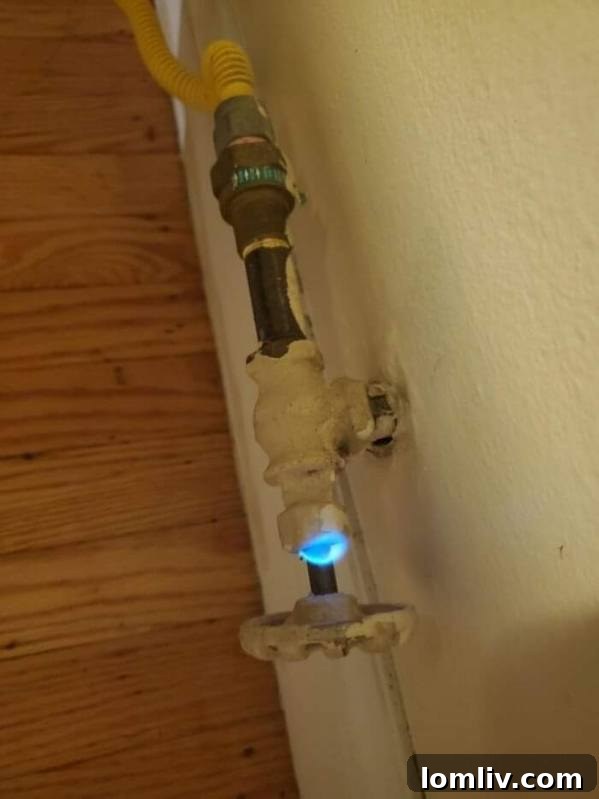
Detecting a gas leak is paramount for natural gas safety. Natural gas itself is odorless, so utility companies add a distinct sulfuric odor, often described as rotten eggs, to make leaks easily detectable. If you ever smell this odor, it should immediately trigger an emergency response. The image above, showing an old, leaking gas pipe somehow ignited, is a terrifying example of what NOT to do. This image, reportedly from a plumbing forum, highlights an extremely dangerous and irresponsible action. It should go without saying, but since it clearly needs to be stated: DO NOT EVER ATTEMPT TO LIGHT A SUSPECTED GAS LEAK WITH FIRE. This act is incredibly reckless and can lead to immediate explosion, severe burns, or death.
Recognizing the Signs of a Gas Leak:
- Smell: The most common indicator is the distinctive odor of rotten eggs or sulfur.
- Sound: A hissing, whistling, or roaring sound near a gas line or appliance can indicate escaping gas.
- Sight:
- Bubbling in wet areas, such as puddles or flooded basements, where gas lines are present.
- A cloud of dust or discolored soil near a gas line.
- Dying or discolored vegetation over or near a gas pipeline.
- A damaged connection to a gas appliance.
- Physical Symptoms: Exposure to natural gas or the oxygen displacement it causes can lead to physical symptoms such as dizziness, nausea, headaches, fatigue, and difficulty breathing. If multiple people in the household experience these symptoms simultaneously without an apparent cause, consider a potential gas leak.
Immediate Actions During a Suspected Gas Leak:
Your swift and correct actions are critical to preventing a disaster. If you suspect a gas leak:
- Evacuate Immediately: Get everyone, including pets, out of the building as quickly as possible.
- Do NOT Ignite Anything: Do not turn on or off any lights, appliances, cell phones, or anything that could create a spark. Do not use landline phones inside the house. Do not start a car or operate any machinery near the property.
- Do NOT Try to Locate the Leak: Your priority is to evacuate, not to find the source.
- Call for Help from a Safe Distance: Once you are a safe distance from your home, call 911 (or your local emergency number) and your natural gas provider’s emergency line.
- Leave Doors and Windows Open (If Safe to Do So During Evacuation): If it’s possible to open doors and windows quickly during your evacuation without delaying your exit, doing so can help vent the gas. However, your primary goal is to get out.
- Do NOT Re-enter: Do not re-enter your home until emergency personnel have confirmed it is safe to do so.
Tools for Gas Leak Detection:
While your senses are the first line of defense, a specialized tool can provide an added layer of protection. If you have gas appliances at home, it’s a wise investment to acquire a portable gas sniffer or combustible gas detector. This handy tool can help identify the precise location of a leak once you’ve confirmed a gas odor. Early detection can mean the difference between a minor repair and a major incident.
You can see our Inspectors using the gas sniffer and more examples of how to detect gas leaks at home here:
These devices are designed to detect various combustible gases, including natural gas, propane, and methane, sounding an alarm when gas concentrations reach dangerous levels. They are invaluable for homeowners who want to proactively monitor their gas lines and appliances.
Professional Inspections and Maintenance for Your Gas System
The age of your home and appliances plays a significant role in natural gas safety. Older homes, particularly those constructed between the 1950s and 1970s, may harbor outdated and potentially dangerous components. One such component is the uncoated brass gas connector, which was commonly used during that era to connect gas appliances to the main gas line.
The Danger of Uncoated Brass Gas Connectors:
These uncoated brass connectors are a known hazard. Over time, the brass tubing can become brittle and crack, particularly where the tubing meets the end pieces. This degradation can lead to a natural gas leak, posing a severe risk of fire or explosion. The video demonstration clearly illustrates this danger, showing how a gas sniffer immediately detects a leak from such a connector.
If your home or gas appliances (furnace, water heater, stove, dryer) are more than 30 years old, it is imperative to have them professionally checked by a licensed plumber or HVAC technician. These professionals can identify and replace any hazardous uncoated brass connectors with modern, safer alternatives, such as flexible stainless steel connectors, which are designed for durability and greater resistance to corrosion and cracking.
Beyond Brass Connectors: Comprehensive System Checks:
Regular professional inspections are not just about old connectors; they are about the entire gas system:
- Gas Line Integrity: Inspectors will check all exposed gas lines for signs of corrosion, damage, or improper installation.
- Appliance Connections: All connections to gas appliances should be secure and leak-free.
- Venting Systems: Proper venting for furnaces, water heaters, and other gas appliances is crucial to prevent carbon monoxide buildup. Professionals ensure vents are clear and correctly installed.
- Appliance Condition: Technicians can assess the overall condition of your gas appliances, identify potential issues, and recommend maintenance or replacements to ensure safe and efficient operation.
- Pressure Testing: In some cases, a plumber may perform a gas pressure test to ensure there are no hidden leaks within the sealed gas piping system.
Safe Usage of Gas Appliances
Beyond professional inspections, daily habits and proper usage of your gas appliances contribute significantly to overall natural gas safety.
- Never Use Gas Ovens for Heating: Gas ovens are designed for cooking, not for heating your home. Using them as a supplementary heat source can lead to dangerous levels of carbon monoxide and is highly inefficient.
- Ensure Proper Ventilation: When using gas stoves or ovens, always use an exhaust fan to vent combustion byproducts. This is particularly important for range hoods that vent outside, as they effectively remove fumes and moisture from your kitchen.
- Clearance and Obstructions: Maintain adequate clearance around gas appliances. Do not store flammable materials, such as cleaning products, paper, or clothing, near water heaters, furnaces, or gas dryers. Ensure nothing obstructs the airflow or vents of these appliances.
- Professional Installation: Always have new gas appliances installed by a qualified professional. Incorrect installation can lead to leaks, inefficient operation, and dangerous situations.
- Pilot Lights: If you have appliances with standing pilot lights, ensure they are burning with a strong, blue flame. A yellow or orange flame can indicate incomplete combustion, which produces carbon monoxide.
Emergency Preparedness and Action Plan
Being prepared for a gas emergency is just as important as prevention. Knowing what to do and who to call can save lives.
- Know Your Main Gas Shut-Off: Locate the main gas shut-off valve for your home. In an emergency (and only if it is safe to do so and you are instructed by emergency personnel), you may need to turn off the gas supply. Note that turning the gas back on usually requires a professional.
- Educate Your Family: Ensure all members of your household, especially older children, know what natural gas smells like and what to do if they suspect a leak. Practice evacuation routes.
- Emergency Contact List: Keep a list of emergency contacts, including 911 and your natural gas provider’s emergency number, readily accessible.
Natural gas is a powerful and valuable resource that demands our respect and diligence. By understanding the risks, recognizing the signs of danger, and implementing proactive safety measures, we can significantly reduce the likelihood of accidents in our homes. From ensuring your gas fireplace is safe to regularly inspecting your appliances and knowing how to react in an emergency, every step contributes to a safer living environment. Do not underestimate the importance of professional inspections and maintenance. When in doubt, always consult with a licensed professional.
For more comprehensive information about gas safety at home, we recommend checking out Atmos Energy’s home safety guide. Remember, if you ever suspect a natural gas leak, your immediate safety is the priority. Call 911 and Atmos Energy’s 24-hour, toll-free emergency number at 866-322-8667 from a safe distance, away from the suspected leak.
For more information about the recent gas explosion in South Dallas and how you can support the affected family during this challenging time, please follow this link to our detailed article.