Unveiling Urban Dynamics: Eric Fischer’s “Locals and Tourists” Data Maps
In an increasingly data-driven world, understanding the intricate patterns of human movement within urban environments has become a fascinating field of study. One particularly insightful project that captured significant attention is “Locals and Tourists,” a unique series of data-driven maps created by artist and geographer Eric Fischer. These compelling visualizations offer a distinctive lens through which to perceive cities, illustrating precisely where residents and visitors choose to engage with their surroundings. Fischer’s work, initially highlighted in an article by Arch Daily, presents a fresh perspective on urban exploration and the subtle differences in how various populations interact with the same geographic space.
The core concept behind Fischer’s groundbreaking project is elegantly simple yet profoundly revealing: to map the perceived differences in urban engagement between those who call a city home and those who are merely passing through. Entitled “Locals and Tourists,” this extensive collection encompasses maps for 136 of the world’s largest and most frequently visited cities. Through a brilliant use of color and data, Fischer illuminates the distinct footprints left by each group, challenging our preconceptions about popular landmarks versus local hangouts.
Decoding Urban Footprints: The Methodology Behind the Maps
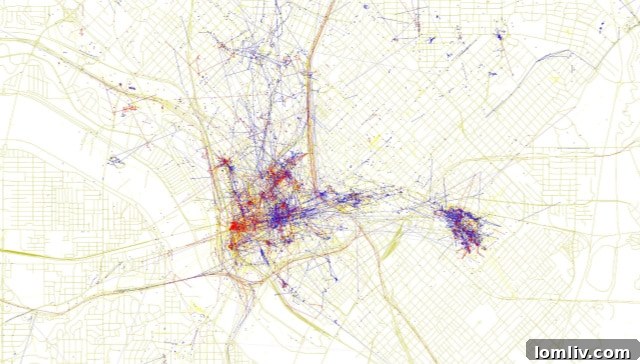
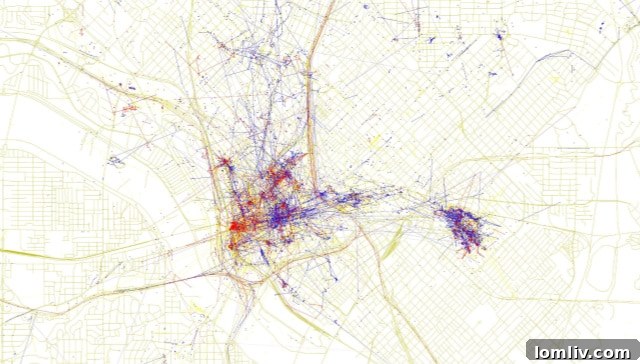
To bring this ambitious vision to life, Eric Fischer meticulously compiled and analyzed vast datasets. His methodology relied primarily on information gathered from MapBox and Twitter, specifically geo-tagged posts and photos shared between 2010 and 2013. This temporal window provided a rich snapshot of social media activity, enabling Fischer to identify and categorize specific points of interest based on user interactions. The ingenious aspect of his work lies in the visual distinction: red dots on his maps indicate locations primarily frequented by tourists, while blue dots highlight areas where locals predominantly take pictures and share their experiences.
The success of the “Locals and Tourists” project hinges on its thoughtful definition of what constitutes a “local” versus a “tourist.” Fischer established a clear, data-driven criterion: individuals were classified as “locals” if they consistently tweeted from the same city over a continuous period of one month. This metric suggests a habitual presence, indicative of daily life and routine within a specific urban context. Conversely, “tourists” were identified as individuals who were classified as “locals” in one city but then tweeted from a different geographic location. This distinction elegantly captures the transient nature of a visitor while acknowledging their regular life elsewhere.
This approach, while innovative for its time, offers a powerful means to filter and categorize activity. By focusing on photo-sharing and tweeting behavior, Fischer tapped into a rich vein of user-generated content that implicitly reveals preferences, interests, and movement patterns. The chosen timeframe (2010-2013) is also significant, representing an early boom in smartphone adoption and geotagged social media, offering a unique historical snapshot of digital urban engagement before the pervasive influence of platforms like Instagram fully matured.
Insights from the Data: What These Maps Reveal
The visual impact of Fischer’s maps is immediate and striking. At a glance, the distinct clusters of red and blue dots paint vivid pictures of urban life. Tourist hotspots, often concentrated around famous landmarks, museums, and historical sites, glow intensely with red. These are the places that grace postcards and travel guides, the “must-see” attractions that draw visitors from across the globe. In contrast, the blue dots, representing local activity, often spread out across neighborhoods, parks, smaller cafes, and less globally recognized spots – the everyday fabric of a city that only its residents truly know and frequent.
These maps are more than just pretty pictures; they are powerful tools for urban analysis. They can inform city planners about pedestrian traffic flow, highlight areas that might be over-touristed, or conversely, point to overlooked districts with untapped potential for local businesses and community development. For local tourism boards, such visualizations can offer invaluable intelligence, helping them to diversify offerings, promote authentic local experiences, and manage tourist concentrations more effectively. Moreover, these maps can inspire individual travelers to venture beyond the typical tourist trails and discover the hidden gems that locals cherish.
For example, a city might observe a heavy red dot concentration around its historic downtown, while blue dots are more prevalent in a vibrant arts district on the periphery. This could suggest an opportunity to connect these areas with better public transport, or to promote the arts district more actively to visitors seeking an authentic experience. Conversely, an area with few red or blue dots might indicate a need for revitalization or better accessibility. The layers of interpretation are vast, making these maps a starting point for deeper discussions about urban identity and development.
A Deep Dive into Texas: Dallas and Beyond
Among the 136 cities mapped by Eric Fischer, several prominent Texas metropolises are included, offering fascinating insights into the Lone Star State’s unique urban character. Dallas, a bustling hub of commerce and culture, provides a particularly compelling case study. The Dallas map, as featured in this article, showcases a dynamic interplay between local daily routines and tourist excursions. While visitors might gravitate towards iconic destinations like Dealey Plaza, Klyde Warren Park, or the Dallas Arts District, locals are likely to be found in neighborhood eateries, specific shopping areas, or less-trafficked green spaces that form part of their everyday lives.
The inclusion of other major Texas cities such as Austin, Houston, and San Antonio within Fischer’s extensive cache of maps allows for comparative analysis. One might observe that Austin, known for its vibrant music scene and outdoor activities, might show a more dispersed pattern of local activity, reflecting its diverse neighborhoods. Houston, with its sprawling urban landscape and distinct cultural enclaves, could reveal pockets of intense local blue dots contrasted with tourist red dots around its museum district or space center. San Antonio, steeped in history and heritage, might present a strong concentration of red dots around the Alamo and River Walk, balanced by blue dots illustrating the life of its local communities.
These Texas maps collectively demonstrate that even within a single state, the fabric of urban interaction can vary dramatically. They serve as valuable resources for anyone seeking to understand the unique rhythm and flow of these cities, whether they are residents looking to appreciate their hometown anew, or visitors planning an immersive journey beyond the typical tourist brochures.
The Broader Impact: Art, Data, and Urban Planning
Eric Fischer’s “Locals and Tourists” project transcends mere cartography; it is a profound intersection of art, data science, and urban sociology. As an artist, Fischer transforms raw, numerical data into visually stunning and intellectually stimulating pieces. The aesthetic appeal of these maps, with their constellation of colored dots against a stark background, is undeniable. Each map tells a story, revealing the invisible pathways and social geographies that define a city. This project exemplifies how data visualization can make complex information accessible and engaging to a broad audience, sparking curiosity and encouraging deeper reflection on our urban environments.
From an urban planning perspective, the implications are immense. By understanding where people gather, planners can make more informed decisions about infrastructure development, public space design, and transportation networks. Businesses can identify prime locations for new ventures, aligning their offerings with either local needs or tourist demands. Furthermore, these maps can contribute to sustainable tourism initiatives by identifying areas that can absorb more visitors, or conversely, areas that need protection from over-tourism to preserve their local character.
While the data used for “Locals and Tourists” spans 2010-2013, the underlying principles remain highly relevant. In an era where social media continues to shape our perceptions and interactions, projects like Fischer’s underscore the enduring value of analyzing digital footprints to understand real-world behaviors. As new data sources emerge and analytical techniques evolve, the potential for even more granular and real-time insights into urban dynamics will only grow, promising a future where our understanding of cities is continually refined by the very data we generate.
Explore the World Through a New Lens
Eric Fischer’s “Locals and Tourists” project stands as a testament to the power of data visualization in revealing hidden truths about our world. By transforming millions of social media interactions into compelling visual narratives, he offers us a unique opportunity to explore cities not just as static geographical locations, but as vibrant, dynamic spaces shaped by the distinct experiences of their inhabitants and visitors.
Whether you’re an urban enthusiast, a data science aficionado, a travel planner, or simply curious about the subtle nuances of city life, Fischer’s maps provide a captivating journey. They invite us to look beyond the obvious, to appreciate the diverse ways in which people connect with their surroundings, and to reconsider what it truly means to experience a city.
To delve deeper into Eric Fischer’s extensive body of work and explore the intricate details of his “Locals and Tourists” project, we encourage you to visit the following resources:
- To see more of Fischer’s captivating data art and other projects, click here.
- For a comprehensive gallery of the “Locals and Tourists” maps, spanning all 136 featured cities, click here.
- To revisit the original Arch Daily post that first brought this fascinating project to light, click here.