

Dallas-Fort Worth Housing Market Outlook: Navigating Affordability, Appreciation, and Employment Trends
The dynamic Dallas-Fort Worth (DFW) metropolitan area continues to be a focal point for real estate observers, presenting a complex landscape of opportunities and challenges. While the region boasts impressive economic growth and a vibrant job market, recent reports highlight a crucial paradox: housing affordability in Dallas is at a historic low, even as the pace of home price appreciation begins to decelerate. This detailed analysis, primarily drawing insights from the Federal Reserve Bank of Dallas’s report released in March 2019, delves into the critical factors shaping the DFW housing market, offering a comprehensive look at price trends, affordability challenges, inventory levels, and the underlying employment dynamics.
Understanding the Shifting Sands of DFW Home Prices
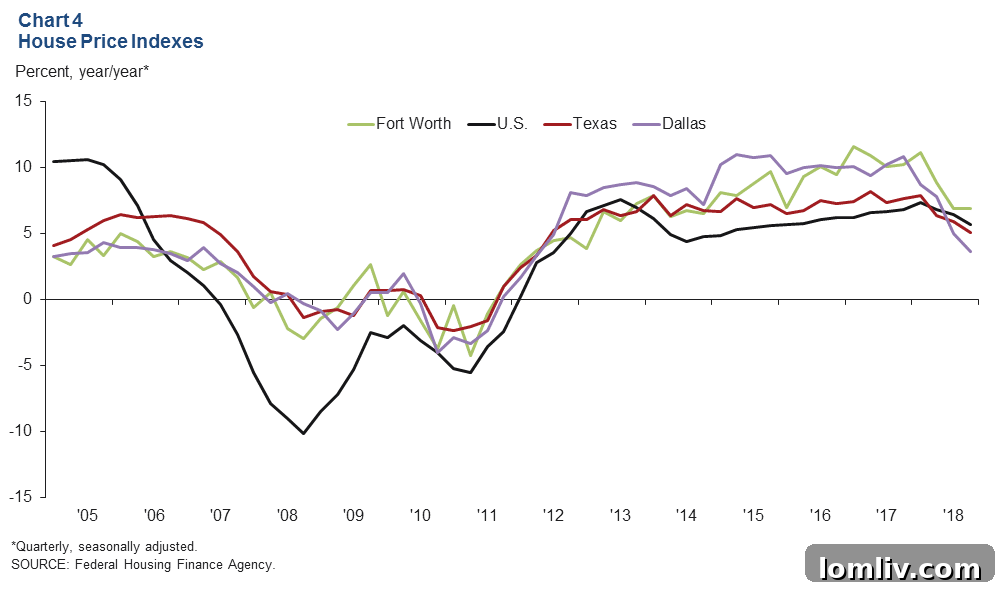
After years of rapid, often described as “torrid,” growth, the Dallas-Fort Worth housing market has entered a new phase characterized by a more moderate rate of appreciation. This shift provides both breathing room for potential homebuyers and a period of recalibration for sellers and investors. The Federal Housing Finance Agency’s (FHFA) house price purchase-only index offers a clear picture of this deceleration.
Q4 2018 Home Price Performance Across the Metroplex
In the fourth quarter of 2018, both Dallas and Fort Worth experienced continued, albeit slower, increases in home prices:
- Dallas: Home prices rose by 1.1 percent.
- Fort Worth: Saw a slightly stronger increase of 2.4 percent.
These quarterly figures, while positive, mark a noticeable departure from the aggressive growth seen in prior years.
Year-Over-Year Growth: Dallas vs. Fort Worth and Beyond
Looking at the broader annual picture, the trends become even more distinct:
- Dallas: Home prices were up by 3.6 percent year-over-year.
- Fort Worth: Demonstrated stronger annual growth at 6.9 percent.
Comparing these figures to broader benchmarks, the state of Texas experienced a 5.1 percent increase, while the national rate stood at 5.7 percent. Fort Worth’s year-over-year performance surpassed both the state and national averages, indicating a sustained demand in that specific market segment, potentially due to relatively more affordable options or ongoing development.
From “Torrid Pace” to Sustainable Growth
The Federal Reserve Bank of Dallas report explicitly notes, “Home-price appreciation in the metroplex has slowed from its torrid pace in 2015–17, when prices in both Dallas and Fort Worth rose by 10 percent annually.” This slowdown is a critical development. While double-digit annual appreciation is exciting for sellers, it can create an unsustainable market, rapidly pushing homes out of reach for many prospective buyers. A more measured growth rate can contribute to greater market stability and reduce the risk of bubbles, making the DFW real estate market more predictable for long-term planning.
The Persistent Challenge of Housing Affordability in Dallas
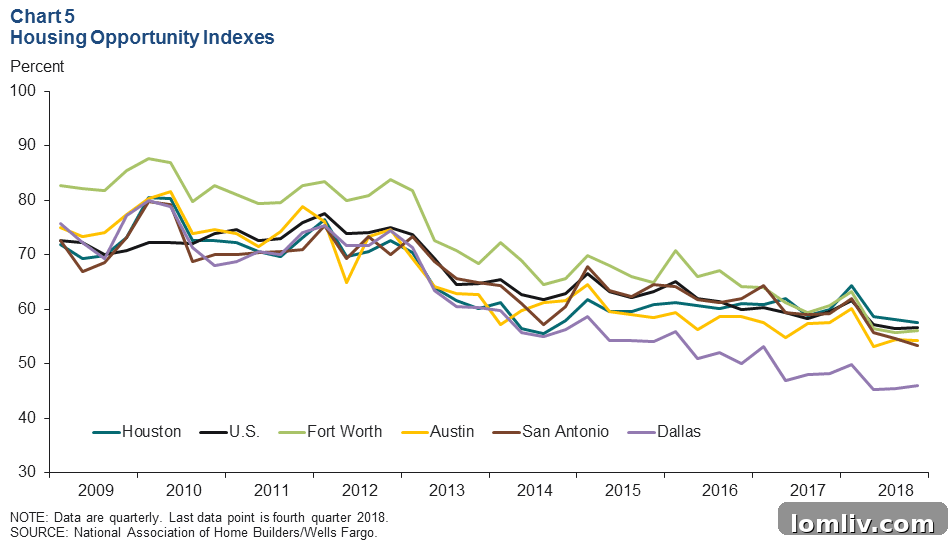
Despite the deceleration in home price appreciation, housing affordability remains a significant concern, particularly in Dallas. According to the National Association of Home Builders/Wells Fargo Housing Opportunity Indexes, Dallas’s affordability index is at a historic low, underscoring a deepening crisis for many residents.
Dallas Versus Its Texas Counterparts
In Q4 2018, only 46 percent of homes sold in Dallas (encompassing both new and existing properties) were considered affordable to the median-income household. This figure represents only a marginal improvement from 45.5 percent in the third quarter, indicating a stubborn resistance to significant change. To put this in perspective, the national affordability figure stood at a more accessible 56.6 percent, highlighting Dallas’s unique challenges.
The report starkly reveals, “Housing affordability in Dallas is the lowest among major Texas metros, including Austin, which has a slightly higher median sales price; affordability in Dallas was eight percentage points lower than Austin.” This disparity is particularly telling. Even with Austin’s reputation for high living costs and surging property values, Dallas residents face a comparatively tougher struggle to secure housing within their financial means. This could be attributed to a combination of factors, including the ratio of median income to median home prices, the availability of different housing types, and the overall demand pressures.
Fort Worth, in contrast, presented a more favorable affordability landscape, with 56 percent of homes being affordable at the end of 2018. This figure aligns more closely with other major Texas metros and the national average, making Fort Worth a potentially more accessible option for a broader range of homebuyers within the DFW metroplex.
The implications of this low affordability are far-reaching, affecting everything from workforce retention to economic diversity. It puts immense pressure on first-time buyers, low-to-moderate income families, and essential service workers, potentially leading to longer commutes or residents being priced out of the communities where they work.
The Critical Issue of Housing Inventory
Another major factor contributing to the DFW housing market’s dynamics, especially affordability, is the persistent shortage of housing inventory. While inventories of existing homes saw a modest rise in Q4 2018, they remained significantly below what is generally considered a healthy, balanced market supply – typically around a six-month inventory level.
Inventory Levels in Early 2019
In January 2019, the situation remained tight:
- Dallas: Overall inventories edged up to 3.4 months.
- Fort Worth: Reported an even tighter 2.6 months of supply.
Both figures are well below the U.S. and Texas state levels, indicating strong buyer demand relative to the available housing stock. The most alarming statistic, however, relates to entry-level homes – properties priced below $200,000. These crucial homes, vital for first-time buyers and those with more modest budgets, registered an critically low inventory of just 1.6 months. This severe shortage in the entry-level segment exacerbates the affordability crisis, forcing many aspiring homeowners to delay purchases, stretch their budgets, or move further away from urban centers.
Low inventory levels inherently create a seller’s market, driving up competition and prices, even when the rate of appreciation is slowing. For potential buyers, especially those looking for starter homes, the limited choices and intense bidding wars can be incredibly frustrating and disheartening.
DFW’s Robust Employment Picture: A Key Market Driver
The DFW housing market trends cannot be fully understood without examining the region’s underlying economic strength, particularly its robust employment growth. A thriving job market acts as a magnet for new residents, fueling demand for housing despite affordability challenges.
Unemployment and Annual Employment Growth
In January 2019, unemployment rates in the DFW metroplex remained low, signaling a healthy labor market:
- Dallas: 3.7 percent unemployment.
- Fort Worth: 4 percent unemployment.
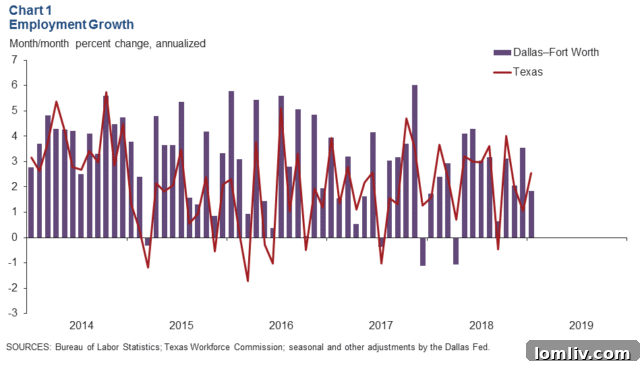
These figures are indicative of an economy operating near full employment. Furthermore, the area’s employment expanded at an impressive rate of 1.8 percent annually in January. However, a closer look at payroll data reveals some interesting intra-metro shifts:
- Dallas: Payrolls surged by 4.8 percent, adding 10,500 jobs.
- Fort Worth: Payrolls unexpectedly contracted by 4,800 jobs, suggesting potential sectoral adjustments or statistical fluctuations within that specific month.
Revised 2018 Job Growth: Stronger Than Expected
The Bureau of Labor Statistics’ annual benchmark revisions provided a more accurate and generally optimistic view of DFW’s job growth in 2018:
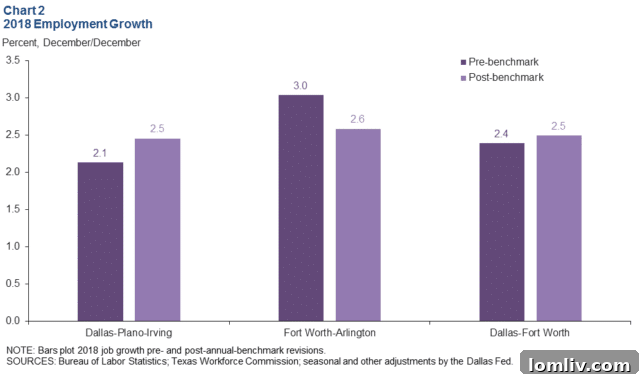
- Overall DFW Job Growth: Revised upwards to 2.5 percent from an initial estimate of 2.4 percent.
- Dallas–Plano–Irving Metropolitan Division: Employment growth was notably revised up to 2.5 percent from an earlier estimate of 2.1 percent, indicating a stronger economic performance than initially believed.
- Fort Worth–Arlington: Job gains were revised down from 3.0 percent to 2.6 percent. Despite this downward revision, the report emphasizes that this growth rate was “still above their long-term average pace,” confirming the sustained strength of the Fort Worth economy.
These revisions reinforce the narrative of DFW as a powerful economic engine, attracting businesses and talent, which in turn places sustained demand on its housing supply. The strong job market is a fundamental driver that continues to underpin real estate values, even as price appreciation normalizes.
What These Trends Mean for DFW Real Estate Stakeholders
The confluence of decelerating home price appreciation, severe affordability challenges in Dallas, critically low inventory, and robust employment growth creates a nuanced environment for both buyers and sellers in the DFW real estate market.
- For Homebuyers: While the slowing pace of price increases might offer a glimmer of hope, the pervasive affordability crisis, especially in Dallas, and the acute shortage of entry-level homes mean that competition remains fierce. Buyers, particularly those entering the market, may need to adjust their expectations regarding location, home size, or be prepared to look towards slightly more affordable areas like Fort Worth. Patience and flexibility are key.
- For Sellers: The market remains favorable, with high demand and limited supply. However, sellers should recalibrate expectations from the frenzied bidding wars of 2015-2017. Realistic pricing and strong marketing are essential to attract serious buyers, even in a seller’s market. Understanding the nuances between Dallas and Fort Worth’s performance can also inform selling strategies.
- For Investors: The DFW metroplex continues to present attractive opportunities due to ongoing population and job growth. However, a slowing rate of appreciation means that rapid capital gains might be less common. Long-term investment strategies focused on rental income and sustainable growth, particularly in areas with strong rental demand, may prove more resilient.
Looking Ahead: The Future of the DFW Real Estate Market
The Dallas-Fort Worth housing market is undeniably complex, balancing strong economic fundamentals with significant affordability and inventory pressures. The Federal Reserve Bank of Dallas’s report provides valuable data that paints a picture of a market transitioning from an overheated state to a more sustainable, albeit still challenging, trajectory. Continued job creation will undoubtedly keep demand high, but the region must grapple with its housing supply shortages, particularly in the entry-level segment, to ensure long-term accessibility and economic equity.
Addressing affordability will require multi-faceted solutions, potentially involving increased housing development, innovative construction methods, and urban planning initiatives that promote diverse housing options. As the market matures, understanding these intricate relationships between economic growth, housing supply, and affordability will be paramount for policymakers, developers, and residents alike to foster a healthy and inclusive DFW for the future.