
The Unprecedented Real Estate Game-Changer: Zillow’s Acquisition of Trulia and Its Profound Impact

In a move that reverberated throughout the entire real estate industry, Zillow, a titan in the online property sphere, announced its monumental acquisition of Trulia. This isn’t just another business deal; it’s a strategic maneuver poised to redefine the landscape of how properties are bought, sold, and rented. Initially proposed with a $2 billion stock offer, the deal ultimately sealed at a staggering $3.5 billion, uniting two of the most influential platforms under one formidable banner. This transaction promised to create an undeniable Goliath in a fiercely competitive market, where new real estate internet startups emerge with increasing frequency, all vying for a slice of the digital property pie.
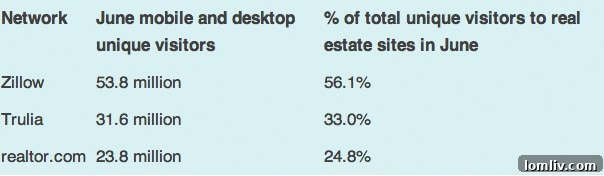
The implications of this merger extend far beyond mere market consolidation. It signaled a new era of data centralization, enhanced user experience, and a seismic shift in the power dynamics between traditional real estate professionals and technology-driven platforms. For Trulia shareholders, the deal brought substantial returns, with each Trulia share converting to 0.444 of a Zillow Class-A share, as reported by Business Insider. This favorable exchange rate underscored the strategic value Zillow placed on Trulia’s assets, user base, and technological infrastructure. The combined entity immediately positioned Zillow head and shoulders above its closest competitor, Move Inc.’s Realtor.com, consolidating an unparalleled share of the online real estate search market. The sheer dominance of the newly formed conglomerate was starkly illustrated by market share analyses, such such as charts from Inman News, painting a clear picture of its market leadership.
Navigating the Aftermath: Key Questions and Integration Challenges
The immediate aftermath of such a colossal merger naturally raised a multitude of critical questions regarding integration, strategy, and the future direction of the combined entity. One prominent concern revolved around the ongoing litigation involving Errol Samuelson’s departure from Realtor.com to join Zillow. This lawsuit, filed by Move Inc. and the National Association of Realtors (NAR), alleged trade secret misappropriation and breach of contract. Its potential impact on the freshly merged Zillow-Trulia entity was a significant point of discussion, adding a layer of legal complexity to the integration process. How would the courts view the enlarged entity in light of these allegations? Could it lead to financial penalties or operational restrictions?
Beyond legal battles, the operational challenges of merging two large and previously competing organizations were immense. Both Zillow and Trulia boasted impressive teams of economists, data analysts, software engineers, and marketing professionals. The duplication of talent became an immediate concern: who would remain, and who would be let go? Strategic decisions about retaining key personnel, harmonizing corporate cultures, and preventing significant talent drain were paramount to the merger’s success. The ultimate goal was to foster innovation and efficiency, not stifle it through redundancies or internal conflict.
A critical strategic decision involved the future of the Trulia brand itself. Would Trulia be completely absorbed into the Zillow brand, becoming a mere redirect, or would it be maintained as a distinct, albeit complementary, offering? Keeping Trulia alive could allow Zillow to capture different market segments or offer specialized user experiences. Discontinuing it, however, would streamline operations and consolidate resources under a single, dominant brand. Similarly, the fate of their respective mobile applications was a hot topic. Both companies had strong mobile presences. Would Zillow choose to consolidate into a single, super-app, or maintain separate apps, perhaps catering to slightly different user preferences or functionalities? The integration of their vast datasets—comprising property listings, user behavior, neighborhood information, and agent data—was also a monumental task, promising unparalleled insights once successfully combined.
The Data Revolution: Redefining the Realtor’s Role and Industry Structure
Perhaps the most profound impact of the Zillow-Trulia merger was the consolidation of an unprecedented volume of real estate data. This wealth of information promised to fundamentally change the way consumers engage with the real estate market and, critically, how real estate professionals operate. Jim Klinge of BubbleInfo.com articulated this impending shift with striking clarity in a piece for Business Insider, a piece that would undoubtedly send shivers down the spine of many traditional realtors. His insights highlighted the potential for a seismic disruption within the industry, particularly concerning agent visibility and performance metrics.
Klinge’s analysis zeroed in on the long-standing resistance from realtors to publicly display their sales history or be subjected to agent-rating and ranking sites. The rationale was simple: many realtors preferred to operate with a degree of opacity regarding their transaction volumes and client feedback. However, Klinge argued that this protection would crumble under the weight of Zillow’s consolidated data and market power. In this new paradigm, the most successful and productive agents stood to benefit immensely. These are precisely the agents who possess the resources and willingness to pay Zillow significant sums for prime advertising placements and enhanced profiles. Zillow, in turn, has a natural incentive to buddy up with these top producers, leveraging their success to promote its own agent-ranking and advertising platforms.
The implications for the broader real estate ecosystem were even more far-reaching. Klinge predicted that the traditional “cabal”—the established network of local associations of realtors and Multiple Listing Service (MLS) companies—would be shattered. These organizations have historically thrived on membership dues, often regardless of an individual realtor’s production levels. If, as Klinge suggests, 20% of realtors are responsible for 80% of the business, a shift towards performance-based visibility on platforms like Zillow could severely cripple these traditional bodies. An 80% reduction in dues, reflecting a decline in membership or a re-evaluation of value, would be unsustainable for many. The very foundation of their existence—providing essential data and organizational structure—would be challenged by Zillow’s superior data aggregation and consumer reach.
Furthermore, Klinge envisioned a scenario where consumer perception would be dramatically altered. When online platforms prominently display an agent’s sales history, or lack thereof, consumers will inevitably hesitate to choose agents who appear less active or less successful. Zillow’s advertising model, which prioritizes and promotes its “top producers” (i.e., those who pay for advertising), would actively encourage consumers to select from this vetted, high-performing pool. This direct influence on consumer choice poses an existential threat to realtors who rely on word-of-mouth referrals or established local connections without a strong digital footprint.
Klinge’s dire prediction suggested a significant “clearing out” of the realtor population within a year or two, fundamentally transforming local associations, MLS companies, and even the top-heavy big corporations that own real estate franchises. This wasn’t merely a market adjustment; it was a potential industry overhaul, driven by data, transparency, and a pay-for-play model that rewarded performance and digital engagement.
The Evolving Landscape: Pay-for-Play, Data Sharing, and the Future of Real Estate
Seriously, for anyone involved in the real estate sector, revisiting Klinge’s entire article provides a sobering perspective on the potential for disruption. The questions he raised remain incredibly pertinent. As more and more consumers turn to online platforms for their agent search, will Zillow’s “pay-for-play” formula—where agents gain visibility through paid advertising—effectively render traditional word-of-mouth marketing irrelevant? While personal recommendations have long been the bedrock of agent success, the sheer volume of data and the sophisticated targeting capabilities of platforms like Zillow could significantly diminish their influence. Agents who don’t invest in digital visibility might find themselves increasingly marginalized, regardless of their past successes or client satisfaction.
Moreover, the consolidation of such vast amounts of real estate data within a single company’s hands raises critical questions about regional MLS organizations. These local data repositories have historically been the gatekeepers of listing information, facilitating cooperation among brokers while also controlling access. Faced with a unified Zillow-Trulia powerhouse possessing unparalleled data insights and consumer reach, will MLS organizations begin to restrict data sharing in an attempt to retain their competitive edge or protect their members? Such a move could fragment the market and create inefficiencies, but it might also be seen as a necessary defense mechanism against a dominant market force. The delicate balance between collaboration and competition is increasingly strained in an era of big data.
The Zillow-Trulia merger was a watershed moment, marking a significant acceleration in the digitalization of the real estate industry. It underscored the growing power of technology platforms and the transformative potential of data analytics. As the industry continues to evolve, real estate professionals, associations, and technology providers alike must critically assess their roles, adapt to new realities, and innovate to remain relevant in a landscape increasingly shaped by giants like the combined Zillow-Trulia entity. The questions posed by this merger continue to resonate, challenging stakeholders to envision a future where technology, transparency, and consumer empowerment are at the forefront of every transaction.
What do you think? How has this merger, and the subsequent evolution of online real estate platforms, impacted your experience as a consumer or a professional in the industry?