

Dallas, a rapidly expanding metropolitan hub, is embarking on a comprehensive overhaul of its existing housing policy, a critical undertaking that seeks to address the multifaceted challenges of urban living in the 21st century. This ambitious initiative is not merely about updating regulations; it represents a strategic integration of the city’s forward-thinking Racial Equity Plan, aiming to foster a more inclusive and equitable urban landscape. The process, often likened to the daunting task of “eating an elephant one bite at a time,” underscores the complexity and long-term commitment required to reshape the city’s approach to housing and community development.
The groundwork for this significant policy shift began with intensive discussions among city officials during a December 13 Housing and Homelessness Solutions Committee meeting. This gathering served as a crucial forum for deliberating the necessary revisions to the current policy and outlining a clear framework for its future implementation. The urgency of this endeavor is palpable, as Dallas continues to grapple with issues ranging from housing affordability and equitable distribution to homelessness and neighborhood revitalization.
Chaired by District 3 Councilman Casey Thomas, the committee received valuable insights from expert consultants at Community Equity Strategies. These consultants are instrumental in guiding the city through the intricate process of policy reformulation, ensuring that the new framework, dubbed “Dallas Housing Policy 2033,” is robust, responsive, and forward-looking. The full City Council is slated to review this pivotal presentation on January 18, marking a significant milestone in its development. Following this, the consultants are expected to deliver a finalized version of the policy in late February, with a target for its official adoption by the council in March. This structured timeline emphasizes a deliberate and thorough approach to a policy that will profoundly impact the lives of Dallas residents for years to come.
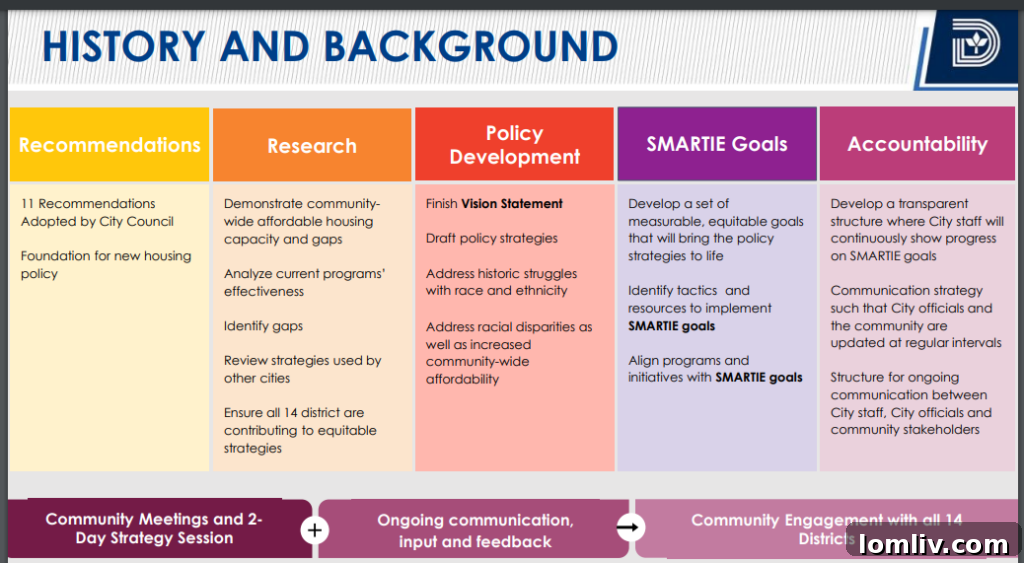
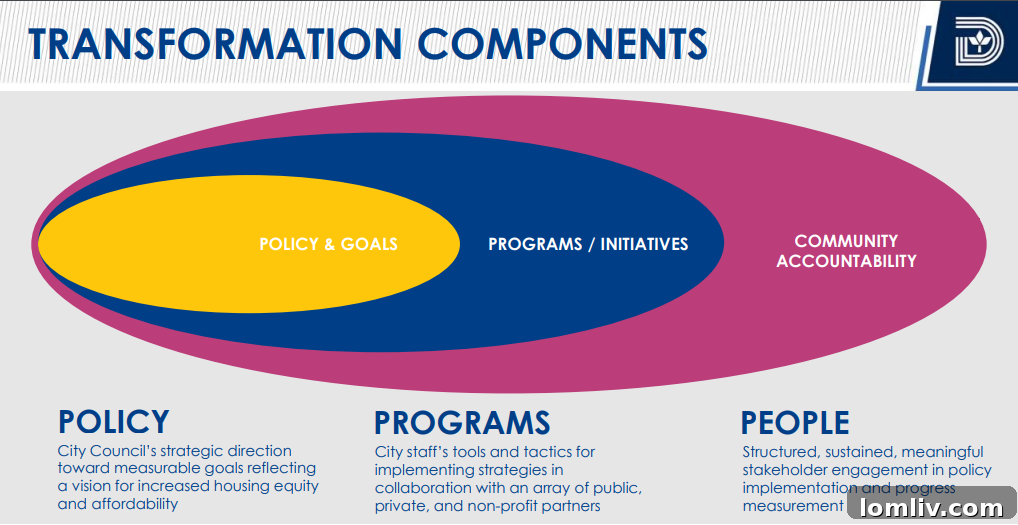

David Noguera, the esteemed Director of Housing and Neighborhood Revitalization, articulated a clear distinction between the housing policy, the housing plan, and housing programs. He emphasized that the policy serves as the foundational “North Star” – a guiding philosophy designed to holistically address the city’s diverse housing requirements. This overarching policy provides the strategic direction, while the housing plan outlines specific objectives and strategies to achieve those goals. Housing programs, in turn, are the practical, on-the-ground initiatives that are folded into the broader plan, bringing the policy’s vision to life. This structured approach ensures clarity and coherence in the city’s efforts to enhance housing accessibility and quality.
“In terms of how we get there, it’s the programs and annual goals,” Noguera elaborated, reiterating his analogy. “You’ll see us — I like to use the term ‘eating the elephant one bite at a time’ — bringing forward projects at a citywide level. You’ll see us growing our home repair program, expanding its reach to more residents in need. You’ll see us working collaboratively with Planning and Urban Design to identify suitable areas across the city where we can responsibly foster the development of new, vibrant communities. This multi-pronged approach reflects our commitment to addressing housing challenges systematically and sustainably.”
Dallas Housing Policy 2033: A New Era for Urban Development
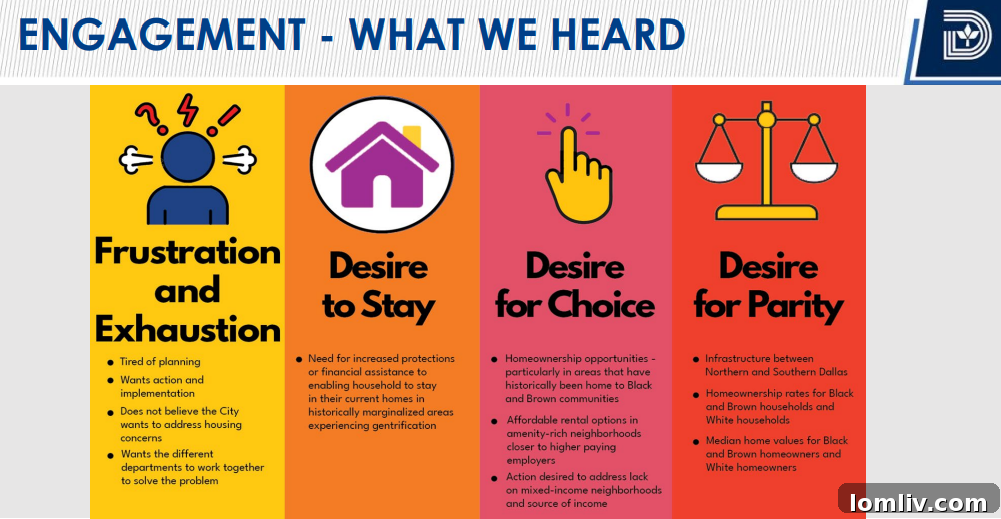
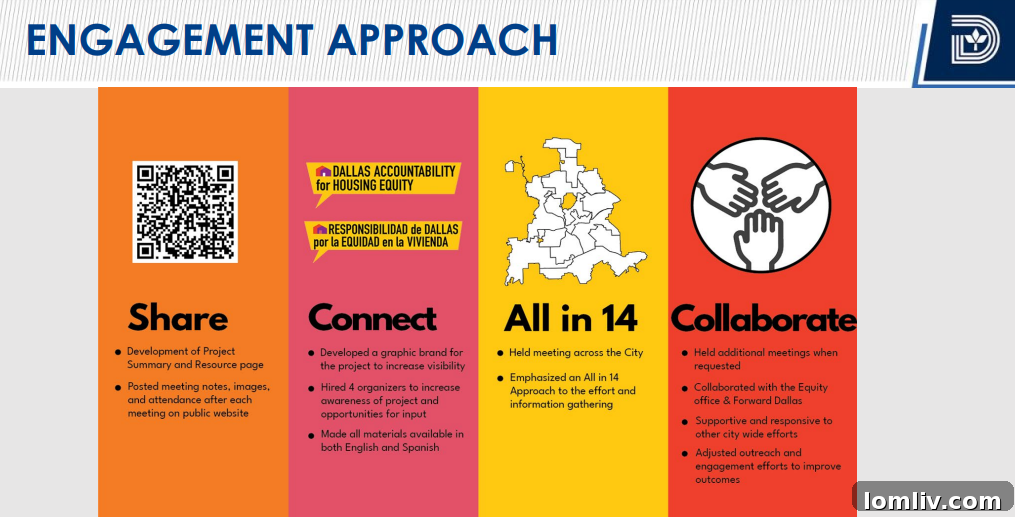
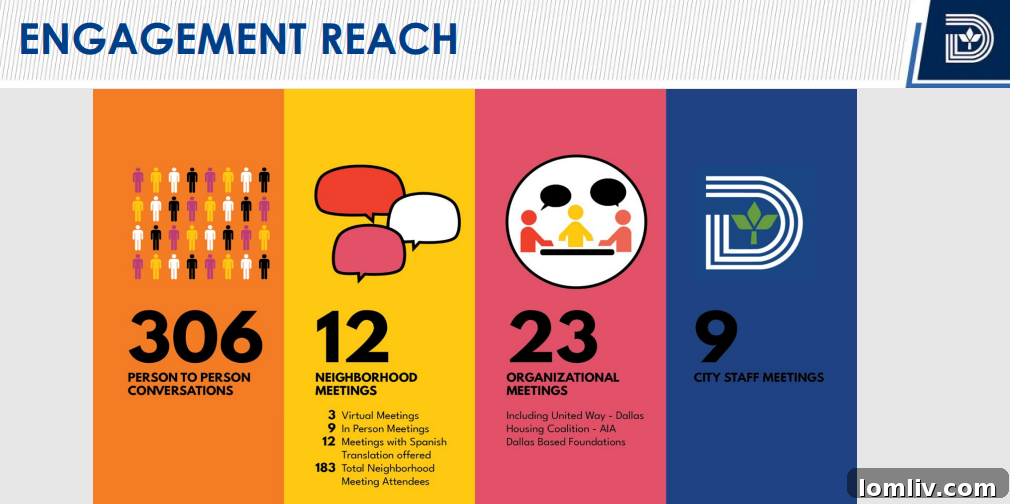
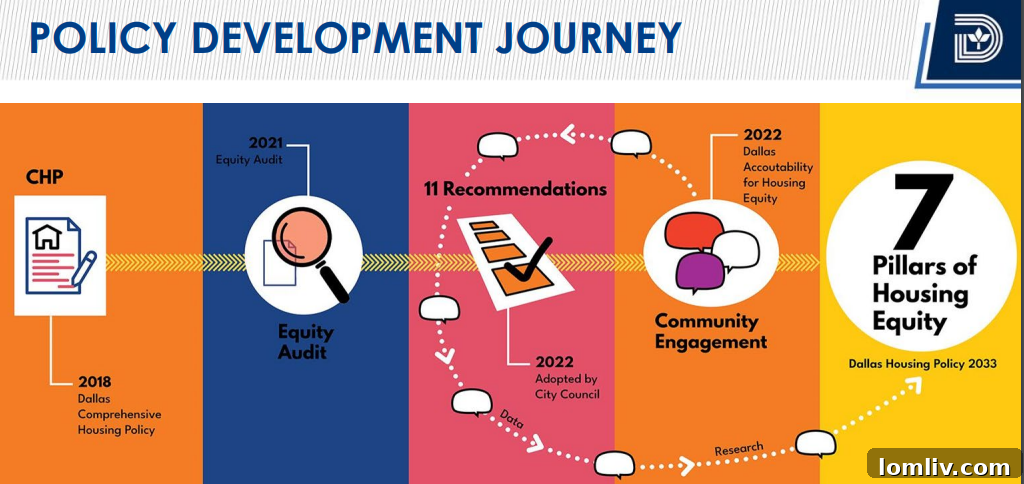
The genesis of Dallas Housing Policy 2033 is deeply rooted in extensive community engagement. Consultants reported a consistent theme emerging from these crucial community engagement sessions: residents are weary of endless planning and are clamoring for decisive action. The clear message was a desire for tangible progress, parity in opportunities, diverse housing choices, and crucially, the ability for families to remain in their cherished homes within their established neighborhoods. This feedback underscores a deep-seated need for policies that not only promise change but deliver measurable improvements in residents’ daily lives.
This sentiment resonated strongly with District 12 Councilwoman Cara Mendelsohn. “I’d like for us to actually address the frustrations instead of continuing to come up with policies that circumvent the actual issue,” she stated passionately during the committee meeting. “We’re hearing over and over the same frustrations. It feels like we are consistently missing what the actual problem is.” Her remarks highlight a critical challenge in policy-making: ensuring that new policies genuinely tackle the root causes of community dissatisfaction rather than merely offering superficial solutions.
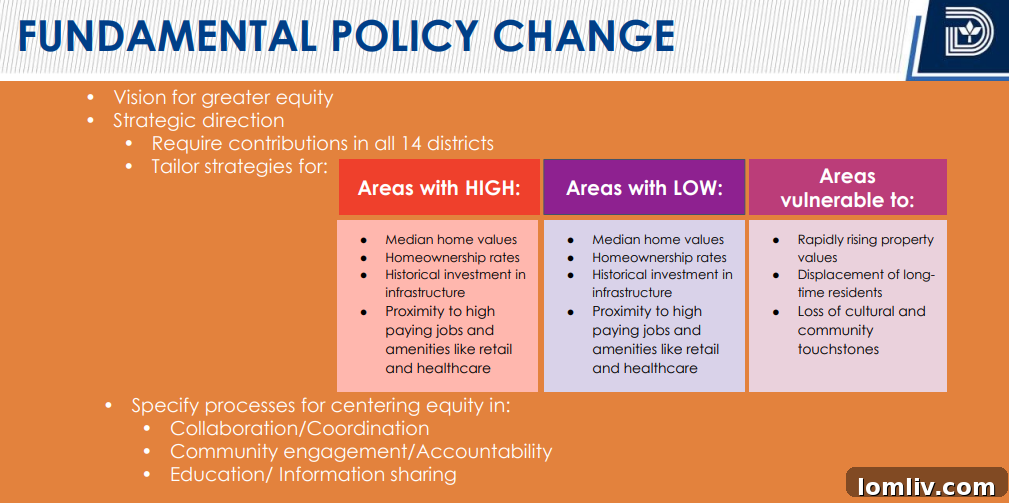
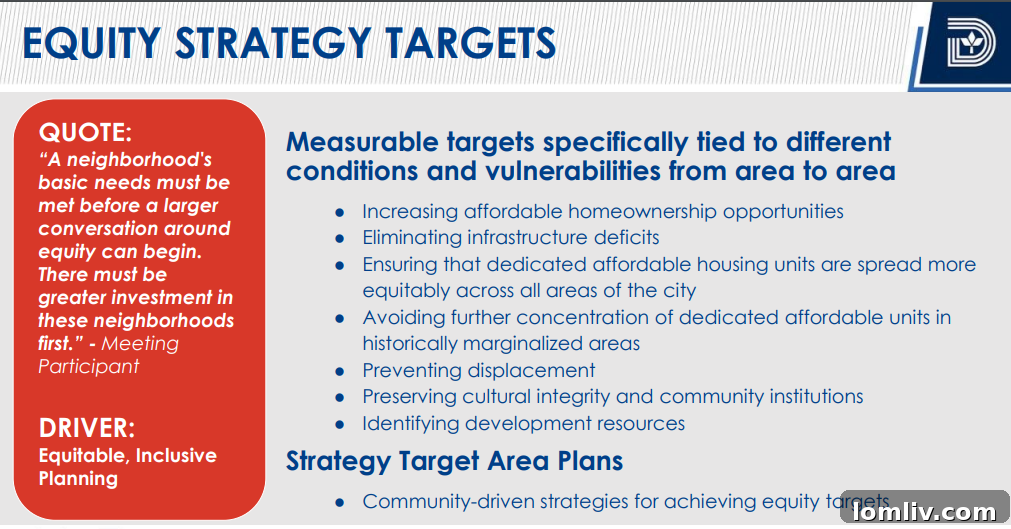
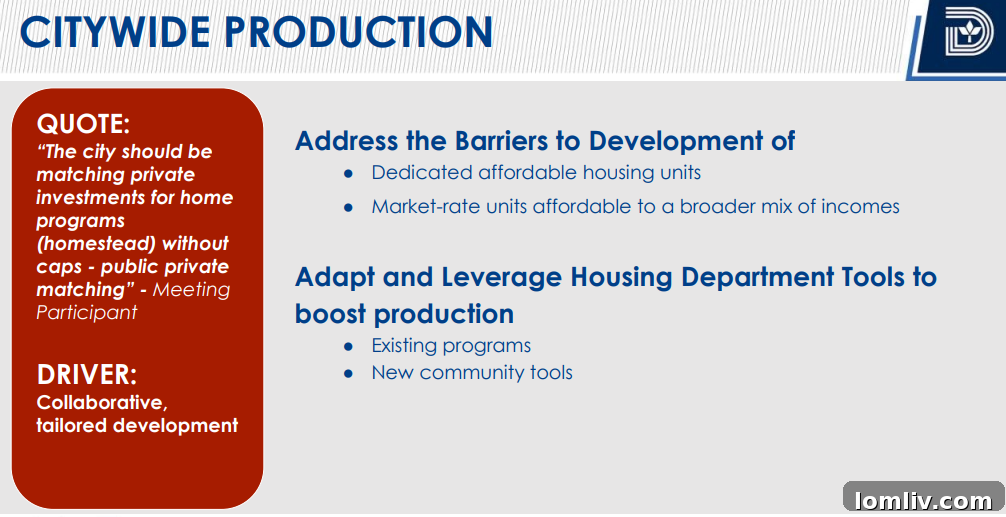
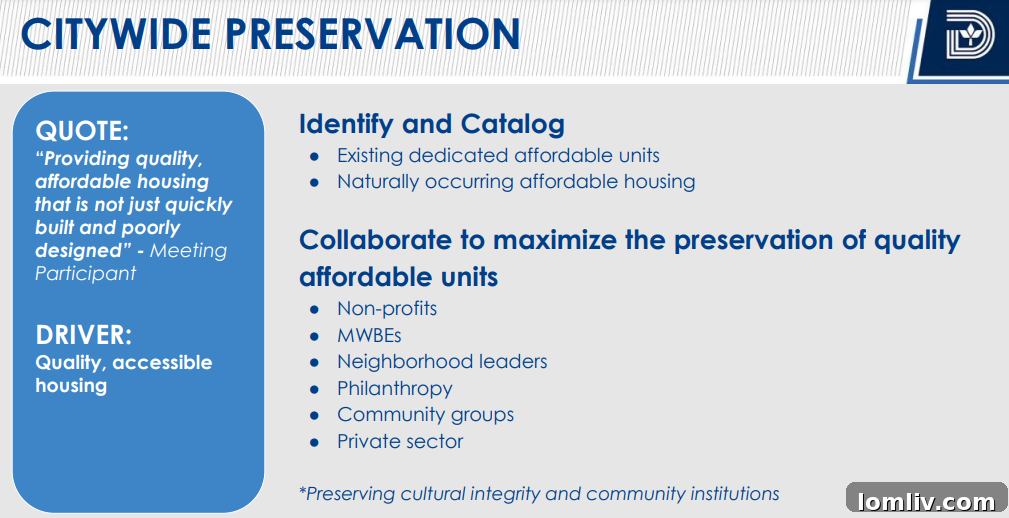
Christine Campbell, a consultant with Community Equity Strategies, underscored that the revised policy aims to craft a dynamic vision that not only attracts developers but also guarantees a more equitable distribution of housing units across all sectors of the city. This approach seeks to move beyond concentrated poverty or concentrated wealth, striving for mixed-income communities that reflect the true diversity of Dallas.
“The policy needs to really look at racial and ethnic disparities and the root causes that perpetuate them,” Campbell asserted. “It needs to significantly increase equity in housing outcomes. This is not just about providing a roof over someone’s head; it’s about making sure people can genuinely thrive within their community and that the outcomes of our policies truly match their inherent ability to flourish and contribute to society.” This emphasis on systemic change and measurable outcomes is a cornerstone of the new policy.
However, the nuanced language of the new policy framework sparked debate, particularly from Councilwoman Mendelsohn. “What’s going to happen is the words that are written will be weaponized later,” she cautioned, expressing concern about potential misinterpretations or unintended consequences. “I reject the idea that it is the city’s mission to provide equity in outcomes. That statement needs to be reworked. This is not our job. Our job is to provide opportunity for everybody.” This distinction between ensuring “equity in outcomes” versus providing “opportunity” highlights a fundamental philosophical divergence that often shapes housing policy debates, touching upon the extent of governmental intervention and individual responsibility.
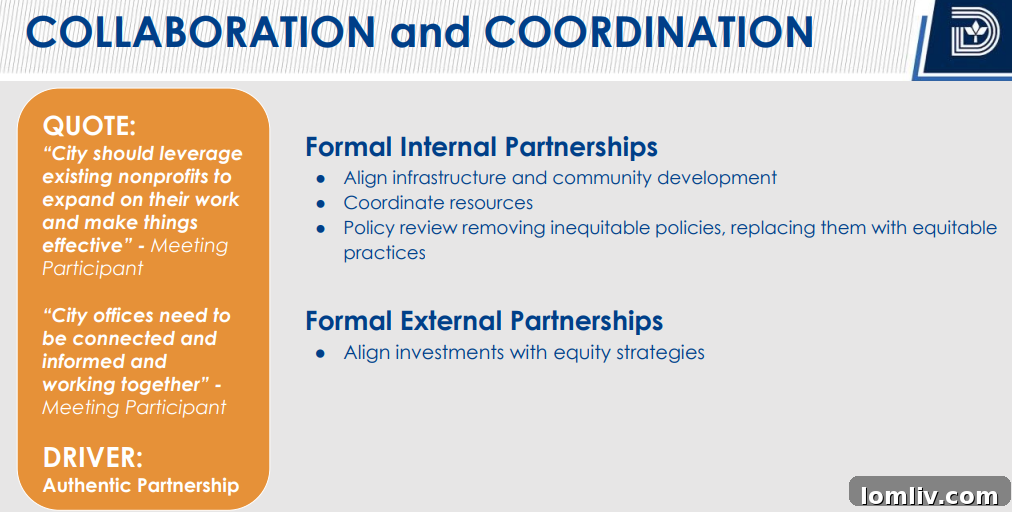
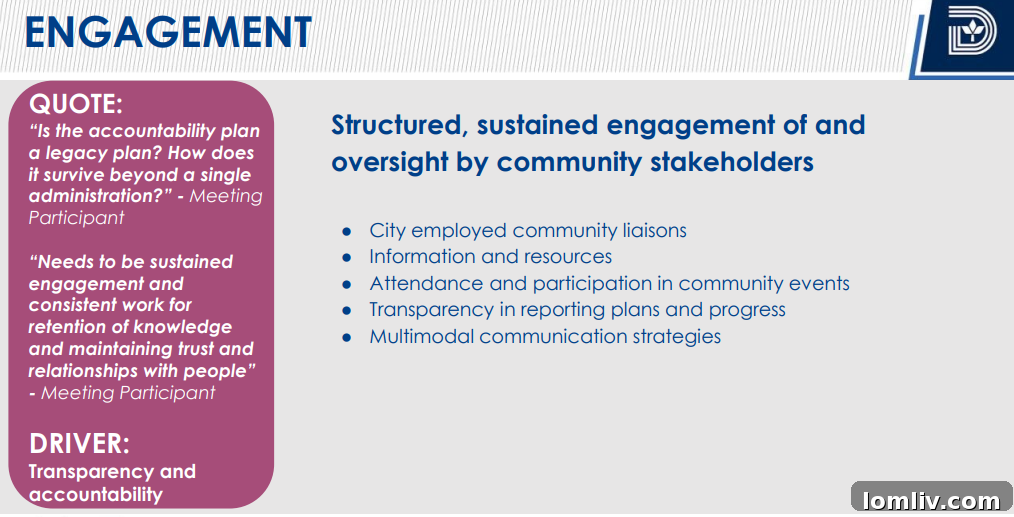
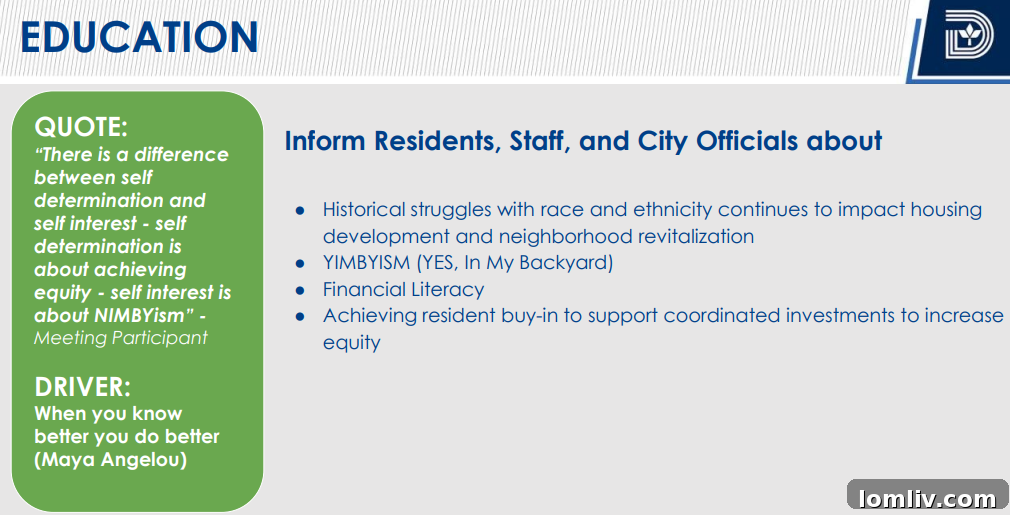
The hour-long committee presentation was rich with what some might consider “buzzwords” – terms such as equity, accountability, collaboration, and engagement. While these concepts are crucial, committee members consistently expressed a more practical interest: they wanted to understand precisely what the policy would achieve and, more importantly, how those achievements would be realized. The emphasis was on concrete deliverables and actionable strategies, moving beyond aspirational language to tangible results.
A significant concern voiced by several committee members revolves around the perceived ineffectiveness of the current Comprehensive Housing Policy. There is apprehension that the seven pillars outlined in the broader Racial Equity Plan could inadvertently be used to dismantle existing policy structures for the sole purpose of complying with guidelines set forth by the U.S. Department of Housing and Urban Development (HUD), potentially overlooking Dallas’s unique local context and needs.
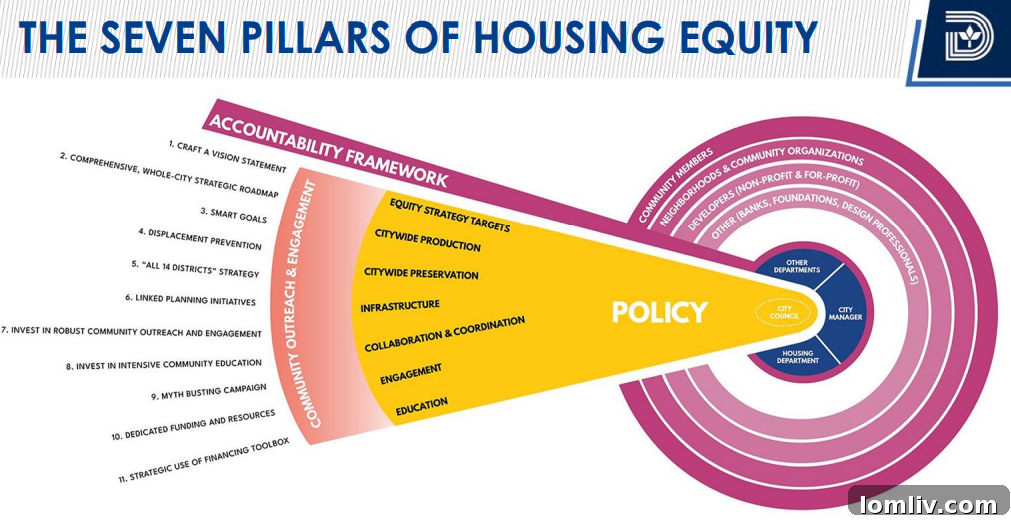
“I hope that when you present to council you’ll bring to us the actualization of a policy, not just the policy itself,” urged District 11 Councilwoman Jaynie Schultz, emphasizing the need for practical implementation strategies. “I’m very worried that we’re going to be overstretched in some of the aspirational goals that are in these seven pillars.” Her concern highlights the common challenge of balancing ambitious, long-term goals with the practicalities and resource constraints of immediate execution, a critical consideration for any large-scale urban policy.
In contrast, District 1 Councilman Chad West expressed a more optimistic view, calling the focused 2033 framework a “great first step” in tackling the significant problems inherent in the flawed original policy. His perspective reflects a broader consensus among city leaders regarding the necessity for substantial revisions to the city’s housing strategy.
“Everyone that I’ve talked to on city council wants to see some revisions to the Comprehensive Housing Policy,” West confirmed. “The previous document was largely created as something to help staff avoid HUD issues and primarily to facilitate existing programs. There’s no genuine vision to it, no dynamic, forward-thinking plan for the future growth and development of our city’s housing landscape.” This critique underscores the motivation behind the current efforts to craft a more visionary and impactful policy.
Navigating Density and Affordable Housing: A Balancing Act
The discussion around density and affordable housing presented another layer of complexity. Councilwoman Mendelsohn candidly shared her concerns regarding her district, District 12, which she described as having an “overabundance” of concentrated multifamily units. She expressed apprehension about the new policy framework’s explicit goal of increasing density across all districts, arguing that a blanket approach might be counterproductive in areas already saturated with high-density housing.
“We have 65 percent multifamily units in District 12,” she explained, illustrating the magnitude of the issue. “We’re at a tipping point. We simply cannot have more. We currently have more than 700 units actively being built right now. If all of the districts reach 65 percent or more multifamily units, it creates an unsustainable problem for the entire city. We absolutely do not want more density [in District 12]. We’re done.” Her remarks highlight the crucial need for a nuanced approach to density planning that considers the unique characteristics and existing infrastructure of individual districts, rather than a uniform mandate.
Furthermore, Mendelsohn critiqued the language in the policy framework that specifically identifies a need for dedicated affordable housing units in all districts. She advocated for the inclusion of market-rate units in this discussion, arguing that a healthy housing ecosystem requires a balance of both, ensuring options for a wider range of income levels and fostering greater socioeconomic diversity within communities. This suggests a desire for integrated housing solutions rather than solely focusing on one segment of the market.
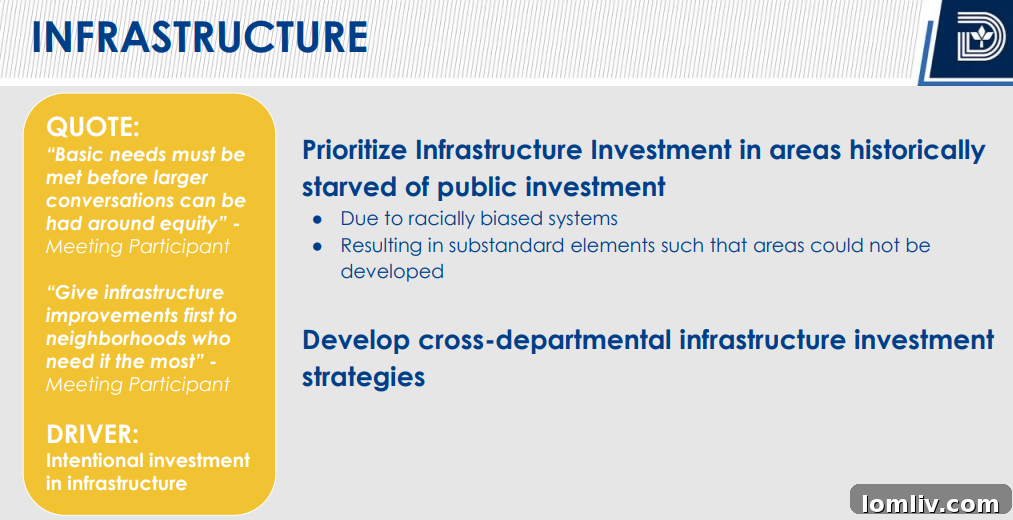
District 2 Councilman Jesse Moreno, who serves as the vice chair of the housing committee, passionately advocated for the specific needs of empty nesters and senior citizens. This demographic often requires specialized housing solutions that prioritize accessibility, community support, and proximity to essential services, underscoring the importance of tailored approaches within a comprehensive housing policy.
In response, Director Noguera elaborated on his staff’s meticulous approach to identifying suitable housing sites for various demographics. He explained that their evaluation extends beyond mere structural considerations, encompassing a holistic review of the neighborhood, including the presence of places of worship, opportunities for socializing, and access to arts and culture. This emphasis on “placemaking factors” is vital for creating truly livable and desirable communities.
“When we’re looking at affordability for a variety of demographics, we’re not just looking at the cost of the home or the rental unit itself,” Noguera clarified. “We’re also deeply considering some of those placemaking factors that genuinely make a place feel like home to them. When you strip away those essential elements and you just have an affordable unit without a supportive environment, you inevitably lose that crucial sense of home and belonging that is vital for residents’ well-being.”
The Clock’s Ticking: Ensuring Sustained Implementation
Councilman West brought a critical element of practicality to the discussion, pointing out a notable absence of conversation regarding the financial resources essential for effectively achieving the ambitious goals outlined in the proposed Housing Policy 2033. The viability of any policy hinges on adequate funding and sustainable financial models, a point that, if overlooked, could jeopardize the entire initiative. Adding to this concern, the city’s contract with Community Equity Strategies, the consulting firm guiding this process, is set to conclude in February, raising questions about continuity and long-term support.
“I’m a little concerned about just having a consultant for that one piece versus helping us fully stand it up,” West articulated, expressing a common worry in municipal projects. “We’ve seen in this city time and time again — when we try to go it alone in creating plans and implementing them and keeping them running — once the champions of that plan leave, the plan often gets shelved. We need a robust framework that can outlast individual tenures.” This highlights the need for institutionalizing the policy and building internal capacity for its sustained execution.
West further noted that the revised policy, in its current form, does not explicitly reference several critical elements vital for a truly comprehensive housing strategy. These include crucial areas such as zoning reform, thorough market value analysis, clear regulations for short-term rentals, or a review of best practices implemented successfully in other major cities. The omission of these elements suggests potential gaps that could hinder the policy’s overall effectiveness and long-term adaptability.
“The biggest miss, that I don’t see here, is how we’re specifically going to work with the private industry moving forward to incentivize and empower them to build all this housing that we so desperately need,” West emphasized, underscoring the indispensable role of the private sector in meeting housing demand. “I don’t believe we should let perfect be the enemy of good. We certainly don’t want to work on this forever and not have a plan, but I’m not comfortable today based on what I’ve heard so far.” His comments encapsulate the delicate balance between developing a thorough, visionary policy and the urgent need for actionable steps, while also stressing the importance of engaging all stakeholders, especially the private development community.
In conclusion, Dallas stands at a pivotal juncture in its housing trajectory. The Dallas Housing Policy 2033, infused with principles of racial equity, represents an ambitious vision to create a more just, affordable, and thriving city. While challenges remain in balancing aspirational goals with practical implementation, addressing district-specific needs, and securing long-term financial and collaborative support, the ongoing dialogue and commitment from city leaders signal a significant step forward. The success of this policy will ultimately hinge on the city’s ability to translate robust planning into tangible outcomes, ensuring that every Dallas resident has access to safe, stable, and equitable housing opportunities for years to come.