Kathy Nealy’s Complex Case: From Political Consulting to MLM Success and Taxpayer-Funded Defense
The world of Dallas politics is frequently a stage for compelling narratives, and few have been as intricate and publicly debated as the story of Kathy Nealy. A prominent Dallas political consultant, Nealy recently became the subject of intense media scrutiny following a serious indictment. What makes her case particularly intriguing is the simultaneous revelation of her remarkable financial recovery from a significant mortgage default, juxtaposed with her successful bid for taxpayer-funded legal representation. This unfolding saga, first brought to wider attention by local investigative reports, delves deep into her unexpected ventures into multi-level marketing and raises critical questions about public funds and personal accountability.
The Astonishing Financial Reversal: Nealy’s Return to Victory Park
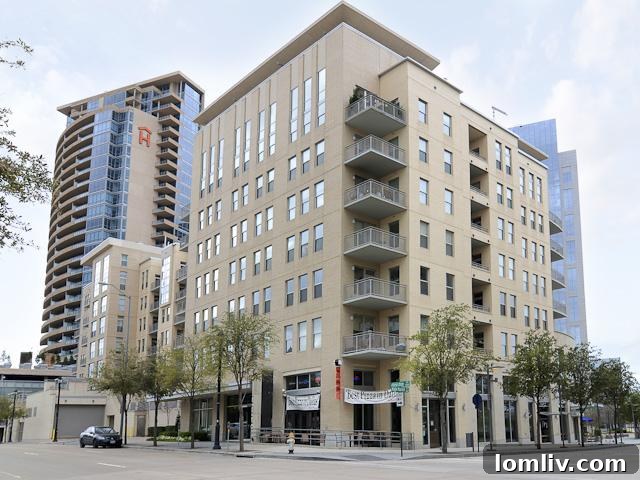
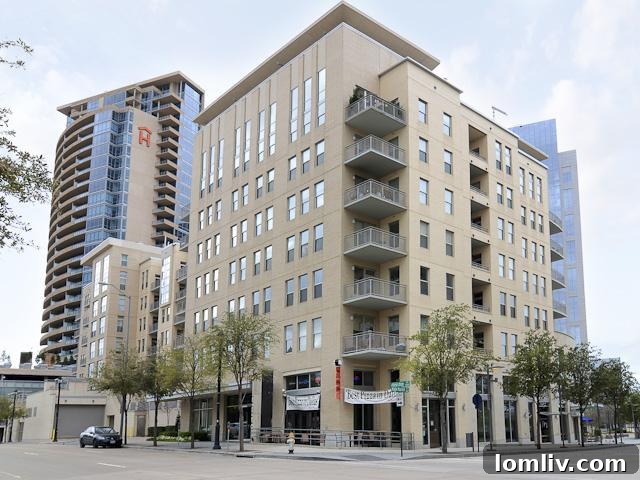
The initial spark for this story ignited when WFAA-TV Channel 8’s investigative journalist, Brett Shipp, delivered an exclusive report that captivated Dallas. Building upon earlier findings, including our own initial discovery, Shipp’s report confirmed that Kathy Nealy, despite facing an indictment, had successfully rescinded her 2013 mortgage default. This significant financial maneuver meant she was back in full ownership and residence of her coveted Victory Park condominium, a property that had previously been on the brink of foreclosure.
The immediate public reaction questioned the source of this substantial financial turnaround, especially given the timing of her legal troubles. How did a political consultant, facing such serious charges, manage to resolve a long-standing mortgage issue with such apparent ease? WFAA-TV’s thorough investigation began to peel back the layers, revealing an unexpected but highly lucrative chapter in Nealy’s career: her deep involvement in the multi-level marketing industry. This discovery provided the critical missing piece, offering a glimpse into the financial engine that seemingly propelled her recovery.
Kathy Nealy’s Foray into Multi-Level Marketing: The 5Linx Success Story
The WFAA investigation brought to light Kathy Nealy’s significant achievements within a national multi-level marketing (MLM) enterprise. Identified as a “top performer in a national wealth building enterprise,” Nealy’s journey with 5Linx, a company focused on technology products and services, quickly became central to understanding her financial resurgence. In the MLM model, individuals not only earn commissions from direct sales but also generate income through building a network of distributors and earning overrides on their sales, creating a hierarchical structure of earnings.
Rapid Ascent: Senior Vice President and Public Recognition
Nealy embarked on her 5Linx journey in 2010, and her rise within the company was nothing short of extraordinary. By September of the following year, she had achieved the prestigious title of Senior Vice President. This rapid climb within a highly competitive industry underscored her exceptional skills in recruitment, sales, and leadership. Her ability to effectively market 5Linx’s technology-based products and services, combined with her prowess in building and motivating a large team, positioned her at the pinnacle of the company’s success hierarchy.
Last September, Nealy was celebrated as the newest senior vice president of 5Linx, a national, multi-level marketing company she joined in 2010.
Nealy got there, in part, by becoming a top recruiter and producer of the technology products and services sold by 5Linx.
A compelling Facebook photo captured Nealy posing with an oversized $10,000 check, a clear symbol of a substantial bonus received in 2010, shortly after her initiation into 5Linx. This early success visually affirmed her commitment and promising trajectory within the organization.
Furthermore, a captivating YouTube video documented Nealy’s lavish promotion to Senior Vice President, showcasing her before a vibrant crowd of cheering admirers. The energy and enthusiasm surrounding the event further cemented her image as a highly successful leader. Adding to these public displays of prosperity, another widely shared picture on Facebook reportedly displayed a brand new BMW, widely understood to be a direct benefit or acquisition linked to her significant achievements and elevated status within 5Linx.
Empowering Others: “Get Your Piece of the Rock” Seminars
Kathy Nealy’s role extended beyond her personal financial gain; she actively embraced the role of an inspirational mentor. In April, she was observed conducting seminars in Little Rock, Arkansas, under the motivational banner, “Get Your Piece of the Rock.” These events were meticulously designed to attract and educate prospective recruits, demonstrating how they too could achieve financial independence and build wealth through the 5Linx business model. Her public persona, defined by evident success and upward mobility, served as a potent magnet for those aspiring to emulate her financial accomplishments. The implicit message was clear: Nealy had secured her financial stability and luxury assets, and with her guidance, others could carve out their own “piece of the rock” by joining her expansive network.

The Indictment and the Taxpayer-Funded Defense Controversy
Despite her documented financial prosperity and her role as a figure of wealth-building, Kathy Nealy’s world took a dramatic turn with her indictment, thrusting her into a complex and high-stakes legal battle. The immediate aftermath of her arrest gave rise to a profound ethical and financial debate that quickly captured public attention. Surprisingly, despite the numerous public indicators of her wealth—including the rescinded mortgage, the substantial bonus check, her executive position, and the new luxury vehicle—Nealy successfully applied for and received legal representation paid for by the taxpayers.
Applying for and Securing Publicly Funded Legal Aid
Remarkably, just hours after her arrest on a Friday, Nealy formally requested U.S. Magistrate Paul Stickney to appoint her chosen lawyer, Cheryl Wattley, a respected law professor, to represent her at public expense. In line with standard judicial procedures, Magistrate Stickney required Nealy to complete a detailed financial affidavit. This crucial document demanded a comprehensive disclosure of her employment status, all sources of income, and any outstanding debts. The affidavit’s purpose was to objectively determine her genuine inability to afford private legal counsel. Intriguingly, after reviewing the submitted information on the following Tuesday, the judge concluded that Nealy genuinely lacked the financial means to pay for her own attorney and, consequently, approved her application for state-funded legal assistance.
On Friday, hours after she was arrested, Nealy asked U.S. Magistrate Paul Stickney to have her lawyer, Cheryl Wattley, who is also a law professor, appointed to represent her at taxpayer expense. Stickney asked Nealy to fill out a financial affidavit, which requires her to provide information about her employer, income and debts. On Tuesday, the judge agreed Nealy was unable to pay for an attorney and approved her application.
This decision immediately sparked widespread public discussion and raised critical questions. How could an individual who had publicly showcased significant financial recovery, boasted about her success in a “wealth-building enterprise,” and displayed tangible symbols of luxury, genuinely qualify as indigent under the law? The stark contrast between her public image of financial achievement and her legal declaration of poverty created a palpable tension, leading to uncomfortable queries about the fairness of public legal assistance criteria and the accountability of individuals with high public profiles.
The Lingering Cost of Corruption: A Precedent for Taxpayer Burden
The controversy surrounding Kathy Nealy’s taxpayer-funded defense inevitably drew comparisons to previous high-profile corruption cases in Dallas, which have historically imposed considerable financial strain on public resources. These precedents elicited a collective “wince” from taxpayers and legal commentators alike, raising concerns that Nealy’s case could further inflate an already burdened public treasury.
Lessons Learned from the Jibreel Rashad Case
Brett Shipp’s report effectively highlighted the immense financial scale of past corruption trials by referencing the last major Dallas case, which notoriously cost taxpayers over a million dollars. To quantify these expenditures, Shipp interviewed Attorney Vic Sasso, who had represented Jibreel Rashad, convicted of conspiracy to commit extortion. Sasso candidly disclosed that he received “more than $180,000” for his defense work, clarifying that this sum was considered modest compared to what other defense attorneys typically billed the government, given a standard reimbursement rate of $126 per hour. This specific detail offered a sobering insight into the potential costs involved in defending intricate legal cases, particularly when the defense is ultimately financed by the public purse.
The comparison served to underscore a fundamental concern: while the justice system is designed to guarantee legal representation for everyone, irrespective of their financial status, the sight of individuals who appear to possess significant wealth receiving public funds for their defense can severely erode public trust. The tangible possibility of Nealy’s legal expenses escalating to, or even surpassing, the substantial costs of previous cases became a real apprehension for Dallas residents, who are ultimately responsible for these expenditures through their taxes. The principle of equitable access to justice, though foundational, must perpetually balance with the public’s expectation of judicious and responsible management of taxpayer funds.
Kathy Nealy’s Property: Valuation, Taxes, and the Enigma of the Missing Mortgage
Beyond the legal and ethical controversies, the specifics of Kathy Nealy’s Victory Park condominium offer further compelling insights into her complex financial standing. The property itself, a tangible symbol of her apparent recovery, presents a nuanced picture when evaluated through official records and comparative market data.
Property Assessment and Market Dynamics
According to the Dallas Central Appraisal District (DCAD), Kathy Nealy’s condo is currently assessed at $287,040. To provide context, a comparable unit of similar dimensions within the same development recently sold for $270,000 in May. It is worth noting that this comparable sale was for a top-floor unit, which typically commands a premium price due to desirable views and features. This slight valuation discrepancy suggests that Nealy might have grounds to contest her property appraisal next spring, potentially seeking a reduction in her assessed value. Given her ongoing and impending financial obligations, any opportunity to mitigate expenses would likely be a strategic consideration.
The Enigma of the Cleared Mortgage
Perhaps one of the most perplexing aspects of Nealy’s financial profile is the striking absence of any visible mortgages on her property after her mortgage default was rescinded. Records indicate that her original loan from Morgan Stanley was for $352,800, providing a significant clue about the initial financing and the property’s perceived value at the time of purchase. The notice of Trustee’s sale last August listed an outstanding amount of $242,254. If Nealy indeed paid off this sum, it would have encompassed more than just the principal balance; she would have also been responsible for accumulated interest, various fees, and all legal expenses incurred throughout the default process. The fact that no current mortgage could be located on the property records, coupled with the absence of her condo’s acquisition details on the Multiple Listing Service (MLS), deepens the mystery surrounding how she managed to clear such a substantial debt and reclaim full, unencumbered ownership. This financial feat, presumably fueled by her MLM earnings, stands in sharp contrast to her claims of legal indigence.
Impending Property Tax Obligations
Despite the ambiguity surrounding her mortgage status, one financial obligation remains unequivocally clear and imminent: her property taxes. In January, Kathy Nealy will be responsible for a property tax bill amounting to $7,847. This impending expense serves as a concrete and unavoidable reminder of her financial responsibilities, standing in stark contrast to her claim of an inability to personally fund her legal defense. The convergence of a high-value property, a mysteriously cleared mortgage (presumably facilitated by her multi-level marketing success), and her request for taxpayer-funded legal aid creates a compelling and evolving narrative that continues to unfold.
Conclusion: A Narrative of Paradox and Public Scrutiny
The unfolding story of Kathy Nealy transcends a mere legal proceeding; it is a rich and complex narrative woven from threads of personal ambition, remarkable financial resilience, the often-contentious world of multi-level marketing, and profound questions concerning public accountability and the judicious allocation of taxpayer resources. Her journey—from confronting a significant mortgage default to achieving senior leadership within a “wealth-building enterprise,” only to then face a serious indictment and subsequently seek public funds for her legal defense—encapsulates a unique and compelling paradox.
As Dallas taxpayers prepare for the potential financial implications of a high-profile corruption trial, Nealy’s case compels a critical examination of the criteria by which indigence is determined, particularly for individuals who publicly project an image of prosperity. Public trust is an invaluable and fragile commodity, and incidents that appear to juxtapose substantial personal wealth with a reliance on public assistance for legal battles can significantly strain that trust, leading to widespread skepticism and demands for greater transparency.
The continuing narrative of Kathy Nealy will undoubtedly remain a central focus for media scrutiny and public debate. It serves as a powerful reminder of the inherent complexities within the legal system, the ethical dilemmas that emerge when private fortunes intersect with public coffers, and the enduring expectation for transparency and integrity from those who navigate the often-turbulent waters of both politics and business. The ultimate resolution of her legal challenges will not only shape her personal fate but will also leave a lasting imprint on the ongoing discourse surrounding justice, wealth, and public responsibility in Dallas and beyond.