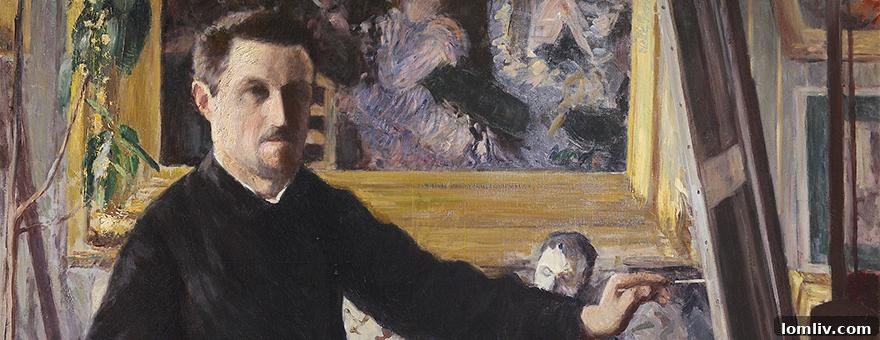
Discovering a truly memorable experience for a special occasion, or simply to enrich your appreciation for art, can be a delightful quest. For art enthusiasts and romantics alike, the Kimbell Art Museum in Fort Worth offers an unparalleled cultural escape. Recently, we had the immense pleasure of immersing ourselves in the “Gustave Caillebotte: The Painter’s Eye” exhibition, housed within the stunning Renzo Piano Pavilion South gallery. The experience was nothing short of breathtaking, solidifying the Kimbell Art Museum’s status as a magnificent cultural asset to Fort Worth and a conveniently accessible treasure for those in the Dallas-Fort Worth metroplex.
Gustave Caillebotte: A Reclusive Master of Impressionism
Who was Gustave Caillebotte? While his name might not resonate with the immediate familiarity of Monet or Renoir, Caillebotte (1848–1894) stands as a pivotal yet often overlooked figure within the French Impressionist movement. Unlike many of his contemporaries who struggled financially, Caillebotte hailed from an affluent Parisian family. This significant wealth provided him a unique position: he was not only an incredibly talented avant-garde artist but also a generous patron and collector of Impressionist art, supporting friends like Monet and Renoir by purchasing their works when they faced hardship. Crucially, Caillebotte had no need to sell his own paintings to secure an income, a factor that inadvertently contributed to his relative obscurity during his lifetime. His works were rarely exhibited or sold, remaining largely within his private collection or that of his family.
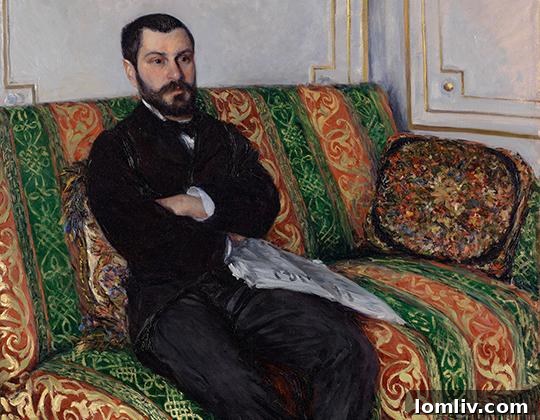
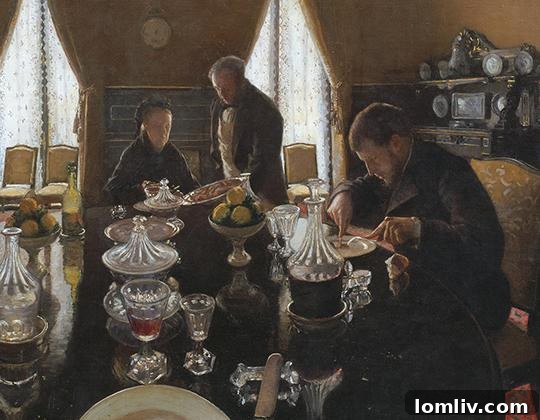
Caillebotte’s life, though prosperous, was touched by personal tragedy. He lost his father in 1874 and his brother René at the tender age of 25, just a year after his father’s passing. Caillebotte himself died prematurely at 45, leaving behind a significant body of work. George T.M. Shackelford, Deputy Director of the Kimbell Art Museum, notes that Caillebotte’s niece inherited the majority of his impressive art collection. His paintings offer a fascinating cross-section of 19th-century French upper-class life, transitioning seamlessly from vibrant cityscapes to serene countryside scenes. What truly captivates in his art is his meticulous attention to detail, particularly in his interior scenes, where he faithfully replicated every element of a room, from the intricate patterns of carpets and the texture of sofa fabrics to the delicate designs of wallpaper and even the ornate servant’s buzzer on a fireplace.
Despite establishing himself as an artistic force among the French Impressionists, Gustave Caillebotte (1848–1894) remained perhaps the least known among them for many years. Without the need to make art as a primary source of income, Caillebotte did not actively sell his pictures, resulting in few entering public or private collections. “Gustave Caillebotte: The Painter’s Eye” aims to rectify this, bringing together over fifty of the most important and beloved pieces of Caillebotte’s career. These magnificent works are lent from private collections, public institutions, and even the artist’s own family descendants. This curated exhibition delves into Caillebotte’s diverse inspirations, offers critical insights into the cultural context of his work, and firmly positions him within the pantheon of French avant-garde art, recognizing his profound contribution.
Capturing a City Reborn: Caillebotte’s Paris and Haussmannization
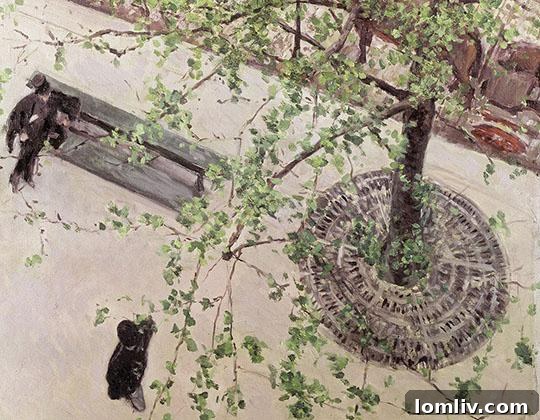
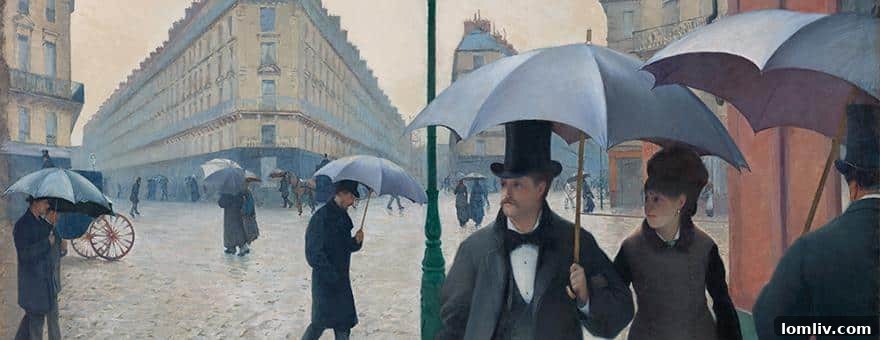
Caillebotte’s paintings provide an unparalleled visual chronicle of Paris during a period of dramatic transformation. Under the visionary direction of Baron Haussmann, starting in the 1850s, the French capital underwent a colossal urban renovation project, famously known as the Haussmannization of Paris. This ambitious undertaking aimed to modernize the city, addressing issues of congestion and public health, while simultaneously creating a grander, more orderly aesthetic. Stringent building codes were implemented to unify architectural design, urban infrastructure was vastly improved, narrow medieval streets were widened into broad boulevards, and essential amenities like sidewalks and streetlamps were added, making Paris the walkable, elegant metropolis we recognize today.
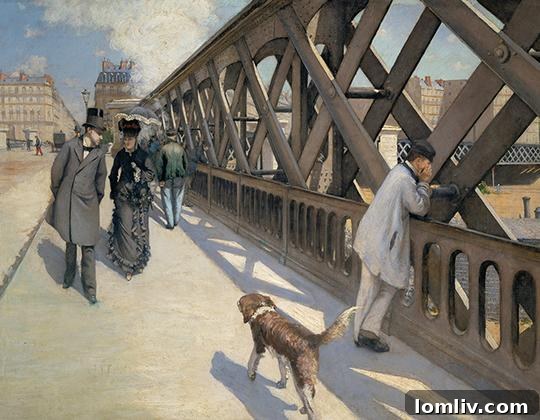
Caillebotte was acutely aware of these changes and skillfully embedded them into his art. His canvases, such as the iconic “Paris Street; Rainy Day” or “The Pont de l’Europe,” reflect and capture what was for Parisians in the late 1800s, a dramatic and often disorienting modernization. He meticulously rendered the new urban landscape, the imposing scale of the boulevards, and the evolving social dynamics of city life. His unique perspective often placed viewers within the scene, creating an immersive experience of this rapidly evolving environment.
The Everyday and the Extraordinary: Caillebotte’s Diverse Subject Matter
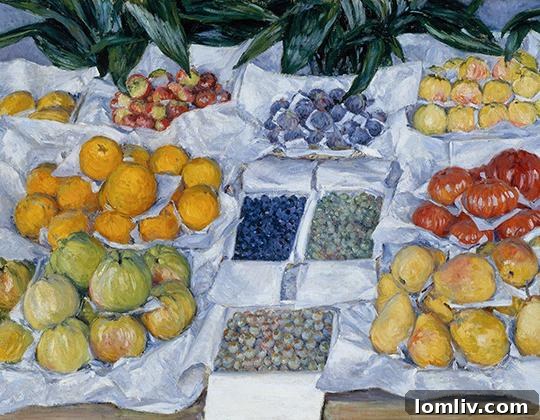
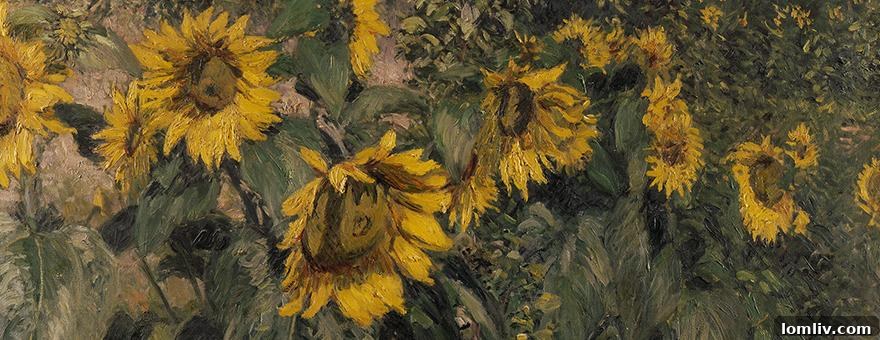
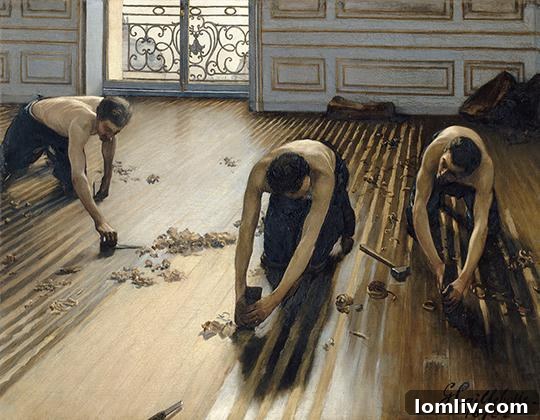
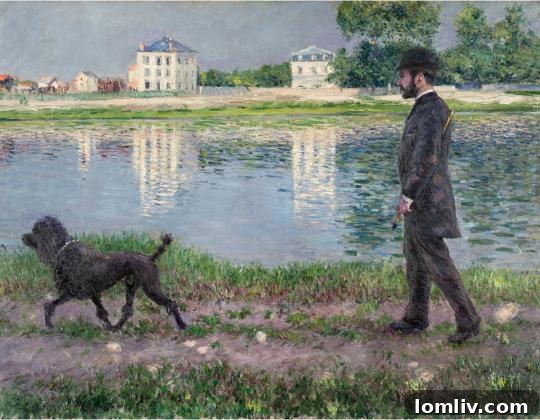
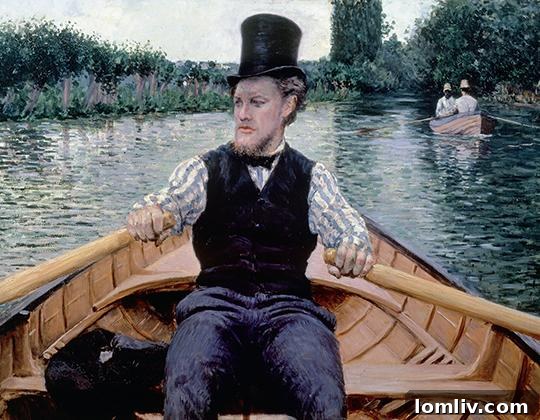
Beyond the grand boulevards, Caillebotte demonstrated an incredible versatility, turning his painter’s eye to a wide array of subjects, from intimate domestic scenes to vibrant still lifes and leisurely outdoor pursuits. His ability to render textures, light, and atmosphere with remarkable precision set him apart even within the Impressionist circle.
The Kimbell Experience: A Must-See Exhibition in Fort Worth
The “Gustave Caillebotte: The Painter’s Eye” exhibition at the Kimbell Art Museum is more than just a collection of paintings; it is a profound journey into the heart of 19th-century France and the mind of an artistic genius. Housed within the ethereal Renzo Piano Pavilion, the exhibition space itself is a masterpiece, offering an ideal environment for contemplative viewing. The natural light filtering through the pavilion’s unique design enhances the nuances of Caillebotte’s palette and the intricate details of his compositions, making each painting truly come alive.
For those seeking a unique cultural outing, or perhaps a romantic and intellectually stimulating Valentine’s Day experience, the Kimbell Art Museum in Fort Worth presents an unparalleled opportunity. Dallas residents are particularly fortunate that such a world-class institution is only an hour’s drive away. This exhibition provides a rare chance to engage with Caillebotte’s significant contributions to modern art, appreciating his pioneering realism, his keen social observation, and his masterful depiction of a city and a society on the cusp of profound change. Don’t miss the chance to witness the rediscovery of an artist whose vision was truly ahead of his time, now rightfully taking his place among the giants of Impressionism.