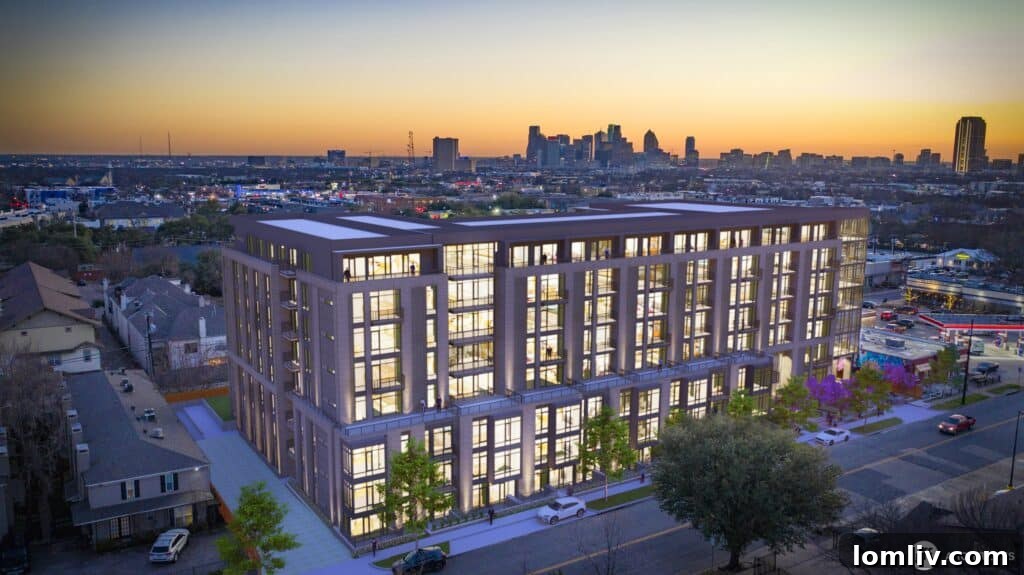
Dallas Flooding Fallout: New Lower Greenville Apartments Face Tenant Outcry Over Flood Damage Accountability
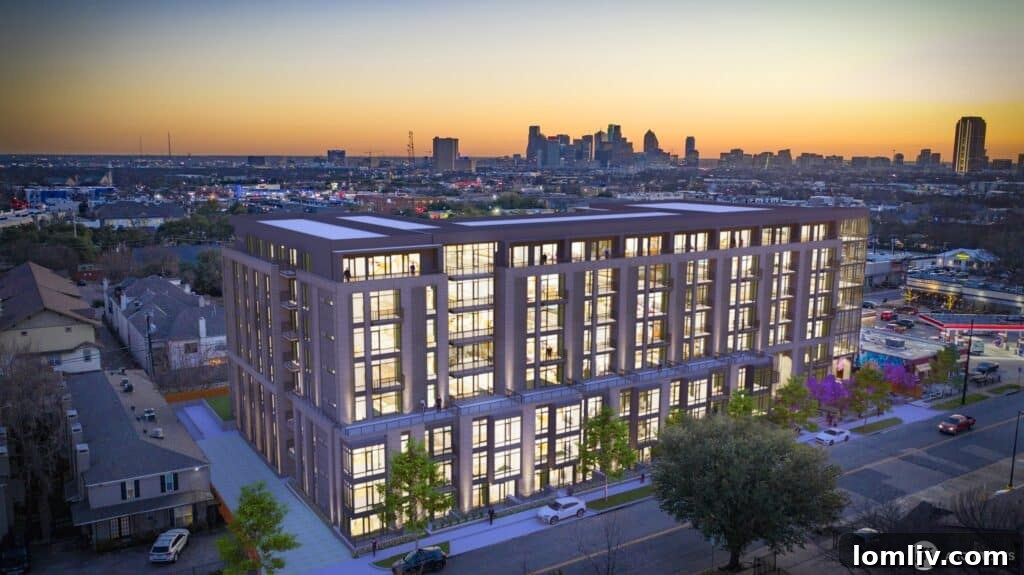
The vibrant Lower Greenville neighborhood of Dallas, a hub of new development, has recently become the epicenter of a contentious dispute between residents of a brand-new apartment complex and its developers. Following record-breaking rainfall, tenants at The ELE apartments are grappling with extensive flood damage to their homes and personal belongings. Their frustration is amplified by claims that the property management is shirking responsibility and refusing to offer fair compensation. This unfolding situation casts a critical spotlight on developer accountability, the scope of tenant rights, and the preparedness of urban infrastructure in an era of increasingly unpredictable and extreme weather events.
The Catastrophic Dallas Deluge of August 2022: An Unprecedented Weather Event
On Monday, August 22, 2022, the Dallas-Fort Worth metroplex was hit by an extraordinary rainstorm that not only shattered historical records but also unleashed widespread destruction across the region. This was far more than just heavy rain; it was a torrential deluge that overwhelmed urban drainage systems and caught countless residents off guard. Within a mere 24-hour period, East Dallas, including the bustling Lower Greenville area, recorded an astonishing 15.1 inches of rainfall, as meticulously documented by the Texas Tribune. Concurrently, Dallas/Fort Worth International Airport reported a staggering 9.1 inches on that single Monday, highlighting the sheer intensity and broad impact of the storm.
The sudden and relentless downpour triggered flash floods across metropolitan Dallas, submerging vehicles, rendering major roadways impassable, and inflicting considerable property damage. For the residents of The ELE apartments, a recently opened complex situated on the 5700 block of Richmond Avenue, the Monday storms transformed their pristine, new living spaces into chaotic disaster zones. The complex, which had just commenced welcoming its inaugural tenants between July 22 and 29, experienced complete inundation of all its first-floor units. The bitter irony of moving into a state-of-the-art apartment only to face such immediate and severe flooding has left many new residents feeling a profound sense of shock, betrayal, and helplessness.
New Beginnings Drowned: Tenants’ Harrowing Accounts at The ELE
For many at The ELE, the promise of a fresh start in a modern apartment quickly dissolved into a grim reality as floodwaters relentlessly surged into their homes. The personal narratives emerging from the complex paint a distressing picture of significant loss, deep frustration, and a desperate quest for answers and accountability. These firsthand accounts vividly illustrate the profound human toll of natural disasters, a burden seemingly compounded by what tenants perceive as an unsupportive and unresponsive posture from the property management.
Thomas Coffee’s Ordeal: A Week into Disaster Strikes
Thomas Coffee, one of the severely affected tenants, had only just moved into his apartment at The ELE on August 15 – a mere week before the catastrophic rainfall descended. His initial excitement for settling into a new home was abruptly shattered when he woke at 3 a.m. to discover approximately an inch of water covering the entire floor of his unit. He recounted water being “everywhere,” not confined to his apartment alone, but also flowing unchecked through the building’s hallways, creating an immediate and widespread sense of chaos and unsafety. The suddenness and sheer scale of the flooding were undeniably overwhelming, leaving him in disbelief.
In the immediate aftermath of the deluge, the apartment management reportedly attempted to mitigate the situation by relocating Coffee to a second-floor unit. However, this purported temporary solution quickly proved insufficient, as even this alternative unit, surprisingly, exhibited standing water, strongly suggesting a more systemic issue within the building’s construction or drainage. Coffee estimates the financial toll of his personal damages, encompassing furniture, electronics, and other irreplaceable possessions, to be substantial, ranging from $8,000 to $10,000. This significant financial burden, coupled with the profound emotional stress of losing cherished belongings in a newly acquired home, has undoubtedly been immense and deeply unsettling.
Coffee explicitly states that Rangewater Real Estate, the Atlanta-based developer and property manager of The ELE, has unequivocally disclaimed fault for any damages to personal items, and is reportedly not offering any reimbursement to the affected tenants. He points out a critical loophole in his protection: his standard renter’s insurance policy explicitly does not cover damages caused by a “natural disaster” such as a flood, thereby leaving him in a deeply precarious financial predicament. Rangewater’s suggestion for him to contact FEMA (Federal Emergency Management Agency) starkly underscores their position of non-liability, effectively shifting the burden of recovery onto external disaster relief agencies rather than assuming direct compensation responsibilities.
Taylor Shaw’s Frustration: Contaminated Waters and Persistent Construction Concerns
Another tenant, Taylor Shaw, who had settled into his unit on August 6, experienced a similarly horrifying ordeal. He described waking up to find water that “covered the entirety of the floor” in his first-floor apartment. Shaw’s specific situation is further compounded by the design of his unit, which is partially underground. He strongly believes that this inherent design characteristic should have prompted the developers to proactively anticipate and implement more robust mitigation strategies for potential flood risks. This raises serious and urgent questions regarding the suitability of the construction and design standards applied to units located in such potentially vulnerable positions, particularly within an urban environment increasingly susceptible to intense rainfall events.
Shaw’s concerns extend significantly beyond mere property damage; he expresses profound worry about the potentially contaminated nature of the water that inundated his apartment. With a substantial portion of the complex still actively under construction, and the final build-out not anticipated until potentially October, the presence of construction debris, pollutants, and other contaminants within the floodwaters poses significant and acute health risks. “This is not something I expected in a brand new apartment,” Shaw articulated, echoing the profound disillusionment and sense of betrayal shared by many tenants. He, too, estimates his personal damages to be approximately $10,000, a figure that starkly mirrors the substantial financial losses endured by his fellow residents.
In the immediate aftermath of the flood, Shaw meticulously compiled an itemized list of all damaged items and conducted a thorough walkthrough of his apartment with the property manager early on August 22. A restoration company was subsequently dispatched several hours later to commence the arduous cleanup process. As part of a “temporary relocation” arrangement, Shaw has since been moved to a second-floor unit. However, he was explicitly informed by the regional director that it is firm company policy not to reimburse residents for personal damage. “It boggles my mind why the developers try to fight us and take an antagonist position to us,” he remarked, expressing his profound disbelief and deep frustration at the developer’s seemingly unyielding stance.
Despite the immense frustrations and challenges, Shaw harbors a glimmer of hope for a constructive resolution, indicating his willingness to continue residing at the complex should an equitable agreement be reached. This sentiment reflects a broader desire among the affected tenants to find an amicable solution, yet not at the unacceptable cost of bearing the entire financial brunt of the flood’s consequences. Repeated attempts to contact Rangewater Real Estate’s corporate headquarters and regional director for comment have, to date, regrettably gone unreturned, leaving tenants without any direct or meaningful communication from the key decision-makers, further exacerbating their sense of abandonment.
Navigating Accountability: Developer Responsibilities, Renter’s Insurance, and Tenant Rights
The distressing situation at The ELE apartments brings into sharp focus the intricate and often ambiguous questions surrounding liability and responsibility in the wake of a natural disaster. When recently constructed properties are significantly impacted by severe weather events, the lines of accountability among developers, property managers, insurance providers, and the affected tenants can become considerably blurred, frequently leaving residents in an inherently vulnerable and unsupported position.
The Developer’s Stance: A Critical Question of Fault
Rangewater Real Estate’s reported policy of refusing to reimburse residents for personal property damage, citing the flood as an “act of God” or “natural disaster,” effectively places the entire financial burden squarely on the shoulders of the tenants. While natural disasters are undeniably unforeseen and beyond immediate human control, a critical examination of this stance often requires an inquiry into whether appropriate preventative measures were diligently implemented during the construction phase, particularly for properties situated in known flood zones or areas increasingly recognized as susceptible to intense rainfall. For a brand-new complex, there is a reasonable expectation that modern building codes, advanced engineering practices, and robust flood mitigation strategies would have been meticulously applied to minimize such risks. The conspicuous lack of any substantive response from Rangewater’s corporate offices further exacerbates the problem, creating a profound communication vacuum that significantly fuels tenant frustration, distrust, and a sense of abandonment.
From an ethical standpoint, a developer responsible for a new property might reasonably be expected to extend more substantial support and compassion to tenants who have barely had the chance to settle into their homes before being confronted with such a devastating crisis. Legally, however, the situation can become highly intricate. While direct liability for “acts of God” is often limited, potential grounds for claims may arise if it can be demonstrably proven that the property possessed inherent design flaws, undisclosed construction defects, or inadequately engineered drainage systems that demonstrably worsened the flood damage. Furthermore, if the developer failed to adequately disclose known flood risks associated with the building site to prospective tenants, legal avenues might also be pursued. This complex legal landscape frequently necessitates that tenants seek expert legal counsel to thoroughly explore their available options and understand their rights.
The Limits of Renter’s Insurance: Understanding “Natural Disaster” Exclusions
As Thomas Coffee painfully discovered, standard renter’s insurance policies typically contain explicit exclusions for flood damage. Comprehensive flood insurance is a distinct and separate policy, generally procured through the National Flood Insurance Program (NFIP) or specialized private insurers, and is often a mandatory requirement for properties explicitly situated within designated flood plains. Many residents, particularly those relocating into new developments not overtly marketed as being in a flood plain, may not consider the crucial necessity of purchasing this additional, specialized coverage, thereby creating a significant and often devastating gap in their financial protection. This incident underscores a vital educational imperative for both tenants and landlords to clarify specific insurance requirements and provide informed recommendations, especially in regions experiencing demonstrable shifts in climatic patterns and increasing severity of weather events.
When standard renter’s insurance policies prove inadequate to cover flood damage, affected tenants are frequently left with severely limited recourse. The suggestion to contact FEMA, while indeed a valid and often necessary option for disaster relief, is typically a protracted and often complex process that may not fully compensate for all incurred losses. FEMA assistance primarily extends to providing grants for essential home repairs and temporary housing solutions, but it rarely covers the full monetary value of extensive personal property damage, thereby imposing a substantial and often debilitating financial burden on individuals. This heavy reliance on government aid, rather than direct and timely compensation from the property developer, starkly accentuates the precarious and vulnerable position in which many affected tenants find themselves.
Understanding Tenant Rights and Recourse in Texas
In Texas, the fundamental rights of tenants concerning uninhabitable living conditions are clearly articulated within the Texas Property Code. Should an apartment become truly uninhabitable due to a flood or any other natural disaster, tenants generally possess the legal right to either terminate their lease agreement or demand that necessary repairs be promptly undertaken by the landlord. However, the responsibility for personal property damage typically reverts to the tenant, unless conclusive evidence of landlord negligence can be definitively established. This specific legal framework can present considerable challenges for individual tenants to navigate effectively, particularly when they are pitted against large, well-resourced corporate entities.
Tenants facing such daunting situations are strongly advised to meticulously document every aspect of their experience: capturing comprehensive photographs and videos of all damage, compiling detailed, itemized lists of all losses, maintaining thorough logs of all communications with property management, and retaining copies of any repair requests submitted. Consulting with a qualified tenant rights attorney or engaging with local legal aid services can provide invaluable clarity regarding their specific rights and potential avenues for legal recourse, including the possibility of initiating collective action if a substantial number of tenants are similarly and adversely affected. The unified voice of a collective group of tenants can often exert significantly more pressure than isolated, individual complaints, especially when advocating for transparency, fair treatment, and equitable resolutions from powerful property developers.
The ELE Apartments: A Pivotal Case Study in Urban Development Challenges
The unfortunate and highly public events at The ELE apartments serve as a poignant and critical case study, vividly illustrating the multifaceted challenges inherent in contemporary urban development. This is particularly true in an era increasingly defined by unpredictable climate patterns and the growing frequency of extreme weather events. The situation compels a rigorous examination of how developers plan, construct, and subsequently market properties in rapidly expanding cities such as Dallas, which are simultaneously experiencing substantial growth and heightened vulnerability to environmental shifts.
Building in a Flood-Prone City: The Imperative of Pre-Construction Assessments
The strategic decision to construct residential complexes within urban areas, especially those with a documented historical or perceived susceptibility to flooding, unequivocally necessitates the execution of rigorous and exhaustive pre-construction assessments. These critical evaluations should encompass comprehensive hydrological studies, a thorough assessment of existing urban drainage infrastructure, and forward-looking climate projections to anticipate future risks. For a newly constructed property like The ELE, there is an inherent expectation that cutting-edge engineering solutions and robust flood mitigation strategies would have been meticulously integrated into its foundational design. The troubling fact that all first-floor units flooded, with some even being “partially underground,” raises serious questions regarding the adequacy of these initial assessments and the subsequent architectural and engineering choices. Were retention ponds designed with sufficient capacity for extreme events? Were building materials specifically selected for their resilience against pervasive water intrusion? These are not merely technical details but critical considerations for any responsible developer operating within a modern, continually growing urban landscape.
The particular vulnerability of ground-floor and “partially underground” units during a severe flood event represents a significant and escalating concern. While these types of units can undeniably offer unique architectural appeal or convenient access, they inherently carry a demonstrably higher risk of water intrusion during periods of heavy and prolonged rainfall. Developers bear a fundamental responsibility to not only construct properties in strict adherence to all prevailing building codes but also to meticulously consider the practical implications of extreme weather on all unit types, especially those situated closest to ground level. Furthermore, providing transparent and explicit communication about these inherent risks to prospective tenants is absolutely paramount, enabling individuals to make fully informed decisions regarding their living arrangements, long-term safety, and essential insurance needs.
The Profound Impact on a Brand New Community
The disruption endured by the new residents of The ELE is profound and deeply unsettling. They embarked on their new lives expecting a pristine, modern, and problem-free living experience, only to be confronted with immediate and widespread destruction and the arduous prospect of a lengthy, emotionally draining recovery process. This stark and brutal contrast between the envisioned lifestyle and the harsh reality of their circumstances can severely erode residents’ trust in both the developer and the overall community ethos. A newly established apartment complex typically aims to foster a vibrant and cohesive community, but an incident of this magnitude can breed deep-seated resentment and profound distrust, potentially jeopardizing resident retention and significantly impairing the complex’s long-term reputation within the highly competitive Dallas real estate market.
Adding another layer of considerable complexity, the ongoing construction at The ELE, with its final build-out not expected until October, introduces further challenges. Flooding within an active construction zone can lead to compromised structural materials, extensive mold growth if not remediated swiftly and properly, and additional, costly project delays. This also raises serious questions concerning the health and safety of residents who are forced to live amidst the dual hazards of ongoing construction and the lingering effects of flood damage, unequivocally highlighting the urgent need for developers to prioritize robust, rapid, and transparent remediation efforts that genuinely put resident well-being first.
Seeking Resolution: What Lies Ahead for The ELE Residents?
The path forward for the distraught residents of The ELE apartments is undeniably fraught with uncertainty, yet their collective determination to seek a fair and just resolution remains steadfast. While some, like Taylor Shaw, have expressed a genuine desire to continue residing at the complex, this hinges entirely on the developer’s willingness to engage constructively and responsibly address the significant damages incurred. The current conspicuous absence of direct and meaningful communication from Rangewater Real Estate only serves to exacerbate an already distressing situation, prolonging the profound emotional and financial distress experienced by those affected.
For the tenants, potential avenues for recourse include rigorously pursuing legal counsel, either individually or through collective action. A class-action lawsuit, if a sufficient number of tenants present similar, compelling claims of negligence or demonstrably insufficient flood mitigation measures, could emerge as a powerful and effective mechanism for seeking substantial compensation and holding the developer definitively accountable. Furthermore, continued public advocacy through media attention and organized community efforts can exert significant public pressure, strongly urging Rangewater to re-evaluate its stringent “no reimbursement” policy and establish open, transparent channels for meaningful dialogue. The critical importance of clear, empathetic, and consistent communication from property management during such crises cannot be overstated; it profoundly influences not only tenant satisfaction but also the long-term viability and positive reputation of the entire community.
Conclusion: Enduring Lessons from the Lower Greenville Deluge
The unfolding saga at The ELE apartments in Dallas’ dynamic Lower Greenville neighborhood stands as a stark and urgent reminder of the escalating challenges confronting urban areas in an era characterized by increasingly unpredictable and severe weather events. While natural disasters inherently lie beyond human control, the responsive actions of property developers and managers, coupled with the inherent robustness of building design and the efficacy of tenant support systems, fall entirely within their sphere of influence and responsibility. This unfortunate incident unequivocally underscores the critical importance of transparent communication, the implementation of comprehensive flood mitigation strategies in all urban development projects, and the establishment of accessible, robust tenant protection mechanisms.
For all future developments planned for flood-prone regions, the experiences at The ELE apartments offer invaluable and sobering lessons on the absolute necessity of proactive planning, the integration of resilient construction methodologies, and the imperative for clear and honest disclosure of potential risks to all prospective residents. For tenants, this incident highlights the vital need to thoroughly understand their insurance policies and tenant rights, and to maintain meticulous documentation during times of crisis. Ultimately, ensuring that residents are not unjustly left to bear the full financial and emotional brunt of such devastating disasters demands a genuinely collaborative and empathetic approach – one where developers consistently uphold their fundamental responsibilities, insurance providers offer clear and unequivocal guidance, and regulatory bodies actively enforce robust and future-proof standards – thereby safeguarding both precious properties and, most importantly, the people who call them home.