Step into the captivating world of television, where fictional living spaces often become as beloved and memorable as the characters themselves. This ongoing series delves deep into the iconic sets that have shaped our viewing experience, exploring the design philosophies and cultural impact of the most famous TV apartments and homes. We’re taking a deep dive into what made these sets so special, turning them into dream living rooms that continue to inspire and entertain. As classic shows live on through retro channels and modern streaming services, we find ourselves reconnecting with these familiar backdrops, realizing just how much they felt like home.
Have you ever wondered what makes a TV show set truly unforgettable? It’s more than just furniture and decor; it’s about how these spaces reflect character, drive narrative, and create an aspirational world for viewers. From cozy sitcom kitchens to opulent penthouse apartments, these meticulously crafted environments offer a glimpse into the lives of our favorite fictional friends and families. They become characters in their own right, etching themselves into our collective memory long after the credits roll.
Frasier (1993-2004): The Epitome of Urban Sophistication
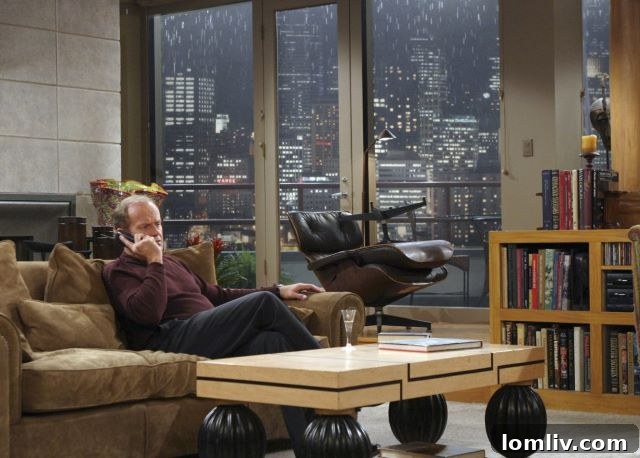
Quick show of hands: Did the exquisite decor of Dr. Frasier Crane’s iconic Seattle apartment influence anyone else’s perception of refined living? It was virtually impossible not to be fixated by its unparalleled ambiance, a true masterclass in sophisticated urban design. The Frasier apartment wasn’t merely a set; it was a carefully curated extension of Frasier Crane’s persona—intellectual, cultured, and just a touch pretentious. Its aesthetic was characterized by immaculate clean lines, a distinctly minimalist feel, and the soothing, sophisticated beige and cream tones that were the hallmark of high-end 1990s interior design.
Every piece within Frasier’s apartment at the fictional Elliott Bay Towers was thoughtfully selected to reflect his discerning taste and academic background. His valued collection included a striking Le Corbusier lamp, a magnificent Chihuly glass vase, an antique telescope that hinted at his intellectual curiosity, and a diverse array of authentic African artifacts. These elements weren’t just decorative; they were conversation starters, often providing a subtle backdrop to the witty banter and psychological musings that defined the show. In 2018, the real estate publication Curbed famously determined that an approximately 2,000-square-foot apartment of such caliber in a prime Seattle location would easily command a price tag of around $3 million. This staggering figure often led fans to ponder the perennial question: How could Frasier, a radio psychiatrist, afford such an extravagant place? The answer, woven into the show’s lore, was often attributed to a substantial settlement from his divorce from Lilith and a shrewd investment portfolio, further cementing his image as a man of considerable means and discerning taste.
Over the course of 246 memorable episodes, the intricate layout of Frasier’s apartment became indelibly imprinted in the minds of millions of viewers. The show’s premise revolved around the humorous adventures of a snooty radio psychiatrist and his equally snooty brother, Niles, attempting to cope with their down-to-earth, retired police detective father, Martin, and his quirky live-in physical therapist, Daphne Moon. Yet, for many of us, tuning in was as much about immersing ourselves in the sophisticated world of the Frasier apartment as it was about the witty dialogue. The enduring appeal of the Frasier apartment decor is evident even today, with online fans continuing to celebrate its design by creating detailed floor plans, crafting intricate miniature replicas, and even transforming their Zoom backgrounds into snapshots of Frasier’s iconic living room, proving its lasting influence on popular culture and interior design aspirations.
The front room, serving as the apartment’s grand entrance and central living space, was exceptionally spacious and elegantly appointed, showcasing Frasier’s distinctive brand of eclectic, high-end furniture. Dominating this area were his iconic Eames Lounge Chair and Ottoman, symbols of mid-century modern design, alongside the striking Wassily Chair, a hallmark of Bauhaus influence. These pieces, representing timeless design and considerable investment, made his father Martin’s beloved, worn-out plaid recliner stand out even more, creating a visual juxtaposition that perfectly encapsulated the show’s central comedic tension between highbrow sophistication and working-class sensibilities.
Beyond the impressive interiors, the Frasier apartment boasted an equally spectacular exterior feature: a private balcony that offered a truly to-die-for panoramic view of the Seattle skyline, complete with the Space Needle. This breathtaking backdrop wasn’t just decorative; it grounded the show in its iconic Seattle setting and often served as a serene space for Frasier’s moments of contemplation or a dramatic stage for various emotional revelations. Inside, Frasier’s master bedroom was a sanctuary of immaculate order, reflecting his fastidious nature. His en-suite bathroom, featuring sleek black porcelain fixtures and luxurious finishes, was so meticulously designed and opulent that it would undoubtedly put even the most upscale public facilities to shame.
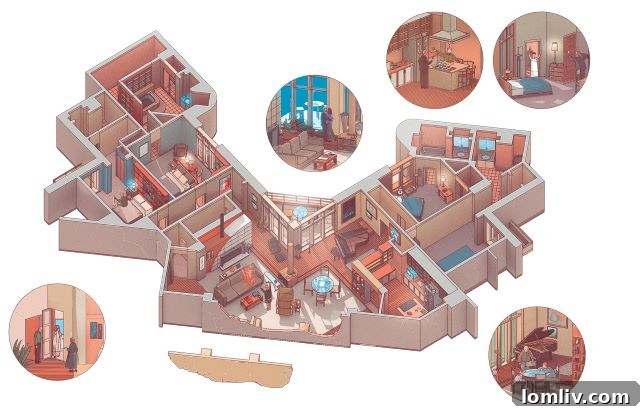
Frasier’s coveted apartment, supposedly located at 1901 Elliott Bay Towers, must have occupied a prime corner position within the building to afford such expansive views. According to one particularly detailed fan’s vision and widely accepted interpretation, the apartment’s layout was ingeniously designed in a V-shape, with the expansive living room forming the base of the ‘V’. Venturing down the hallway on the left side of this ‘V’ would lead one into Frasier’s private domain: a spacious master bedroom, which, in turn, opened into his lavish, oversized bathroom. Martin’s modest bedroom was also situated within this wing, subtly contrasting with Frasier’s opulent quarters. The right side of the ‘V’ wing was comparatively smaller but equally elegant. It began with a step-up parlor area, an exquisite space designed to showcase a grand piano and a sophisticated wet bar, perfect for Frasier’s frequent social gatherings and intellectual soirées. Further back from the parlor, a small, discreet hallway provided access to Daphne Moon’s living space, reflecting her role as a live-in therapist rather than a permanent resident of Frasier’s inner circle. Finally, heading back into the main front room, the well-appointed kitchen was conveniently located to the right, efficiently designed yet rarely the focus of the show’s culinary exploits.
While Frasier’s apartment undoubtedly holds the crown, many other remarkable sets inhabit the expansive Frasier-verse. The KACL radio studio, where Frasier hosts his popular advice show, “Dr. Frasier Crane,” opens countless episodes, instantly transporting viewers into his professional world. The studio, with its muted tones and professional yet slightly quirky decor, perfectly encapsulated Frasier’s on-air persona. In terms of fan popularity, the second most iconic location is arguably Café Nervosa, the charming coffee shop where Frasier, Niles, Martin, Daphne, and Roz frequently gathered to commiserate, exchange witty barbs, and hash out their latest dilemmas. Its warm, inviting atmosphere and distinctive art pieces made it a beloved backdrop for many of the show’s most memorable conversations and comedic moments.
Perhaps as architecturally impressive and certainly even more overtly pretentious than Frasier’s own dwelling was his brother Niles’ apartment at The Montana, an equally exclusive and grand building. Niles Crane’s apartment, often glimpsed through floor plans and brief scenes, epitomized an even more elaborate form of old-money luxury and fastidious taste. With its classical architectural details, pristine white furniture, and a seemingly endless collection of priceless antiques, Niles’ home served as a perfect foil to Frasier’s slightly more contemporary, albeit still luxurious, abode. The contrast between these two iconic TV apartments subtly highlighted the brothers’ competitive yet deeply affectionate relationship, each trying to outdo the other in their pursuit of sophisticated living. Fans can explore a detailed floor plan of Niles’ Montana apartment, further appreciating the meticulous set design.
As for fascinating tidbits from television history, Frasier’s apartment was housed on the very same sound stages used for Cheers, the iconic Boston bar sitcom that famously spawned Frasier’s spin-off show. This shared physical space provided a metaphorical bridge between the two beloved series, linking Frasier’s past to his new life in Seattle. Additionally, these versatile sound stages were also repurposed for the apartment set in the television adaptation of The Odd Couple, starring Matthew Perry and Thomas Lennon, further showcasing the enduring legacy of these production spaces. With the much-anticipated Frasierreboot now actively in development at Paramount+, fans are eagerly keeping an eye out to see what new iconic sets might emerge or if beloved locations like Café Nervosa or a reimagined apartment might make a triumphant return. For those craving an even deeper dive into every conceivable detail of the show, the comprehensive FrasierWiki fandom site offers an invaluable resource, packed with character biographies, episode guides, and fascinating insights into the show’s production.
The cultural phenomenon surrounding Frasier’s apartment extends far beyond the show’s original run. If we crave more glimpses into this aspirational world, the internet is brimming with fan-made Frasier floor plans, many of which are beautifully rendered and sold as prints, allowing enthusiasts to bring a piece of Frasier’s design into their own homes. There are also intricate Lego sets meticulously designed to recreate the apartment’s layout, miniature replicas that capture every detail, and countless articles detailing the hidden design details and secrets of the various apartments featured in the series. This fervent online activity and commercial interest definitively prove that we’re certainly not the only ones who believe Frasier’s apartment truly rules. Its enduring appeal lies not just in its luxurious aesthetic but in its ability to transport viewers into a world of wit, intellect, and sophisticated comfort, making it a timeless icon of television interior design.