

Harlan Crow’s Eclectic Historical Collection Ignites Political Controversy in Dallas
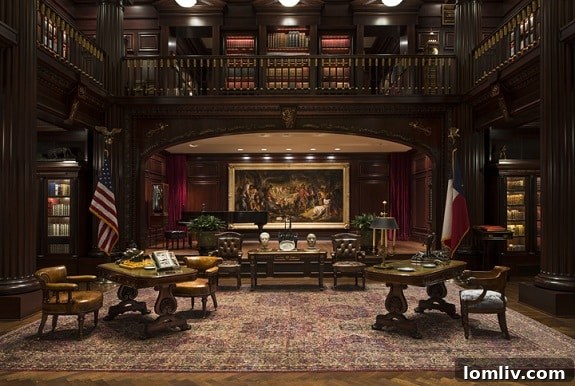
In a political climate often charged with passionate debate, an unexpected flashpoint emerged from the lavish Preston Road home of renowned Dallas real estate magnate and prolific collector, Harlan Crow. What began as a routine presidential fundraising event for then-Florida Senator Marco Rubio quickly escalated into a national discussion, drawing criticism from Democratic National Committee (DNC) Chairwoman Rep. Debbie Wasserman Schultz. The controversy centered not on political platforms or policy debates, but on the unique and sometimes provocative historical artifacts housed within Crow’s private residence, which doubles as one of the world’s most impressive private libraries and museums.
The incident highlighted the complex interplay between private historical preservation, public political discourse, and the enduring sensitivities surrounding certain historical figures and eras. As Senator Rubio prepared to host a crucial campaign fundraiser in Dallas, the DNC Chairwoman called for its cancellation, citing the presence of controversial items within Crow’s extraordinary collection. This public demand thrust the private world of an esteemed collector into the harsh glare of partisan politics, raising questions about the role of historical artifacts in modern society and the boundaries of acceptable political association.
The Storied Collection of Harlan Crow: A Glimpse into History’s Vast Tapestry
Harlan Crow is not merely an art enthusiast; he is a dedicated historian and an unparalleled collector whose passion has transformed his Preston Road estate into a veritable private museum. His collection is globally recognized for its scope, depth, and the sheer historical weight of its contents. Unlike typical art collectors who might focus on a specific period or movement, Crow’s interests span millennia and cultures, aiming to capture the full spectrum of human history – its triumphs, tragedies, and transformative moments.
The sheer breadth of Crow’s collection is astonishing. It houses thousands of documents, manuscripts, and works of art, each telling a distinct story. Visitors to his Dallas home can encounter an original letter penned in 1493 by Christopher Columbus, offering a direct link to the Age of Exploration. Nearby, one might find a signed copy of Benjamin Franklin’s ‘Poor Richard’s Almanac,’ a testament to early American wit and wisdom. The collection also boasts profound philosophical pieces, such as an Abraham Lincoln syllogism detailing the evils of slavery, underscoring Crow’s commitment to preserving documents that shaped fundamental human rights and national identity.
Beyond these foundational American and European treasures, Crow’s collection takes an intriguing turn into the more complex and often darker chapters of history. Among the vast array of items are sculptures of influential 20th-century figures, including Soviet dictators Stalin and Lenin, presented not as endorsements, but as powerful reminders of ideological conflicts that defined a century. His library also notably contains Third Reich dinnerware and a signed copy of Adolf Hitler’s infamous autobiography, Mein Kampf. Adding to the controversy, Crow also possesses a few paintings attributed to Hitler himself – artifacts that undeniably represent one of history’s most fascinating, albeit profoundly reprehensible, political figures.
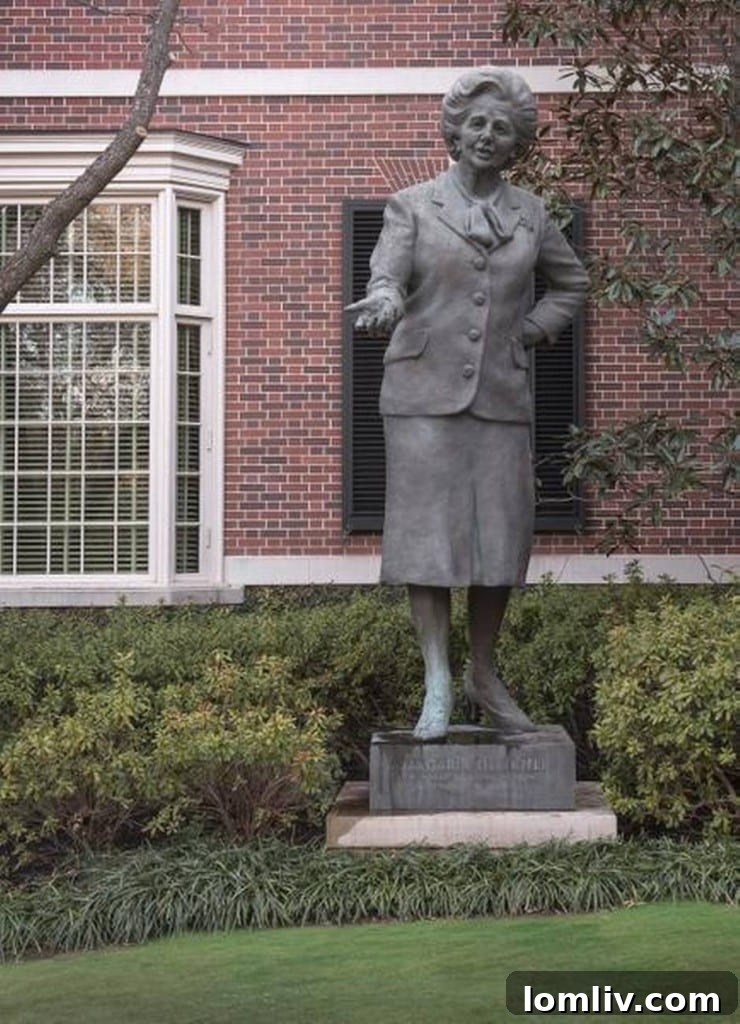
Yet, to focus solely on these provocative items is to miss the grandeur and purpose of Crow’s broader collection. The estate also proudly displays masterpieces by revered artists such as Renoir and Monet, illustrating the beauty and innovation of classical art. Political icons are also well-represented, with paintings by Winston Churchill and Dwight D. Eisenhower, alongside sculptural likenesses of Churchill and former British Prime Minister Margaret Thatcher. This diverse assemblage underscores Crow’s intent: to create a comprehensive historical archive that spans the full spectrum of human endeavor, from democratic ideals to totalitarian regimes, from artistic brilliance to the stark realities of war and genocide.
The Harlan Crow library is widely considered one of the most historically rich private libraries in the world, not just for the value of its individual items, but for the meticulous care taken in their preservation and the educational potential they hold. It serves as a profound testament to the past, inviting contemplation on the forces that have shaped our present.
A Political Storm Brews: The Dallas Fundraiser Controversy
The planned fundraising event for Senator Marco Rubio, a prominent Republican presidential candidate at the time, was scheduled to take place at the Crow residence. This was when Rep. Debbie Wasserman Schultz, then DNC Chairwoman, launched her scathing public criticism, demanding the event’s immediate cancellation. Her concerns were rooted deeply in the sensitivities surrounding the historical items linked to Adolf Hitler, especially given the timing of the fundraiser.
“Holding an event in a house featuring the artwork and signed autobiography of a man who dedicated his life to extinguishing the Jewish people is the height of insensitivity and indifference. There’s really no excuse for such a gross act of disrespect. Mr. Rubio, who by the way, represents a sizable Jewish population in our home state of Florida, should cancel this tasteless fundraiser,” Wasserman Schultz passionately declared.
Wasserman Schultz further intensified her criticism by highlighting that the fundraiser was slated to occur on the eve of Yom Kippur, one of the holiest days in the Jewish calendar. She asserted that holding such an event, under these specific circumstances and in a location housing Hitler memorabilia, amounted to “adding insult to injury.” Her comments resonated with a segment of the public who felt that the presence of such artifacts, regardless of their historical context, created an inappropriate and offensive backdrop for a political gathering, particularly for a candidate representing a state with a significant Jewish population.

Diverging Perspectives and Defense of Historical Preservation
In response to the mounting pressure, the Rubio campaign maintained a notably reserved stance, opting to decline direct comment on Wasserman Schultz’s accusations. This decision was interpreted by some as a strategic move to avoid legitimizing what they perceived as a politically motivated attack. However, the Republican National Committee (RNC) was quick to defend the senator and the nature of Crow’s collection.
Allison Moore, a spokesperson for the RNC, dismissed the entire affair as a “false controversy.” In an emailed statement, Moore retorted, “Rather than manufacture a false controversy over a collection of historic memorabilia that includes a statue of Margaret Thatcher and effects belonging to Abraham Lincoln, Debbie Wasserman Schultz should have opposed the weak Clinton-Obama Iran deal that puts Israel’s safety in jeopardy.”
Moore’s statement pivoted the discussion, redirecting criticism back to Wasserman Schultz by suggesting a distraction from more pressing geopolitical issues relevant to Israel’s security. This response underscored the partisan nature of the debate, where historical artifacts became pawns in a broader political struggle.
Beyond the political sparring, many observers and advocates for historical preservation defended Harlan Crow’s collection and Senator Rubio’s decision to proceed with the fundraiser. The original article’s author notably expressed admiration for Rubio’s handling of the situation, describing Wasserman Schultz’s comments as “absurd.” This perspective argued that while figures like Hitler were undeniably despicable, collecting and preserving historical artifacts associated with them serves a crucial purpose in society. Such collections are seen not as endorsements, but as vital educational tools, reminding us of the heinous crimes of the past and providing tangible evidence for future generations to learn from and prevent recurrence. The belief is that suppressing or ignoring these dark chapters does a disservice to history and risks repeating its mistakes.
Furthermore, Harlan Crow’s history of public engagement with his collection reinforces this view. In the past, he has generously opened his famous library to the public, notably for the Park Cities Historic and Preservation Society’s home tour. He also frequently shares insights into his collection’s architectural features and historical significance through speaking engagements, such as the 3rd Annual Distinguished Speaker Series luncheon, often complete with illustrative slide shows. These actions demonstrate Crow’s commitment to sharing history, even its most challenging aspects, for educational and cultural enrichment, rather than any perceived glorification.
The Broader Implications of Historical Preservation and Sensitivity
The controversy surrounding Harlan Crow’s collection and the Marco Rubio fundraiser sheds light on a broader, perennial debate: how society should engage with artifacts from morally repugnant historical figures or events. Is it sufficient to preserve such items within a private, curated context, or do they inherently carry a public weight that demands a higher degree of scrutiny, especially when intersecting with political events?
For many historians and collectors, the primary goal is preservation. They argue that every artifact, regardless of its origin, holds informational value. By preserving objects associated with figures like Hitler, collectors are not celebrating their ideologies but are ensuring that material evidence of these historical periods remains accessible for study. This access allows scholars to understand the mechanisms of propaganda, the symbols of power, and the everyday realities of those times, providing crucial context that texts alone cannot always convey. Erasing or discarding these objects, from this perspective, is akin to attempting to erase parts of history, which can be dangerous.
Conversely, critics argue that while historical preservation is vital, the public display or association with such items, even in a private setting, can be deeply hurtful and disrespectful to victims and their descendants. For Jewish communities, the presence of Hitler’s personal effects evokes profound pain and trauma. The argument here is not necessarily for destruction but for extreme caution and sensitivity in how and when these artifacts are presented or referenced, particularly in contexts that could be misconstrued as normalizing or validating the figures they represent.
The Harlan Crow incident underscores the tension between academic freedom in historical study and the social responsibility to prevent harm or offense. It forces a dialogue on whether context is always sufficient to mitigate the potential for offense, especially in highly charged political environments. The discussion extends to the role of private collectors as custodians of history, and the expectations placed upon them when their private worlds become public stages.
Conclusion: Navigating History and Sensitivity in Modern Discourse
The brief but intense controversy surrounding Harlan Crow’s extraordinary historical collection and Senator Marco Rubio’s fundraiser serves as a potent reminder of the complexities inherent in engaging with history. It highlights the delicate balance between the imperative to preserve all facets of our past – including its darkest chapters – and the profound need for sensitivity towards communities deeply affected by historical atrocities. Harlan Crow, through his dedication, has amassed a collection of unparalleled historical significance, a private museum that offers a tangible journey through human civilization’s diverse narrative. His efforts to share this legacy, as evidenced by public tours and speaking engagements, underscore a genuine commitment to education rather than endorsement of specific ideologies.
The political “flap” orchestrated by Debbie Wasserman Schultz, while perhaps strategically motivated, did bring to the forefront legitimate questions about appropriate conduct and respect for historical memory, particularly on the eve of Yom Kippur. However, the counter-arguments from the RNC and from commentators who defended the collection’s historical purpose underscore a crucial principle: that understanding and learning from history, however painful, requires confronting its realities. Dismissing or censoring artifacts, even those associated with despicable figures, risks obscuring the very lessons they can teach us.
Ultimately, the episode in Dallas illustrated that history is never static; it is constantly re-interpreted, debated, and often politicized. Harlan Crow’s collection stands as a testament to the idea that embracing the entirety of human history, with all its light and shadow, is essential for a truly informed and conscious society. It prompts us to consider how we can uphold historical integrity while simultaneously fostering an environment of respect and understanding in our ongoing public discourse.