The Rise of “Coming Soon” Listings: Navigating a Shifting Real Estate Landscape
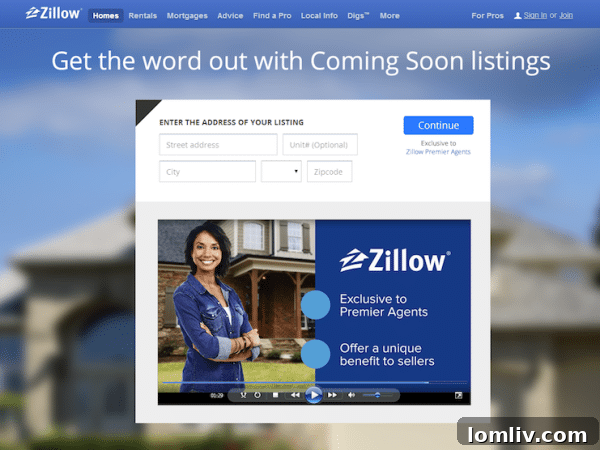
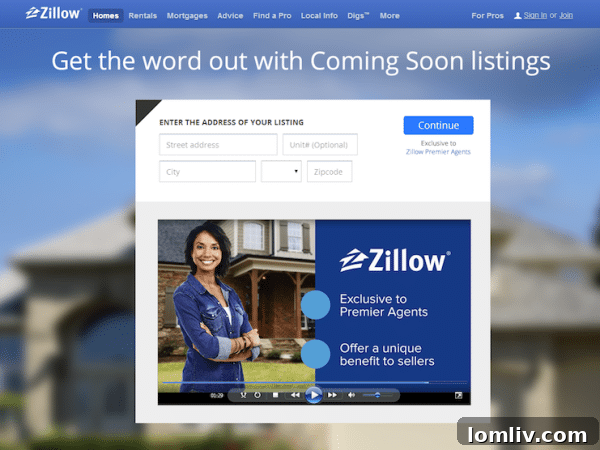
The real estate market, shaped by recent economic shifts and persistent low inventory, continues to evolve rapidly. One significant trend emerging from this dynamic environment is the growing prevalence of “Coming Soon” or pre-market listings. These properties, often dubbed “Hip Pocket” or “Whisper Listings,” are made available to potential buyers before they officially hit the Multiple Listing Service (MLS). This trend has sparked considerable debate and innovation within the industry, recently intensified by major online players like Zillow launching dedicated features for such listings.
Last week, as real estate leaders gathered, Zillow announced a new online search function aimed at helping consumers discover these pre-market properties. This move by Zillow, a dominant force in online real estate, signals a pivotal moment for the industry, prompting a closer look at the implications for buyers, sellers, and real estate professionals alike.
Understanding Pre-Market Listings: Hip Pockets and Whisper Sales
Pre-market listings, regardless of what they are called, refer to homes that are actively being marketed for sale but have not yet been formally entered into the local MLS database. This means they are not widely accessible to all agents and the general public through traditional channels. While an agent may or may not be directly involved in every whisper listing, their increasing presence is undeniable, particularly in highly competitive markets.
The concept of “hip pocket” listings has long been a subject of contention within the real estate community. Concerns range from the potential for unfair advantages to issues related to data transparency and market integrity. For instance, approximately a year ago, NTREIS (North Texas Real Estate Information Systems) initiated plans for a task force to investigate the proliferation of hip pocket listings. Many Realtors express apprehension that these listings undermine the MLS, which serves as a crucial repository of valuable comparative data essential for accurately pricing homes.
Consider a scenario where five homes in a neighborhood sell within six months via the MLS. The next home listed benefits from a clear understanding of its market value based on these comparable sales. However, if those same five homes are sold as pre-market, off-MLS transactions, there’s often no public record or obligation to disclose their financial data. This lack of transparency leaves the sixth listing without critical comparables, turning the process of determining a fair market value into a complex and often subjective challenge. This erosion of data integrity is a core concern for real estate professionals committed to fair and transparent practices.
Zillow’s Strategic Move: Capitalizing on Market Trends
Zillow’s decision to launch a “Coming Soon” feature reflects a keen understanding of current market dynamics and consumer demand. In a market characterized by low inventory and high buyer competition, new listings are snapped up almost instantly. Buyers are increasingly eager to get a jump on properties before they become widely available, leading to a natural demand for pre-market information. By offering a platform for “Coming Soon” listings, Zillow positions itself to capture an even larger share of the market and attract more unique visitors.
Realtors who advertise with Zillow and brokerages that provide listing feeds to the platform are now able to market pre-market listings on Zillow.com for a period of up to 30 days. This gives sellers a head start in gauging interest and potentially securing a buyer, while offering buyers an early look at properties that might otherwise be missed. This initiative is expected to significantly boost Zillow’s already impressive online presence. Currently, Zillow consistently leads the online real estate portal race, reportedly attracting over 45 million unique visitors per month—a figure they believe is an understatement.
The introduction of this feature by such a dominant platform raises important questions for the real estate community: Will Zillow’s move further normalize and accelerate the trend of non-MLS transactions? How will other major portals like Trulia respond? And what strategies will local MLS associations employ to adapt, regulate, or even compete with this evolving landscape?
The Undeniable Growth of Off-MLS Sales
The truth is, hip pocket sales and pre-market transactions are not just theoretical concerns; they are a growing reality in many competitive markets. If you’re currently in the market to buy a house, you’ve likely encountered this phenomenon. In a hot market with less than three months of inventory in certain price ranges, buyers are desperate for new listings. They are often ready to make offers the moment a fresh property becomes available. Some agents even advise clients against discussing hip pocket opportunities in public settings to prevent competitors from snatching leads.
In numerous inventory-deprived markets, sales are being finalized even before homes officially hit the MLS. Studies suggest that anywhere from 30% to 50% of transactions in some areas occur outside the traditional MLS framework. For example, local networking groups like “Facebook Friends” in Dallas serve as popular platforms for agents to exchange information on properties before they are publicly listed. Similarly, Austin has “Broker Underground,” a network where agents reportedly boast about selling real estate “free from the constraints of their MLS.” The most significant of these “constraints” is often the obligation to record the final sales price and other transaction details, which are critical for market transparency.
While there is no universal law mandating that every listing must be entered into the MLS, many associations, like NTREIS, require their members to obtain informed consent from clients. This consent typically involves explaining that the best possible chance for selling a home in North Texas is through an MLS listing, where it will be seen by a vast network of 25,000 members. However, comparing this to Zillow’s 45 million unique monthly visitors highlights a fundamental tension. While those 25,000 North Texas agents are highly targeted with clients specifically interested in North Texas homes, Zillow’s sheer volume of eyeballs presents a different kind of opportunity and challenge.
Shedding Light on the Data: A CoreLogic Study
The extent of off-MLS transactions has been quantified by research. A California real estate research firm, CoreLogic, conducted a study on California MLS listings and uncovered compelling insights. Their research revealed that hip pocket listings accounted for 26% of home sales in certain Northern California markets during the first quarter of 2013. How did they arrive at this figure? By meticulously comparing public record transaction data with MLS records across a four-county area.
The findings were striking: While public records indicated that 266,804 homes changed hands in those counties in 2013, the MLS systems reported only 174,762 transactions, representing just 66% of the total. This significant discrepancy clearly illustrates the substantial volume of sales occurring outside the MLS.
Furthermore, the study found that 9% of homes in those four counties during the research period were already under contract when submitted to the MLS, or went under contract within three days of listing. This strongly suggests that these properties were pre-marketed and quickly secured buyers before gaining full MLS exposure. An even more astonishing 7% of listings were under contract within zero to two days of appearing on the MLS, further emphasizing the speed at which pre-marketed homes are being sold.
In summation, 34% of off-MLS transactions combined with 9% of pre-MLS transactions means that a staggering 43% of 2013 real estate transactions in these four Northern California counties took place either entirely outside the MLS or with minimal to no MLS exposure. Bob Hale, president and CEO of the Houston Association of Realtors, accurately described these figures as “eye-opening numbers,” underscoring the profound impact of this evolving market dynamic.
If You Can’t Beat Them, Join Them: MLS Innovation
In light of these trends, some MLS associations are adopting a proactive stance, choosing to innovate rather than merely resist. A prime example of this progressive approach comes from Houston. Intriguingly, Houston is the only major U.S. city where Zillow is not the most highly trafficked real estate portal. This unique situation is largely due to the Houston Association of Realtors (HAR), which offers consumers a superior experience through its own platform, HAR.com.
Unlike Zillow, which sometimes displays stale data, properties that are no longer available, or “Zestimates” that often deviate from actual market values, HAR.com prides itself on providing comprehensive, accurate, and up-to-date information. Recognizing the need to offer a robust alternative, the Houston Association of Realtors has developed its own Zillow-like beta site. This impressive platform provides listings, actual sale prices, comparable sales data, property tax information, and detailed school and neighborhood insights for consumers. I had the opportunity to see the site last week at NAREE, and it was truly impressive.
The HAR.com beta site also includes a home value finder that offers property tax data, including assessed values, for off-market properties—a crucial feature for transparency. HAR is not keeping this innovation exclusive; it is inviting every broker in Texas to participate. In March, HAR announced plans to expand its coverage across the entire state by partnering with ListHub, a prominent listing syndicator and subsidiary of realtor.com operator Move Inc. This collaboration enables all ListHub-participating Texas brokers and MLSs to publicize their listings on HAR.com, effectively creating one comprehensive, statewide real estate portal for Texas. Locally, Virginia Cook Realtors, among others, will be contributing their listings to the HAR site.
When I questioned Bob Hale about whether this move implied HAR would cease sending listings to Zillow and Trulia, effectively cutting off these national portals—a strategy employed by the Austin Board of Realtors—his response was clear and insightful. “Oh no,” said Bob Hale. “I want my listings on Zillow and Trulia and our HAR site; I want them everywhere. That’s how listings get sold!” This philosophy highlights a strategic decision by HAR to embrace broad distribution while simultaneously building a superior local platform. HAR stands out as one of the very first MLS Realtor associations to leverage this evolving market situation to its advantage, demonstrating a forward-thinking approach to serving both its members and consumers.
The Financial Implications and Fair Housing Concerns
The pre-MLS market carries significant financial ramifications, particularly for brokers. Jonathan Green of CoreLogic highlighted that for every 1% increase in transactions involving pre-MLS marketing, brokers nationally stand to gain an estimated $250 million in gross commission income (based on 2014 figures) from in-house sales. This substantial gain is often attributed to the fact that many of these transactions are conducted within the same brokerage house, often facilitated through internal networks and “water cooler talk,” reducing the need for commission splits with outside agents. The financial incentive for brokerages to facilitate these internal, off-MLS transactions is clear.
Even more impactful, off-MLS marketing of homes yields greater overall transaction volume. Each 1% change in off-MLS sales represents an estimated $8.7 billion in 2014 transaction volume. This underscores the massive scale of economic activity occurring outside the traditional MLS system, reshaping how real estate value is exchanged and commissions are earned.
Beyond the financial considerations, the rise of pre-market and off-MLS listings also raises critical questions regarding market transparency and fair housing. When properties are marketed exclusively within private networks or to a select group of buyers, it can limit exposure to the broader public. This reduced visibility potentially restricts opportunities for certain buyers, raising concerns about whether all individuals, regardless of background, have an equal chance to discover and purchase available homes. Fair housing principles advocate for equal access and opportunity in housing, and practices that limit the reach of listings could inadvertently create barriers or perception of unfairness. Maintaining a balance between innovative marketing strategies and ensuring equitable access for all potential homebuyers remains a crucial challenge for the evolving real estate industry.
The emergence of “Coming Soon” listings and the growth of off-MLS transactions represent a significant shift in the real estate landscape. While they offer speed and exclusivity in competitive markets, they also challenge traditional structures, data integrity, and fair housing principles. The industry’s response, from Zillow’s embrace to HAR’s innovative counter-strategy, highlights a dynamic period of adaptation and redefinition. The future of real estate listings will likely involve a hybrid model, balancing the reach of national portals with the integrity and local expertise offered by MLS associations, all while navigating the complexities of transparency and equal opportunity for all.