Every week, the detail-oriented folks at Green Scene Home Inspections provide Daltxrealestate.com readers with invaluable insights into the world of home inspections. Want to see what critical issues they uncover? Tune in for “Upon Closer Inspection.”
Uncovering the Hidden Risks of Grey Ductwork: A Critical Home Inspection Insight
Just like the rapid evolution of your smartphone, the equipment and materials used in home building are constantly advancing. What was once cutting-edge can quickly become obsolete, posing potential issues for homeowners. In this week’s edition of Upon Closer Inspection, we delve into an outdated yet still prevalent material that some homes, particularly those from the 1980s, might be harboring: grey ductwork. Imagine still using a “Zack Morris style brick cell phone” in today’s world – that’s the level of outdated technology we’re talking about when it comes to this type of ductwork in your home’s vital HVAC system.
What Exactly Is Grey Ductwork and Why Was It Used?
Grey ductwork, often referred to as grey flex duct, is a type of flexible insulated ducting predominantly used in homes during the 1980s. Its primary function was to provide insulation for the air ducts, aiming to maintain the temperature of conditioned air as it traveled from the HVAC unit to various registers throughout the house. At the time of its widespread adoption, it was considered a practical and economical solution for residential duct systems. It featured a grey outer coating, typically a vapor barrier, covering a layer of fiberglass insulation, with an inner core through which the air flowed. While seemingly effective for its era, its design held inherent weaknesses that would eventually lead to its discontinuation.
The Decline of Grey Ductwork: A Lesson in Material Durability
The use of grey ductwork began to decline significantly by the early 1990s as critical flaws in its design and material composition became apparent. The primary issue stemmed from the outer grey coating, which was found to deteriorate rapidly when exposed to certain environmental factors. Specifically, high heat and ultraviolet (UV) rays proved to be its undoing. This is particularly problematic because a significant portion of a home’s ductwork, especially in warmer climates, is often routed through attics – environments notorious for extreme temperatures and, in some cases, exposure to indirect sunlight or UV radiation through vents or openings. When exposed to these conditions, the grey coating would become brittle, crack, and eventually disintegrate.
As experienced inspectors, we still encounter enough grey ductwork in existing homes to recognize it as a persistent concern for both current homeowners and potential buyers. Its presence often signals an underlying issue that demands attention.
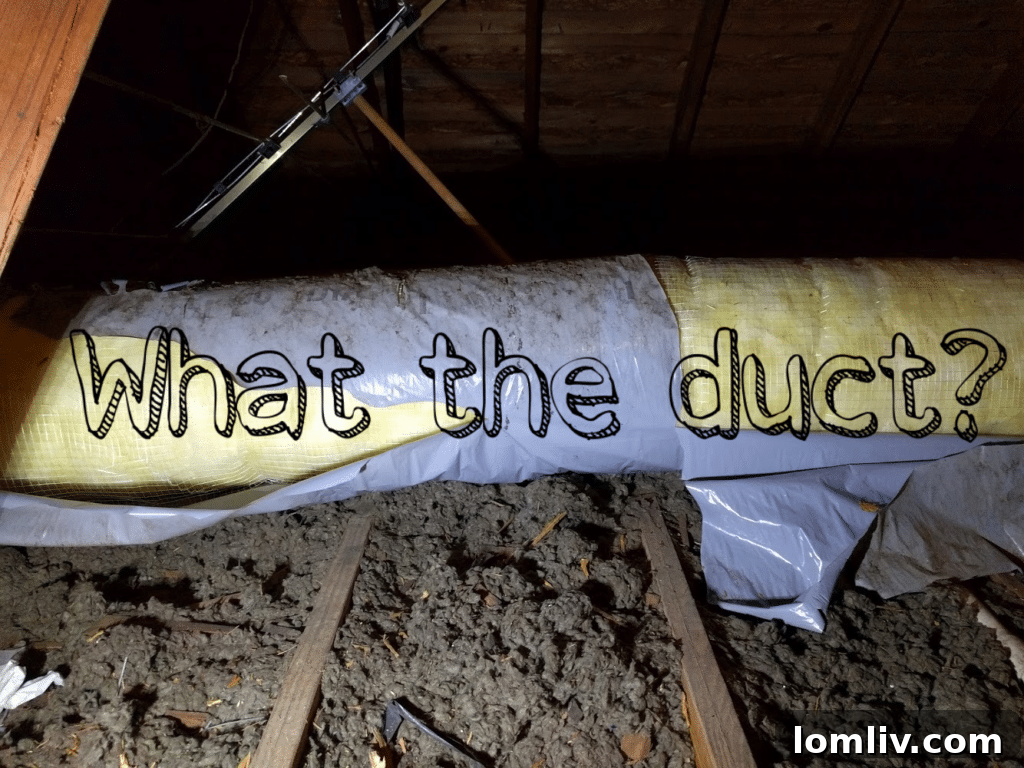
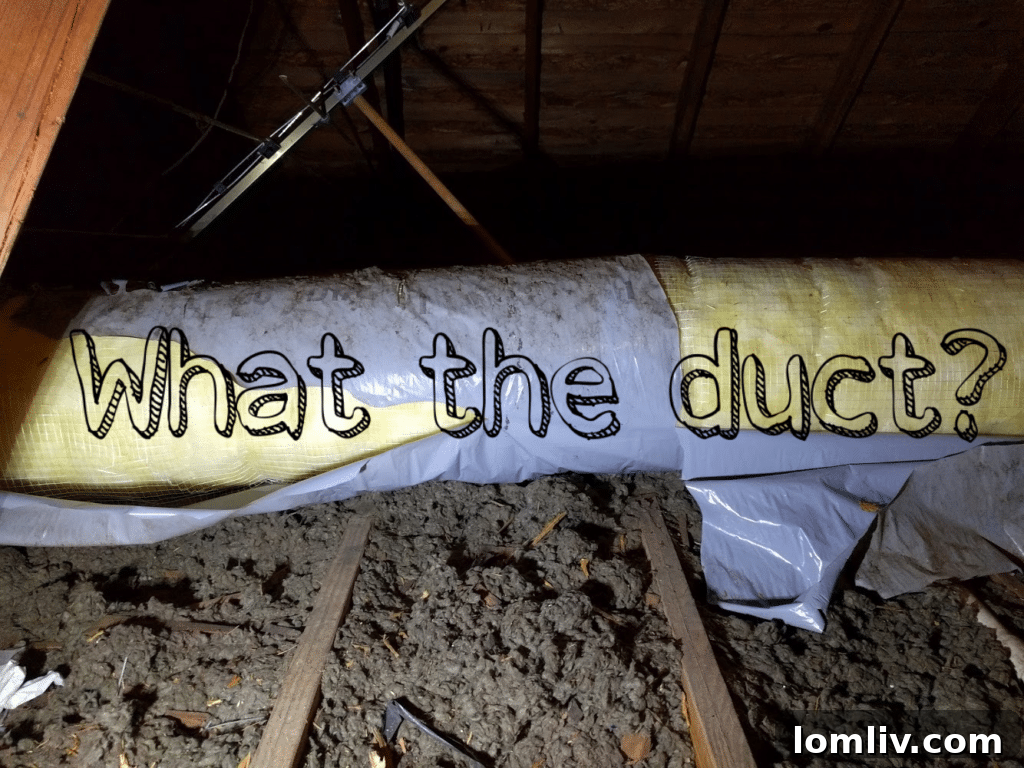
In the photo above, you can clearly observe the early stages of this deterioration. The grey coating, once uniform and protective, is visibly falling off the insulation beneath it. This isn’t just an aesthetic flaw; it’s a critical compromise of the ductwork’s integrity and ability to perform its function.
The Dire Consequences of Deteriorated Grey Ductwork
When grey ductwork begins to fail, the implications for your home’s energy efficiency, indoor air quality, and overall HVAC system health can be severe. The material doesn’t just chip away; over time, it completely falls apart. This leads to several significant problems:
1. Drastically Reduced Energy Efficiency and Higher Utility Bills
As the outer grey coating disintegrates, the fiberglass insulation beneath becomes exposed and, eventually, compromised. This means that the conditioned air — whether it’s cooled in the summer or heated in the winter — no longer has adequate insulation as it travels through a hot attic or a cold crawl space. The air temperature will rapidly equalize with the surrounding environment. In hot attics, for instance, cool air becomes significantly warmer before it even reaches your living spaces. This forces your HVAC system to work much harder and longer to achieve and maintain your desired indoor temperature, leading to inflated energy bills and wasted electricity.
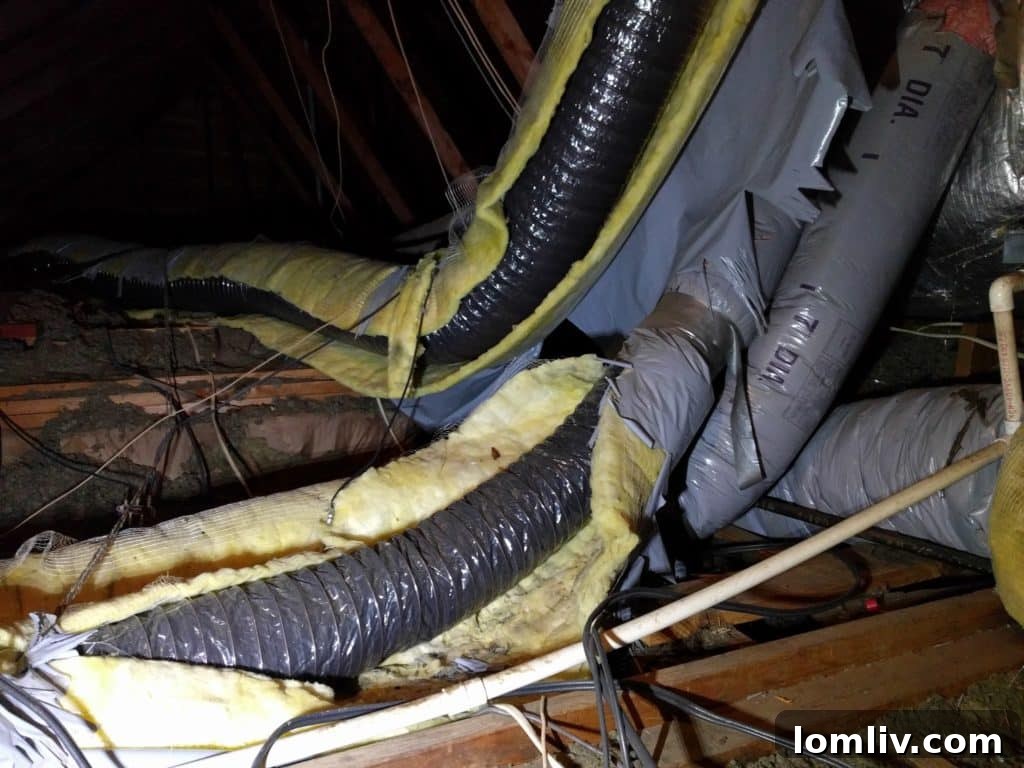
Here, you can see an example of completely exposed ductwork. In this scenario, any air flowing through that vent has virtually no hope of staying cool as it passes through a superheated attic. It’s essentially like trying to keep ice cream frozen on a summer day without a cooler – futile and inefficient.
2. Compromised Indoor Air Quality
Another serious concern arises from the breakdown of the insulation material itself. As the fiberglass insulation within the grey ductwork deteriorates and becomes exposed, tiny fibers and particles can be introduced into the airstream. These microscopic fibers can then be circulated throughout your home, potentially contributing to indoor air quality issues. For occupants with allergies, asthma, or other respiratory sensitivities, this can exacerbate symptoms and create an unhealthy living environment. While the health risks are often subtle, prolonged exposure to such contaminants is undesirable for any household.
3. Increased Strain on Your HVAC System
An inefficient duct system forces your heating, ventilation, and air conditioning unit to operate under constant stress. When the system has to work overtime to compensate for air leaks and temperature loss in the ducts, its components wear out much faster. This can lead to more frequent breakdowns, costly repairs, and ultimately, a shortened lifespan for your entire HVAC system. What might seem like a minor issue with duct insulation can snowball into a major expense for system replacement.
4. Uneven Heating and Cooling
Beyond energy waste, deteriorated ductwork often results in inconsistent temperatures throughout your home. Some rooms may feel noticeably warmer or cooler than others, regardless of thermostat settings. This “hot and cold spot” phenomenon is a common symptom of inefficient duct distribution, leading to discomfort and dissatisfaction with your home’s climate control.
The Home Buyer’s Perspective: Why Grey Ductwork is a Red Flag
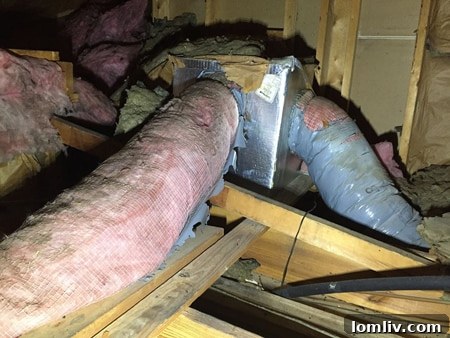
As a prospective home buyer, discovering grey ductwork during a professional home inspection should be a significant point of concern. Its presence is often a strong indication that the home’s HVAC system, and potentially other core components, may not have received adequate care or timely updates over the years. Modern HVAC systems typically utilize more durable, energy-efficient ducting materials that are designed to withstand attic conditions for decades. If the ductwork hasn’t been updated, it suggests a broader pattern of deferred maintenance, potentially masking other hidden issues within the home.
This finding isn’t merely a suggestion for an upgrade; it’s a clear sign that a critical component of the home’s energy infrastructure is failing. Understanding this allows buyers to make informed decisions, potentially negotiating repairs or factoring the cost of replacement into their budget. A thorough home inspection will not only identify the presence of grey ductwork but also assess the extent of its deterioration and its overall impact on the home’s HVAC performance.
Replacement is Essential: What to Know About Costs and Coverage
The reality is that if your home has deteriorated grey ductwork, it needs to be replaced. Continuing to use it will only lead to escalating energy costs, potential air quality issues, and an overworked HVAC system. Unfortunately, because grey ductwork was voluntarily pulled from the market by manufacturers due to its performance issues – rather than being officially recalled by a government agency – it is highly unlikely that homeowner’s insurance or a standard home warranty policy will cover its replacement. This means that the cost of upgrading to modern, efficient ductwork will almost certainly fall to the homeowner.
Replacing old, failing ductwork with new, well-insulated flexible or rigid ducting is a significant investment, but it’s one that offers substantial returns. Modern duct materials are designed for longevity, superior insulation, and improved airflow, directly contributing to lower utility bills, enhanced indoor comfort, and a healthier living environment. It’s an upgrade that pays for itself over time through energy savings and extended HVAC system life, making it a wise investment in your home’s future.
Beyond Grey Ductwork: The Broader Importance of Proactive HVAC Maintenance
The saga of grey ductwork serves as a powerful reminder of the importance of proactive home maintenance and the value of professional home inspections. Building materials, even those considered standard in their time, have finite lifespans and can conceal hidden problems that impact comfort, health, and finances. Regularly inspecting and maintaining your home’s HVAC system, including its ductwork, is crucial for ensuring its long-term efficiency and reliability. This means not only changing filters but also having periodic professional evaluations of the entire system, from the outdoor unit to the furthest registers.
Investing in the care of your home’s vital systems, and being informed about outdated materials like grey ductwork, empowers you to create a safer, more energy-efficient, and comfortable living space. Don’t let hidden issues compromise your home’s integrity or your family’s well-being. Stay vigilant, stay informed, and always opt for thorough professional assessments.
The experts at Green Scene Home Inspections are dedicated to uncovering these hidden truths, providing you with the knowledge needed to make informed decisions about your property. For more critical insights into your home’s unseen components, keep tuning into “Upon Closer Inspection.”