The Great Christmas Lights Debate: When Is the Perfect Time to Deck the Halls?
As the vibrant hues of autumn fade, a familiar and enchanting spectacle begins to transform neighborhoods across the globe: the dazzling glow of Christmas lights. These radiant illuminations, from simple twinkling strands to elaborate festive masterpieces, are a timeless emblem of the holiday season, turning ordinary homes into extraordinary winter wonderlands. Yet, amidst this cheerful display lies a question that sparks lively discussions among friends, family, and communities every year: when, precisely, is the ideal moment to hang those beloved Christmas lights? Is it ever truly too early to usher in the festive spirit, or could waiting too long dim the holiday magic?
The timing of holiday decorating extends far beyond mere personal preference; it’s a rich tapestry woven from cultural norms, regional traditions, and even deep-seated psychological comforts. Some eager enthusiasts begin stringing lights the instant Halloween decorations are packed away, while others steadfastly adhere to more traditional timelines, patiently waiting until after Thanksgiving or the official start of December. This enduring fascination with festive timing has become a compelling subject of inquiry, revealing a diverse spectrum of opinions and practices across different states and even international borders.
Unwrapping US Traditions: A Look at When Americans Light Up Their Homes
For countless Americans, the transition from fall festivities to the joyful embrace of winter holidays is unequivocally marked by the appearance of Christmas lights. To shed light on these decorating habits, House Method, a prominent Raleigh, N.C.-based company specializing in home-service research, conducted a comprehensive study. In October, they surveyed 3,939 U.S. homeowners, asking a direct question: “What’s the earliest day you should display Christmas lights?” The responses painted a fascinating portrait of America’s varied holiday traditions.
The survey unequivocally revealed that December 1st emerged as the most favored choice, garnering support from 16 percent of respondents. This date often symbolizes the official commencement of the festive month, serving as a clear and widely accepted demarcation from earlier autumnal celebrations. However, a significant segment of the population, 12 percent, expressed a preference for displaying their lights even earlier, specifically before Thanksgiving in November. This group often champions an extended holiday season, eager to maximize their enjoyment of the enduring festive glow. At the other end of the spectrum, a mere 1 percent believed it was appropriate to begin decorating as early as September, highlighting the rarity of this exceptionally early approach for the vast majority of Americans.
Texas Takes on Twinkling Lights: A Lone Star State Tradition
Delving deeper into the decorating habits of the Lone Star State, the House Method survey offered particularly intriguing insights into Texan holiday preparations. While December 1st proved to be a national favorite, the majority of Texans actually plan to initiate their outdoor lighting displays during the last week of November. This timing often aligns perfectly with the post-Thanksgiving weekend, transforming what might traditionally be a period for lingering feasts and Black Friday shopping into a collective opportunity for festive adornment. The delightful shift from Texas’s milder autumn warmth to the cooler, more distinctly holiday-like atmosphere makes late November an ideal moment for many to immerse themselves in the festive spirit.
Interestingly, the survey also uncovered a small yet distinct group within Texas: four percent of Texans proudly indicated their intention to keep their Christmas lights displayed year-round. This unique perspective speaks volumes about a profound appreciation for the aesthetic charm and emotional comfort that these lights provide, extending their cheer far beyond the conventional holiday season. Whether it’s a testament to an unyielding festive spirit, a constant craving for bright illumination, or simply a practical choice, these year-round decorators certainly stand out, contributing a unique flavor to the state’s holiday traditions.
National Averages vs. Regional Nuances: A State-by-State Look
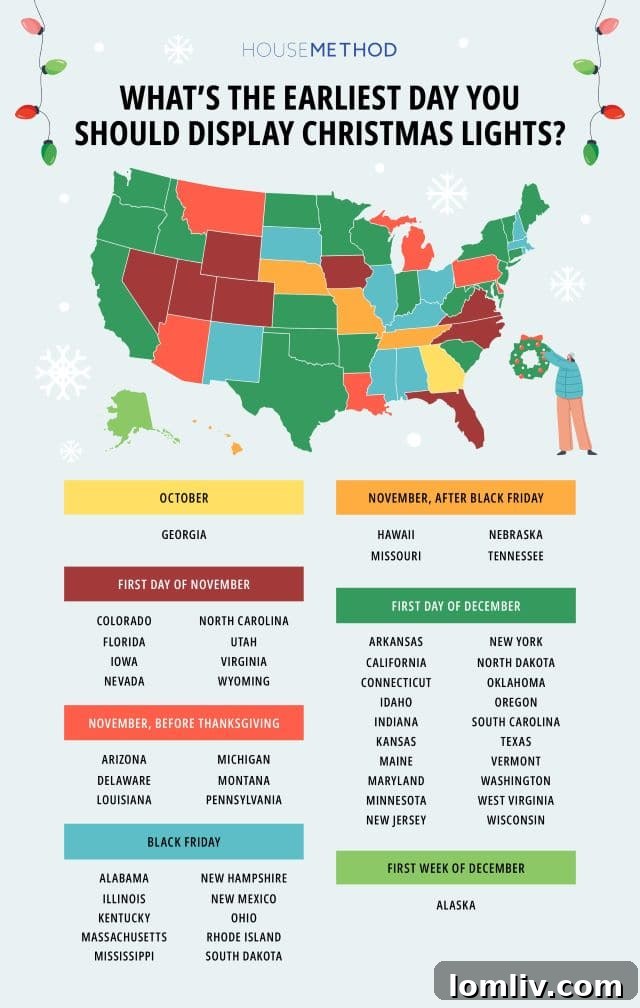
The House Method survey further illuminated the nuanced differences in holiday decorating sentiments across the United States. A striking majority of states—an impressive 34 out of 50—shared the collective belief that hanging Christmas lights before Thanksgiving is, in most cases, considered “too early.” This widespread consensus underscores a prevailing adherence to traditional timelines, suggesting that for much of the country, the fourth Thursday of November serves as an unofficial, yet highly respected, starting gun for the full-throttle holiday season.
However, as with any rule, there are always intriguing exceptions. Georgia and Delaware emerged as notable outliers in this national pattern. Residents in these states expressed absolutely no reservations about displaying their festive lights as early as October. This distinctive willingness to embrace the holiday season earlier than most could potentially be attributed to various regional factors, including milder autumn climates that make outdoor decorating more enjoyable, or perhaps unique cultural preferences that lean towards more extended periods of celebration. These states stand as vibrant examples of how local traditions can beautifully diverge from broader national averages, adding richness to America’s holiday tapestry.
When survey participants were asked about their personal plans for hanging Christmas lights, Texans, as previously noted, indicated November, specifically after the flurry of Black Friday activities. They found themselves in good company, joining a significant cohort of states that included Illinois, Massachusetts, Michigan, Missouri, New Mexico, North Carolina, North Dakota, and Tennessee. This collective preference for a post-Thanksgiving, pre-December decorating window highlights a widespread American tradition that intrinsically links the start of the holiday shopping season with the joyful beginning of festive home adornment, creating a seamless flow into the holiday spirit.
Meanwhile, Delaware, consistent with its earlier “early bird” stance, confirmed plans to begin decorating in October. Connecticut, surprisingly, broke away from its popular “White Christmas” movie stereotype, where one might expect early snow and swift decorations. Instead, residents in Connecticut reported planning to put up their lights during the second week of December, suggesting a more conservative and perhaps weather-dependent approach to holiday decorating, possibly waiting for deeper winter chills to truly set the quintessential New England festive mood.
Across the Pond: British Perspectives on Festive Lighting Traditions
The widespread fascination with the optimal timing for Christmas lights is by no means exclusive to the United States. Cultural attitudes and decorating practices across the Atlantic also offer valuable and intriguing insights. The U.K.-based financial comparison website Confused.com commissioned its own detailed survey of 2,000 U.K. adults who celebrate Christmas and adorn their homes, seeking to understand the unique British traditions and preferences surrounding festive decoration.
The Confused.com survey revealed that nearly half of U.K. respondents, specifically 47 percent, typically put up their outdoor lights between December 1st and December 10th. This finding aligns remarkably closely with the most popular decorating timing identified in the U.S. survey (December 1st), suggesting a shared international understanding of when the festive season truly commences. This early December period often coincides with the start of Advent, a significant traditional Christian period of anticipation leading up to Christmas, which for many provides a natural and deeply meaningful cue for the commencement of holiday decoration.
A particularly significant finding from the U.K. survey was that an impressive 56 percent of respondents intentionally put up their decorations early, with the explicit reason being to have more time to thoroughly enjoy them. This profound desire to prolong the festive experience transcends geographical boundaries, highlighting a universal human tendency to savor moments of joy, beauty, and cheer. For many, the considerable effort and creativity involved in decorating warrant an extended period of appreciation, transforming weeks of brilliant display into cherished memories and a sustained source of happiness throughout the colder months.
The Psychology Behind Early Decorating: More Than Just Aesthetics
Why do so many individuals feel a compelling urge to illuminate their homes early in the season, even when some societal norms might suggest waiting? The answer, often, delves far deeper than mere aesthetic appeal; it taps into a rich vein of profound psychological benefits. Dr. Elena Touroni, a distinguished consultant psychologist and co-founder of The Chelsea Psychology Clinic, offers a particularly compelling explanation: “Christmas activities like decorating the house or the tree are happy (and often shared) experiences that provide a temporary break from the reality of what’s happening in the world right now.”
This sentiment resonates deeply with countless people navigating the complexities of modern life. In an increasingly demanding, fast-paced, and often stressful world, the deliberate act of decorating for Christmas offers a powerful and essential form of escapism and mood enhancement. The gentle twinkling of lights, the vibrant hues of ornaments, and the nostalgic comfort of familiar decor evoke powerful feelings of warmth, security, and childhood wonder. These sensory experiences serve as a psychological balm, capable of momentarily alleviating worries, reducing anxiety, and fostering a profound sense of peace and joy. Decorating, in this light, becomes a mindful, therapeutic activity, allowing individuals and families to focus on beauty, creativity, and the enduring power of shared traditions.
Furthermore, the anticipation meticulously built by early decoration can be a potent and sustained mood booster. The visible signs of the approaching holidays—the shimmering lights adorning houses, the festive wreaths on doors, the decorated trees visible through windows—serve as daily, comforting reminders of upcoming celebrations, cherished family gatherings, and moments of profound goodwill. This sustained sense of hopeful anticipation can significantly contribute to an overall improvement in mood and may even help mitigate seasonal affective tendencies, particularly as daylight hours dramatically shorten during the depths of winter. For many, these lights are powerful symbols of hope and enduring happiness, literally brightening the darkest days of the year, both physically and emotionally.
Beyond individual psychological well-being, early decorating often cultivates a powerful sense of community and shared celebration. When one house in a neighborhood illuminates its facade, it can serve as a catalyst, inspiring others to follow suit, creating a delightful domino effect of festive cheer. This collective effort fosters a shared atmosphere of celebration, strengthens social bonds between neighbors, and can even evolve into friendly competitions that add an extra layer of excitement and camaraderie. Children, in particular, delight in witnessing their entire neighborhood transform into a magical wonderland, reinforcing the enchantment and wonder of the holiday season.
The Evolution of Christmas Lighting Traditions and Modern Influences
The cherished tradition of decorating with lights boasts a rich and fascinating history, having evolved dramatically over many centuries. What began as simple candles, often used to symbolize Christ as the “light of the world,” underwent a profound transformation with the groundbreaking advent of electricity. The very first electrically lit Christmas tree, a marvel of its time, made its grand appearance in 1882, quickly captivating public imagination and hinting at the future of holiday decor. Over the subsequent decades, Christmas lights transitioned from being an exclusive luxury to a widely accessible and affordable staple, irrevocably transforming outdoor spaces with their brilliant and captivating glow, becoming an integral part of holiday celebrations.
Today, a myriad of modern influences continues to shape both when and how we decorate our homes for the holidays. Technological advancements, such as the widespread adoption of energy-efficient LED lighting, have made lights more economical to run and significantly safer, subtly encouraging longer display times without excessive worry. The pervasive rise of social media platforms also plays a significant role, with people eagerly sharing their elaborate and creative displays, often inspiring others and sometimes even gently pushing the decorating timeline earlier to capture stunning visual content for their online followers. Commercial trends, particularly the aggressive marketing campaigns surrounding events like Black Friday and Cyber Monday, frequently blend the retail holiday season with the traditional decorating period, creating an almost seamless transition from Thanksgiving feasting to enthusiastic festive adornment.
Ultimately, whether you choose to string your Christmas lights the day after Halloween, patiently wait until after Thanksgiving, enthusiastically embrace December 1st, or even opt to keep them up year-round, the fundamental purpose remains beautifully consistent: to spread joy, ignite a sense of wonder, and distinctly mark a truly special time of year. The inherent beauty of holiday decorating lies in its remarkable flexibility and deeply personal meaning. There is no single “right” answer, only what feels most joyful, meaningful, and celebratory to you, your family, and your surrounding community.
Final Thoughts: Embracing Your Own Festive Timeline
In conclusion, the fascinating and enduring debate surrounding the timing of Christmas lights reveals a rich mosaic of deeply held traditions, personal preferences, and compelling underlying psychological motivations. From the specific decorating preferences observed among Texans to the broader national averages across the United States, and even the remarkably similar trends documented in the United Kingdom, it is abundantly clear that while general patterns certainly exist, individual and regional variations not only thrive but also enrich the tapestry of global holiday celebrations. Whether you are an early decorator who savors every extra day of festive cheer or a steadfast traditionalist who patiently waits until December to transform your home, your unique approach contributes meaningfully to the diverse beauty of the holiday season.
The act of putting up Christmas lights is far more than just an annual chore; it is a cherished ritual that powerfully signals the arrival of a season steeped in warmth, togetherness, and unparalleled magic. It serves as a heartfelt expression of hope, a radiant beacon of joy, and a visual promise of brighter days ahead. So, as the eagerly anticipated holiday season approaches, we encourage you to wholeheartedly embrace your own preferred timeline, string those lights with boundless enthusiasm, and allow their radiant glow to fill your home and neighborhood with an abundant and infectious festive spirit. After all, the most important holiday tradition is ultimately the one that brings you, and those around you, the greatest measure of happiness and warmth.