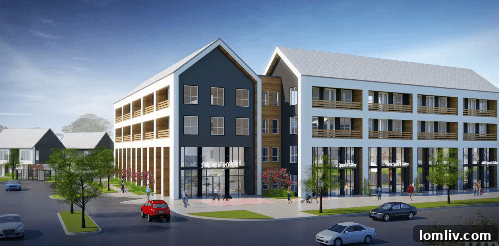
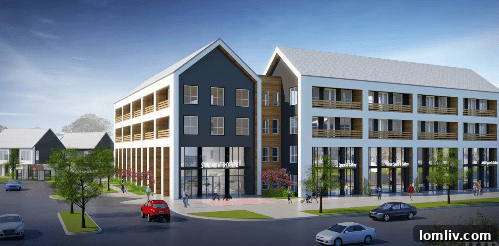
The highly contentious Standard Shoreline apartment development, a project that has sparked intense debate over its financing and impact on the local community, is rapidly approaching a critical juncture. After months of impassioned discussions and community engagement, the proposal is now slated for a Dallas City Council vote next month. While the refrain during a nine-month-long zoning process was often, “We don’t talk about project financing,” the topic of a 75-year tax exemption has undeniably become central to the ongoing discourse surrounding this significant Dallas development.
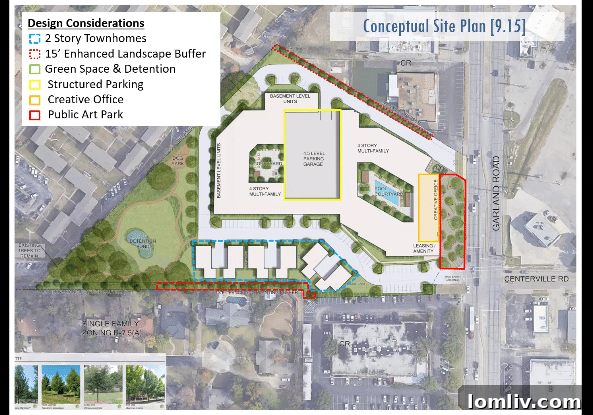
On September 15, the Dallas City Plan Commission formally approved Ojala Holdings’ rezoning request for The Standard Shoreline. This decision effectively green-lighted the construction of a 60-foot-tall apartment tower on Garland Road, strategically located northeast of Easton Road. However, this approval did little to quell the concerns of residents in the adjacent Lochwood neighborhood, who have vocally and consistently stated their firm intention to continue their fight against the development. The community’s organized opposition highlights a broader tension between urban expansion and neighborhood preservation in rapidly growing cities like Dallas.
District 9 Plan Commissioner Michael Jung played a pivotal role in leading the discussions during the CPC meeting. Jung revealed that he had initially encouraged the developers to attempt renegotiating the sale price with Shoreline City Church, the original property owner. His rationale was rooted in the hope that a revised price could make a three-story structure economically viable, thereby potentially reducing the development’s impact and addressing community concerns about height. Unfortunately, Jung confirmed that these efforts to renegotiate proved unsuccessful, leading to the presentation of the four-story building that ultimately received approval. This outcome underscores the complex interplay between economic feasibility, developer aspirations, and community expectations in urban planning.
Reflecting on the limitations and pressures faced during the decision-making process, Commissioner Jung articulated the stark choice confronting the commission at the meeting. “The question is not three stories versus four stories,” he stated, framing the dilemma in definitive terms. “The question is four stories versus denial.” This statement encapsulated the perceived lack of flexible alternatives available to the commission, suggesting that the approved four-story design was presented as the only financially viable option for the developer, short of outright rejection of the entire project. Such binary choices often leave little room for compromise or hybrid solutions that might better satisfy all stakeholders involved in a major urban development project.
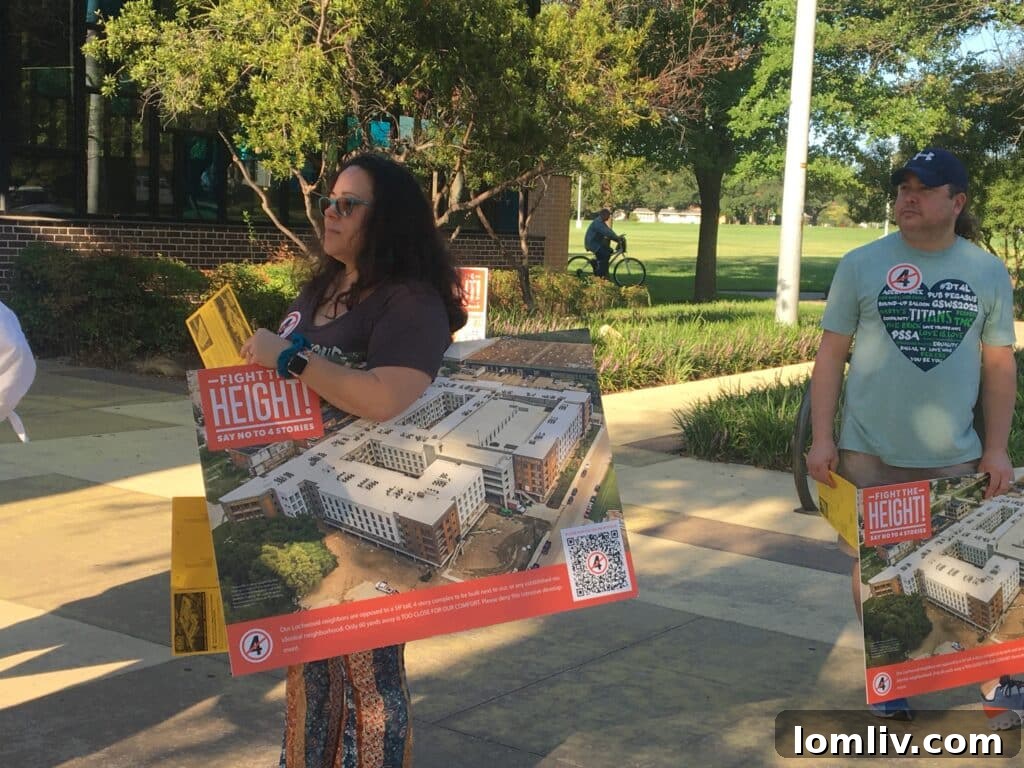
During the hearing, supporters of the 282-unit apartment complex put forth an argument suggesting that the Lochwood neighbors’ focus on building height was merely a “red herring.” This assertion implied that the true underlying issue was not the structural dimensions, but rather a perceived reluctance among Lochwood residents to accept affordable housing within their neighborhood. Such accusations often arise in zoning debates, adding another layer of complexity and sometimes animosity to discussions about urban development and community integration.
However, the residents of Lochwood have vehemently denied these claims, asserting that such interpretations of their concerns are entirely false and misrepresent their position. The Lochwood Neighborhood Association website clearly articulates their stance: “If this complex was 100 percent market-rate, we would still oppose a 60-foot, four-story complex.” This statement directly challenges the notion that their opposition is driven by an aversion to affordable housing. Instead, the association highlights a range of specific and tangible concerns that form the basis of their objections. These include how the complex is financed, particularly through “tremendous city tax abatements,” issues regarding its management and oversight, non-compliance with key items outlined in the comprehensive [Garland Road Vision] study, and its “enormously sized” footprint. The website concludes with a defiant message: “It’s not over. Council ultimately decides whether or not this is approved.” This underscores the residents’ determination to continue advocating for their vision of the Garland Road corridor and their neighborhood’s character, believing the Dallas City Council hearing to be the definitive moment for this controversial project.
Unpacking The Standard Shoreline Project Financing: The PFC Model
A significant and often misunderstood aspect of The Standard Shoreline project is its innovative financing structure. Kyle Hines, Assistant Director of Housing and Neighborhood Revitalization for the City of Dallas, explained that Dallas is, for the first time, leveraging a specific financing mechanism made available through the Texas Local Government Code pertaining to Public Facility Corporations (PFCs). This model represents a novel approach for Dallas, even though it has been utilized elsewhere in the state.
The PFC structure is designed to facilitate the creation of affordable housing by offering substantial financial incentives. Under this model, the city effectively leases tax-exempt land to a private developer for an extended period, in this case, 75 years. In return for this significant tax abatement, the developer commits to reserving a substantial portion of the units for affordable housing. Specifically, at least 50 percent of the units must be offered to tenants earning less than 80 percent of the area median income (AMI). The Standard Shoreline project proposes to exceed this minimum, allocating 51 percent of its units as affordable housing. This mechanism aims to bridge the financial gap that often makes affordable housing projects challenging for developers in high-cost urban markets.
To receive the exemption, a private apartment developer transfers land to a public facility corporation (PFC) set up by a local government entity — such as a public housing authority, county, or city — which then leases the land and any buildings on the land (including those built in the future) back to a limited partnership controlled by the developer. The local government entity gets paid to participate in the venture.
University of Texas School of Law Entrepreneurship and Community Development Clinic
The Public Facility Corporation model, while new to Dallas, is not a recent invention in Texas. A comprehensive 2020 report published by the University of Texas School of Law Entrepreneurship and Community Development Clinic highlights the widespread adoption of this structure across the state. The report indicated that since 2016, at least 30 apartment complexes in Texas have either been acquired, developed, or are currently in active development using this tax-exempt framework. This demonstrates a growing trend among local governments to utilize such incentives to address housing affordability challenges.
The UT report further elaborates on the accelerating trend: “Housing authorities, cities, and counties report an ongoing onslaught of proposals by apartment developers to convert existing apartment complexes as well as develop new apartment complexes under this structure in order to obtain the Section 303.042(f) exemption.” This surge in proposals signals the attractiveness of the PFC model for developers seeking to reduce their tax burden while contributing to the affordable housing stock. While these projects initially concentrated in Texas’s largest metropolitan areas, particularly San Antonio and Houston, the report notes that the model is now “spreading into suburban areas and smaller cities,” indicating its increasing relevance across the state’s diverse urban and exurban landscapes.
Despite The Standard Shoreline project being Dallas’s inaugural venture under the PFC model, city leaders have not approached it without guidance. Kyle Hines confirmed that Dallas has actively looked to San Antonio, a pioneer in utilizing this financing structure, to inform and refine its own process. This proactive learning approach has allowed Dallas to adapt and implement best practices observed in other cities. “There’s a perception that we’re going out in the wilderness with this, but it’s customary throughout the state; it just hasn’t been done in Dallas,” Hines explained, addressing potential concerns about venturing into uncharted territory. He emphasized, “We’re able to see best practices in San Antonio, and we’ve been able to adjust the plan. Our terms are top of the market,” suggesting that Dallas has crafted a robust and competitive agreement.
One notable adjustment derived from this comparative analysis involved re-evaluating the income thresholds. The financial structure was originally calibrated around a single person earning $77,000 annually. Recognizing that this threshold might not target the most critical demographic for truly affordable housing, the city revised its approach to better serve families and individuals with more pressing needs. This refinement ensures that the tax benefits are directed towards those who genuinely require lower rent options.

“A single person making $77,000 doesn’t need that kind of [lower] rent,” Hines clarified, highlighting the intent to ensure equitable access to affordable units. “We’re making sure we get the right tenants in there.” This strategic recalibration aims to maximize the social impact of the tax exemption by targeting households that genuinely struggle with housing costs in Dallas’s competitive market. Furthermore, to foster integrated communities and avoid creating segregated zones within the development, the city has mandated that affordable units be distributed throughout the complex rather than concentrated in a single area. This approach promotes social equity and ensures a diverse tenant mix across the property.
Understanding what constitutes “affordable housing” is crucial for appreciating the project’s goals. By definition, affordable housing refers to a household paying no more than 30 percent of its annual income on housing expenses. Consequently, even for an apartment priced at an “affordable” $1,200 per month, a single person would still need to earn approximately $43,000 a year to qualify under these guidelines. This illustrates that “affordable” in a major metropolitan area like Dallas still implies a significant income level, often catering to working professionals rather than those in the lowest income brackets.
Ojala developers have consistently characterized The Standard Shoreline project as a “Class A” development, aiming to offer “attainable” housing specifically to working professionals and public servants. This category includes essential workers such as teachers, firefighters, and police officers, who often face challenges finding suitable housing in desirable urban corridors. For instance, according to Salary.com, the average entry-level teacher salary in Texas is approximately $41,000 per year. These income levels align closely with the adjusted affordability thresholds, positioning the project to serve a vital segment of the city’s workforce. The vision is to provide modern, high-quality living spaces that are within financial reach for those who contribute significantly to the community but are increasingly priced out of market-rate options.
Should the Dallas City Council grant approval for The Standard Shoreline project next month, the financial arrangement for the city will involve an annual lease payment of $250,000. In exchange, the property will be removed from the traditional tax rolls due to its public facility corporation status. This structure reconfigures how the city benefits from the development, shifting from property tax revenue to a fixed annual lease payment. This payment, combined with the provision of much-needed affordable housing, represents the city’s perceived return on investment for the tax exemption granted to the developer.

Hines articulated the strategic thinking behind the financial structuring, especially given Dallas’s buoyant real estate market. “With the kind of Dallas real estate market people want to be in, we can command that type of structuring,” he stated, implying that the city is in a strong negotiating position. He acknowledged the high construction costs associated with such developments, particularly Class A projects. “This development has a pretty high construction cost. There has to be some way to make them whole because they’re not getting the same amount of money they would if all the units were market rate.” The goal, therefore, is to strike a delicate balance: “We want to make sure the developer is not underfunded, but we also don’t want to overfund them. We’ve found a sweet spot here.” This “sweet spot” aims to incentivize developers to undertake affordable housing projects without excessively burdening the public purse, ensuring financial viability for all parties while addressing a critical urban need.
Beyond the financial mechanics, Hines emphasized the broader societal benefits, asserting that the project offers a crucial opportunity for Dallas to provide much-needed affordable housing within the high-opportunity Garland Road corridor. This area, known for its amenities and connectivity, is an ideal location for diverse housing options. “It’s a great win for the city,” he proclaimed, underlining the administration’s perspective. “This is our way of providing affordable housing.” The development is seen not just as a building project, but as a key component of Dallas’s larger strategy to foster inclusive growth and ensure that residents of varying income levels can access quality housing in desirable areas.
Transparency and public engagement have been key components of the process surrounding this development. Meetings of Public Facility Corporations (PFCs) are open to the public, as are the various stages of municipal review, including gatherings of the housing committee, city council, and plan commission. This openness ensures that community members have multiple avenues to voice their opinions and stay informed about the project’s progress. Hines specifically highlighted the extraordinary level of public interest in this particular case: “I don’t think I’ve ever seen public engagement like there has been on this project,” he remarked concerning the Shoreline development, a testament to its profound impact on the local community.
It is important to note the distinct roles of different municipal bodies in this process. The City Plan Commission is constitutionally limited to considering matters of land use and zoning. Consequently, the intricate financial structure of The Standard Shoreline project, including the 75-year tax exemption and the PFC model, was not subject to discussion or approval during the September 15 CPC meeting. This critical aspect of the development, however, will be a central factor and a primary point of contention when the proposal moves to the Dallas City Council for its definitive hearing next month. The Council’s broader mandate allows it to deliberate on the financial implications, community benefits, and overall public interest in a way that the Plan Commission cannot, making the upcoming vote highly anticipated and consequential.
Lochwood Neighborhood Response: Disappointment and Continued Opposition
The City Plan Commission’s decision did not sit well with the Lochwood community, whose residents felt that the process failed to deliver the rigorous examination they had anticipated. Jessica Mannon, a prominent Lochwood resident, articulated the neighborhood’s disappointment, particularly regarding the commission’s handling of the building height issue. “Commissioner Jung said he originally asked for three stories, and not four,” Mannon recalled, highlighting the initial preference for a less imposing structure. However, Ojala Holdings asserted that a three-story design would not be “financially possible.”

Mannon’s critique centered on the perceived lack of substantiation for this financial claim. “To the neighbors’ knowledge, Ojala was never required to follow up on this assertion to provide any financial modeling to demonstrate this was anything other than an assertion that their profit margins will be better with four stories,” she explained. This lack of transparency regarding the developer’s financial models became a significant point of contention for residents. Mannon further expressed frustration that Commissioner Jung, by his own admission, “took Ojala at their word, and employed a ‘four stories or nothing’ analysis to come to his decision.” This approach, she argued, fell short of the community’s expectations for a thorough and critical evaluation. “We rely on Commissioner Jung to help us decide on the best use for land, not the easiest use, and we’re disappointed in [the] outcome.” This sentiment reflects a broader desire within the community for development decisions that prioritize long-term neighborhood well-being over immediate developer convenience or profit margins.
Echoing Mannon’s sentiments, Thomas Buck, Communications Director for the Lochwood Neighborhood Association, issued a statement reinforcing the community’s resolve. “This is just a part of the process, and while we are not happy nor agree with the CPC recommendation, we can now include other, important reasons to oppose when talking with Council Member [Paula] Blackmon, and the rest of the council members prior to the next hearing,” he conveyed. This indicates that while the CPC decision was a setback, it has merely shifted the arena of contention to the City Council, where the neighborhood intends to present an expanded array of arguments against the project, including its financing and broader impacts. The association’s strategic focus now lies in leveraging these additional points to influence the final vote.
Notably, Dallas City Councilwoman Paula Blackmon, whose district includes the Lochwood neighborhood and the proposed development site, did not respond to a request from Daltxrealestate.com for comment on The Standard Shoreline proposal. This silence, while not indicative of a position, leaves a void that residents hope to fill with their advocacy as the council vote approaches. The community’s efforts will undoubtedly intensify in the coming weeks, aiming to persuade Council Member Blackmon and her colleagues to consider their multifaceted objections.
Adding another layer to their concerns, Lochwood residents have also raised questions about potential conflicts of interest among certain council members. They have pointed out instances where some council members have accepted campaign contributions from individuals or associations who may have a direct financial or professional interest in the outcome of a vote on a particular matter, such as the Shoreline development. City code explicitly mandates that council members disclose any such conflicts of interest and, crucially, recuse themselves from any discussions or votes pertaining to those matters. This ethical consideration adds a critical dimension to the community’s watchful oversight, emphasizing their desire for a decision-making process free from undue influence and based solely on the merits of the project and its impact on the city and its residents. As the final vote looms, the collective voice of the Lochwood neighborhood remains steadfast in its opposition, demanding thorough scrutiny and accountability from the Dallas City Council.