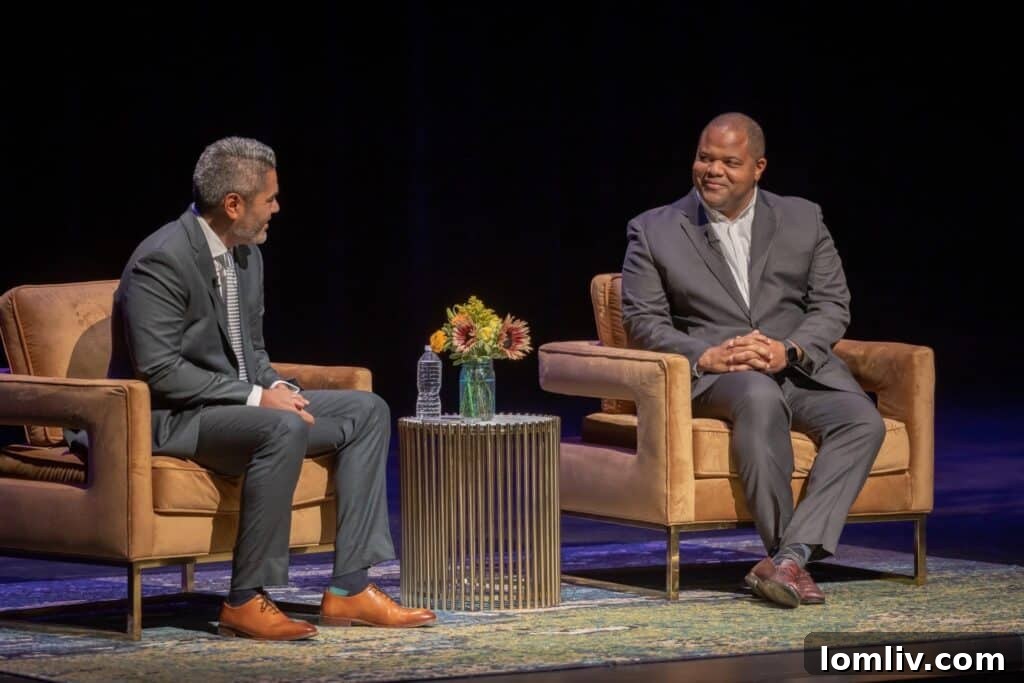
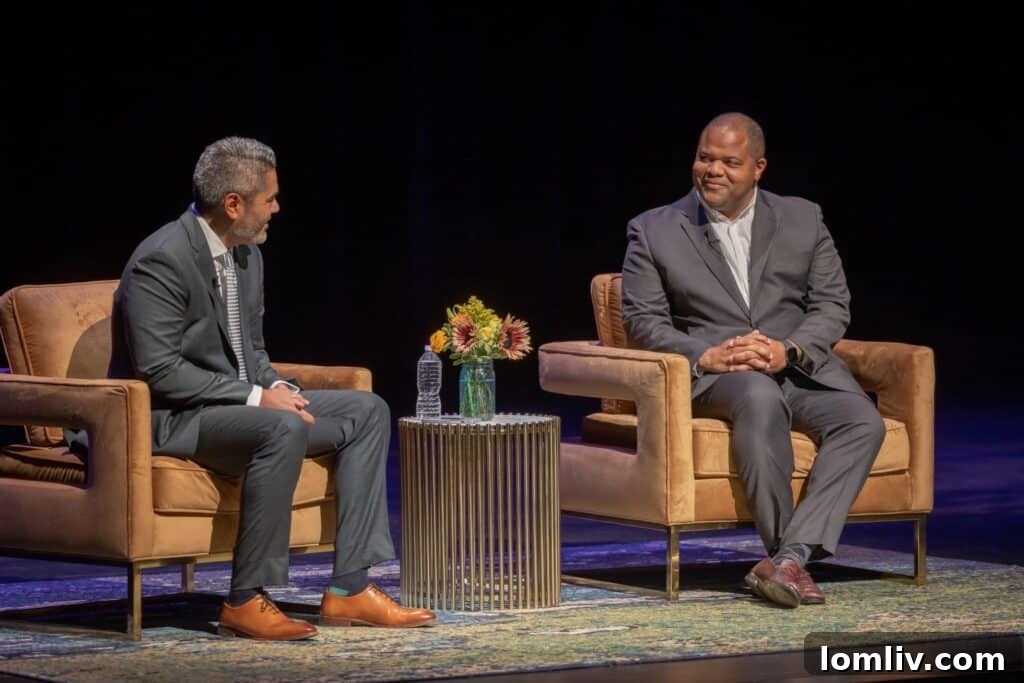
Dallas, Texas – Mayor Eric Johnson delivered a compelling address at the recent Downtown Dallas Inc. State of Downtown event, urging community leaders and stakeholders to continue building on the remarkable momentum of new development, strategic revitalization, and the creation of vibrant, walkable urban residential areas. Held at the esteemed Moody Performance Hall, the gathering felt less like a formal presentation and more like a rallying cry for the city’s bright future.
Indeed, many observers might characterize the prevailing atmosphere surrounding Dallas’s growth as an embodiment of “Big Dallas Energy.” This palpable enthusiasm reflects a city confidently asserting its place on the national stage as a hub for innovation and urban excellence.
“My vision is simple: it’s about continuing and amplifying the success we’ve already achieved,” Mayor Johnson stated, his words resonating with optimism. “This is a narrative of consistent good news for Dallas, a story that’s now being told across the nation.” His remarks underscored the city’s impressive trajectory and its expanding influence beyond regional borders.
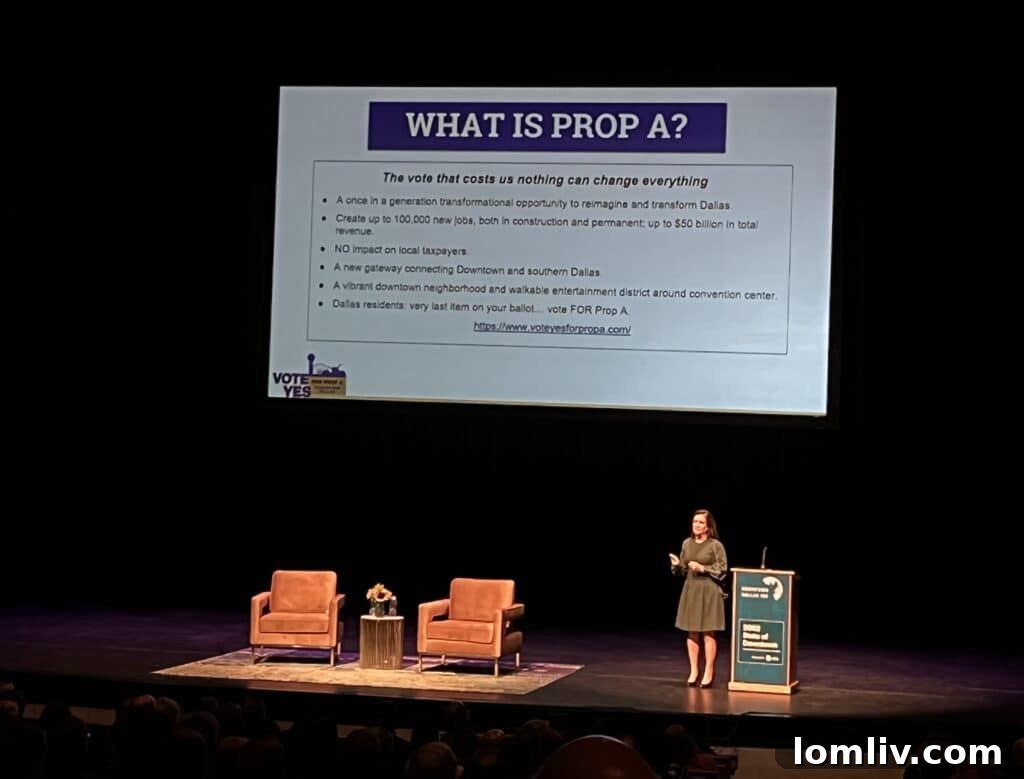
A significant portion of Mayor Johnson’s speech focused on Proposition A, a crucial initiative slated for voter consideration. This proposal seeks to increase the hotel occupancy tax by two percentage points, generating an estimated $1.5 billion. This substantial investment is earmarked for vital renovations and upgrades to two of Dallas’s most iconic landmarks: Fair Park and the Kay Bailey Hutchison Convention Center Dallas. These improvements are not merely cosmetic; they represent a strategic investment in the city’s infrastructure and economic future.
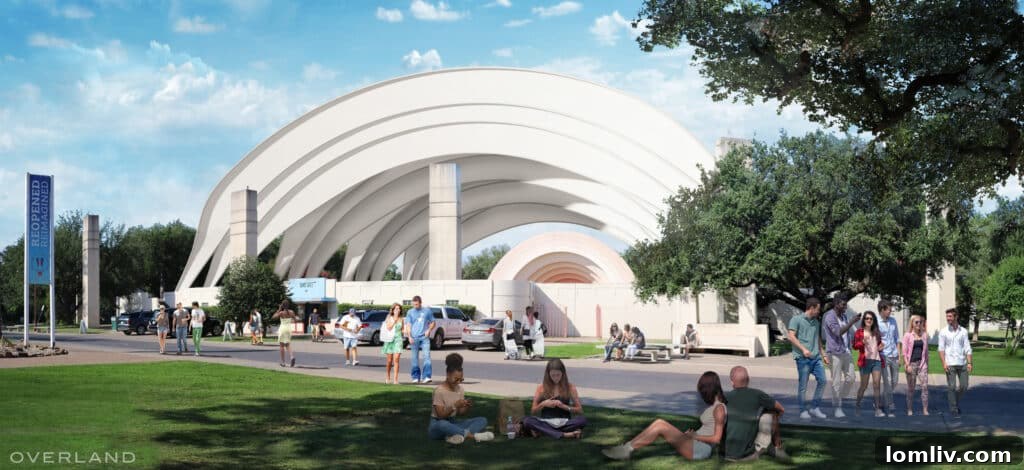
Highlighting the transformative potential of these projects, Mayor Johnson elaborated on the convention center’s proposed re-orientation. “The core idea is to pivot the convention center’s primary entrance to face directly towards downtown,” he explained. “This strategic re-alignment will liberate approximately 30 acres of prime land in that vicinity. If we approach its development intelligently, this alone could ignite an additional $2 billion to $3 billion in economic activity and investment within that specific downtown sector. This initiative is akin to injecting jet fuel into the already formidable engine of economic development driving our city forward.” The mayor emphasized that such upgrades would naturally attract significant residential and retail development, creating a dynamic and integrated urban landscape.
“This is truly a once-in-a-lifetime opportunity for Dallas,” he asserted, underscoring the urgency and strategic importance of Proposition A. “From an economic and urban development perspective, it’s an absolute no-brainer.” The decision now rests with Dallas voters, who will cast their ballots on November 8th, with early voting commencing on Monday, October 24th.
The president and CEO of Downtown Dallas Inc., Jennifer Scripps, echoed the mayor’s sentiments, articulating the broader impact of this proposed investment. “This project represents an unparalleled chance to significantly advance urban mobility, forge seamlessly connected neighborhoods, and cultivate a truly unique sense of place within our urban core,” Scripps remarked. She also reassured residents about the financial implications: “Crucially, this investment will incur no direct cost to us as local residents, as it is funded through visitor-generated hotel occupancy taxes.”
Dallas: The Resilient Comeback City Leading Urban Development
Mayor Johnson, first elected in 2019, officially announced his re-election bid in September, signifying his ongoing commitment to Dallas’s growth trajectory. While rumors circulate about potential opponents, including former Dallas ISD Superintendent Michael Hinojosa, Johnson remains focused on the city’s progress.
“I am profoundly motivated by the future and the immense potential that lies ahead for Dallas,” Johnson articulated during the DDI event. “When I reflect upon what we’ve been able to accomplish, even against the backdrop of an unprecedented global pandemic over the past three-and-a-half years, it is truly extraordinary.” This period of remarkable growth underscores Dallas’s resilience and dynamic leadership.
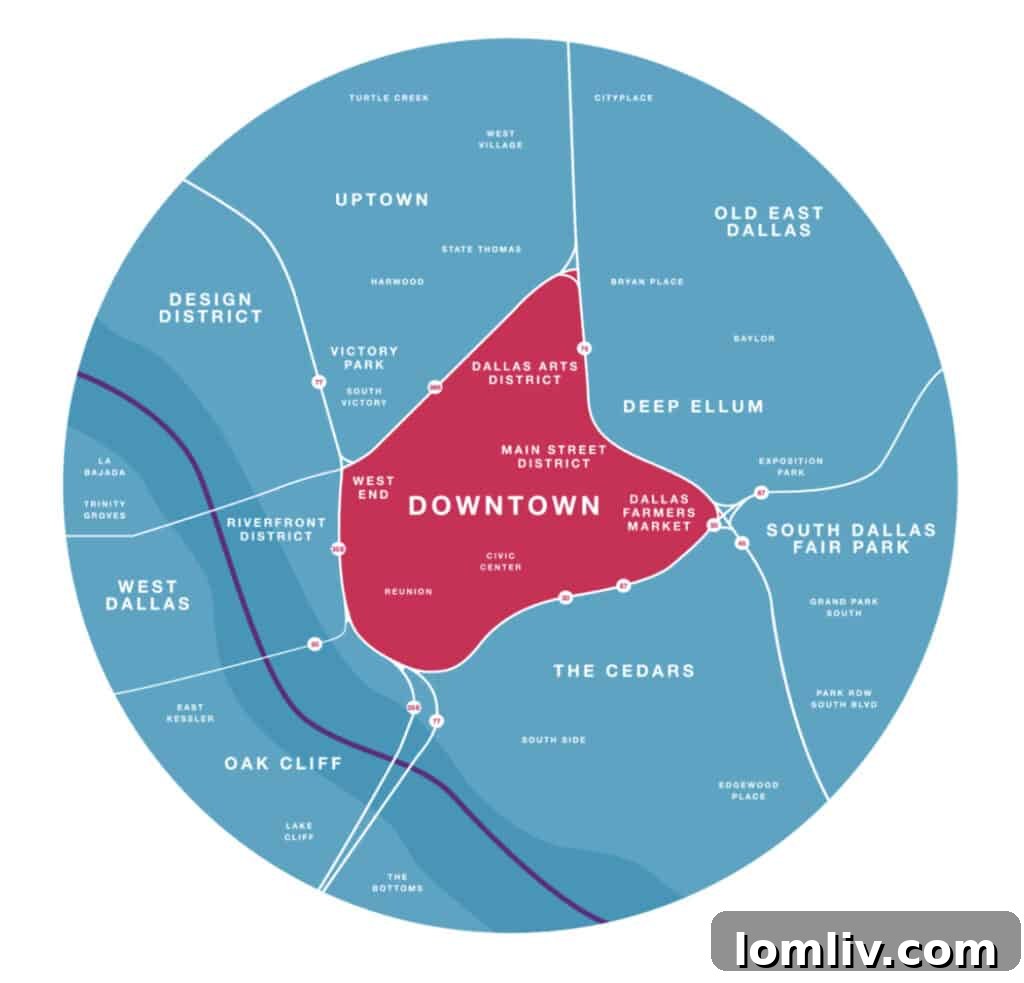
The mayor proudly highlighted downtown Dallas’s distinctive position to elevate the city’s national and international profile. He cited the recent high-profile relocation of global financial titan Goldman Sachs to a strategic location nestled between Victory Park and Uptown. This monumental move, incentivized by approximately $18 million from the Dallas City Council, is a testament to Dallas’s competitive edge and attractive business environment.
“Our City Council is deeply committed to ensuring Dallas not only competes but excels against our neighboring suburbs, other major cities across Texas, and indeed, the entire nation,” Johnson affirmed. “We are actively positioning ourselves to capture all the truly groundbreaking development opportunities available in today’s market.” This proactive approach is foundational to sustaining Dallas’s economic vitality.

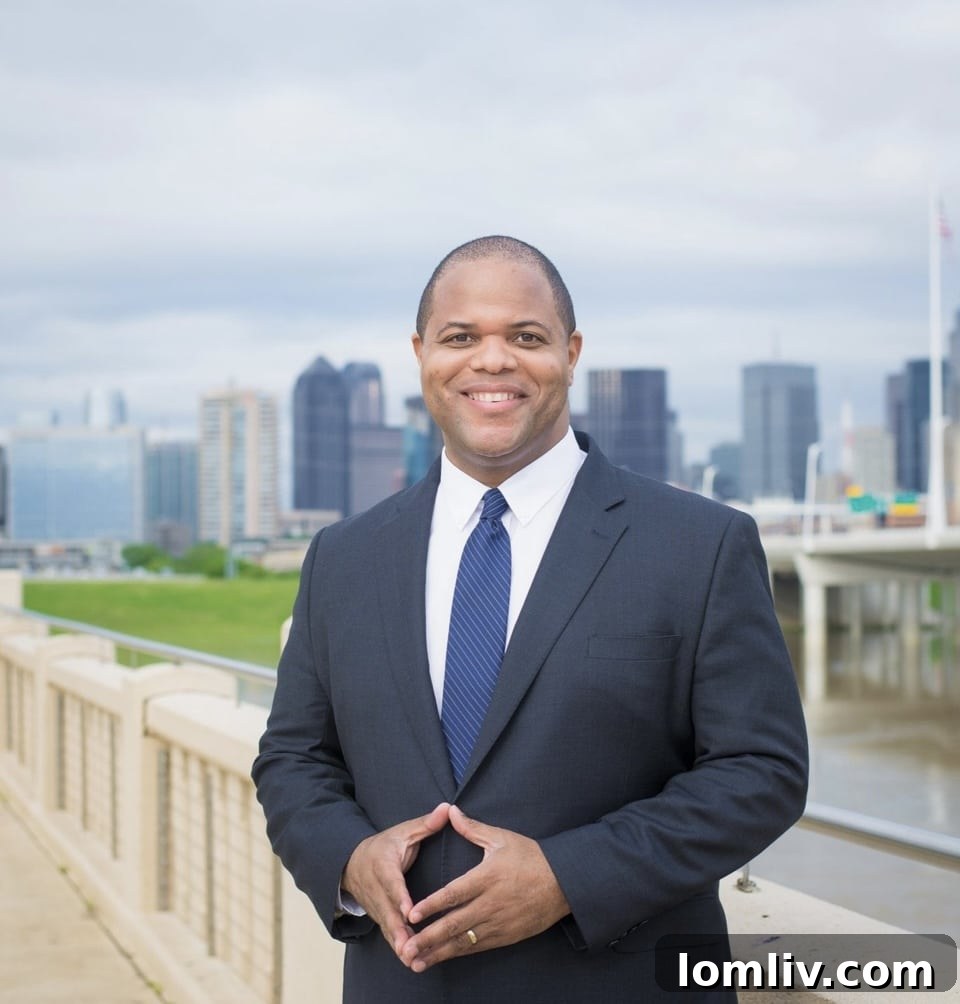
Over the past four years, Dallas has witnessed an astounding $14 billion infused into new construction projects, a figure that powerfully illustrates the city’s robust development boom. “The success of downtown Dallas is fundamentally driven by its people,” Johnson declared, recognizing the collective effort behind the city’s transformation. “We, as Dallasites, possess the unique ability to manifest our aspirations into reality. The creation of our world-renowned Arts District, for instance, was a profoundly deliberate act of urban planning and vision. Furthermore, our city’s most cherished park amenity is, remarkably, an overpass—an innovative concept that we conceived and brought to life.”
Ollie Chandhok, publisher of the Dallas Business Journal, further elaborated on this point, noting that Klyde Warren Park, an iconic deck park bridging Uptown and Downtown, has become a model now emulated by other forward-thinking cities across the nation. This innovative urban green space symbolizes Dallas’s pioneering approach to public infrastructure and quality of life.
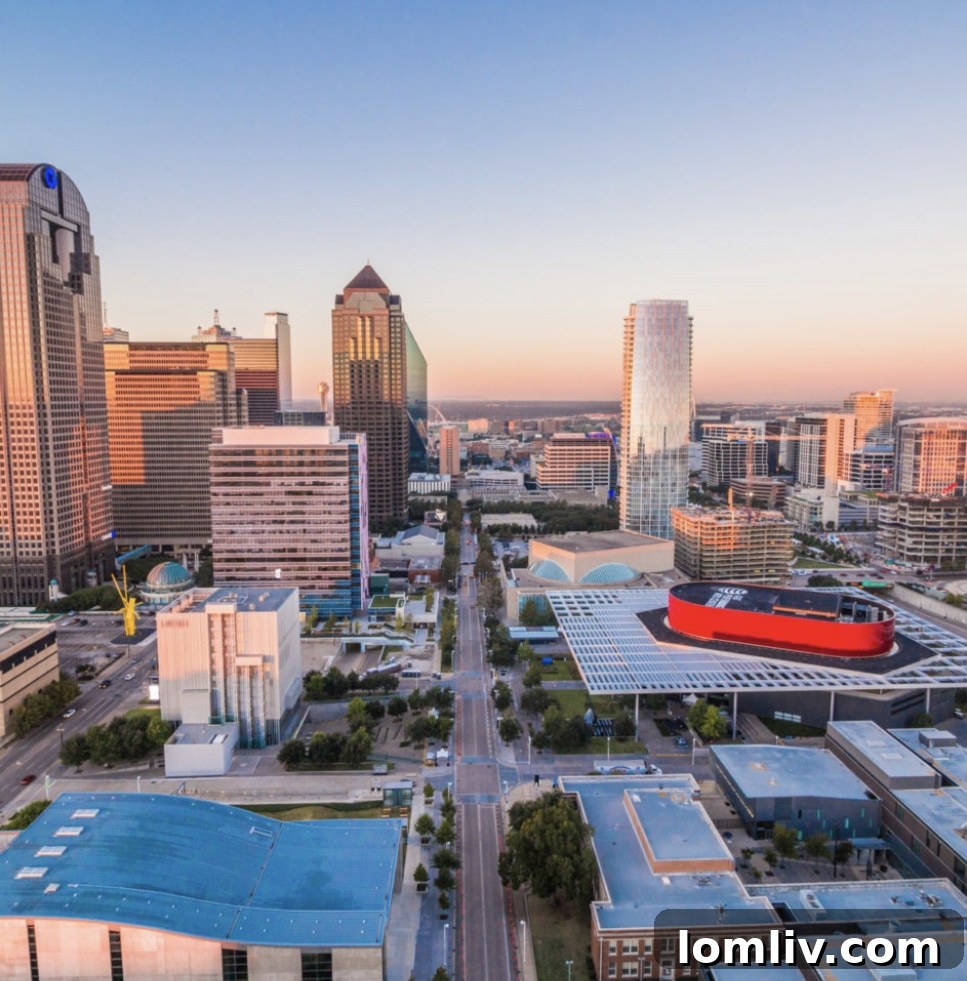
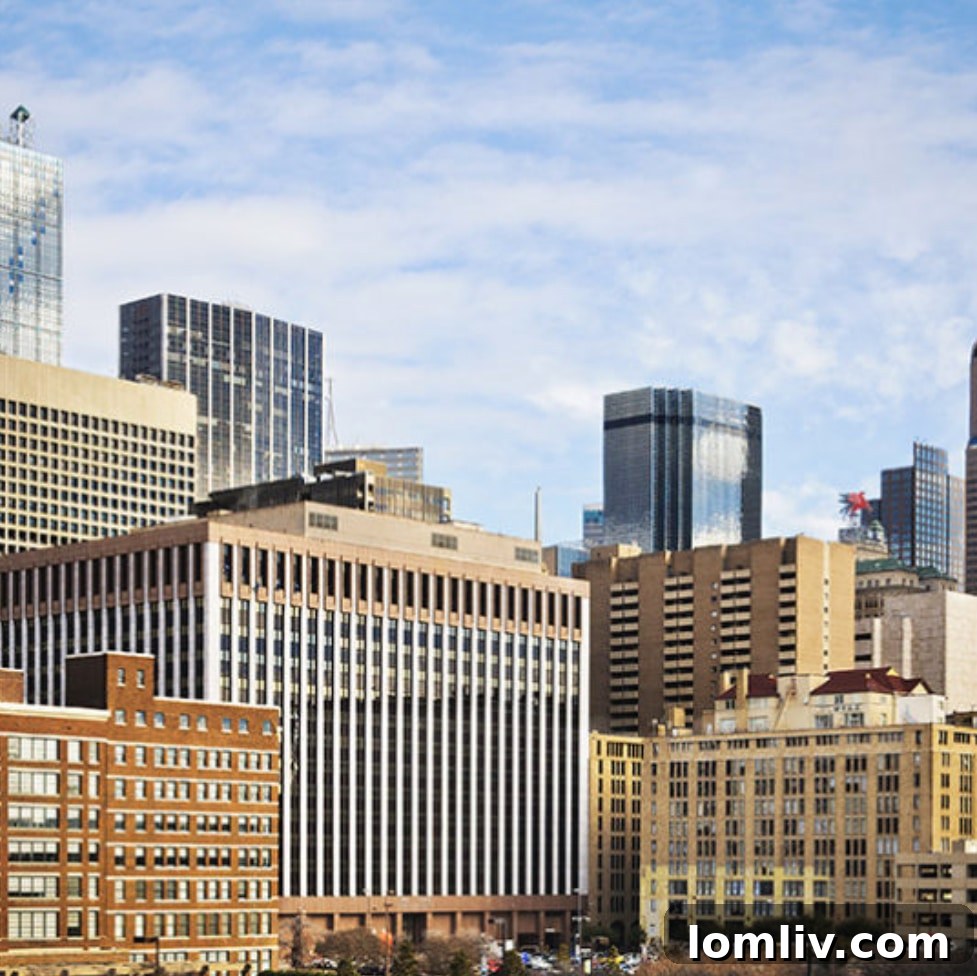
Mayor Johnson emphasized Dallas’s singular and indispensable role within the vast metropolitan region, which now encompasses a population of 8 million people. “We are the very foundation upon which this entire region was built. Dallas stands as the heart and soul of this dynamic metropolitan area,” he proclaimed. “Downtown Dallas, in particular, forms a compelling part of the argument for why Dallas, as a city, is uniquely special and distinct when businesses or families contemplate relocation. You will never find a place better than the original Dallas. Because we are not content to rest on past accomplishments and are constantly striving for improvement, I welcome competition. I do not shy away from it. We possess an undeniable silver bullet, and that is our downtown. Our suburbs simply cannot replicate our iconic skyline, our historic hotels steeped in character, or our internationally recognized Arts District. We are a legitimate, fully-fledged, great American city, an identity that our surrounding suburbs, while valuable, do not possess.”
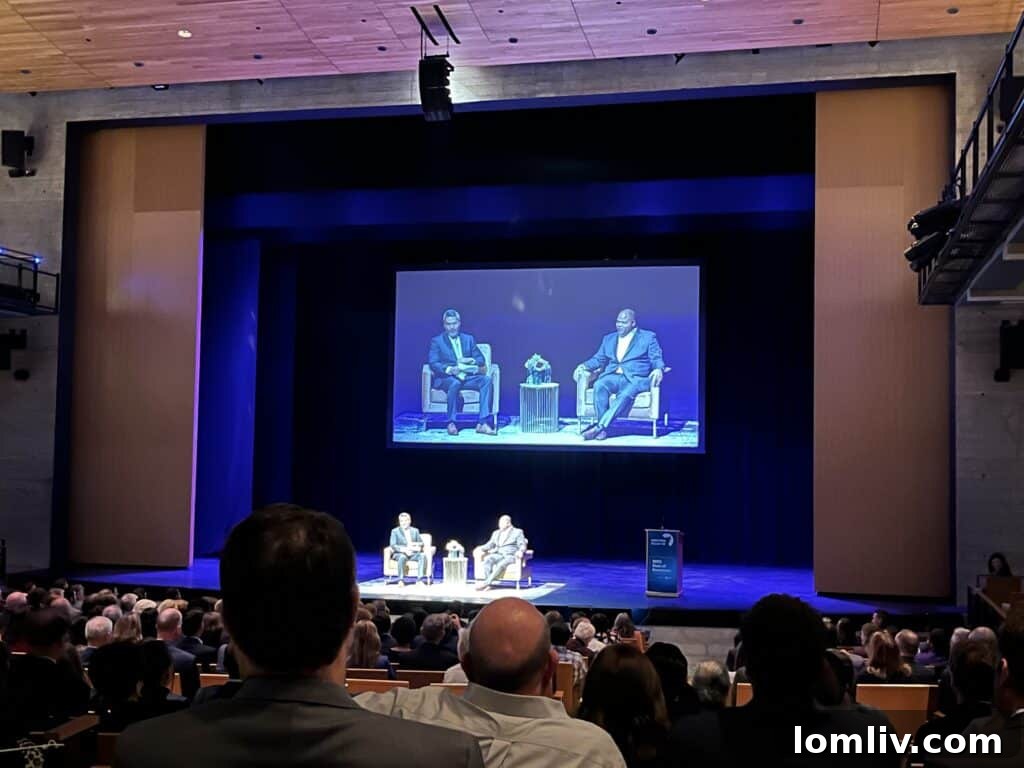
Beyond its economic prowess, Mayor Johnson lauded Dallas’s profound resilience in the face of adversity. “The overwhelming majority of my mayoral term coincided with an unprecedented global pandemic,” he reflected. “When one considers what we managed to achieve with, metaphorically, one arm tied behind our back—navigating a pandemic, enduring economic recession, coping with devastating tornadoes striking Preston Hollow, experiencing 1,000-year flooding events, enduring severe winter freezes, addressing the George Floyd protests and periods of significant social unrest, and having to declare emergency after emergency—it’s truly remarkable. We have collectively weathered an incredible storm. It’s no wonder that the U.S. Travel Association aptly christened Dallas ‘the comeback city,’ recognizing our distinction as the first major urban center to emerge robustly from the pandemic’s grip.”
Key Insights from the Downtown Dallas Perception Survey
During the DDI event, Jennifer Scripps unveiled the illuminating results of a comprehensive downtown perception survey, which garnered responses from approximately 1,600 individuals. This survey offered valuable insights into the current state and future prospects of downtown Dallas.
Scripps reported that downtown Dallas currently boasts a vibrant residential population of about 15,000, complemented by an impressive $4 billion in planned and actively developing projects. “We have been the fortunate beneficiary of an extraordinary $8 billion in development investment over the last 25 years alone,” she added, emphasizing the sustained growth and commitment to the urban core. “All this strategic investment has culminated in an amazing smorgasbord of amenities throughout downtown. We are, quite frankly, the envy of the country, particularly when one considers the expansive greenspace that has been meticulously developed, featuring four signature parks and more than 20 acres of lush, accessible green areas.”
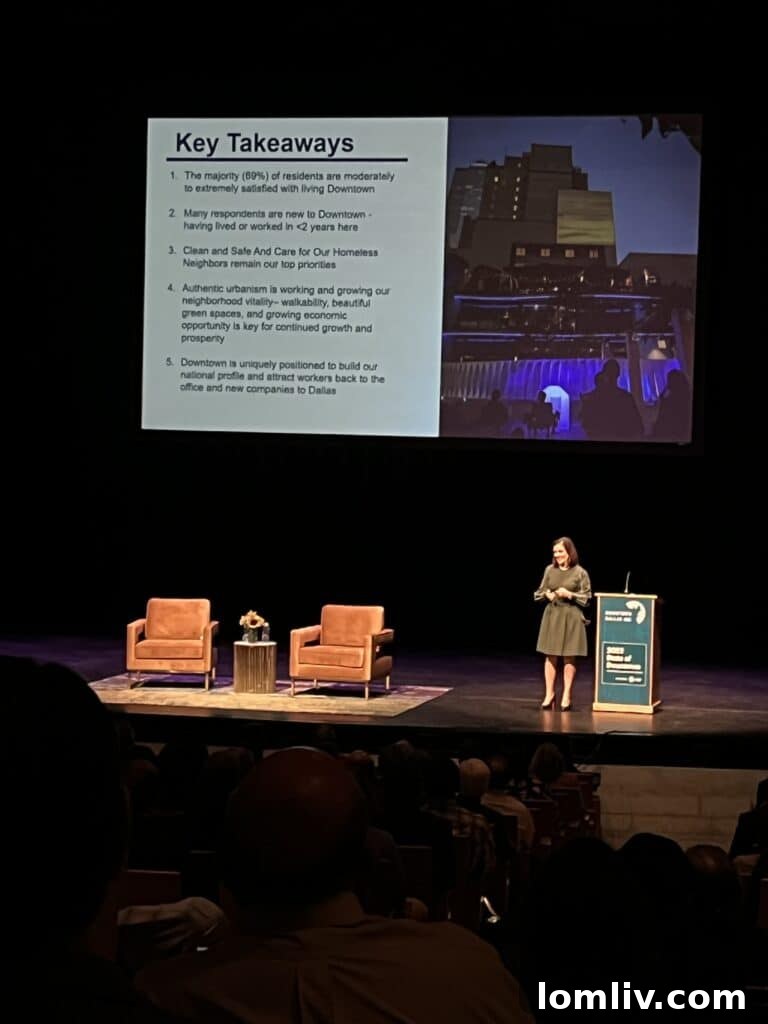
A notable finding from the survey indicated a demographic shift towards a younger residential population in downtown Dallas. Furthermore, nearly half of the surveyed residents reported relocating to the area within the past two years, underscoring its growing appeal. “These new residents chose to move to Dallas even during the height of the pandemic,” Scripps pointed out. “Unlike many other urban centers across the country, downtown Dallas did not experience an emptying out. In fact, numerous local restaurants and bars consistently confirm that it was these dedicated residents who sustained them through the challenging pandemic period.”
While overall satisfaction was high, the survey also revealed a significant concern among most respondents regarding the city’s homeless situation. This critical issue was also addressed by Mayor Johnson in his remarks, signaling its importance on the civic agenda.
“We are likely to benefit immensely from adopting a more regional, collaborative approach to effectively address and mitigate homelessness,” Mayor Johnson suggested. “The City of Dallas should not, in isolation, be bearing the overwhelming brunt of what is fundamentally a regional public health and social challenge. The reality is that many of our unsheltered or homeless individuals, in numerous cases, do not have a last known Dallas address. Dallas, characterized by its deep compassion and generous spirit, invests millions of taxpayer dollars into these services, while some of our surrounding suburbs do not, with some even subtly encouraging individuals who require these essential services to come to Dallas, only to then boast about their comparatively low tax rates.” This statement highlights the disparity in regional responsibility and the financial strain on Dallas.
Despite these challenges, Scripps affirmed that the overarching sentiment is one of deep satisfaction. Overall, approximately 69 percent of survey respondents expressed extreme satisfaction with the downtown area, indicating a strong affinity for their urban environment.
“We firmly believe that downtown Dallas is uniquely positioned and exceptionally suited to serve as the vibrant, welcoming face of our entire region and city,” Scripps concluded, encapsulating the optimistic outlook for Dallas’s dynamic urban core.