Preserving Affordable Homeownership in Dallas: The Turtle Creek Terrace Story and Unit #168
In the vibrant heart of Dallas, the debate over urban development and the preservation of affordable housing continues to rage. A recent pivotal moment saw the city council deny Lincoln Property’s ambitious, yet controversial, Lincoln Katy Trail project. This proposed development aimed to replace the established Turtle Creek Terrace condo complex, a move that sparked significant community discussion. While the immediate future of the project remains uncertain – with a potential re-application on the horizon – the recent listing of Turtle Creek Terrace Unit #168 at 3203 Carlisle Street offers a powerful real-world illustration of the very concerns raised during the project’s review. Situated at the bustling intersection of Oak Lawn and Uptown, this property is far more than just a listing; it’s a living example of the market-rate affordable housing Dallas stands to lose.
The Critical Need for Market-Rate Affordable Housing: A Case Study
The core of the controversy surrounding the Lincoln Katy Trail project lay in its proposed exchange: replacing 115 existing market-rate affordable housing units with only 45 new ones. This net loss of 70 housing opportunities was, and remains, a profoundly concerning proposition for many residents and advocates. Unit #168 at Turtle Creek Terrace serves as a perfect lens through which to examine this issue. This charming one-bedroom, two-bathroom unit spans a comfortable 824 square feet and was recently listed for an accessible $149,000, represented by Tyler Hagood from Small World Realty. This price point immediately highlights its critical role in Dallas’s affordable housing landscape.
Let’s delve into the financial accessibility of this home. Utilizing standard mortgage calculation tools, a 30-year mortgage could result in an approximate monthly payment of $925. For those seeking a quicker payoff, a 15-year mortgage would still keep payments around $1,250 per month. Crucially, these estimates encompass all major housing costs: the mortgage principal and interest, property taxes, homeowner’s insurance, and the monthly Homeowners Association (HOA) fees. These figures demonstrate a remarkable level of affordability for a prime Uptown Dallas location.
Further analysis using Zillow’s calculators and Dallas’s average household income of $54,727 reveals even more compelling insights. A couple earning the average income could comfortably afford a monthly payment of $1,629. More strikingly, when considering the 80 percent average median income often used for qualifying listed affordable housing ($43,781), this home becomes purchasable by someone earning just $42,000 annually. This income threshold is even lower than what’s typically required for a “qualified affordable unit” under many city programs, underscoring the intrinsic value of market-rate options like Turtle Creek Terrace.
For a single individual earning the median income of $29,752 per year, Unit #168 presents a slight stretch, with estimated payments being just $42 over their calculated affordability. However, a modest salary increase to approximately $31,200 would comfortably place homeownership within reach. This data unequivocally illustrates that genuine, accessible homeownership opportunities exist within Dallas’s market, particularly in highly sought-after areas like Oak Lawn and Uptown. This is a critical distinction, especially considering that Dallas’s current affordable housing programs primarily focus on rentals, offering limited support for affordable homeownership – a significant gap that properties like Unit #168 help to fill.
A Glimpse Inside: Value and Charm at Turtle Creek Terrace
Beyond its financial accessibility, Unit #168 offers appealing features and a comfortable living environment. Let’s take a closer look inside this unique condo.
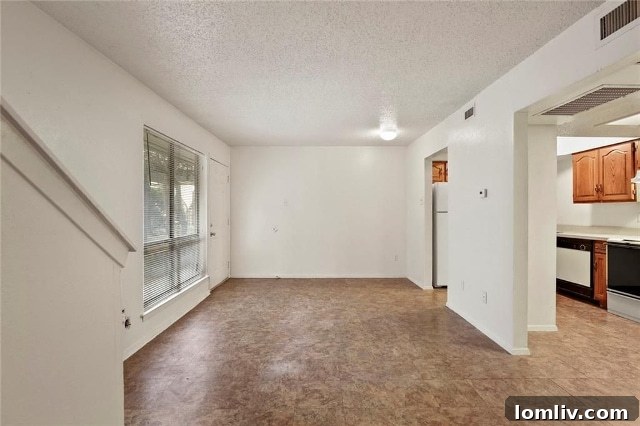
Upon entry, a welcoming, compact foyer ushers you into the bright, open-plan living room. The space feels immediately inviting, benefiting from ample natural light. To the right of the living area, a generously sized kitchen – impressive for a unit of this footprint – stands ready for culinary endeavors. Directly behind the main entrance, one of the unit’s two well-appointed bathrooms offers convenience. The ground floor is finished with durable and aesthetically pleasing tile, a choice that not only provides a clean, modern look but also offers refreshing coolness during Dallas’s warmer months. For those who prefer the warmth and texture of carpets, strategically placed area rugs can effortlessly personalize the space.
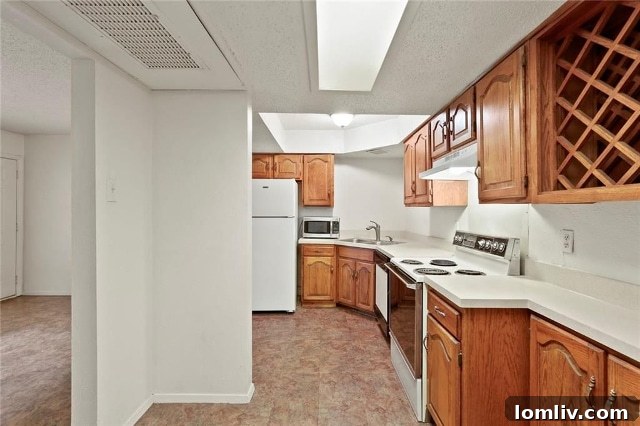
The kitchen is indeed a standout feature, boasting significant counter space – a rare find in many urban condos – complemented by a wealth of cabinetry for storage, and even a built-in wine rack. A subtle “T-wall” partition hints at a potential past life as a small two-bedroom unit, a theory further supported by the presence of two full bathrooms. This historical configuration suggests a flexible layout that maximized living space.
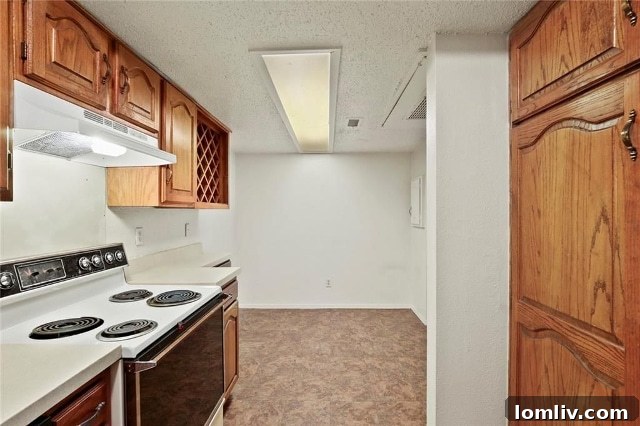
Continuing through the kitchen area, you discover a cozy eat-in space – another subtle indication of the unit’s potential former two-bedroom layout. To the right, a delightful surprise awaits: an unexpectedly spacious pantry, offering invaluable storage solutions that are typically uncommon in homes of this size. This intelligent use of space enhances the unit’s functionality and livability.
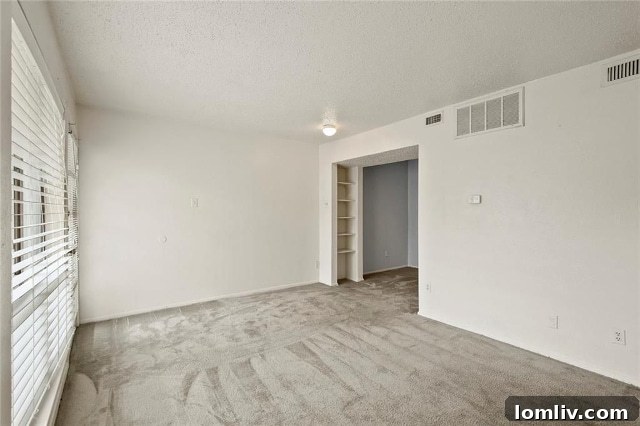
Ascending the stairs, you arrive at the master bedroom, which occupies the entire second floor as a private, enclosed suite. This design creates a true sanctuary, complete with a generous closet, a dedicated en-suite bathroom, and direct access to a private balcony – perfect for enjoying a morning coffee or an evening breeze. For those who appreciate personalized lighting, adding a chandelier or a distinctive ceiling light fixture would be a straightforward and impactful upgrade.
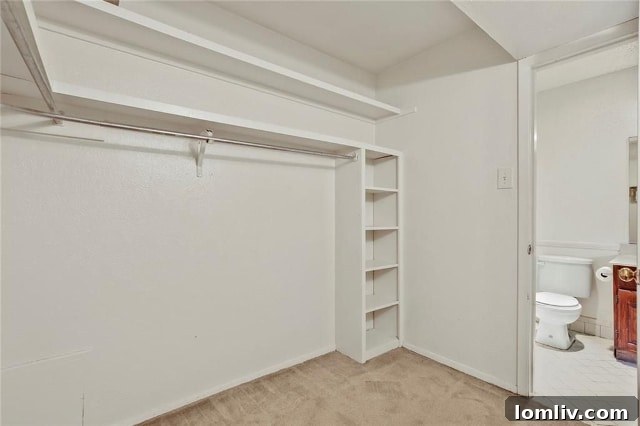
The closet attached to the master suite is, frankly, shockingly large. This expansive space would be a dream for any shoe or handbag enthusiast, offering ample room for an extensive collection. For others, it provides abundant hanging space and shelving for clothing, accessories, and storage. Positioned just off the master bath, its sheer size warranted a separate highlight, showcasing the thoughtful design and practical amenities within this condo.
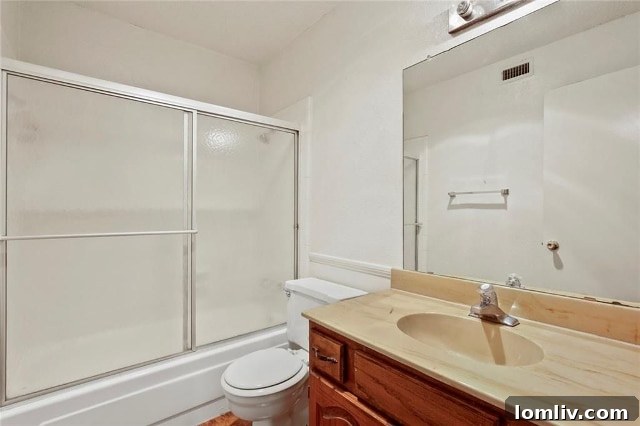
While the master bathroom is functional and well-maintained, it’s fair to say it’s not opulent. However, for a property at this price point in Uptown Dallas, expectations are appropriately calibrated. The beauty of this space lies in its potential: a new owner, over time and as budget allows, can easily undertake a cosmetic refresh to update fixtures, tiling, and finishes, transforming it into a more contemporary oasis. Investing in such upgrades here is a wise decision, as properties in Uptown are unlikely to decrease in value.
The Turtle Creek Terrace Complex: Community and Considerations
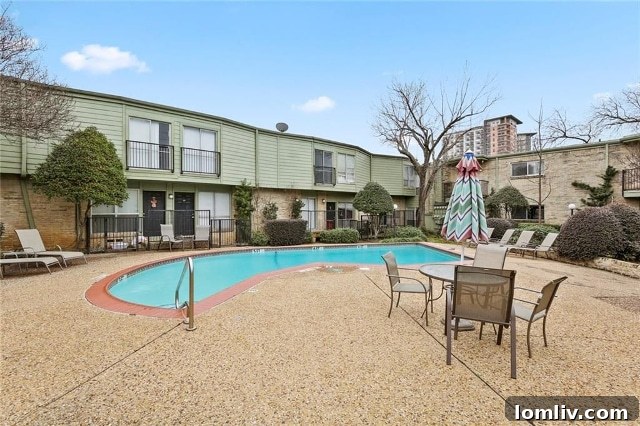
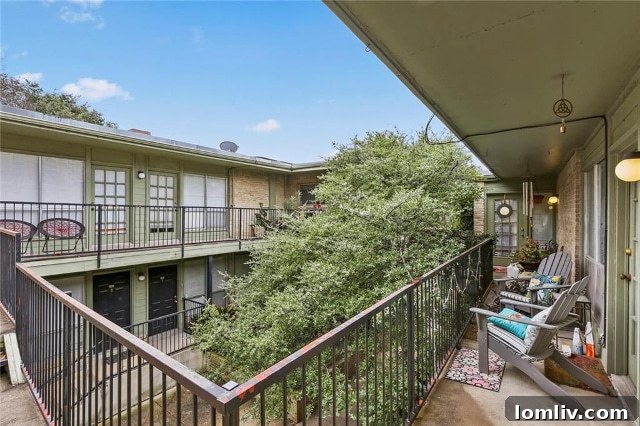
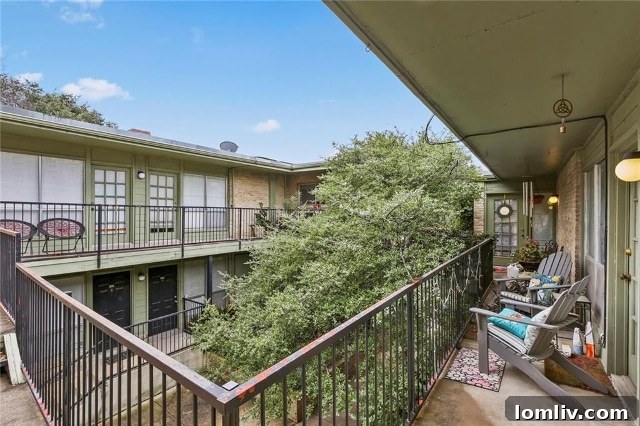
The Turtle Creek Terrace complex itself is an appealing community, sprawling across an entire block and enjoying direct access to the popular Katy Trail – a significant amenity for residents. Designed as a courtyard building, it offers a variety of living experiences. Some units, like #168, benefit from a greater degree of privacy with secluded patios or entrances, while others are more community-oriented, facing the central pool area and fostering a lively neighborhood feel.
It’s ironic, and quite revealing, that during the Lincoln Katy Trail project discussions, the complex was repeatedly characterized by developers as “dilapidated” and nearing obsolescence. Yet, as evidenced by this listing and others, Turtle Creek Terrace properties appear perfectly functional and well-maintained, offering comfortable homes to their residents. This disparity highlights a common tactic in urban redevelopment: disparaging existing structures to justify their demolition, often overlooking the inherent value and affordability they provide. Prospective buyers in such targeted complexes must exercise heightened due diligence.
When a complex is under contract for potential redevelopment, maintenance often slips. Why would current owners or the HOA invest heavily in repairs for a property slated to be torn down? This creates a critical situation for new buyers. It becomes paramount to thoroughly examine the complex’s financial records. Are there sufficient funds in the capital reserve to cover a potential backlog of deferred maintenance? You wouldn’t want to inherit significant repair liabilities that far exceed the available savings, potentially leading to costly special assessments.
Furthermore, understanding the specifics of Lincoln Property’s original contract (or any similar developer agreement) is non-negotiable. You could, inadvertently, purchase a home only to find it subject to an imminent buyout, potentially leaving you with limited options or an unexpected relocation. However, this scenario also presents a calculated risk and potential reward. If a future developer succeeds in acquiring the complex, the payout to existing unit owners could be quite generous, turning a calculated risk into a significant financial gain. Regardless of the desired outcome, a clear understanding of these contractual intricacies is vital. Any plans for significant renovations or upgrades should be put on hold until the developer’s plans and the potential for a buyout are fully clarified; otherwise, your renovation budget might end up in a dumpster along with the old structure.
The Enduring Value of Market-Rate Affordable Housing
Ultimately, the listing of Unit #168 at Turtle Creek Terrace serves as undeniable proof that market-rate affordable housing is not a myth in prime Dallas neighborhoods like Oak Lawn and Uptown. These homes provide essential, accessible entry points for individuals and families into thriving urban communities. The ongoing challenge, however, is that such invaluable housing stock is consistently threatened by large-scale developments that often prioritize high-density, luxury units over the preservation of existing affordability. The conversation around urban development in Dallas, and indeed in any growing city, must pivot towards recognizing and protecting these vital market-rate affordable options, ensuring that progress doesn’t come at the cost of accessible homeownership for its diverse population.

Remember: My focus consistently revolves around high-rises, HOAs, and property renovations, but my perspective is always informed by a deeper appreciation for modern and historical architecture, balanced against the principles of the YIMBY (Yes In My Backyard) movement. My commitment to insightful real estate commentary has been recognized by the National Association of Real Estate Editors, honoring my writing with three Bronze awards in 2016, 2017, and 2018, alongside two Silver awards in 2016 and 2017. If you have a compelling story to share, a crucial real estate topic to discuss, or even a marriage proposal (you never know!), please don’t hesitate to reach out via email at [email protected]. Feel free to search for me on Facebook and Twitter – while my online presence might be elusive, your efforts are always welcome!